 407-408-0577
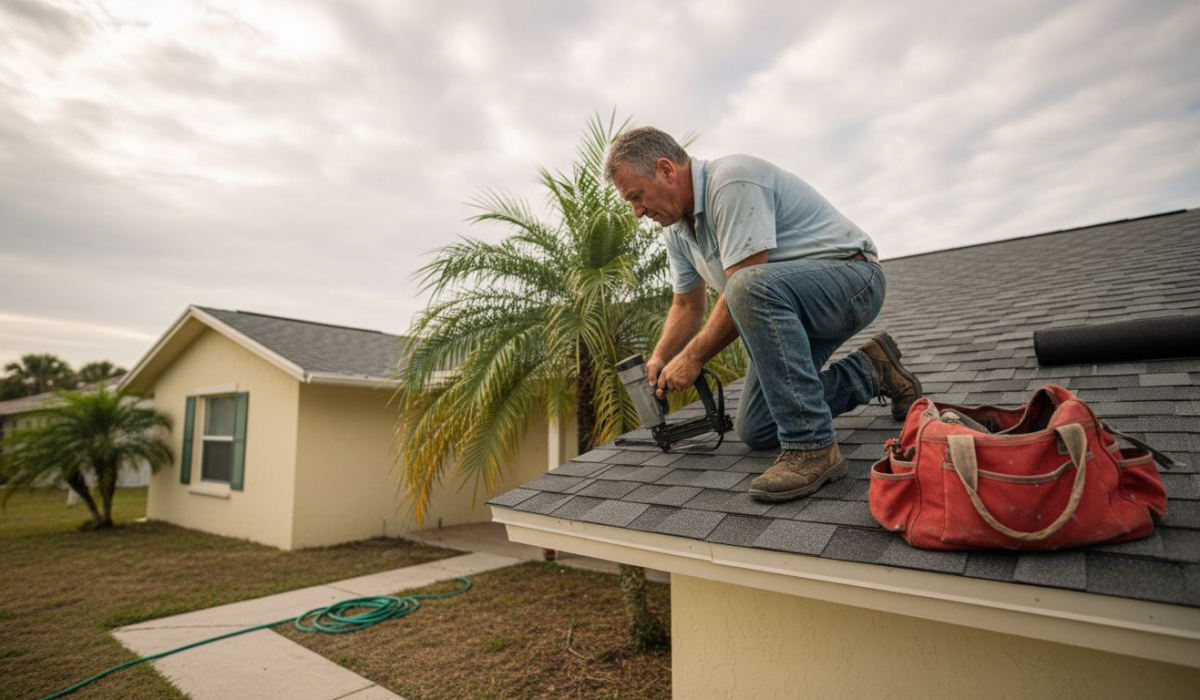
When hurricane season threatens Central Florida, an aging roof often becomes a homeowner’s biggest worry. Choosing the right roofing materials is more than a cosmetic decision, especially with frequent storms, scorching sun, and Florida Building Code requirements that demand superior protection. This guide breaks down the core purpose of modern roofing, highlights key protective roles each material serves, and offers practical options that balance affordability and long-term resilience for your home.
Table of Contents
- Roofing Materials And Their Core Purpose
- Popular Material Types In Central Florida
- Performance, Lifespan, And Storm Resistance
- Florida Building Codes And Insurance Impacts
- Cost Breakdown And Home Value Considerations
- Mistakes To Avoid When Choosing Materials
Key Takeaways
| Point | Details |
|---|---|
| Roofing Materials are Critical for Protection | Roofing materials in Central Florida must provide weather resistance, temperature regulation, and energy efficiency to effectively shield homes from environmental threats. |
| Consider Long-Term Value and Compliance | Selecting roofing should involve evaluating durability, compliance with Florida Building Code, and potential insurance discounts rather than just initial cost. |
| Regular Inspections are Essential | Annual professional roof inspections help identify vulnerabilities early and are crucial for maintaining the integrity and performance of the roofing system. |
| Avoid Aesthetic-Only Choices | It’s important to prioritize functionality and compliance over looks when selecting roofing materials to ensure resilience against local climate challenges. |
Roofing materials and their core purpose
In Central Florida’s challenging climate, roofing materials serve as the primary defense mechanism protecting homes from intense sunlight, tropical storms, and extreme weather conditions. The core purpose of roofing extends far beyond simple shelter – it represents a critical architectural system designed to shield residential structures from environmental threats while maintaining structural integrity.
Every roofing material fundamentally aims to accomplish several essential protective functions:
- Weather Resistance: Block rain, wind, and UV radiation
- Temperature Regulation: Provide insulation and reduce heat transfer
- Structural Protection: Support building framework and prevent water infiltration
- Energy Efficiency: Minimize heat absorption and reduce cooling costs
Understanding roofing materials requires recognizing their fundamental protective roles. Different materials offer unique advantages based on their composition, with options ranging from traditional asphalt shingles to modern metal roofing systems. The selection process involves carefully evaluating durability, local climate demands, aesthetic preferences, and long-term performance expectations.
Copper roofing represents an excellent example of advanced material engineering, offering remarkable durability and minimal maintenance requirements. As detailed by architectural experts, copper provides exceptional weathering resistance while delivering aesthetic appeal and structural longevity.
Pro tip: Research local building codes and consult professional roofing contractors to determine the most suitable roofing material for your specific Central Florida home environment.
Popular material types in Central Florida
Central Florida’s unique climate demands robust roofing materials that can withstand intense heat, humidity, and hurricane-force winds. Roofing materials for this region must offer exceptional durability, weather resistance, and energy efficiency to protect homes effectively.
The most popular roofing materials in Central Florida include:
- Asphalt Shingles:
- Most affordable option
- Quick and easy installation
- Available in multiple colors and styles
- Metal Roofing:
- Exceptional storm resistance
- Long lifespan (40-70 years)
- Excellent heat reflectivity
- Concrete and Clay Tiles:
- Superior durability
- Traditional Mediterranean aesthetic
- Excellent insulation properties
- Flat Roofing Systems:
- Common in commercial buildings
- Single-ply membrane materials like EPDM or TPO
- Efficient for large surface areas
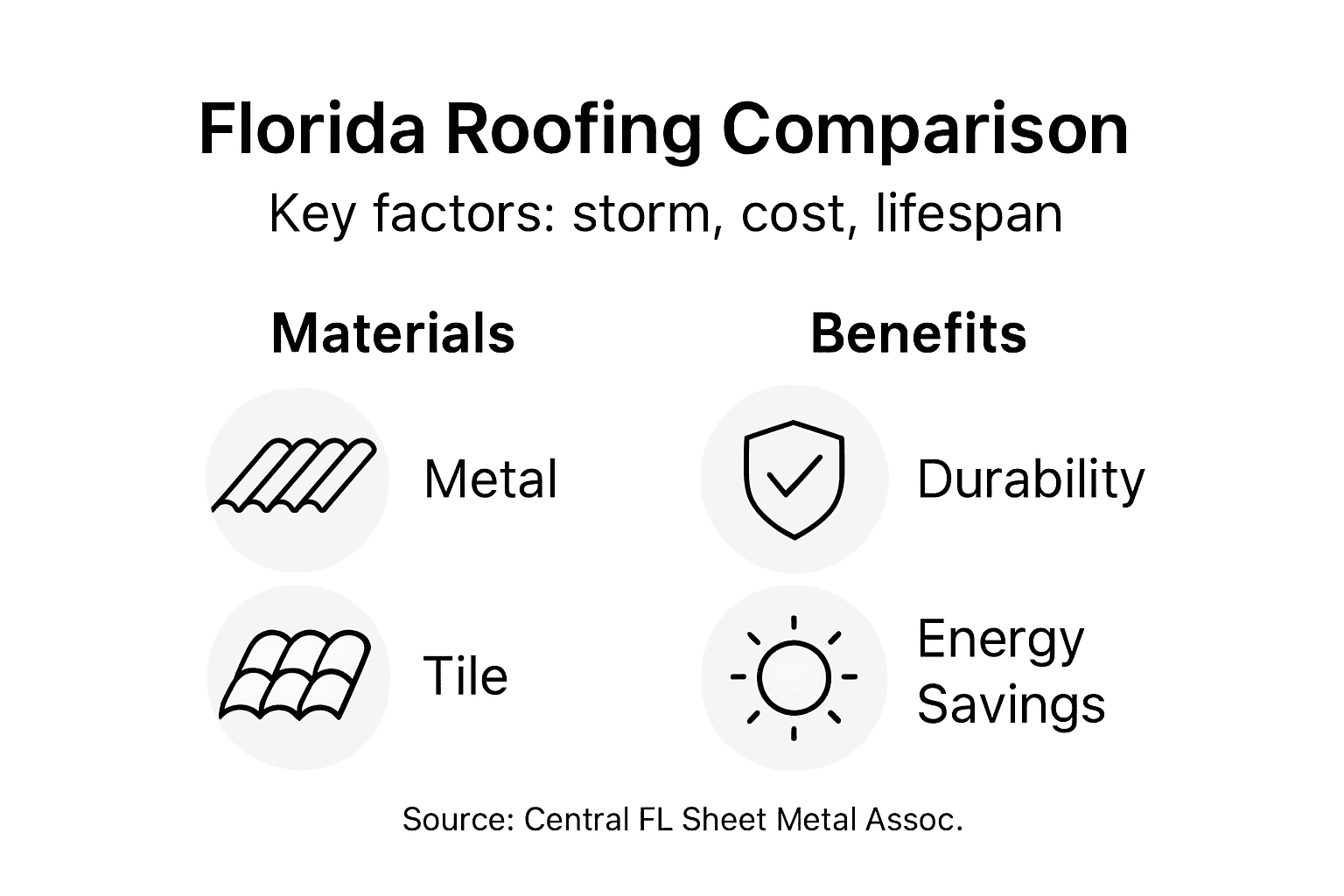
Central Florida Roofing and Sheet Metal Association experts recommend selecting materials based on specific local environmental challenges. Homeowners must consider factors beyond initial cost, including long-term maintenance, energy efficiency, and potential insurance discounts for storm-resistant roofing.
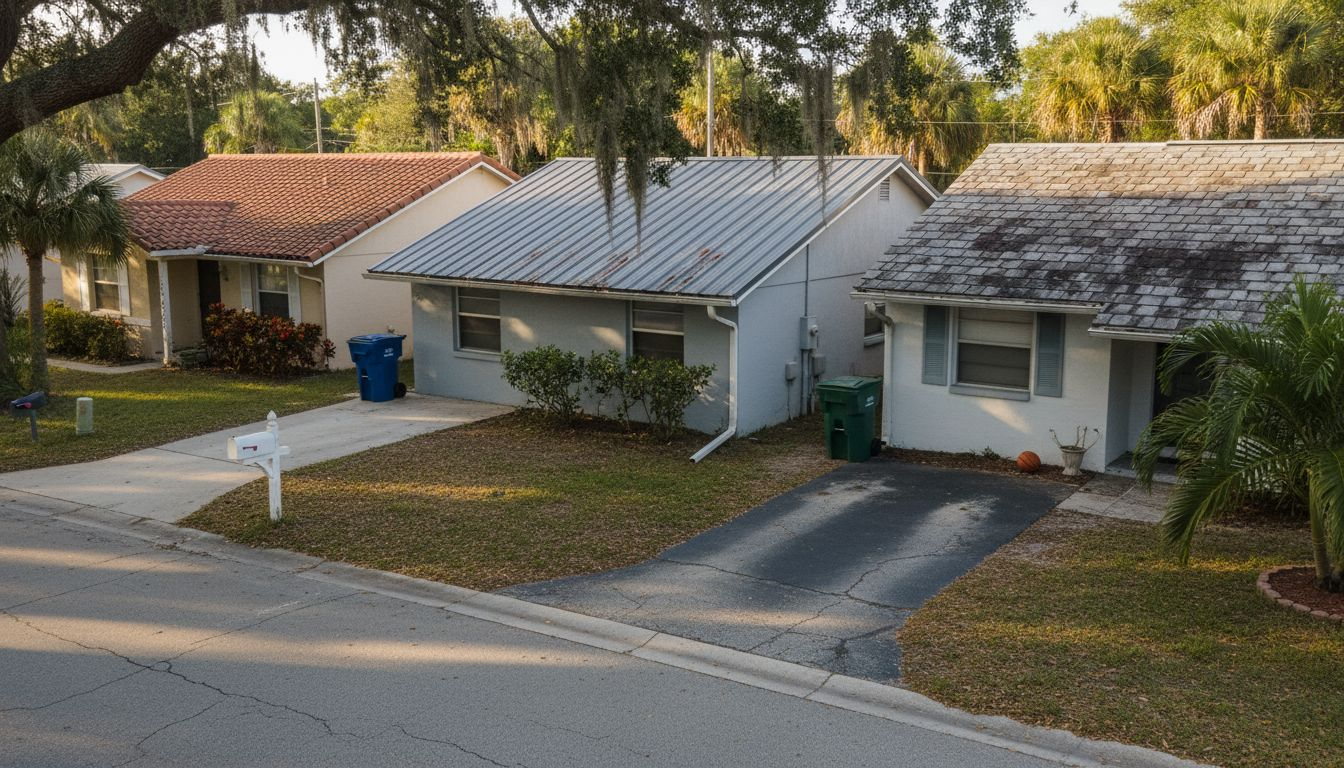
Metal and tile roofing systems have gained significant popularity due to their enhanced durability and ability to withstand extreme weather conditions. These materials offer superior protection compared to traditional asphalt shingles, making them increasingly attractive for Central Florida homeowners seeking comprehensive roof protection.
Here’s a concise overview comparing common roofing materials for Central Florida homes:
| Material | Storm Resistance | Lifespan | Energy Efficiency |
|---|---|---|---|
| Asphalt Shingles | Moderate, easily damaged in hurricanes | 15-25 years | Lower, absorbs heat |
| Metal Roofing | Excellent, resists high winds | 40-70 years | Highly reflective, cools home |
| Concrete/Clay Tiles | Superior, heavy and wind-resistant | 40-70 years | Excellent insulation |
| Flat Roofing (EPDM/TPO) | Good, but depends on system design | 20-30 years | Variable, potential for reflectivity |
Pro tip: Consult with local roofing professionals who understand Central Florida’s specific climate challenges to determine the most appropriate roofing material for your home.
Performance, lifespan, and storm resistance
Central Florida’s extreme weather demands roofing systems that can withstand intense environmental challenges. Florida Building Code requirements have significantly evolved to ensure roofs provide maximum protection against hurricane-force winds and water infiltration.
Key performance factors for Central Florida roofing include:
- Wind Resistance:
- Minimum 130 mph wind rating recommended
- Enhanced fastening techniques crucial
- Impact-resistant materials preferred
- Water Protection:
- Sealed roof deck requirements
- Multiple water barrier layers
- Advanced underlayment technologies
- Material Durability:
- Corrosion-resistant components
- UV radiation protection
- Minimal thermal expansion damage
FORTIFIED Roof standards emphasize comprehensive roof system strengthening, focusing on critical elements that prevent catastrophic failure during extreme weather events. These standards go beyond traditional building codes, providing homeowners with a comprehensive approach to roof resilience.
Metal and tile roofing systems typically demonstrate superior performance, with lifespans ranging from 40-70 years when properly installed and maintained. Asphalt shingle roofs, while more economical, generally require replacement every 15-25 years in Central Florida’s challenging climate.
Pro tip: Schedule professional roof inspections annually to identify and address potential vulnerabilities before they become significant problems.
Florida building codes and insurance impacts
Florida’s stringent building codes represent a critical defense mechanism for homeowners against the state’s extreme weather conditions. Florida Building Code requirements have been meticulously designed to enhance residential structural resilience and minimize potential storm damage.
Key aspects of building code impact on roofing and insurance include:
- Building Code Compliance:
- Mandatory wind resistance standards
- Specific underlayment and fastening requirements
- Precise material performance specifications
- Insurance Premium Considerations:
- Potential discounts for code-compliant roofs
- Reduced risk assessment for insurers
- Lower likelihood of catastrophic damage claims
- Roof Material Regulations:
- Strict testing for wind and impact resistance
- Required certification for roofing materials
- Comprehensive performance documentation
My Safe Florida Home program provides additional support by offering free wind mitigation inspections and financial incentives for homeowners who upgrade their roofing systems to meet or exceed current building standards. These initiatives directly connect building code compliance with tangible financial benefits.
Insurance companies increasingly use building code adherence as a primary factor in determining homeowners insurance rates. Roofs that meet or exceed Florida’s rigorous standards can potentially reduce insurance premiums by 20-40%, making code compliance not just a safety measure, but a significant financial strategy.
Pro tip: Request a professional wind mitigation inspection to document your home’s code compliance and potentially secure substantial insurance discounts.
Cost breakdown and home value considerations
Understanding the financial implications of roofing investments in Central Florida requires a comprehensive analysis of both immediate expenses and long-term value. Construction cost surveys reveal that roofing represents a significant portion of home improvement and construction budgets.
Typical cost ranges for roofing materials in Central Florida include:
- Asphalt Shingles:
- Lowest initial cost ($3-$5 per square foot)
- Shortest lifespan (15-25 years)
- Most budget-friendly option
- Metal Roofing:
- Higher upfront investment ($7-$12 per square foot)
- Longest lifespan (40-70 years)
- Significant long-term value
- Concrete/Clay Tiles:
- Mid-range cost ($10-$18 per square foot)
- Excellent durability
- Enhanced home aesthetic appeal
Florida Department of Transportation pricing data demonstrates that roofing costs vary significantly based on material selection, installation complexity, and local market conditions. Homeowners must consider not just initial expenses, but potential long-term savings through reduced maintenance and insurance costs.
Beyond immediate financial considerations, the right roofing material can substantially increase home value. Energy-efficient and storm-resistant roofing systems can potentially boost property values by 5-10%, making them a strategic investment for Central Florida homeowners looking to enhance their property’s market appeal.
Consider how roofing choices influence overall home value and insurance costs:
| Factor | Value Impact | Insurance Impact |
|---|---|---|
| Storm-Resistant Materials | Higher resale value, market appeal | Potential premium savings up to 40% |
| Energy Efficiency | Reduces long-term utility expenses | May qualify for efficiency discounts |
| Building Code Compliance | Essential for appraisals & resale | Required for most policy coverage |
Pro tip: Calculate the total lifecycle cost of roofing materials, including installation, maintenance, and potential insurance savings, rather than focusing solely on initial purchase price.
Mistakes to avoid when choosing materials
Choosing the right roofing material in Central Florida requires careful consideration beyond aesthetic preferences. Florida Building Code requirements highlight critical factors that homeowners frequently overlook when selecting roofing materials.
Common mistakes when selecting roofing materials include:
- Aesthetic-Only Selection:
- Ignoring performance ratings
- Overlooking local climate demands
- Prioritizing looks over functionality
- Compliance Negligence:
- Disregarding building code standards
- Using non-certified roofing materials
- Skipping professional installation assessments
- Cost-Driven Decisions:
- Choosing cheapest material
- Neglecting long-term durability
- Ignoring maintenance requirements
FORTIFIED Home recommendations emphasize the importance of selecting materials specifically tested for Florida’s extreme weather conditions. Homeowners frequently underestimate the critical role of proper installation techniques and material compatibility with local environmental challenges.
Understanding wind resistance, water infiltration prevention, and material-specific performance characteristics is crucial. Improper material selection can lead to substantial financial risks, including increased repair costs, reduced home value, and potential insurance complications.
Pro tip: Always request professional documentation proving a roofing material’s compliance with Florida Building Code and wind resistance standards before making a final selection.
Protect Your Central Florida Home with Trusted Roofing Solutions
Choosing the right roofing material is vital to protect your home from Florida’s intense weather challenges. After learning about storm resistance, durability, and energy efficiency, you deserve a roofing partner who understands these demands and delivers expert craftsmanship tailored to your needs. At Thomas Roofing and Repair, we specialize in high-quality roof installation, repair, and replacement that meet Florida Building Code standards and help you maximize damage protection and insurance savings.
Key benefits of working with us include:
- Customized recommendations on roofing materials proven to withstand hurricane-force winds
- Professional inspections to ensure compliance and enhance longevity
- Financing options and a community-focused approach centered on your peace of mind

Don’t wait until minor damage becomes costly repairs. Visit Thomas Roofing and Repair today to schedule a free roofing inspection or request your no-obligation estimate. Protect your home with confidence and experience roofing service built on integrity and local expertise.
Frequently Asked Questions
What are the primary purposes of roofing materials?
Roofing materials provide essential protection against weather elements, regulate temperature, protect the building’s structure, and improve energy efficiency.
How do different roofing materials compare in terms of lifespan and durability?
Asphalt shingles last 15-25 years, whereas metal and concrete or clay tiles can last 40-70 years, offering superior durability in extreme weather conditions.
What factors should I consider when selecting roofing materials for my home?
Consider durability, local climate demands, aesthetic preferences, long-term maintenance, energy efficiency, and building code compliance when selecting roofing materials.
How does roofing material choice affect homeowners insurance rates?
Roofs that meet Florida’s building code standards may qualify for discounts on insurance premiums, potentially reducing costs by 20-40% due to decreased risk assessments.