 407-408-0577
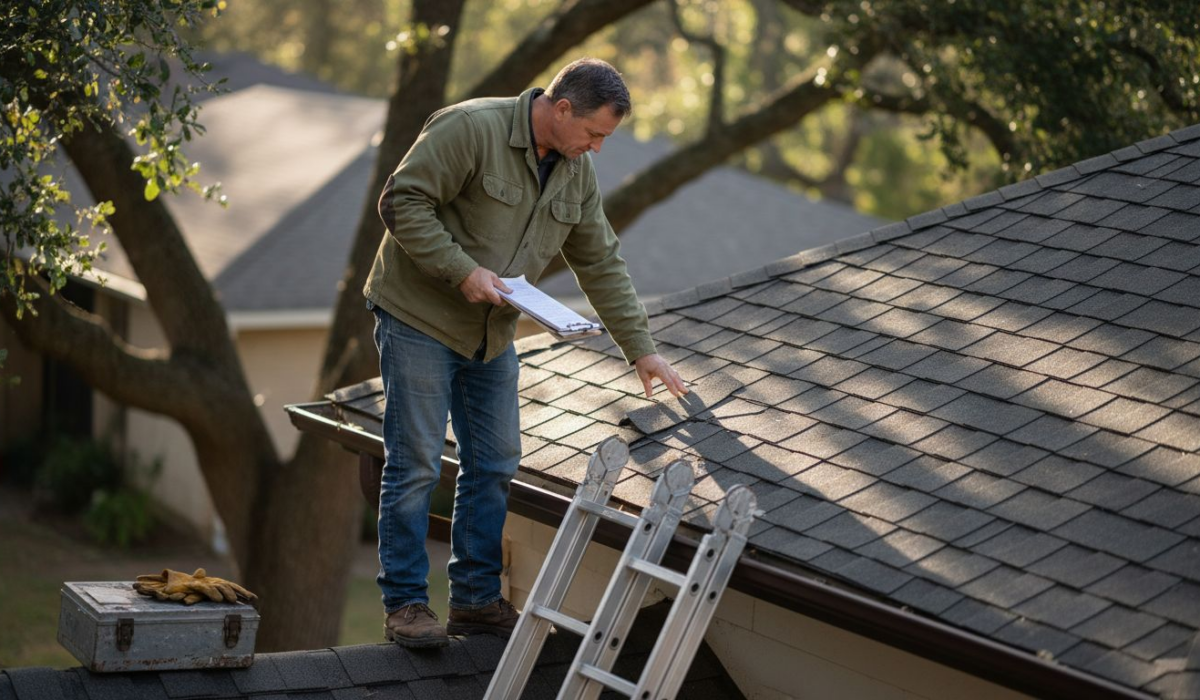
Every Central Florida landlord knows that a neglected roof can quickly turn a property asset into a costly headache. With multiple residential properties to manage, keeping up with roof repairs often means juggling inspections, tenant schedules, and legal requirements. By focusing on a systematic approach to roof assessment and communication, you can prevent minor issues from escalating, protect your investments, and keep tenant concerns to a minimum.
Table of Contents
- Step 1: Assess Roof Repair Needs Thoroughly
- Step 2: Coordinate Repairs With Tenants And Contractors
- Step 3: Obtain Necessary Permits And Approvals
- Step 4: Oversee Professional Roof Repair Process
- Step 5: Verify Repairs And Ensure Compliance
- Step 6: Document Work For Records And Future Claims
Quick Summary
| Key Point | Explanation |
|---|---|
| 1. Conduct thorough roof assessments | Regular inspections help identify potential issues early, preventing costly repairs and ensuring tenant safety. |
| 2. Coordinate effectively with stakeholders | Clear communication with tenants and contractors minimizes disruptions during repairs and ensures compliance with legal obligations. |
| 3. Obtain necessary permits before repairs | Securing local permits protects investments and ensures work meets legal standards, preventing future complications. |
| 4. Oversee the repair process diligently | Active oversight ensures quality workmanship and adherence to project specifications, protecting both the property and tenant interests. |
| 5. Document all work and agreements | Detailed record-keeping establishes a timeline of work performed, safeguarding against future disputes and providing essential references. |
Step 1: Assess roof repair needs thoroughly
Effective roof repair starts with a comprehensive and systematic assessment that allows landlords to identify potential issues before they escalate into costly damages. By developing a strategic inspection approach, you can protect your property investment and maintain tenant safety.
Begin your roof assessment by conducting a thorough visual inspection of building maintenance. This process involves multiple critical steps:
- Examine roof surfaces for visible signs of damage
- Check for water stains or moisture intrusion
- Inspect shingle conditions and potential deterioration
- Look for structural sagging or uneven roof lines
- Evaluate flashing around chimneys and ventilation points
Documenting each finding is crucial. Use a detailed checklist to track potential repair needs, noting the location, extent, and severity of any observed issues. For more complex assessments, consider hiring a professional roofing inspector who can provide an expert evaluation of your property’s roof condition.
Systematic inspections can help landlords prevent minor roof problems from becoming expensive emergency repairs.
Pro tip: Schedule roof inspections twice annually – once before summer storm season and again after hurricane season to catch potential damage early.
Step 2: Coordinate repairs with tenants and contractors
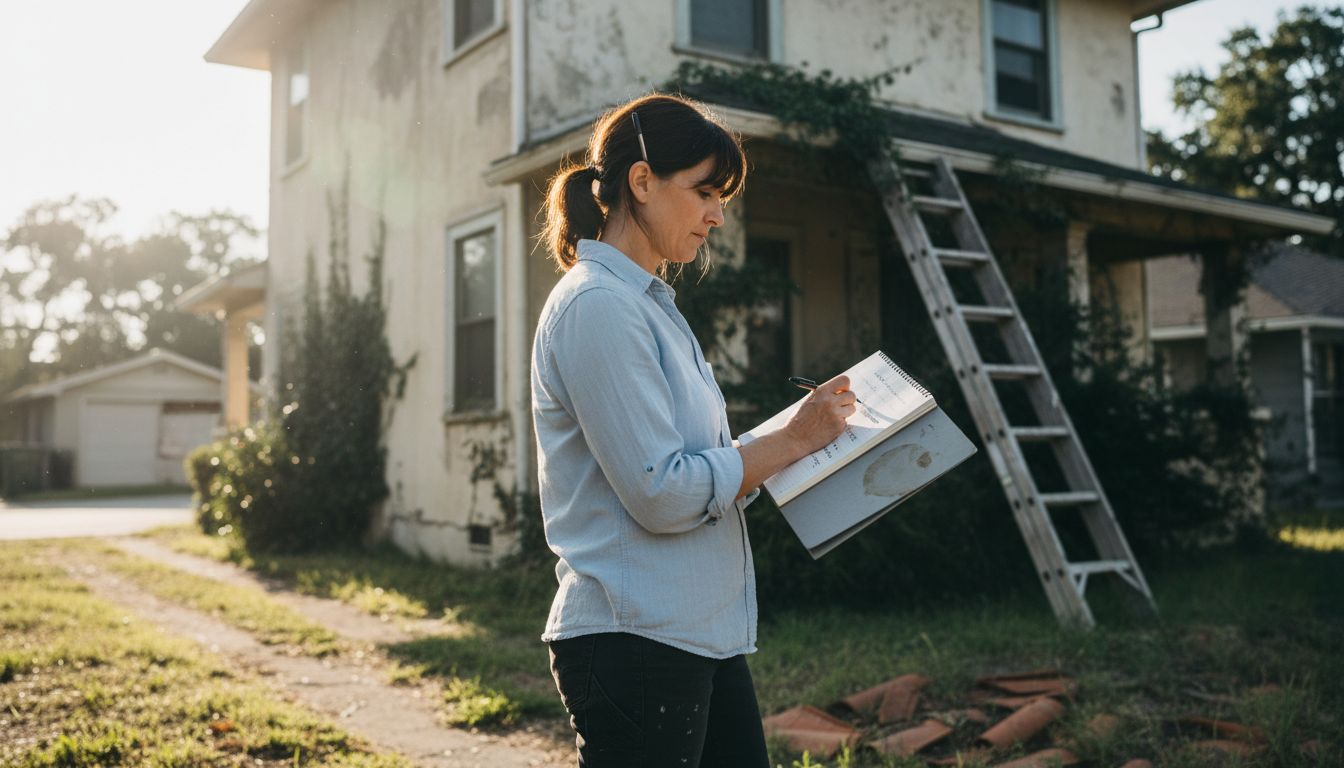
Successful roof repair requires seamless coordination between landlords, tenants, and professional contractors. Your goal is to minimize disruption while ensuring efficient and legally compliant maintenance of your rental property.
Start by understanding landlord-tenant legal requirements for property maintenance. Communication is key to a smooth repair process:
- Provide written notice of repair schedules at least 24-48 hours in advance
- Explain the scope and expected duration of roof repair work
- Offer alternative accommodations if repairs significantly impact tenant living spaces
- Confirm convenient times for contractor access
- Ensure tenants understand their rights and responsibilities during repairs
When selecting contractors, prioritize licensed professionals with experience in residential roof repairs. Request detailed written estimates, verify insurance coverage, and discuss potential timelines and potential disruptions before scheduling work.
Effective communication and advanced planning can transform a potentially stressful repair process into a smooth, collaborative experience.
Pro tip: Create a standardized repair communication template that outlines repair expectations, contact information, and tenant rights to streamline future maintenance interactions.
Step 3: Obtain necessary permits and approvals
Navigating the permit process is a critical step in ensuring your roof repair project meets all local legal requirements. Understanding and securing the right approvals protects your investment and prevents potential costly legal complications down the line.
Begin by researching local building permit regulations specific to your county or municipality. Different jurisdictions have varying requirements for roof repairs, which typically depend on:
- Extent of roof damage
- Planned repair or replacement scope
- Property zoning classification
- Structural modifications needed
- Total project cost
Most residential roof repair projects require official documentation. Work closely with your licensed contractor to compile the necessary paperwork, which usually includes detailed project plans, contractor licensing information, and specific repair specifications. Some municipalities might require additional documentation such as property surveys or structural engineering assessments.
Proactive permit management can save you significant time, money, and potential legal headaches during your roof repair project.
Pro tip: Request a pre-application consultation with local building authorities to understand exact permit requirements and potentially streamline your approval process.
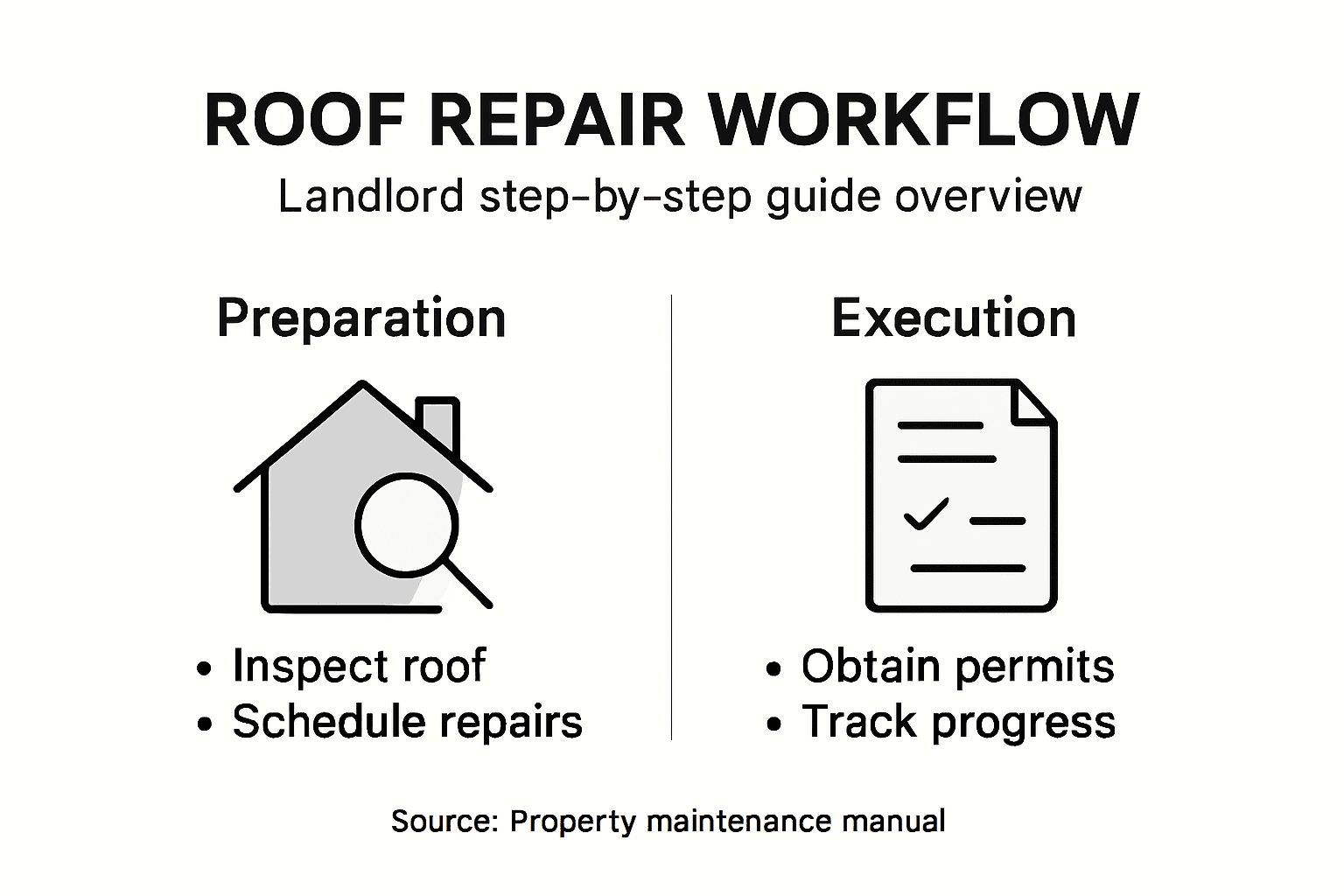
Step 4: Oversee professional roof repair process
Active oversight during roof repair is crucial for ensuring quality workmanship and protecting your investment. Your role as a landlord is to remain engaged throughout the repair process, monitoring progress and maintaining clear communication with contractors.
Learn from building maintenance professional strategies to effectively supervise the repair work. Key oversight responsibilities include:
- Schedule regular on-site inspections during the repair
- Verify contractors are following approved project plans
- Check material quality and installation techniques
- Document progress with photographs and written notes
- Confirm all work meets local building code requirements
- Validate that repairs address the originally identified issues
Maintain a professional yet collaborative relationship with your roofing contractors. Request daily or weekly progress reports, and be prepared to ask detailed questions about repair techniques, material selections, and potential complications.
Here’s a summary of roles and their responsibilities during a roof repair project:
| Role | Primary Responsibility | Key Action |
|---|---|---|
| Landlord | Oversight and communication | Schedule inspections |
| Tenant | Cooperate and provide access | Respond to notices |
| Contractor | Execute repairs to code | Submit progress reports |
| Inspector | Validate compliance and quality | Issue formal reports |
Consistent, proactive oversight transforms roof repairs from potential problems into successful property maintenance opportunities.
Pro tip: Keep a dedicated project notebook to track all communications, progress notes, and important decisions throughout the roof repair process.
Step 5: Verify repairs and ensure compliance
The final stage of your roof repair workflow involves comprehensive verification and documentation to protect your investment and ensure complete satisfaction. Your goal is to confirm that all repairs meet professional standards, local building codes, and the originally specified project requirements.
Secure a certified roof inspection report to validate the repair quality. The verification process should include:
- Request detailed written inspection documentation
- Confirm all repairs match original project specifications
- Check for proper material installation techniques
- Verify structural integrity and weatherproofing
- Ensure all local building code requirements are met
- Review contractor warranties and guarantees
Carefully examine the completed work, comparing the finished repair against initial project plans and your original assessment of roof damage. Pay close attention to workmanship details, material quality, and overall structural performance.
A thorough final verification transforms a potential liability into a reliable, long-lasting roof repair solution.
Pro tip: Take comprehensive photographs of the completed repairs from multiple angles to create a permanent record for your property maintenance files.
Step 6: Document work for records and future claims
Comprehensive documentation protects your property investment and creates a valuable historical record of roof maintenance. By meticulously tracking repair details, you establish a clear timeline of work performed and safeguard yourself against potential future disputes.
Master the art of contract documentation and claims management through systematic record-keeping. Your documentation package should include:
- Original repair scope of work
- Signed contractor agreements
- Detailed cost breakdowns
- Photographic evidence of damage and repairs
- Inspection reports and certifications
- Materials used and their specifications
- Contractor contact information and warranties
- Timestamps and dates of all work performed
Organize these documents systematically, creating both digital and physical backup copies. Digital files should be saved in multiple secure locations, including cloud storage and external hard drives, while physical copies can be stored in a fireproof, moisture-resistant container.
For a quick reference, here is a comparison of physical vs. digital documentation for property maintenance:
| Method | Advantages | Recommended Use |
|---|---|---|
| Digital | Easy backup, fast access | Ongoing projects, claims |
| Physical | Originals, disaster backup | Legal proof, insurance audits |
Meticulous documentation transforms potential legal vulnerabilities into clear, defensible property maintenance records.
Pro tip: Create a dedicated digital folder for each property, with subfolders organized by year and type of maintenance to ensure easy future retrieval.
Streamline Your Landlord Roof Repair Workflow with Trusted Experts
Managing roof repairs on your rental properties can feel overwhelming when dealing with inspections, tenant coordination, permits, and contractor oversight. This article highlighted key challenges landlords face such as conducting thorough assessments, ensuring legal compliance, and maintaining clear communication to prevent costly damages and disruptions. At Thomas Roofing and Repair, we understand how crucial every step is in protecting your investment and tenant safety through dependable, high-quality roof repair services.
Our team specializes in residential and commercial roofing solutions across Central Florida counties like Brevard, Volusia, and Orange. We offer expert roof inspections, permit assistance, professional repairs, and detailed documentation support so you can confidently manage your properties without added stress. Let us help you transform your roof maintenance process into a smooth, efficient experience backed by integrity and craftsmanship.
Take the next step toward hassle-free roof repairs right now. Visit Thomas Roofing and Repair for your free estimate.

Don’t wait for small issues to become expensive emergencies. Contact us today to schedule a comprehensive roof inspection or repair and keep your properties protected year-round. Learn more about how we support landlords with reliable roofing services and easy communication at Thomas Roofing and Repair. Your investment deserves the best care delivered with honesty and skill.
Frequently Asked Questions
What steps should I take to assess my roof repair needs?
Start by conducting a thorough visual inspection of your roof, checking for visible damage, water stains, and shingle conditions. Document your findings using a detailed checklist to identify potential repair needs clearly.
How do I coordinate roof repairs with my tenants?
Provide your tenants with written notice of the repair schedule at least 24-48 hours in advance, explaining the scope and expected duration of the work. Maintain open communication to confirm access times and address any tenant concerns during the repair process.
What permits are necessary for roof repairs?
Most roof repair projects require obtaining various local building permits, depending on the extent of damage and the nature of the repairs you plan. Research your local regulations, then work with your contractor to compile the necessary documentation for submission.
How can I oversee the professional roof repair process effectively?
Engage actively by scheduling regular on-site inspections and verifying that the contractor adheres to approved project plans. Document the repair process with photographs and detailed notes to ensure quality and compliance with local building codes.
What should I do after repairs are completed to verify their quality?
Request a certified roof inspection report to confirm that the repairs meet local codes and project specifications. Carefully examine the completed work for proper material installation and overall structural integrity before finalizing the project.
How can I document roof repair work for future reference?
Organize all repair documentation, including contractor agreements, inspection reports, and photographs, in a systematic manner. Create both digital and physical copies to safeguard your records, ensuring easy retrieval for any future claims or maintenance needs.