
 407-408-0577
Worrying about the next Florida storm can make any homeowner with an aging roof feel uneasy. Confusion over what a roofing guarantee really covers leaves many in Central Florida unprepared for expensive surprises. This guide clears up the most common myths about roofing guarantees, helping you understand exactly what protection you gain, what exclusions to watch for, and how to keep your roof covered for years to come. For true peace of mind, knowing your warranty’s limits is just as valuable as having one.
Table of Contents
- Roofing Guarantee Definition And Common Myths
- Types Of Roofing Guarantees In Florida
- What Coverage Includes And Excludes
- Legal Requirements And Contractor Obligations
- Risks, Maintenance, And How Warranties May Be Voided
Key Takeaways
| Point | Details |
|---|---|
| Understanding Warranties | Roofing guarantees are contractual agreements with specific terms and limitations, not comprehensive protection against all damage. |
| Types of Warranties | Florida homeowners have access to various warranty types, including Manufacturer Material Warranties, Workmanship Warranties, and Extended Comprehensive Warranties. |
| Maintenance is Key | Regular professional inspections and diligent maintenance documentation are essential to keep warranties valid and avoid unexpected costs. |
| Beware of Myths | Common misconceptions about roofing warranties can lead to misunderstandings; homeowners should clarify details with contractors before signing agreements. |
Roofing guarantee definition and common myths
A roofing guarantee is not the magical shield many homeowners imagine it to be. Instead, it represents a specific contractual agreement between a roofing professional and a property owner, outlining precise terms of potential future coverage. Roof warranty details often surprise homeowners who mistakenly believe they have blanket protection against every potential issue.
Understanding the nuanced landscape of roofing guarantees requires dispelling several common myths:
- Myth #1: Warranties cover all roof damage
- Myth #2: Guarantees are valid regardless of maintenance
- Myth #3: Storm damage is automatically included
- Myth #4: Manufacturer warranties equal comprehensive protection
In reality, most roofing guarantees have strict limitations. They typically focus on specific types of failures, such as manufacturing defects or premature material breakdown, rather than providing comprehensive damage protection. Roofing scams frequently exploit these misconceptions, targeting homeowners who don’t understand warranty specifics.
The key components of a legitimate roofing guarantee usually include:
- Specific duration of coverage
- Clear definition of covered issues
- Maintenance requirements
- Exclusions and limitations
Homeowners must read the fine print carefully and understand exactly what their guarantee does and does not cover. This means documenting regular maintenance, working with certified professionals, and maintaining detailed records of all roof-related work.
Pro tip: Always request a written, detailed explanation of your roofing guarantee and ask your contractor to clarify every potential scenario of coverage before signing any agreement.
Types of roofing guarantees in Florida
Florida homeowners have access to several distinct roofing guarantee types, each designed to protect their significant property investment. Florida’s warranty landscape includes complex legal protections that safeguard homeowners against potential roofing failures and construction defects.
The primary types of roofing guarantees in Florida include:
-
Manufacturer Material Warranties
- Covers defects in roofing materials
- Duration typically ranges from 10-30 years
- Varies by specific roofing material type
-
Workmanship Warranties
- Provided by roofing contractors
- Covers installation errors and related issues
- Duration usually 1-10 years
-
Extended Comprehensive Warranties
- Combines material and workmanship coverage
- Often includes additional protection mechanisms
- Most comprehensive guarantee option
Florida Building Code requirements significantly influence these warranty structures, especially in hurricane-prone regions. The code mandates stringent standards for materials, installation techniques, and resistance to wind and water damage, which directly impact the scope and reliability of roofing guarantees.
Understanding the specific terms of each warranty type is crucial. Homeowners should carefully examine:
- Exact coverage period
- Specific conditions and exclusions
- Maintenance requirements
- Claim submission processes
- Transferability of the warranty
Certain warranties may require professional inspections, documented maintenance records, and strict adherence to manufacturer guidelines to remain valid. Homeowners must proactively manage these requirements to ensure continued protection.
Here’s a quick comparison of the main roofing guarantee types available to Florida homeowners:
| Guarantee Type | Coverage Focus | Typical Duration | Ideal For |
|---|---|---|---|
| Manufacturer Material | Protects against defects | 10-30 years | Long-term material quality |
| Workmanship | Covers installation errors | 1-10 years | New roof installations |
| Extended Comprehensive | Combines materials + labor | Up to 30 years | Maximum property protection |
Pro tip: Always request a detailed, written breakdown of your roofing warranty’s specific terms and maintain comprehensive documentation of all roof-related maintenance and repairs.
What coverage includes and excludes
Roofing warranties are not catch-all protection plans. Roof warranties typically have strict limitations that homeowners must understand to avoid unexpected expenses and claim denials. These guarantees are designed to protect against specific types of failures, not serve as comprehensive insurance for every potential roof problem.
Typically, roofing warranties include coverage for:
-
Manufacturing Defects
- Material flaws in roofing components
- Premature deterioration of roofing materials
- Structural integrity issues from production errors
-
Workmanship Errors
- Improper installation techniques
- Installation-related structural failures
- Errors in sealing and attachment methods
Conversely, most warranties explicitly exclude:
- Natural disaster damage
- Normal wear and tear
- Damage from lack of maintenance
- Unauthorized repairs
- Cosmetic imperfections
Consumer Reports highlights that understanding warranty exclusions is crucial to avoiding costly misunderstandings. Homeowners must recognize that warranties are not blanket insurance policies but specific contractual agreements with precise terms and conditions.
To maintain warranty validity, homeowners should:
- Schedule regular professional inspections
- Document all maintenance activities
- Follow manufacturer’s maintenance guidelines
- Use authorized repair services
- Keep detailed repair and inspection records
Warranty terms can vary significantly between manufacturers and contractors. Some warranties may include prorated coverage, meaning the homeowner’s financial responsibility increases as the roof ages. Reading and understanding the fine print is essential to comprehending the true extent of protection.

Pro tip: Request a complete written breakdown of your warranty’s inclusions and exclusions, and have a roofing professional review the document to ensure you fully understand its scope.
Legal requirements and contractor obligations
Florida law establishes specific legal requirements for roofing contractors, creating a comprehensive framework to protect homeowners from substandard work and potential construction defects. These regulations ensure that roofing professionals maintain high standards of quality and accountability throughout their projects.
Contractor legal obligations in Florida include:
-
Licensing Requirements
- Hold valid state contractor license
- Maintain current insurance and bonding
- Pass rigorous professional qualification standards
-
Warranty Compliance
- Follow Florida Statutes Chapter 558
- Provide clear warranty documentation
- Honor repair and replacement commitments
-
Installation Standards
- Adhere to Florida Building Code regulations
- Use approved roofing materials
- Meet wind resistance and structural requirements
The legal framework mandates several critical protections for homeowners, including:
- Pre-suit notice requirements for construction defects
- Opportunity for contractors to inspect and remedy issues
- Transparent communication about warranty terms
- Documented repair procedures
- Compliance with state-specific building standards
Most warranties require contractors to address material defects and workmanship errors within specific timeframes. Homeowners have legal recourse if contractors fail to meet these obligations, but must follow precise procedural guidelines when filing claims.
Contractors who consistently violate legal requirements risk losing their professional licenses and facing significant financial penalties.
Understanding these legal requirements protects homeowners from potential fraudulent practices and ensures quality roofing installations that meet Florida’s stringent environmental and safety standards.
Pro tip: Always verify a contractor’s current license status and request comprehensive documentation of their warranty terms and legal compliance before signing any roofing contract.
Risks, maintenance, and how warranties may be voided
Warranty protections can quickly become invalidated through seemingly minor homeowner oversights or maintenance neglect. Understanding the potential risks and specific actions that might compromise your roofing warranty is crucial for long-term protection and financial security.
Common risks that can potentially void a roofing warranty include:
-
Unauthorized Repairs
- DIY repairs without professional consultation
- Using non-approved materials or techniques
- Hiring unlicensed contractors for modifications
-
Maintenance Negligence
- Skipping annual professional inspections
- Failing to address minor damage promptly
- Ignoring manufacturer’s maintenance guidelines
-
Environmental Damage
- Unreported storm or hurricane impacts
- Allowing vegetation growth on roof surfaces
- Neglecting drainage system maintenance
Roof maintenance programs significantly extend roof life and protect homeowners’ investments. Proactive maintenance involves systematic inspections, timely repairs, and adherence to specific manufacturer guidelines. Homeowners should document every maintenance activity and professional inspection to preserve warranty validity.
To maintain warranty protection, homeowners must:
- Schedule annual professional roof inspections
- Document all maintenance activities
- Use manufacturer-approved repair techniques
- Address issues immediately when discovered
- Keep detailed maintenance records
Warranty violations can expose homeowners to thousands of dollars in unexpected repair costs, making diligent maintenance essential.
Specific warranty requirements vary between manufacturers, but most share common criteria for maintaining coverage. Understanding these nuanced requirements can mean the difference between comprehensive protection and complete financial liability.
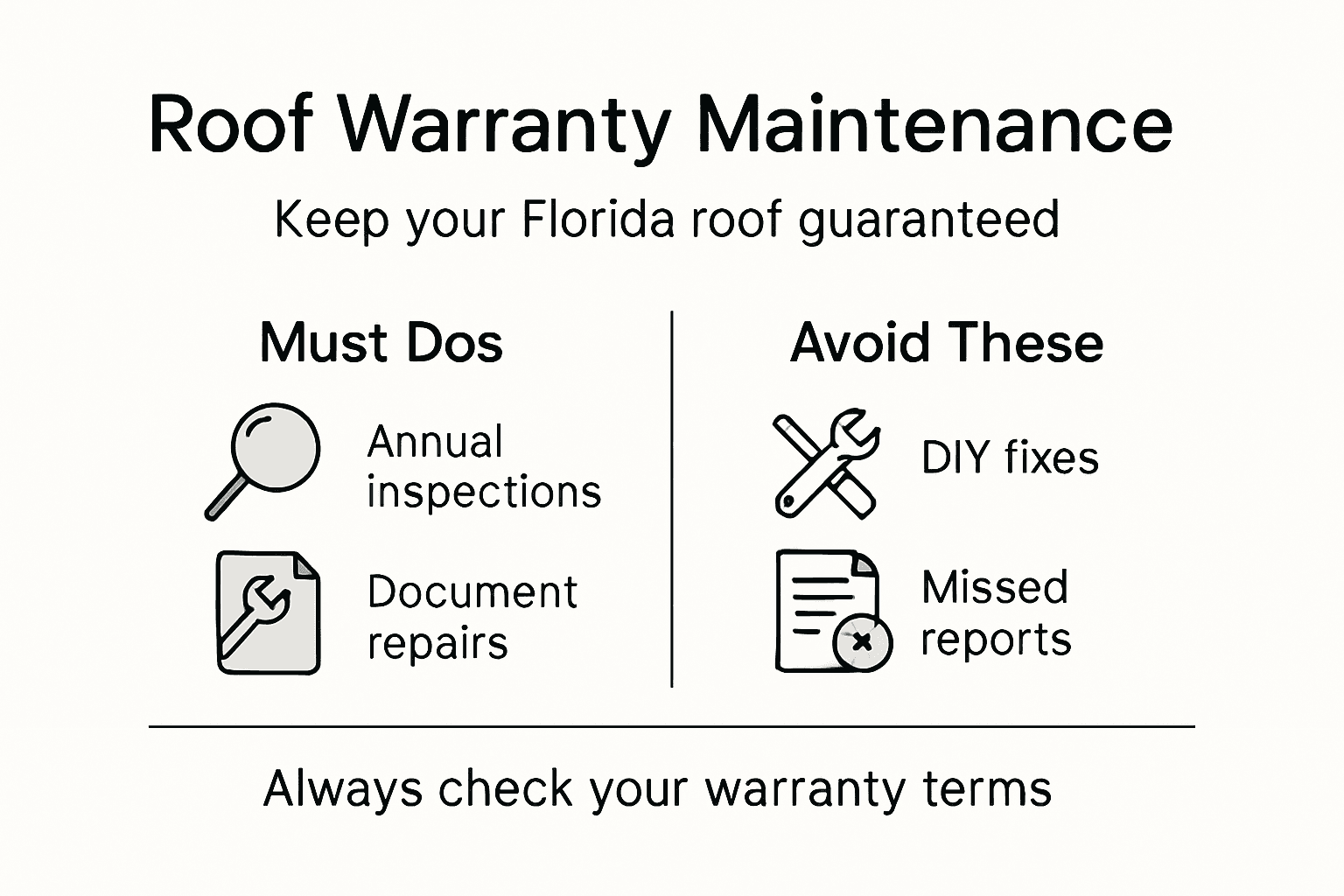
The table below summarizes key actions that help homeowners maintain roof warranty validity:
| Action | Impact on Warranty | Recommended Frequency |
|---|---|---|
| Professional Inspections | Prevents accidental voiding | Yearly |
| Maintenance Documentation | Confirms compliance | After each service |
| Manufacturer Guidelines | Keeps terms valid | As specified |
| Approved Repairs | Ensures coverage remains | When needed |
Pro tip: Create a dedicated folder to store all roof-related documentation, including inspection reports, repair receipts, and maintenance records to protect your warranty coverage.
Protect Your Florida Home with Trusted Roofing Guarantees from Thomas Roofing and Repair
Understanding the true scope of roofing guarantees is essential to avoid costly surprises and ensure your home is protected against material defects and workmanship errors. If you are a Florida homeowner worried about warranty exclusions or how maintenance might affect your roof’s coverage Thomas Roofing and Repair is here to help. Our experienced team specializes in providing comprehensive roofing solutions including expert inspections and repairs designed to keep your warranty valid and your roof secure.
Gain peace of mind knowing that:
- We use only manufacturer-approved materials and methods
- Our certified contractors adhere to Florida Building Code standards
- We document every step to support your warranty claims
Take control of your home’s roofing protection and avoid voiding your guarantee by trusting professionals who understand the complex Florida roofing landscape. Visit us today at Thomas Roofing and Repair and discover our full range of services designed for your roofing needs.

Are you ready to secure your roofing investment with a company that prioritizes integrity craftsmanship and dependable service? Contact us now for a free roof evaluation and let us help you navigate your roofing guarantee with confidence. Learn more about our offerings at Thomas Roofing and Repair and request your free estimate today.
Frequently Asked Questions
What is a roofing guarantee?
A roofing guarantee is a contractual agreement between a roofing professional and a property owner that outlines specific terms of coverage for future roofing issues, usually focusing on material defects and workmanship.
What common myths exist about roofing warranties?
Common myths include the belief that warranties cover all types of roof damage, that they are valid without maintenance, and that storm damage is automatically included, which is not true as most warranties have strict limitations and exclusions.
What types of roofing guarantees are available?
The main types of roofing guarantees include manufacturer material warranties, which cover defects in materials; workmanship warranties, which cover installation errors; and extended comprehensive warranties, which combine both material and workmanship coverage.
How can I keep my roofing warranty valid?
To maintain your roofing warranty, it’s essential to schedule regular professional inspections, document all maintenance activities, follow the manufacturer’s maintenance guidelines, and use authorized repair services.