
Most American families in Central Florida face the reality that roofs rarely last more than 20 years in this storm-prone region. When hurricane season arrives, an aging roof quickly becomes a major risk to your home’s safety and insurance eligibility. Understanding what roof replacement truly involves helps you protect your property, control costs, and take advantage of financing options available to Florida homeowners looking for affordable, storm-resistant solutions.
Table of Contents
- What Roof Replacement Really Means
- Leading Causes of Roof Failure in Florida
- Warning Signs Your Roof Needs Replacing
- Storm Damage and Insurance Considerations
- Costs, Financing, and Modern Options
Key Takeaways
| Point | Details |
|---|---|
| Comprehensive Approach to Roof Replacement | Roof replacement in Florida involves complete removal and installation of materials to withstand severe weather, addressing structural vulnerabilities. |
| Key Causes of Roof Failure | Wind damage and water infiltration are primary risks for roofs in Florida, necessitating proactive maintenance and strategic replacement planning. |
| Warning Signs for Replacement | Homeowners should monitor for persistent leaks, missing shingles, and signs of aging to determine when roof replacement is necessary. |
| Insurance and Financing Considerations | Understanding insurance implications and exploring state programs can significantly reduce the financial burden of roof replacement for homeowners. |
What Roof Replacement Really Means
Roof replacement is more than just swapping out old shingles. In Florida, it represents a critical process of protecting your home from severe weather conditions and potential structural damage. Defined by the Florida Building Code, roof replacement involves completely removing existing roofing assemblies down to the roof deck and installing new materials designed to withstand hurricane-force winds and intense rainfall.
The process goes beyond cosmetic upgrades. It’s a comprehensive structural intervention that addresses multiple home protection aspects. Proper roof replacement means installing new underlayment, strengthening attachment points, and using materials that meet current building codes. These updated standards ensure your roof can resist wind speeds up to 140 miles per hour and provide superior water resistance compared to older roofing systems.
For Florida homeowners, roof replacement represents an investment in home resilience. The International Residential Code mandates specific requirements for complete roof system removal, which means addressing potential hidden damage like rotted decking, compromised structural supports, or moisture intrusion points. This thorough approach prevents minor issues from escalating into major, costly repairs and protects your most significant asset.
Pro tip: Schedule a professional roof inspection before replacement to identify all potential structural vulnerabilities and develop a comprehensive restoration strategy.
Leading Causes of Roof Failure in Florida
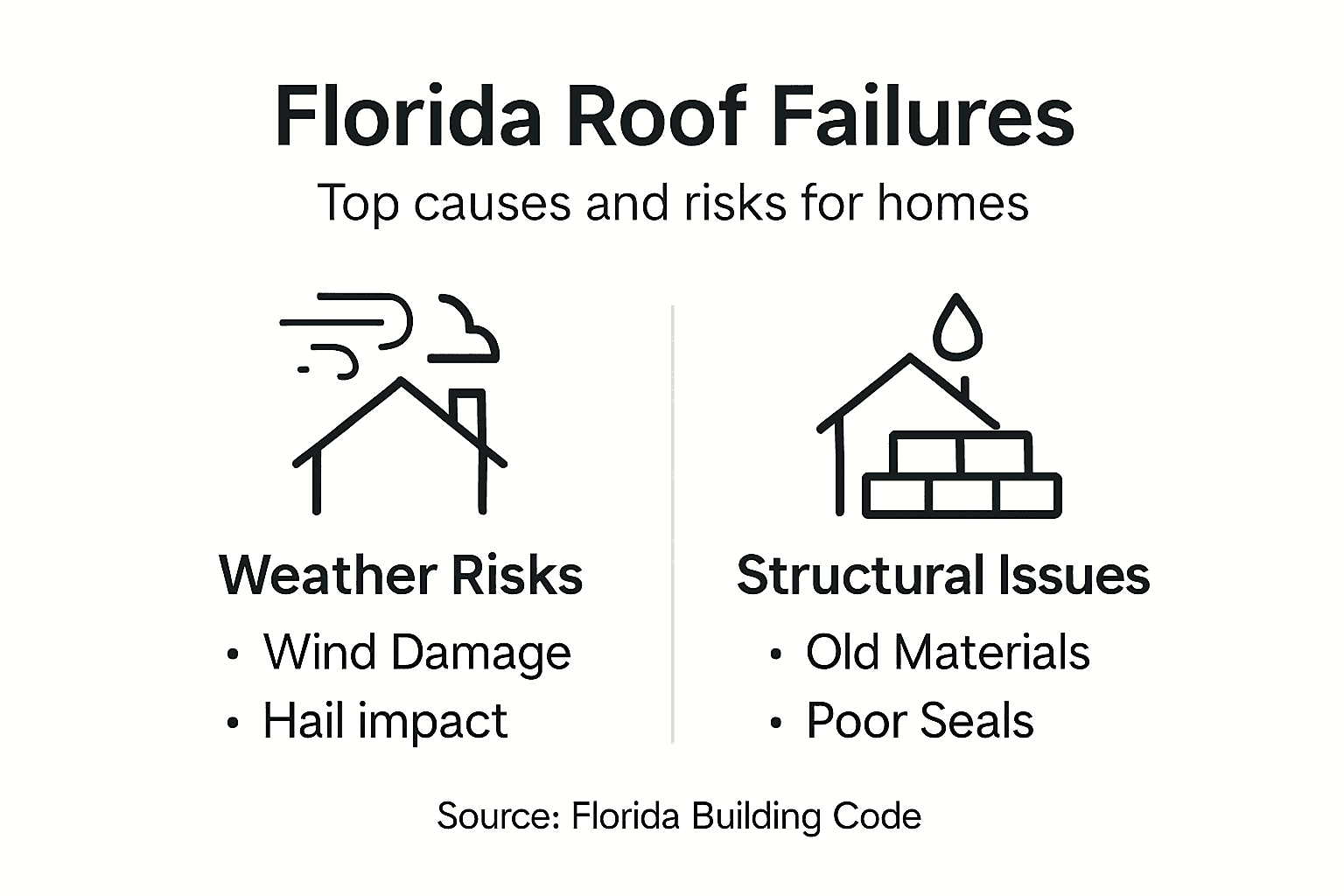
Florida homeowners face unique challenges when it comes to roof durability, with severe weather conditions presenting constant threats to structural integrity. Wind damage from hurricanes represents the most significant risk, capable of creating catastrophic failures that compromise entire roofing systems. Tropical storms can generate wind speeds exceeding 140 miles per hour, which can instantly tear off shingles, damage underlayment, and create structural vulnerabilities that lead to long-term deterioration.
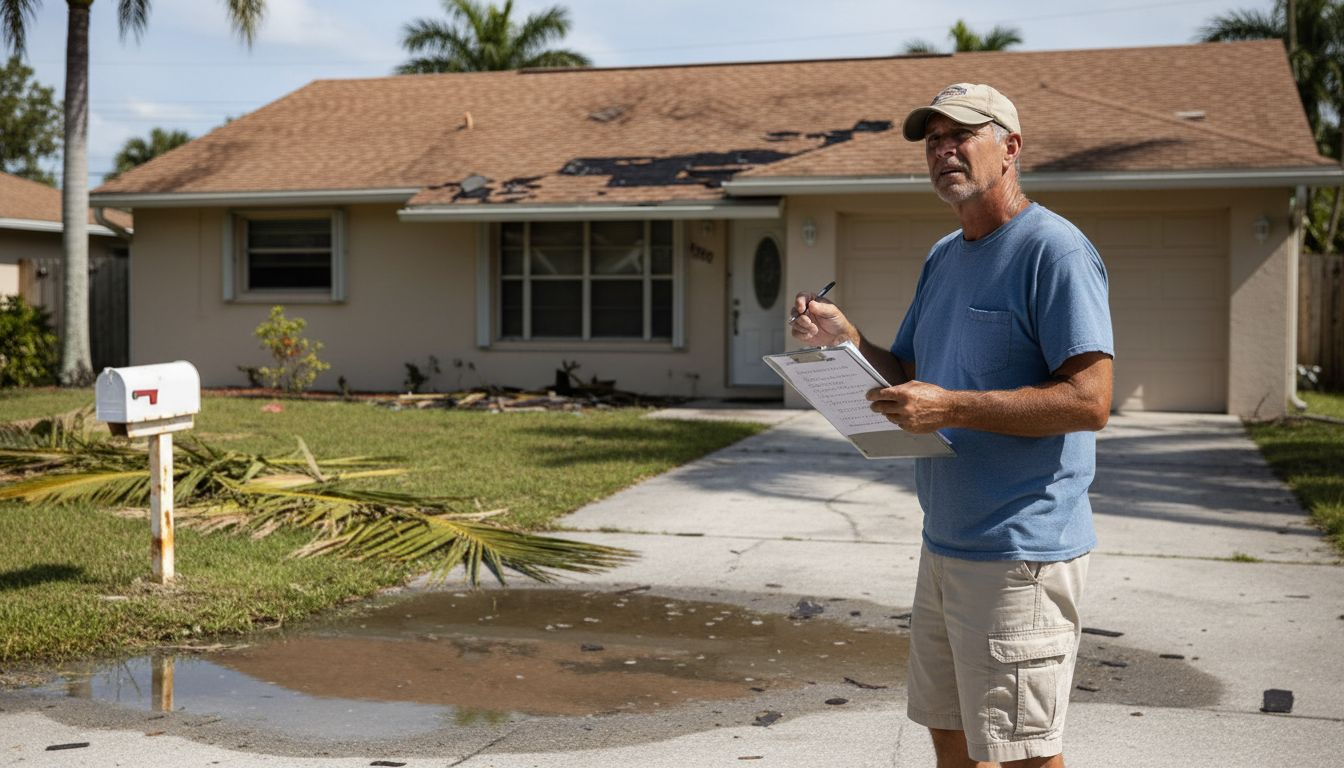
Beyond wind damage, water infiltration poses another critical threat to Florida roofs. Improper flashing, compromised seals, and inadequate underlayment can allow moisture to penetrate roofing layers, leading to extensive structural damage. The intense sunlight and high humidity accelerate material degradation, causing roofing components to break down faster than in more moderate climates. These environmental factors create a perfect storm of roof failure risks that require proactive maintenance and strategic replacement strategies.
The Florida Building Code identifies several key mechanisms of roof failure specific to the state’s challenging environment. Weak attachment points, deteriorating sealants, and outdated roofing materials dramatically increase vulnerability to wind uplift and water intrusion. Post-hurricane assessments consistently reveal that roofs with older installation techniques are exponentially more likely to experience complete system failure during severe weather events, highlighting the critical importance of modern construction standards and regular professional inspections.
Pro tip: Conduct annual professional roof inspections and maintain detailed maintenance records to identify potential vulnerabilities before they become catastrophic failures.
Warning Signs Your Roof Needs Replacing
Recognizing the early warning signs of roof deterioration can save Florida homeowners thousands in potential damage and emergency repairs. Persistent roof leaks represent the most critical indicator that your roof might be nearing the end of its functional lifespan. These leaks often manifest as water stains on ceilings, discolored patches around vents and chimneys, or mysterious moisture spots that appear after rainstorms, signaling potential structural compromise.
Visual indicators of roof failure extend beyond simple water damage. Homeowners should carefully inspect their roof for missing or curling shingles, significant granule loss from asphalt shingles, and visible sagging or deformation in the roofing structure. Florida’s intense sunlight and extreme weather conditions accelerate roof degradation, meaning that roofs in this region typically have shorter lifespans compared to homes in more temperate climates. Cracked or damaged flashing, exposed roof deck materials, and widespread moss or algae growth are additional red flags that professional replacement might be imminent.
Age remains a critical factor in determining roof replacement necessity. Most residential roofing systems have a maximum effective lifespan of 20-25 years, depending on installation quality and maintenance history. Professional roofing inspectors recommend comprehensive evaluations every few years to assess structural integrity, especially in regions prone to severe weather events. Roof inspection experts emphasize that proactive replacement can prevent catastrophic failures during hurricane season, potentially saving homeowners from extensive and expensive secondary damage to their property’s interior and structural components.
Pro tip: Schedule a professional roof inspection immediately if you notice multiple warning signs, and request a comprehensive assessment of your roof’s overall condition and remaining functional lifespan.
Here are common roof inspection findings and their likely implications for replacement decisions in Florida:
| Inspection Finding | Likely Implication | Recommended Action |
|---|---|---|
| Missing shingles | Increased water intrusion risk | Schedule prompt replacement |
| Sagging roof deck | Possible structural failure | Full system evaluation needed |
| Widespread algae/moss | Accelerated material decay | Clean and assess integrity |
| Roof age over 20 years | Diminished storm protection | Consider proactive replacement |
Storm Damage and Insurance Considerations
Navigating insurance coverage for storm-related roof damage in Florida requires a comprehensive understanding of complex policy requirements and state-specific regulations. Florida building codes mandate stringent documentation and repair standards that directly impact insurance claims, making professional assessment critical for homeowners facing potential storm damage. Insurers closely scrutinize the condition, age, and maintenance history of roofing systems when processing claims, with special attention to wind and water damage mitigation.
Insurance challenges for Florida homeowners are particularly nuanced, with carrier policies often imposing strict age-related restrictions on roof coverage. Most insurance providers now implement aggressive underwriting guidelines that limit coverage for roofs older than 10-15 years, potentially reducing claim payouts to actual cash value rather than full replacement costs. Homeowners must proactively maintain detailed maintenance records, complete professional inspections, and ensure their roofing systems meet current building code requirements to maximize potential insurance support during storm events.
Insurance underwriting guidelines create significant financial implications for Florida residents. Roofing systems that fail to meet current wind resistance standards or show signs of significant wear can result in higher deductibles, reduced coverage, or even policy cancellation. Proactive roof maintenance, timely replacements, and working with certified roofing professionals who understand local insurance requirements become essential strategies for protecting both the home’s structural integrity and its insurability.
Pro tip: Document every roof inspection, repair, and maintenance activity with dated photographs and professional reports to create a comprehensive maintenance history that can support future insurance claims.
Costs, Financing, and Modern Options
Replacing a roof in Florida involves sophisticated financial considerations beyond simple material and labor costs. Modern roofing solutions now integrate advanced technologies that significantly impact upfront expenses while providing long-term value through enhanced durability and energy efficiency. Homeowners must consider not just immediate replacement costs, but potential insurance premium reductions, storm damage prevention, and increased property value that come with contemporary roofing systems.
Financing options have expanded dramatically for Florida homeowners seeking roof replacements. State programs like the ‘My Safe Florida Home’ initiative offer critical financial support, providing matching grants up to $10,000 for storm mitigation upgrades. These programs recognize that investing in high-quality roofing is not just a home improvement, but a strategic approach to reducing overall property risk. Modern roofing materials now incorporate wind-resistant technologies, reflective surfaces that reduce cooling costs, and sustainable components that can qualify for additional tax incentives and insurance discounts.
State-sponsored home protection programs have created unprecedented opportunities for homeowners to upgrade their roofing systems with minimal financial strain. These initiatives recognize that robust roofing is a critical component of Florida’s overall disaster preparedness strategy. Advanced roofing options now include impact-resistant shingles, metal roofing systems designed to withstand hurricane-force winds, and solar-integrated roofing technologies that can generate electricity while providing superior protection against environmental challenges.
Here’s how Florida’s main roof replacement options stack up for hurricane resilience and insurance compliance:
| Roofing Material Type | Hurricane Resistance | Impact on Insurance | Typical Lifespan |
|---|---|---|---|
| Asphalt Shingles | Meets wind code, less durable | May need frequent inspections | 15-20 years |
| Metal Roofing | Superior wind resistance | Often preferred by insurers | 40-70 years |
| Impact-Resistant Shingles | Enhanced storm protection | May qualify for discounts | 20-30 years |
| Solar Integrated | Advanced wind and water resistance | May attract premium discounts | 25-30 years |
Pro tip: Research all available state and federal grants before financing a roof replacement, as multiple funding sources might significantly reduce your out-of-pocket expenses.
Protect Your Florida Home with Expert Roof Replacement Services
Facing Florida’s harsh weather means your roof must do more than just stand tall. The article highlights how crucial proper roof replacement is for resisting hurricane-force winds and preventing water damage that can lead to costly repairs. If you notice warning signs like missing shingles or leaks it is vital to act quickly to maintain your home’s safety and structural integrity. Don’t let hidden damage turn into expensive emergencies.
At Thomas Roofing and Repair we specialize in residential and commercial roof replacement throughout Central Florida including Brevard, Volusia, and Orange counties. Our team understands Florida Building Code requirements and storm damage challenges. We offer comprehensive roof inspections, expert replacements using modern hurricane-resistant materials, and efficient storm damage repair tailored to your needs. When you choose us you get dependability, integrity, and craftsmanship you can trust for long-lasting protection.
Wondering if your roof needs replacement before the next storm hits

Schedule a professional roof inspection today with Thomas Roofing and Repair. Protect your home from severe weather risks and maximize your insurance benefits by ensuring your roof meets current standards. Reach out now for a free estimate and take the first step toward peace of mind this hurricane season.
Frequently Asked Questions
What does roof replacement involve?
Roof replacement means completely removing the existing roofing materials down to the roof deck and installing new materials that meet current building codes and can withstand severe weather conditions.
Why is roof replacement important for Florida homeowners?
Replacing a roof is essential for protecting homes from severe weather conditions, preventing potential structural damage, and ensuring compliance with updated building codes that enhance wind resistance and water protection.
How can I identify if my roof needs replacement?
Look for signs such as persistent leaks, missing or curling shingles, widespread algae or moss growth, and significant sagging in the roof structure. Age is also a factor; roofs older than 20-25 years may need replacement.
What are the benefits of modern roofing materials?
Modern roofing materials offer enhanced durability, energy efficiency, and wind-resistant technologies, which can reduce insurance premiums and increase property value. They are also better equipped to handle the unique challenges posed by Florida’s climate.
Recommended
- Roof Replacement in Central Florida | Thomas Roofing
- Residential Roofing Orlando FL
- Roofing Services Volusia FL
- Roofing Services Brevard FL
- Central Florida Shingle Roof Replacement | Expert Asphalt Roofing | Thomas Roofing & Repair
- Flat Roof Replacement Near You | Central Florida | EPDM, TPO & Metal Roofing ExpertsFlat Roof Replacement Near You | Central Florida | EPDM, TPO & Metal Roofing Experts
- Water Heater Replacement Services and Installation Process – Home Therapist Cooling, Heating, and Plumbing