
Storm damage and aging roofs cost American homeowners billions every year. For Central Florida residents, unpredictable weather makes roof financing a crucial concern, not just a routine home upgrade. Choosing the right plan can mean the difference between lasting protection and costly repairs. This article breaks down common misconceptions and essentials, giving you the clarity to find affordable, expert-backed solutions that truly safeguard your home.
Table of Contents
- Roof Financing Basics And Common Misconceptions
- Major Types Of Roof Financing Options
- How Roof Loans And Payment Plans Work
- Eligibility And Application Requirements In Florida
- Risks, Costs, And Choosing The Right Plan
Key Takeaways
| Point | Details |
|---|---|
| Understanding Roof Financing | Roof financing involves specialized options tailored to regional weather and material costs, differentiating it from standard home improvement loans. |
| Diverse Financing Options | Homeowners should explore various financing types, like HELOCs, personal loans, and specialized roofing loans, each with distinct terms and interest rates. |
| Application Preparedness | Gathering comprehensive financial documentation upfront can expedite the roof loan application process and improve approval chances. |
| Cost Considerations | Evaluating long-term project costs, including interest rates and material quality, is crucial for making financially sound roof financing decisions. |
Roof Financing Basics and Common Misconceptions
Homeowners in Central Florida face unique challenges when considering roof financing, especially given the region’s severe weather conditions and storm risks. Understanding the fundamental principles of roof financing can help you make informed decisions about protecting your most significant investment. Construction financing fundamentals reveal that roof replacement is not just an expense, but a strategic investment in your property’s long-term value and structural integrity.
Many homeowners mistakenly believe that roof financing is similar to standard home improvement loans, but the reality is far more nuanced. Roofing projects require specialized financing options that account for regional weather challenges, material costs, and potential insurance interactions. Unlike general home renovations, roof financing often involves more complex underwriting processes that consider factors like local building codes, potential storm damage history, and the specific roofing materials required for Central Florida’s unique climate.
The most common misconception is that all roof financing options are identical. In reality, homeowners have multiple paths, including home equity lines of credit, personal loans, manufacturer financing programs, and specialized roofing loans. Each option carries different interest rates, repayment terms, and qualification requirements. Consumer Reports highlights that understanding these distinctions can save homeowners thousands of dollars and prevent potential financial strain.
Pro tip: Before committing to any roof financing option, request detailed written estimates from multiple providers and carefully compare not just the total cost, but the long-term financial implications of each financing strategy.
Major Types of Roof Financing Options
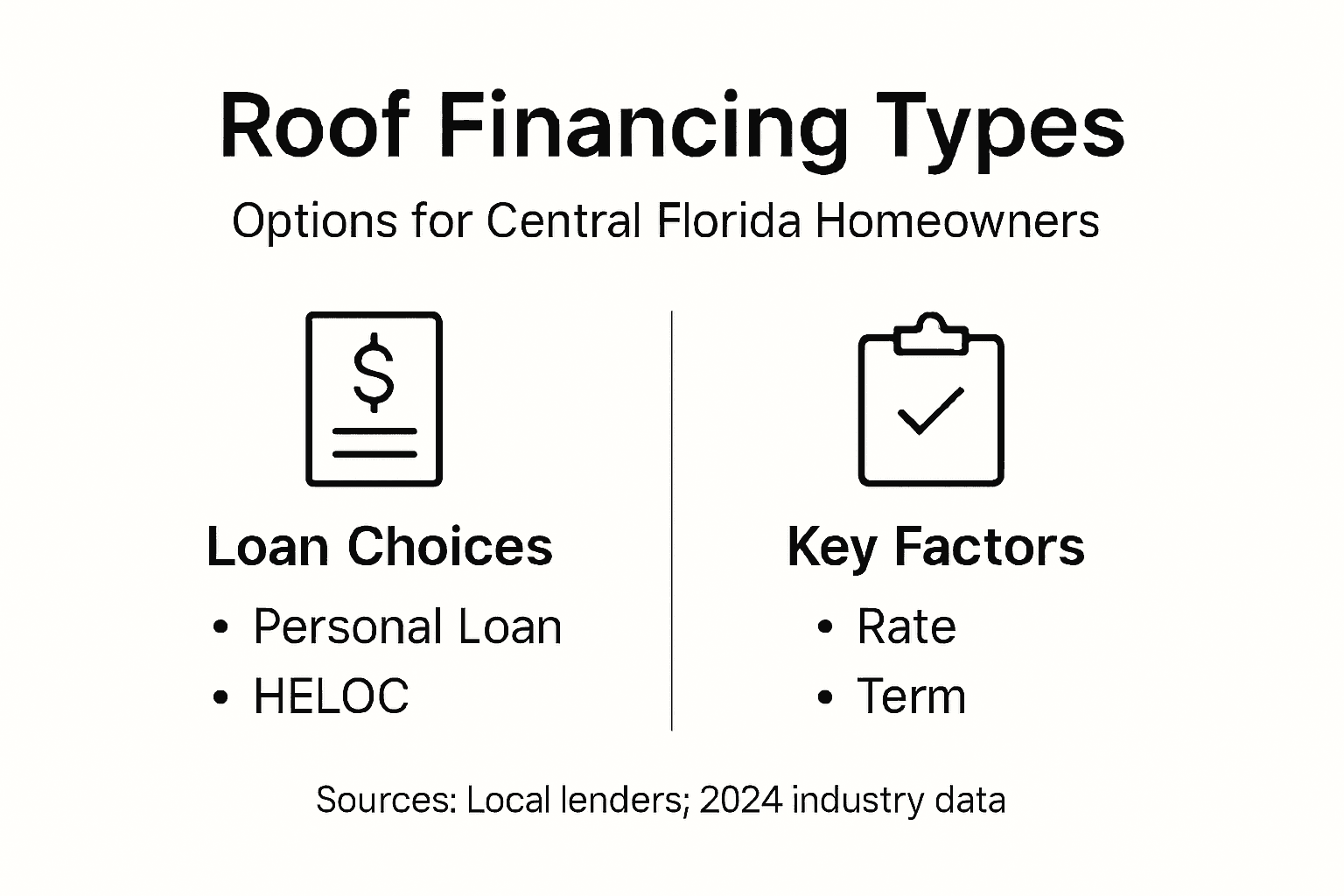
Central Florida homeowners have several strategic financing pathways for roof replacement and repair, each with unique advantages and considerations. Financial incentives for roofing projects vary widely, offering homeowners multiple options to manage their investment. The most common financing approaches include personal loans, home equity lines of credit, manufacturer financing programs, and specialized roofing loans designed to address specific regional needs.
Personal loans represent a flexible financing option that doesn’t require home equity. These unsecured loans typically offer faster approval processes and can cover full project costs without additional collateral. Home equity lines of credit (HELOC) provide another popular alternative, allowing homeowners to borrow against their property’s existing equity, often at lower interest rates. Manufacturer financing programs can be particularly attractive, as they sometimes offer promotional rates or specialized terms for specific roofing materials and installations.
Specialized roofing loans have emerged as a targeted solution for homeowners facing urgent roof replacement needs. National Energy Improvement Fund financing demonstrates how these programs can provide comprehensive coverage with favorable terms, including fixed-rate installment loans that cover 100% of project costs. These options often come with unique benefits like no prepayment penalties, flexible repayment terms, and streamlined approval processes specifically designed for home improvement projects.
Pro tip: Always compare multiple financing options, carefully reviewing interest rates, total loan costs, repayment terms, and potential tax implications before selecting a roof financing solution.
Here’s a comparison of common roof financing options available to Central Florida homeowners:
| Financing Type | Typical Interest Rate | Approval Speed | Key Considerations |
|---|---|---|---|
| Personal Loan | Moderate to high | Fast (days) | No home equity needed |
| Home Equity Line of Credit | Low to moderate | Moderate (weeks) | Uses home as collateral |
| Manufacturer Financing | Promotional/variable | Fast or moderate | Tied to specific materials |
| Specialized Roofing Loan | Fixed, often lower | Fast (days) | Covers full project cost |
How Roof Loans and Payment Plans Work
Roof financing in Central Florida involves a complex landscape of loan structures designed to help homeowners manage significant roofing investments. Government housing repair programs offer unique solutions that can dramatically reduce the financial burden of roof replacement. These specialized financing options typically involve fixed-rate loans with specific eligibility requirements, repayment terms, and maximum funding amounts tailored to different homeowner circumstances.
Most roof loans operate through several standard mechanisms. Unsecured personal loans provide quick funding without requiring home equity, featuring straightforward application processes and fixed monthly payments. Home equity loans offer lower interest rates by using property value as collateral, allowing homeowners to borrow larger amounts with longer repayment periods. Manufacturer-specific financing programs often include promotional rates or special terms directly tied to roofing material purchases, creating additional flexibility for Central Florida residents seeking comprehensive roof replacement solutions.

The application process for roof loans involves multiple verification steps, including credit checks, income documentation, and project cost estimates. Government loan assistance demonstrates that homeowners can access various financing pathways, from low-interest federal programs to local credit union offerings. Lenders typically evaluate factors such as credit score, debt-to-income ratio, project scope, and homeowner’s ability to make consistent monthly payments when determining loan approval and terms.
Pro tip: Gather all financial documentation, including tax returns, proof of income, and detailed roofing project estimates before applying for any roof financing to streamline the approval process and improve your chances of securing favorable terms.
Eligibility and Application Requirements in Florida
Navigating roof financing eligibility in Central Florida requires understanding specific local and state requirements that can significantly impact homeowners’ ability to secure funding. Safe Florida Home Program guidelines demonstrate the complexity of qualifying for roofing assistance, with detailed criteria that consider factors like property location, homeowner income, insurance status, and existing home conditions. These requirements are designed to ensure that financial support reaches those most in need while maintaining program integrity and effectiveness.
Most roof financing programs in Florida establish multi-tiered eligibility criteria. Homeowners typically must provide proof of property ownership, demonstrate stable income, maintain acceptable credit scores, and show the necessity of roofing improvements. Income thresholds vary by program, with many targeting low to moderate-income households. Some specialized initiatives, such as those offered by local nonprofits, have additional requirements like minimum years of property ownership, primary residence status, and compliance with specific geographic restrictions.
Habitat for Humanity roof repair assistance illustrates the detailed application process common to many Florida roofing support programs. The typical application involves several key stages: initial pre-screening, comprehensive documentation submission, home inspection, project assessment, and final approval. Applicants must typically prepare documents including property deed, recent tax returns, proof of income, current insurance information, and detailed estimates of proposed roofing work. Credit checks and financial background reviews are standard components of most application processes, helping ensure responsible allocation of limited assistance resources.
Pro tip: Compile a comprehensive application folder in advance, including all financial documents, property records, and repair estimates, to streamline the eligibility review and increase your chances of quick program approval.
Risks, Costs, and Choosing the Right Plan
Financing a roof replacement in Central Florida involves carefully balancing multiple financial risks and strategic considerations. Construction financing strategies reveal complex decision-making processes that homeowners must navigate to protect their investment. Key risks include potential interest rate fluctuations, unexpected project cost overruns, and long-term financial commitments that can strain household budgets if not carefully planned.
Understanding the true cost of roof financing extends beyond simple loan terms. Homeowners must consider multiple factors, including material durability, potential energy efficiency savings, and long-term maintenance expenses. Roofing investment analysis demonstrates that cheaper financing options are not always the most cost-effective in the long run. Critical considerations include comparing total loan costs, evaluating material warranties, assessing potential insurance benefits, and understanding how different roofing materials impact future maintenance expenses.
Choosing the right financing plan requires a comprehensive approach that goes beyond simple interest rate comparisons. Homeowners should evaluate their financial stability, project urgency, and long-term home improvement goals. Important factors include loan term flexibility, prepayment options, potential tax implications, and alignment with overall household financial planning. Some financing options offer more favorable terms for energy-efficient roofing upgrades, providing additional financial incentives for environmentally conscious homeowners in Central Florida.
The following table summarizes major risk factors and cost drivers when financing a roof replacement:
| Factor | Description | Impact on Project Cost |
|---|---|---|
| Interest Rate Fluctuations | Changes in loan interest terms | Affects total repayment amount |
| Material Quality | Durability and warranty of roofing | Influences long-term expenses |
| Project Urgency | Need for immediate repairs | May increase financing costs |
| Insurance Interaction | Potential for claim offsets | Can reduce out-of-pocket cost |
Pro tip: Create a comprehensive spreadsheet comparing total project costs, including financing expenses, material durability, and potential long-term savings before making a final decision on roof financing.
Secure Your Central Florida Roof Today with Trusted Financing Solutions
Facing the challenge of financing a roof replacement in Central Florida can feel overwhelming. From understanding complex loan options to navigating eligibility requirements and unforeseen costs, homeowners often worry about making the right financial decisions. If you are concerned about finding affordable, transparent, and reliable roof financing options tailored to your unique needs—Thomas Roofing and Repair is here to help. We specialize in roofing services throughout Brevard, Volusia, and Orange counties, offering expert guidance to simplify your roofing project from initial inspection to completion.
Let us take the stress out of roofing finance. We understand concepts like home equity loans, manufacturer financing, and specialized roof loans that Central Florida residents frequently encounter. Our team works closely with you to compare options, ensuring you choose the ideal payment plan that fits your budget and timeline. Experience confident roof replacement with a company known for integrity and quality craftsmanship.
Explore our services at Thomas Roofing and Repair to discover how we support your roofing needs and financing decisions. Ready for your free estimate or to discuss customized financing? Start your roofing journey now.

Get a dependable roof with financing designed around you. Visit Thomas Roofing and Repair today or request a free estimate to protect your home against Central Florida’s storms with confidence.
Frequently Asked Questions
What are the main types of roof financing options available?
Homeowners typically have several financing options for roof replacement, including personal loans, home equity lines of credit (HELOC), manufacturer financing programs, and specialized roofing loans. Each option has different terms, interest rates, and eligibility requirements.
How does a home equity line of credit (HELOC) work for roof financing?
A HELOC allows homeowners to borrow against the equity in their property, often offering lower interest rates compared to other financing options. It works like a credit card, where you can withdraw funds as needed for your roofing project up to a certain limit based on your home’s value.
What should I consider when choosing a roof financing plan?
When selecting a financing plan, consider factors such as interest rates, repayment terms, total loan costs, and potential future maintenance expenses. It’s essential to evaluate your financial stability and long-term goals to find the best option for you.
What is the application process for roof financing?
The application process typically involves verifying your income, credit score, and the estimated cost of the roofing project. Gather necessary documentation, such as tax returns and project estimates, to facilitate a smoother approval process.