
Standing on your porch after a heavy Florida afternoon storm, you notice a dark stain creeping across your ceiling. Flat roofs in Central Florida face constant threats from UV exposure, pooling water, and frequent storms, making leaks and membrane damage especially common. Flat roof repair demands specialized knowledge and a proactive approach to protect your home from escalating structural concerns. This guide helps you understand the issues unique to local flat roofs and outlines what you should expect when seeking expert solutions.
Table of Contents
- Defining Flat Roof Repair And Common Issues
- Flat Roof Types Found In Central Florida
- How Flat Roof Repairs Are Performed
- Recognizing Signs That Repairs Are Needed
- Repair Costs, Risks, And Expert Help
Key Takeaways
| Point | Details |
|---|---|
| Importance of Professional Inspections | Schedule flat roof inspections at least twice a year to catch potential issues early. |
| Varied Roof Types | Choose the right flat roof type based on specific building requirements and the Central Florida climate. |
| Consequences of DIY Repairs | Amateur repairs can lead to higher long-term costs and potentially void warranties; professional services are recommended. |
| Signs of Trouble | Look for warning signs such as water stains and membrane deterioration to address repairs before they escalate. |
Defining Flat Roof Repair and Common Issues
Flat roofs represent a unique architectural feature in Central Florida homes, requiring specialized maintenance and repair strategies. Unlike sloped roofs, flat roofing systems demand precise attention to prevent water accumulation and structural damage. Flat roof repairs involve addressing multiple potential issues that emerge from consistent weather exposure and structural stress.
Central Florida’s intense climate creates specific challenges for flat roof integrity. Typical problems include membrane degradation, seam failures, punctures, and persistent water ponding. UV radiation rapidly breaks down roofing materials, causing microscopic cracks and weakening the protective surface. Professional roofers understand these nuanced vulnerabilities and can implement targeted repair techniques that extend roof lifespan.
The primary repair approaches for flat roofs focus on restoring waterproof membranes and ensuring proper drainage. Technicians typically inspect for signs of material shrinkage, surface cracking, and potential leak points. Advanced repair methods might involve partial membrane replacement, specialized sealants, or complete system restoration depending on the extent of damage. Homeowners should prioritize professional assessment to prevent minor issues from escalating into costly structural repairs.
Pro tip: Schedule professional flat roof inspections at least twice annually to catch potential issues before they become significant problems.
Flat Roof Types Found in Central Florida
Central Florida’s unique climate demands specialized roofing solutions, with several distinct flat roof types designed to withstand intense sunlight, heavy rainfall, and potential hurricane conditions. Flat roofing systems in this region typically include four primary configurations: built-up roofs (BUR), modified bitumen, thermoset, and thermoplastic membranes.
Built-up roofs (BUR) represent the traditional approach, consisting of multiple layers of asphalt and reinforcing fabrics. These roofs provide excellent durability and are particularly effective in managing UV exposure. Modified bitumen systems offer enhanced flexibility, featuring polymer-modified asphalt sheets that create a more resilient membrane. Thermoset roofs, such as EPDM (ethylene propylene diene monomer), provide superior resistance to weathering and temperature fluctuations, making them ideal for Central Florida’s dynamic environmental conditions.
Thermoplastic membranes like PVC and TPO have gained significant popularity due to their exceptional heat-reflective properties and lightweight construction. These materials offer excellent wind uplift resistance, crucial for protecting structures during hurricane seasons. Each roofing type presents unique advantages, with selection depending on specific building requirements, budget constraints, and environmental considerations. Professional roofing specialists can evaluate individual property needs to recommend the most suitable flat roof system.
Here’s how the four main flat roof types in Central Florida differ by major characteristics:
| Roof Type | Durability in Heat | Flexibility | Wind Resistance |
|---|---|---|---|
| Built-up (BUR) | Excellent; asphalt resists UV | Moderate | Good; multiple layers add strength |
| Modified Bitumen | Very good; polymer-modified | High | Good for heavy rain and storms |
| Thermoset (EPDM) | Superior; resists weathering | Exceptional | Moderate; lighter than PVC/TPO |
| Thermoplastic (PVC/TPO) | Outstanding; reflects sunlight | Moderate | Excellent for hurricanes |
Pro tip: Consider roof membrane color and reflectivity when selecting a flat roof system to maximize energy efficiency and reduce cooling costs in Central Florida’s intense heat.
How Flat Roof Repairs Are Performed
Flat roof repairs require a meticulous and systematic approach tailored to the specific challenges of Central Florida’s demanding climate. Roof repair techniques begin with a comprehensive inspection to identify the precise extent and nature of damage, whether from storm impact, UV degradation, or structural wear.
The repair process typically involves multiple critical stages. First, technicians thoroughly clean the damaged area, removing debris, dirt, and any loose or deteriorating roofing materials. They then carefully assess the underlying substrate, checking for structural integrity and potential water damage. Depending on the roof type and damage extent, repairs might involve applying specialized roofing cement, installing patch membranes, or replacing entire sections of damaged roofing material. Advanced diagnostic tools like infrared cameras help detect hidden moisture and potential weak points that might not be visible during initial surface inspections.
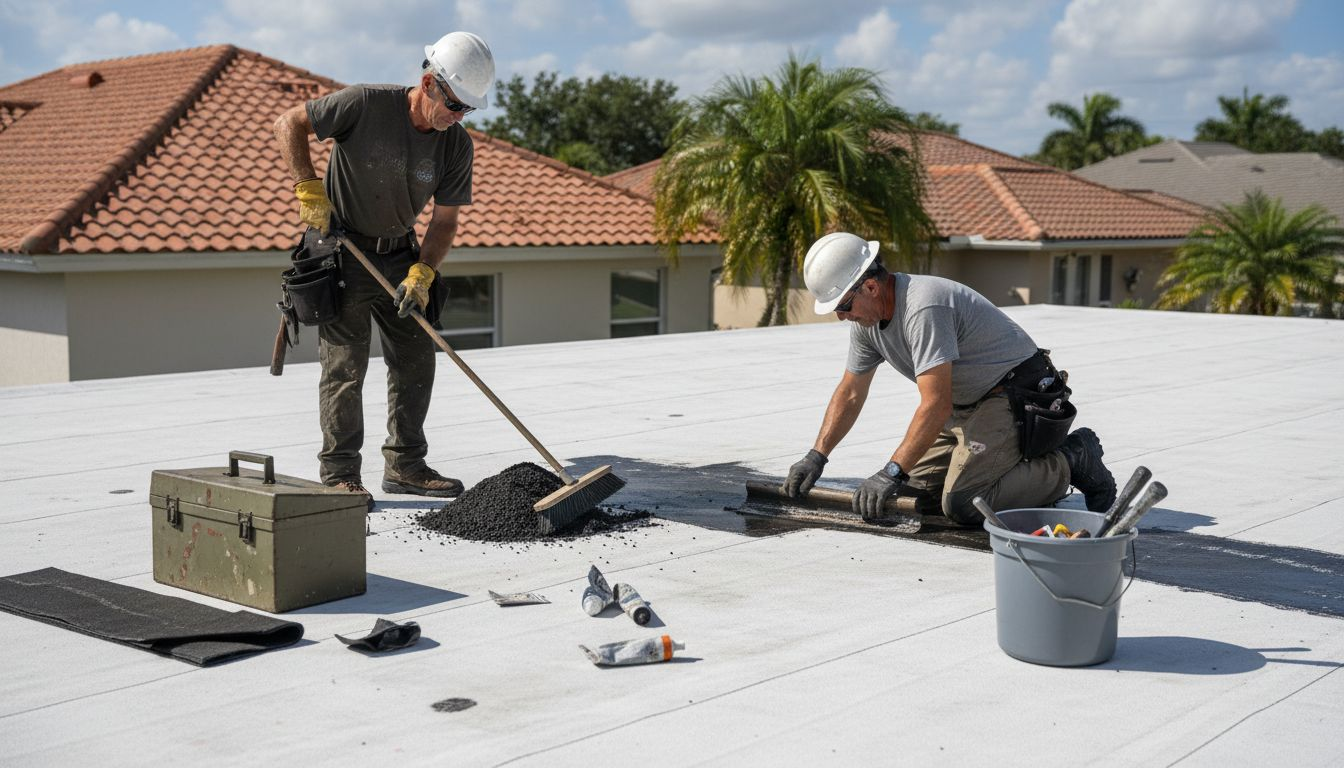
Professional roofers utilize different repair strategies based on the specific roofing membrane type. For built-up roofs, this might involve resealing layers and applying additional protective coatings. Thermoplastic and EPDM roofs often require precise heat-welding techniques or specialized adhesive patches to ensure a watertight seal. The goal is always to restore the roof’s waterproofing capabilities while maintaining its structural strength and extending its overall service life. Proper repair work not only addresses immediate damage but also prevents potential future issues that could lead to more extensive and expensive repairs.
Pro tip: Document every roof repair with photographs and professional inspection reports to maintain a comprehensive maintenance history and support future warranty claims.
Recognizing Signs That Repairs Are Needed
Central Florida homeowners must remain vigilant about their flat roofs, as early detection of damage can prevent costly structural issues. Common roof problems manifest through several critical warning signs that demand immediate professional attention. Water stains on interior ceilings, visible membrane deterioration, and persistent moisture are red flags indicating potential roof system failures.
Visual inspection reveals multiple indicators of needed repairs. Ponding water represents a significant concern, where water accumulates in distinctive pools instead of draining properly, signaling potential structural misalignment or membrane damage. Blistering or bubbling on the roof surface suggests moisture trapped beneath the membrane, which can compromise the roof’s waterproofing capabilities. Cracks, especially those wider than hairline fractures, indicate material stress and potential imminent failure. Homeowners should also watch for signs of mold growth, discoloration around roof edges, or unexplained increases in interior humidity levels.
Some less obvious signs require professional assessment. Slight sagging, seemingly minor membrane separations, or subtle changes in roof texture can signal underlying structural issues. Advanced diagnostic techniques like infrared scanning can detect hidden moisture pockets and potential weak points not visible during standard visual inspections. Flashing deterioration around roof penetrations such as vents, chimneys, or HVAC units often signals water intrusion risks that might not be immediately apparent to untrained observers.
Pro tip: Conduct a visual roof inspection every six months and after significant storm events to catch potential issues before they escalate into major repair projects.
Repair Costs, Risks, and Expert Help
Flat roof repairs in Central Florida represent a complex financial and technical challenge that requires careful consideration of potential risks and long-term investment strategies. Roof repair complexities demonstrate that seemingly minor damage can quickly escalate into substantial structural problems if not addressed professionally.
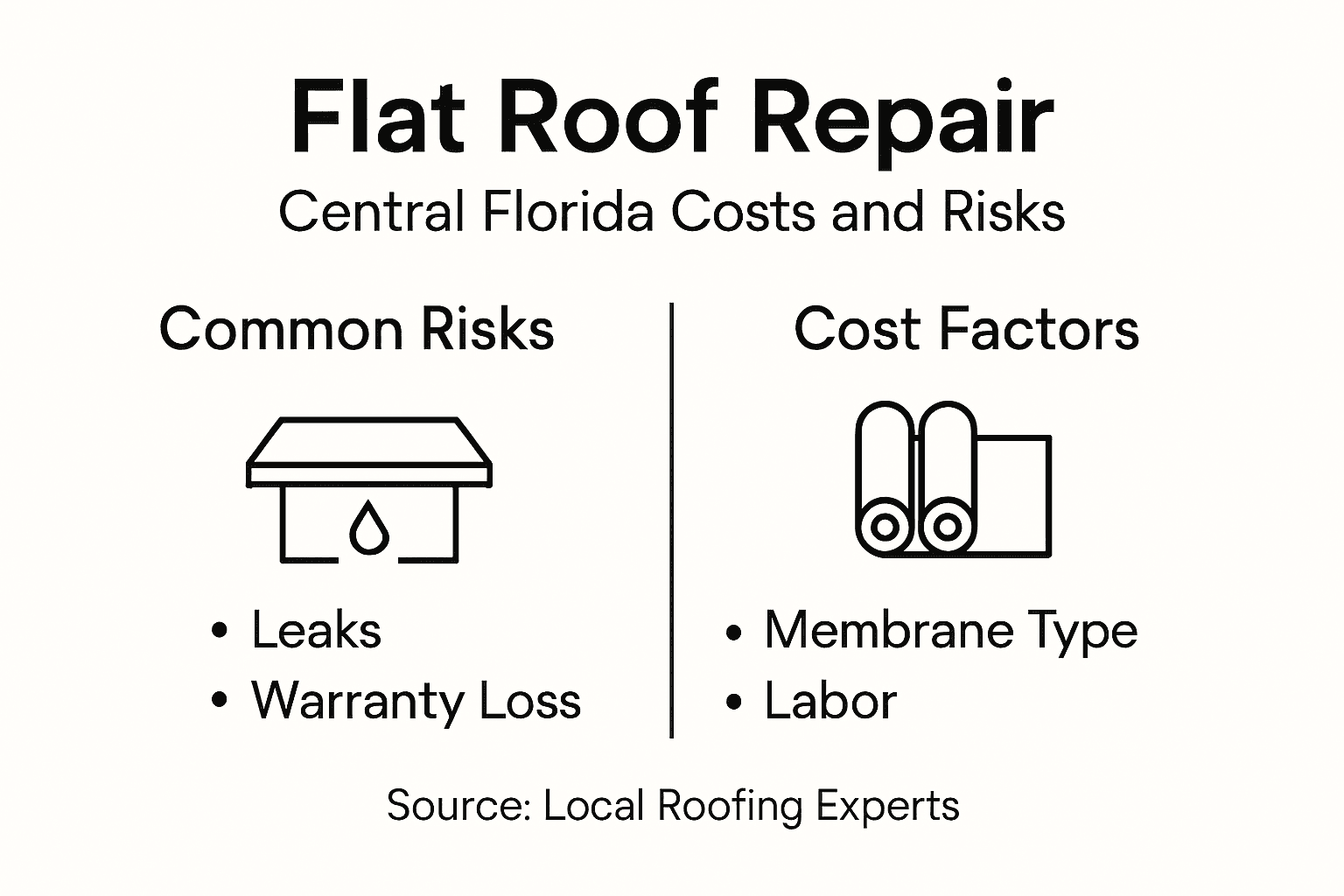
Cost considerations extend far beyond immediate repair expenses. DIY attempts often lead to more expensive future repairs due to improper techniques, incompatible material selection, and overlooked structural weaknesses. Professional roofing experts typically charge between $300 and $1,500 for flat roof repairs, depending on damage extent, roof size, and required materials. While these costs might seem significant, they pale in comparison to potential expenses from water damage, structural deterioration, and complete roof replacement that can result from inadequate maintenance.
Flat roof repair cost and risk levels in Central Florida broken down:
| Repair Approach | Typical Cost Range | Long-Term Risk | Warranty Impact |
|---|---|---|---|
| Professional Service | $300 – $1,500 | Low; meets code/warranty | Usually strong |
| DIY Attempt | $100 – $400 | High; improper repair risk | Often voided |
| Neglect/Missed Issues | None initially | Very high; major damage possible | No coverage |
Risks associated with amateur roof repairs include compromised waterproofing, voided manufacturer warranties, potential building code violations, and increased likelihood of recurring damage. Certified roofing professionals bring specialized knowledge of Central Florida’s unique environmental challenges, understanding how intense sunlight, hurricane-force winds, and persistent moisture impact roofing systems. They utilize advanced diagnostic tools, provide comprehensive warranties, and ensure repairs meet stringent local building regulations. Their expertise helps homeowners make informed decisions that protect both their property’s structural integrity and long-term financial investment.
Pro tip: Request detailed written estimates from multiple certified roofing professionals, comparing not just total cost but also warranty coverage and specific repair methodologies.
Protect Your Central Florida Home with Expert Flat Roof Repairs
Flat roofs in Central Florida face unique challenges like intense UV exposure, heavy rains, and hurricane winds that can cause membrane damage, ponding water, and leaks. If you notice cracked membranes, blistering, or interior water stains, it is critical to act quickly to avoid costly structural damage. Our team at Thomas Roofing and Repair understands these specific vulnerabilities and uses advanced repair methods tailored to built-up, modified bitumen, thermoset, and thermoplastic roofs. We focus on restoring your roof’s waterproof integrity while extending its lifespan.

Don’t wait until minor issues become expensive emergencies. Rely on trusted experts for comprehensive flat roof repair who prioritize quality, dependability, and local expertise. Schedule your free roof inspection today and benefit from professional repairs that protect your investment now and into the future. Visit Thomas Roofing and Repair to request your service or learn more about our tailored roofing solutions.
Frequently Asked Questions
What are common issues that require flat roof repair?
Common issues include membrane degradation, seam failures, punctures, and water ponding, often caused by weather exposure and structural stress.
How often should I schedule flat roof inspections?
It is recommended to schedule professional flat roof inspections at least twice a year to catch potential issues before they escalate into costly repairs.
What types of flat roofing systems are best for long-term durability?
The four primary types include built-up roofs (BUR), modified bitumen, thermoset (EPDM), and thermoplastic (PVC/TPO), each offering different advantages in durability, flexibility, and resistance to weathering.
What steps are involved in performing flat roof repairs?
Flat roof repairs typically involve a thorough inspection, cleaning the damaged area, assessing the substrate, and applying specialized materials or techniques tailored to the specific roofing type.
Recommended
- Roof Repair in Central Florida | Thomas Roofing & Repair
- Roof Installation in Central Florida | Thomas Roofing
- Roof Repairs in Orlando Florida – Thomas Roofing & Repair Inc.
- Flat Roof Replacement Near You | Central Florida | EPDM, TPO & Metal Roofing ExpertsFlat Roof Replacement Near You | Central Florida | EPDM, TPO & Metal Roofing Experts