
 407-408-0577
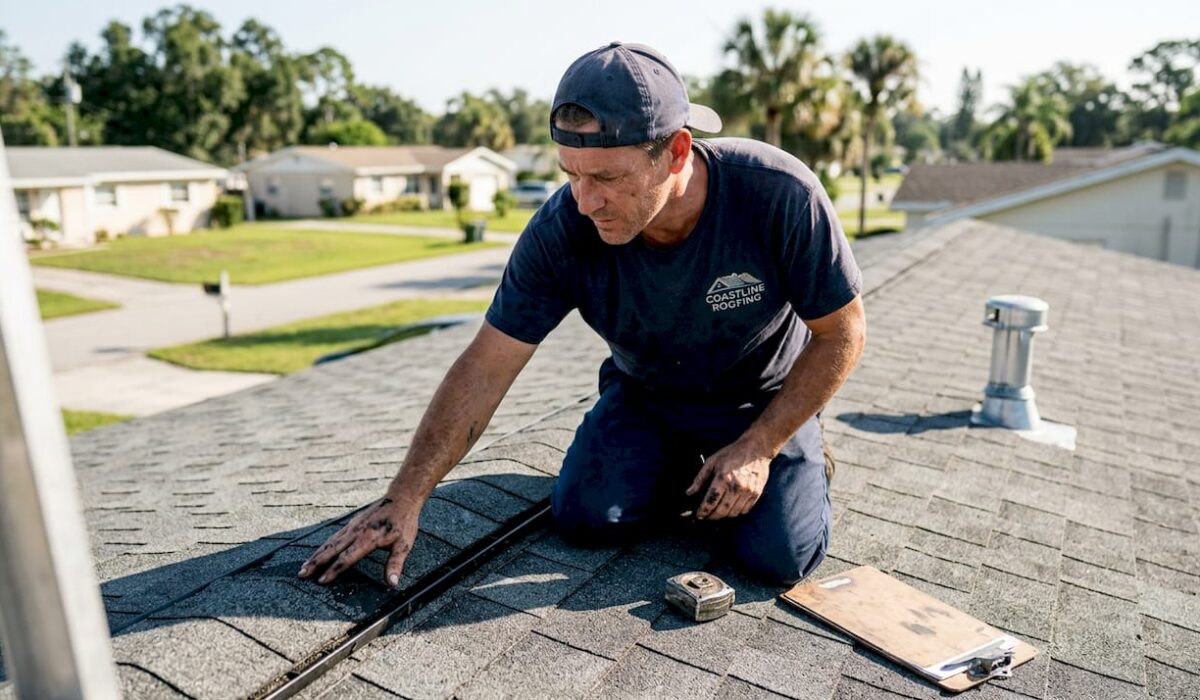
Many roofs look perfectly fine from the street. Clean lines, no visible damage, nothing obviously wrong. But appearances can be deeply misleading, especially in Central Florida where summer storms, intense heat, and relentless humidity put every roof to the test. Roof craftsmanship ensures durability, weather resistance, and longevity, separating professional work from shortcuts that fail when it matters most. This guide breaks down what real craftsmanship looks like, how to spot it on your own home, and why it is the single most important factor in protecting your investment.
Table of Contents
- What is roof craftsmanship?
- The core mechanics of quality roofing
- Expert nuances and common pitfalls: what most people miss
- Aesthetics vs. function: debates in the industry
- How to evaluate roof craftsmanship on your home
- Get reliable, storm-ready roofing with Central Florida experts
- Frequently asked questions
Key Takeaways
| Point | Details |
|---|---|
| True craftsmanship defined | Roof craftsmanship means precise installation, proper techniques, and durability beyond surface appearance. |
| Visual checks essential | Uniform shingles, clean flashing, and consistent lines show skilled workmanship on your roof. |
| Central Florida priorities | Storm codes, proper adhesives, and certified professionals are crucial for local roofs. |
| Expert inspection pays off | NRCA-standard inspections and hiring qualified roofers help roofs last decades, not just years. |
| Aesthetics vs. function | Great roofs balance curb appeal with weather resistance for lasting protection. |
What is roof craftsmanship?
Roof craftsmanship is not just about keeping water out. It is about precision, consistency, and meeting the standards that make a roof perform for decades rather than years. Skilled workmanship emphasizes precision, attention to detail, proper techniques, and the use of quality materials from start to finish. In Central Florida, that standard is not optional. It is survival.
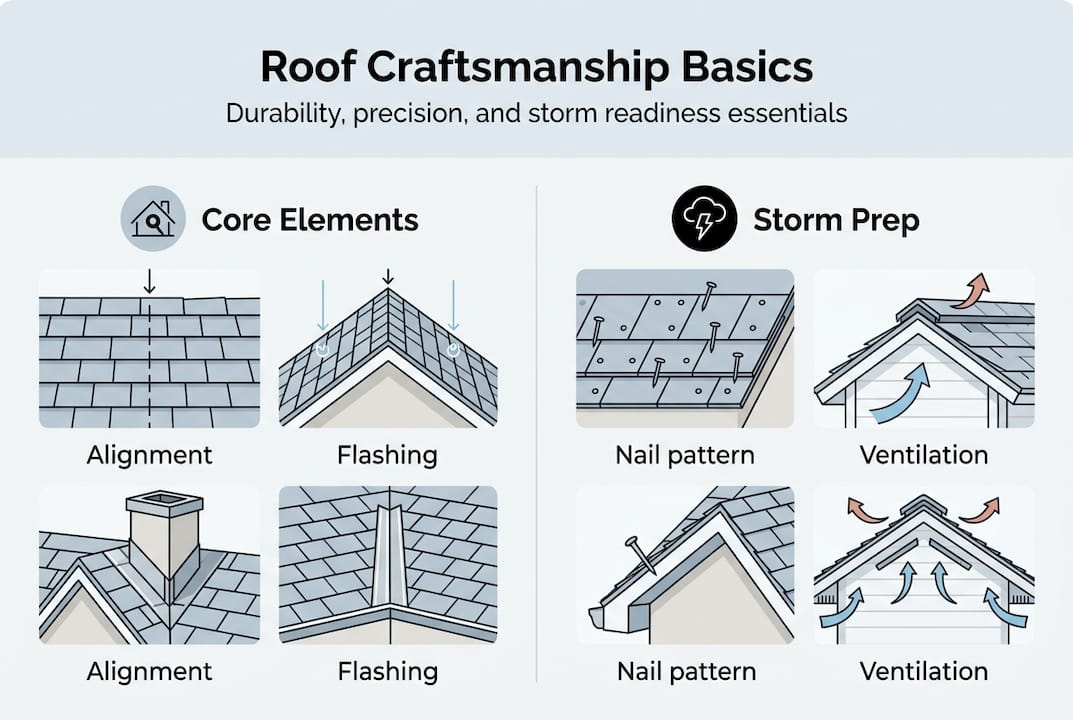
Florida’s climate is unforgiving. A roof that looks great in January can start failing by August if the installation cut corners. Poor shingle alignment, haphazard flashing, and excess caulk are not just cosmetic problems. They are early warning signs of a roof that will not hold up under hurricane-force winds or a season of afternoon thunderstorms.
Here is a quick comparison of what separates skilled roofing from shoddy work:
| Feature | Quality craftsmanship | Poor workmanship |
|---|---|---|
| Shingle alignment | Straight, uniform rows | Wavy, uneven lines |
| Flashing | Woven and layered | Caulked over gaps |
| Nail placement | In designated nail zones | Random or overdriven |
| Ventilation | Properly calculated | Guessed or skipped |
| Visual finish | Clean, consistent | Patchy, mismatched |
Signs of quality roofing workmanship include:
- Uniform shingle exposure from ridge to eave
- Clean, tight flashing around chimneys and vents
- No visible caulk blobs or patched areas
- Consistent color and texture across the entire surface
- Proper drip edge installation at all edges
“A roof that passes a visual inspection is not necessarily a roof that will pass a storm.” The hidden layers, the flashing integration, the ventilation design — these are what certified roofers focus on that untrained eyes simply cannot see.
For a deeper look at what spotting craftsmanship actually involves, the details go well beyond a quick glance from the driveway.
The core mechanics of quality roofing
With a clear definition in mind, let’s look at what skilled roofers actually do to set their work apart. The mechanics of quality roofing are specific, measurable, and non-negotiable.
Key mechanics include straight alignment, proper flashing, correct ventilation, drip edges, and precise nail placement. Each of these elements works together. Miss one, and the whole system weakens.
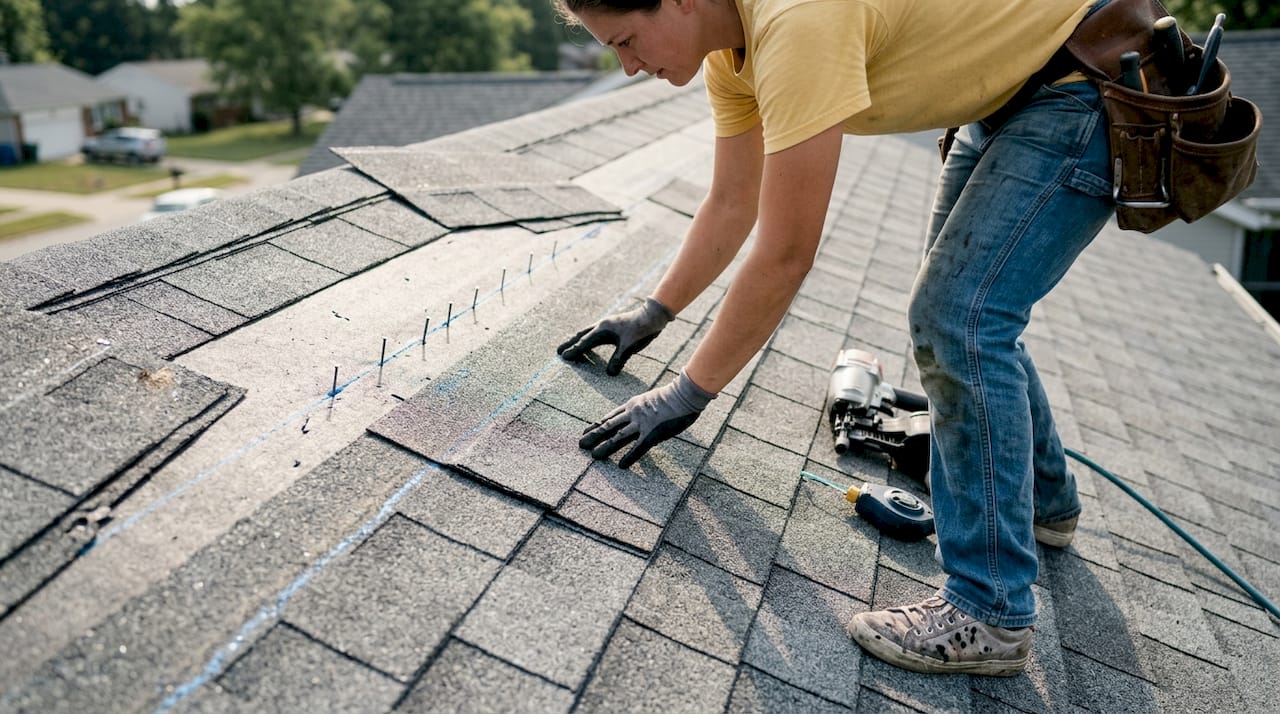
Here is how the numbers break down for standard asphalt shingle installation:
| Element | Correct standard | Common mistake |
|---|---|---|
| Nails per shingle | 4 to 6 nails | 2 to 3 nails |
| Nail placement | In nail strip zone | Too high or too low |
| Shingle overhang | 0.5 to 0.75 inches | Flush or excessive |
| Ventilation ratio | 1:150 sq ft | Undersized or absent |
| Drip edge overlap | 2 inches minimum | Butted or missing |
Here is the step-by-step process a skilled roofer follows on every job:
- Inspect the deck for rot, soft spots, and structural integrity before laying anything.
- Install underlayment with proper overlap and fastening, not just stapled loosely.
- Set drip edges at eaves first, then rakes, in the correct sequence.
- Lay starter strips to seal the first course of shingles against wind uplift.
- Nail each shingle in the designated zone with the correct number of fasteners.
- Weave flashing at every valley, chimney, and wall intersection rather than caulking over gaps.
- Verify ventilation calculations match the attic square footage before closing up.
Pro Tip: Ask your roofer to show you the nail pattern before they cover it with the next course. A confident, skilled crew will not hesitate. A crew cutting corners will change the subject.
For tile roofs specifically, batten spacing and foam adhesive application are critical. Tile roof longevity depends heavily on these details being done right the first time. And when it comes to choosing roofing materials for Central Florida, the installation method matters just as much as the product itself. Florida contractors are also expected to follow FBC-compliant techniques that account for our specific wind and moisture exposure.
Expert nuances and common pitfalls: what most people miss
Even with proper basic techniques, there is more to craftsmanship than meets the eye. Here is what even experienced homeowners often overlook.
The biggest red flag? Excess caulk. When a roofer reaches for a caulk gun to solve a flashing problem, that is almost always a cover-up. Flashing must be physically integrated with the roofing materials, not sealed over with a bead of sealant that will crack and shrink within a few years.
NRCA standards highlight hands-on skills over visual appearance, and they specifically call out the need to avoid excess caulk, check hidden ventilation, and prioritize structural assessment over cosmetic fixes. These are the benchmarks that separate a truly professional job from one that just looks good on inspection day.
Watch out for these common pitfalls:
- Caulk over flashing gaps instead of proper metal integration
- Skipped or undersized ridge vents that trap heat and moisture in the attic
- Improper batten spacing on tile roofs that allows tiles to shift under wind load
- Mismatched shingle lots that create color variation and signal rushed material handling
- No starter strip at the eave, leaving the first course vulnerable to wind uplift
“The difference between a 15-year roof and a 30-year roof is rarely the material. It is almost always the installation.”
Pro Tip: Before signing any contract, verify that your contractor holds a valid CCC license (Certified Roofing Contractor in Florida). Licensed roofers in Central Florida are required to meet state standards that protect you legally and structurally. You can also cross-reference their credentials against NRCA certification records for an added layer of confidence.
Aesthetics vs. function: debates in the industry
Understanding the advanced details, it is important to see how the roofing industry debates and blends aesthetics and function. This is not a settled argument, and where a company lands on it tells you a lot about their priorities.
Some roofing companies focus almost entirely on visual perfection. Clean lines, matching colors, a roof that photographs beautifully. Others focus on elements that only reveal themselves over time: wind resistance ratings, moisture barrier integrity, and proper adhesive application. Foam adhesive is preferred for tiles in Florida because it provides superior bond strength under hurricane conditions compared to mortar or mechanical fasteners alone.
Here is how the two approaches compare:
| Priority | Aesthetics-first approach | Function-first approach |
|---|---|---|
| Main focus | Visual uniformity | Wind and moisture resistance |
| Flashing method | Caulked for clean look | Woven and integrated |
| Tile adhesive | Mortar (traditional look) | Foam adhesive (FBC preferred) |
| Ventilation | Minimal for clean roofline | Calculated for attic health |
| Long-term result | May look great, fail early | Lasts 30 to 50+ years |
The best approach for Central Florida homeowners combines both. Your roof should look great and perform under pressure. That means roof material choices that suit the local climate, installed with techniques that meet or exceed Florida Building Code requirements.
Key factors that define best-practice roofing in Florida:
- Hurricane zone compliance built into every installation decision
- Foam adhesive for tile systems in wind-rated areas
- Moisture barriers that go beyond minimum code requirements
- Ventilation systems designed for Florida’s heat load
- Aesthetic consistency that signals careful, detail-oriented work
For a broader look at roof installation quality benchmarks, the standards are clear: function and appearance are not competing goals. They reinforce each other when the work is done right.
How to evaluate roof craftsmanship on your home
Once you understand what to look for, you can take action to ensure your roof meets the highest standards of craftsmanship. You do not need to climb up there yourself. A lot can be assessed from the ground.
Quality roofs last 20 to 50+ years, and twice-yearly inspections prevent the kind of slow failures that turn into expensive emergencies. Here is a practical checklist to get started:
- Ground-level visual check: Look for wavy shingle lines, missing pieces, or patchy color variations.
- Gutter inspection: Granule buildup in gutters signals shingle wear. A little is normal; a lot is a warning.
- Flashing review: From the ground or a ladder at the eave, check that flashing around vents and chimneys is metal, not just caulk.
- Attic check: Look for daylight, moisture stains, or inadequate ventilation from inside your attic.
- Documentation request: Ask your roofer for the permit, inspection report, and manufacturer warranty paperwork.
Here is a quick takeaways table to keep handy:
| What to check | What good looks like | What to worry about |
|---|---|---|
| Shingle lines | Straight and uniform | Wavy or uneven |
| Flashing | Metal, tight, layered | Caulk blobs, gaps |
| Gutters | Clean, minimal granules | Heavy granule buildup |
| Attic | Dry, ventilated, no light | Moisture, daylight visible |
| Paperwork | Permit, warranty, license | Missing or vague documents |
When hiring local roofers, always ask for their CCC license number and verify it with the Florida DBPR. A professional crew will hand it over without hesitation. You can also request an NRCA inspection process review to benchmark your roof against national workmanship standards.
Get reliable, storm-ready roofing with Central Florida experts
If you are ready to apply what you have learned about roof craftsmanship or want a professional eye on your home, here is how to get support from trusted local pros.
At Thomas Roofing and Repair, we bring certified, licensed expertise to every job in Brevard, Volusia, and Orange counties. Whether you need a full inspection, storm damage assessment, or a new installation built to Florida Building Code standards, our team delivers the precision and accountability this guide describes.

Our storm damage repair guide walks you through what to do after severe weather, and our residential roofing services cover everything from minor repairs to full replacements. If you are in the University area, our roofing services in University team is ready to help. Contact us today for a free estimate and find out what real craftsmanship looks like on your home.
Frequently asked questions
How do I know if my roof has quality craftsmanship?
Visual checks and documented inspections identify quality. Look for straight, uniform shingles, clean metal flashing, and ask your contractor for proof of licensing and a formal inspection report.
Why is proper flashing so important?
Flashing must be integrated with roofing materials rather than just caulked over gaps. Woven and layered flashing prevents water intrusion far longer than any sealant-only fix.
How often should I have my roof inspected for workmanship?
Twice-yearly inspections prevent failures, especially in Florida. Schedule one before storm season and one after to catch any damage or wear before it becomes a serious problem.
What’s the difference between FBC and NRCA roof standards?
NRCA standards emphasize skilled techniques and national workmanship benchmarks, while FBC focuses specifically on Florida Building Code requirements for storm resistance and hurricane zone compliance.
Do materials or labor matter more for craftsmanship?
Craftsmanship blends quality materials with expert labor, but skilled installation and attention to detail are what determine how long your roof truly lasts under real-world conditions.