
TL;DR:
- Central Florida homeowners have access to various financing options including grants, PACE loans, and community programs.
- It is advisable to prioritize grants and government-backed programs before considering loans to reduce costs.
- Combining grants with low-cost loans can significantly lower overall repair expenses if work is authorized only after approval.
A roof repair in Central Florida isn’t just a home improvement project. It’s often an emergency, triggered by hurricane season, tropical storms, or the kind of sudden hail damage that leaves you scrambling for cash. The average roof replacement runs $10,000 to $20,000 or more, and most homeowners don’t have that sitting in savings. The good news is that Central Florida homeowners have more financing options than almost anywhere else in the country, from state-funded grants to PACE loans to local community programs. This guide walks you through each option clearly so you can match the right funding to your situation, budget, and timeline.
Table of Contents
- How to evaluate roof repair financing options
- MSFH grants and hurricane mitigation programs
- PACE loans: Energy-efficient roof funding
- Local SHIP programs and community grants
- HELOCs, personal loans, and contractor financing
- Why stacking grants and affordable loans works best
- Get expert help for roof repair and financing
- Frequently asked questions
Key Takeaways
| Point | Details |
|---|---|
| Grants first | Pursue MSFH and SHIP grants for roof repairs before considering loans or commercial options. |
| PACE loans accessibility | PACE provides 100% financing with flexible terms to homeowners in eligible counties without credit checks. |
| Stack for savings | Combining grants and affordable loans minimizes costs and maximizes repair coverage. |
| Local program differences | SHIP grants and loan programs vary by county, so check local eligibility and limits before applying. |
| Smart loan choices | HELOCs offer lower rates but use property as collateral; personal and contractor loans bring convenience but higher costs. |
How to evaluate roof repair financing options
Not every financing option fits every homeowner. Before you start applying for anything, you need a clear framework for evaluating what actually makes sense for your situation. Four criteria matter most: urgency, eligibility, total cost, and storm resilience value.
Urgency is the first filter. If your roof is actively leaking or has sustained hurricane damage, you don’t have six weeks to wait for grant approval. Some programs require inspections and approval before any work starts, which means timing is everything. If you need repairs done in days, not months, your options narrow quickly.
Eligibility is the second filter. Many of the best programs, including grants and forgivable loans, have income limits, property age requirements, or geographic restrictions. A homeowner in Volusia County may qualify for programs that aren’t available in Orange County, and vice versa. Checking top roof repair services in your area can also help you understand what local contractors are familiar with when it comes to program requirements.
Total cost is where most homeowners make mistakes. A loan with a low monthly payment can end up costing you twice the original repair amount over 15 years. Always calculate the total repayment amount, not just the monthly figure.
Storm resilience value is a factor unique to Central Florida. Upgrading your roof to meet hurricane standards doesn’t just protect your home. It can reduce your homeowner’s insurance premium significantly, which changes the math on what you can afford to spend. Urgency and eligibility drive financing choice for roof repairs, and ignoring either one leads to costly mistakes.
Here are the key criteria to run through before choosing any option:
- Urgency: How quickly do you need repairs completed?
- Income eligibility: Do you fall within program income limits?
- Property type: Is your home homesteaded, pre-2008, or insured below a certain value?
- Repayment terms: What is the total cost over the life of the loan?
- Insurance impact: Will the repair qualify you for premium reductions?
- County availability: Is the program active in your specific county?
Pro Tip: Always start with grants and government-backed programs before looking at commercial loans. Free money and 0% deferred loans should be exhausted first. You can find details on the MSFH program details website to see if you qualify before spending a dollar on interest.
MSFH grants and hurricane mitigation programs
The My Safe Florida Home program is the single best starting point for most Central Florida homeowners who qualify. It’s a state-funded initiative designed to help homeowners harden their homes against hurricane damage, and roof upgrades are one of the primary eligible improvements.
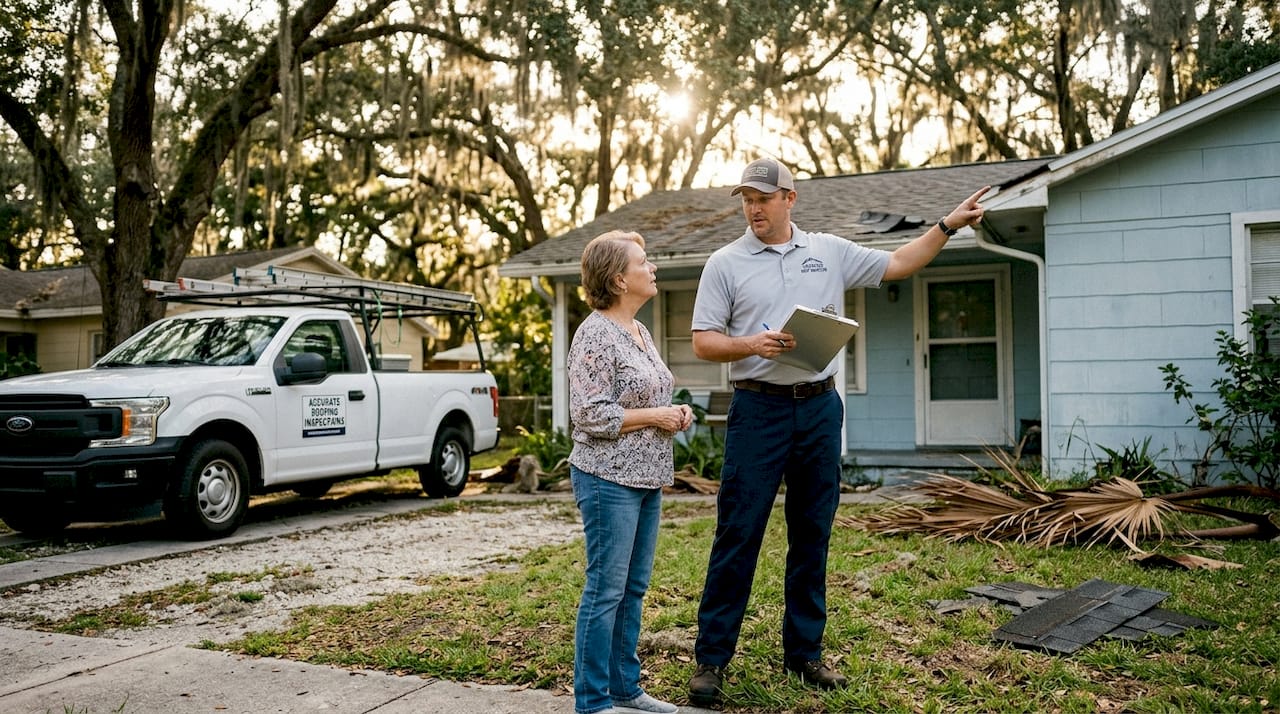
The MSFH program offers grants up to $10,000 for hurricane mitigation including roof repairs. The structure depends on your income level. Low-income homeowners may receive the full grant with no match required. Moderate-income homeowners receive a 2:1 match, meaning the state pays $2 for every $1 you contribute.
Eligibility requirements include:
- Home must be homesteaded (your primary residence)
- Home must have been built before 2008
- Insured value must be under $700,000
- You must have an active homeowner’s insurance policy
- Income limits apply and vary by household size
How to apply, step by step:
- Request a free wind mitigation inspection through the MSFH portal
- Receive your inspection report identifying eligible upgrades
- Wait for official program approval before scheduling any work
- Select a state-approved contractor for the repairs
- Submit completion documentation to receive grant funds
The free wind mitigation inspection alone has value beyond the grant. It documents your roof’s condition and can be submitted to your insurance company to lower your premiums. Prioritize MSFH grants first because they reduce insurance premiums by an average of $981 per year, which means the program pays for itself over time even if you only receive a partial grant.
One important caveat: this program is competitive. Funding windows open and close, and priority is given to lower-income applicants and older homes. Check grant eligibility and deadlines regularly and apply as early as possible. Pairing this with professional roof inspections ensures your documentation is accurate and complete when you submit.
PACE loans: Energy-efficient roof funding
Once you’ve explored grants, the next major alternative is long-term financing like PACE. Property Assessed Clean Energy financing is a unique option that works differently from a traditional loan. Instead of borrowing from a bank, the financing is attached to your property and repaid through your annual property tax bill.
PACE financing covers 100% of roof repairs and replacements as a tax assessment, with no credit check or down payment required. Rates typically run between 6% and 8%, with repayment terms of 15 to 20 years. This makes it accessible to homeowners who have been turned down for traditional credit.
| Feature | PACE loan | Traditional personal loan |
|---|---|---|
| Credit check required | No | Yes |
| Down payment | None | Varies |
| Interest rate | 6 to 8% | 10 to 25% |
| Repayment method | Property tax | Monthly payment |
| Term length | 15 to 20 years | 2 to 7 years |
| Risk if you sell | Transfers with property | Stays with borrower |
The biggest advantage of PACE is accessibility. If your credit score is low or you have limited savings, this program opens doors that traditional lenders close. The PACE loan program is available in participating counties across Central Florida, so confirm your county is enrolled before applying.
The risks are real, though. Because the obligation transfers with the property, selling your home before the loan is paid off can complicate the sale. Some buyers don’t want to inherit a tax assessment. You should also factor in the long repayment window when calculating total cost. Explore your residential roofing options to understand which upgrades qualify as energy-efficient improvements under the program.
Local SHIP programs and community grants
For those who don’t qualify for statewide grants, local community programs offer strong alternatives. The State Housing Initiatives Partnership, known as SHIP, is administered at the county level and provides forgivable loans and grants specifically for low and moderate-income homeowners.
The key thing to understand about SHIP is that it varies significantly by county. What’s available in Volusia County may not exist in Seminole or Orange County. SHIP local programs offer forgivable 0% deferred loans and grants up to $60,000 for roof repairs and other critical home improvements.
| County | Max grant or loan | Income limit (approx.) | Repayment |
|---|---|---|---|
| Volusia (Deltona) | Up to $60,000 | $50,000 to $83,000 household | Deferred, 0% |
| Orange | Varies by cycle | Area Median Income based | Forgivable |
| Seminole | Varies by cycle | Area Median Income based | Deferred |
Here’s what makes SHIP grants particularly valuable: they are non-repayable in most cases, meaning you never pay the money back as long as you remain in the home for the required period. Deferred loans carry 0% interest and only become due if you sell or refinance.
Tips for a successful SHIP application:
- Gather proof of income, tax returns, and property ownership documents early
- Check your county’s specific open application windows, as funding is limited
- Prioritize applications for roof and HVAC repairs, which are typically at the top of local priority lists
- Contact your local housing authority directly to confirm current availability
See Deltona SHIP details for an example of how county programs are structured. You can also reach out to local roof repair services who are experienced working with SHIP-approved contractors.
HELOCs, personal loans, and contractor financing
When grants or government programs aren’t available, commercial lending fills the gap. Three options dominate this space: home equity lines of credit (HELOCs), unsecured personal loans, and contractor-offered financing.
HELOCs offer lower rates but use home equity as collateral, while personal unsecured loans are faster with higher rates. A HELOC lets you borrow against the equity you’ve built in your home, typically at rates between 7% and 10%. The interest may be tax-deductible if used for home improvements, which is a real financial advantage. The downside is that your home is the collateral. Miss payments and you risk foreclosure.
Personal loans are faster and require no collateral, but rates can run from 10% to 25% depending on your credit. For a $10,000 repair, that difference in rate can mean thousands of dollars in extra interest over the life of the loan.
Grants are non-repayable but income and priority limited. Loans are immediate but carry interest. Knowing which situation you’re in changes everything about which option to choose.
Contractor loans are convenient and fast but carry higher rates compared to HELOCs, and you should always check for prepayment penalties before signing.
What to watch for with any commercial loan:
- Prepayment penalties that make early payoff expensive
- Variable interest rates that can increase over time
- Origination fees that add to the total cost
- Balloon payments at the end of the loan term
Pro Tip: For shingle roof repairs that fall in the $5,000 to $15,000 range, a personal loan with a short 3-year term often beats a HELOC when you factor in closing costs and the time to access equity.
Why stacking grants and affordable loans works best
Here’s something most homeowners never consider: you don’t have to pick just one program. The smartest approach is to stack options, layering grants on top of low-cost loans to cover what grants can’t.
In practice, this means applying for MSFH or SHIP first, getting approved, and then using a HELOC or personal loan to cover any remaining gap. The grant reduces your principal, the insurance savings reduce your ongoing costs, and the loan covers only what’s left. The total cost of your repair drops dramatically compared to financing the whole thing commercially.
Most homeowners miss this strategy entirely. They see the grant amount as too small or the application process as too slow, and they reach for a credit card or contractor loan instead. That’s an expensive mistake, especially during active hurricane seasons when storm damage repair guides make clear that acting fast and acting smart are not mutually exclusive.
The one rule you cannot break: never start work before grant approval. Starting repairs before your application is approved will disqualify you from most grant programs immediately. Patience in the application phase saves you thousands.
Get expert help for roof repair and financing
Now, here’s how to get expert support making your repairs happen and paying for them with confidence.
Navigating grants, PACE loans, and SHIP programs while managing an urgent roof repair is a lot to handle alone. Thomas Roofing and Repair works with Central Florida homeowners every day to assess damage, identify the right repair approach, and help you understand which financing paths make sense for your home and budget.

From free inspections to storm-proof repairs across Brevard, Volusia, and Orange counties, we’re here to make the process straightforward. Check out our storm damage repair tips for guidance on what to do after a major weather event, and explore our reliable roof repair services to get started with a free estimate today.
Frequently asked questions
What is the most affordable roof repair financing for Central Florida homeowners?
MSFH grants offer up to $10,000 without repayment for eligible homeowners, making them the most affordable option available when you qualify based on income and property criteria.
Can I combine multiple roof repair financing options at once?
You can stack grants and loans if eligibility rules allow, but never start work before grant approval or you risk immediate disqualification from the program.
Do PACE loans require home equity or a credit check?
PACE financing requires no credit check or down payment and is repaid through property taxes, making it one of the most accessible options for homeowners with limited credit history.
How do income limits affect SHIP local repair grants?
SHIP grants are income-restricted and vary by county, with limits set annually based on Area Median Income, so eligibility in Volusia County differs from Orange or Seminole County.
Is contractor financing a good idea for urgent roof repairs?
Contractor loans are fast and convenient for urgent repairs but typically carry higher interest rates and may include prepayment penalties that increase your total repayment cost.
Recommended
- Top roofing financing options for Central Florida
- Roof Financing Explained: Affordable Solutions for Central Florida
- 10 roof repair budgeting tips for Central Florida homeowners
- Role of Roof Financing – Helping Central Florida Homes
- Roofing Company Orlando, FL
- Roofing Company Titusville, FL
- Roofing Company DeLand, FL