
 407-408-0577
TL;DR:
- Proper roof ventilation balances intake and exhaust vents to prevent heat and moisture buildup that can damage your attic and roof. It enhances shingle longevity, reduces mold risk, and lowers energy costs by maintaining attic temperatures close to outdoor levels. Incorrect installation, blocked vents, or venting indoor exhaust into the attic can compromise system effectiveness and cause costly damage.
Roof ventilation is the process of moving outside air through your attic to remove excess heat and moisture before they damage your roof structure and drive up your energy bills. Without it, attic temperatures can reach 150°F on sunny days, accelerating shingle breakdown and forcing your air conditioning to work harder. The International Residential Code, specifically IRC 2024 R806, sets the standard for how much ventilation every home needs. Understanding why roofing ventilation matters gives you the knowledge to protect one of your largest investments before problems become expensive repairs.
Why roofing ventilation matters: how the system actually works
Roof ventilation operates on two physical principles working together. The stack effect causes warm air to rise and exit through exhaust vents near the roof peak, while cooler outside air enters through intake vents at the lower edge of the roof. Wind pressure across the roof surface reinforces this movement, creating a continuous airflow loop through the attic.
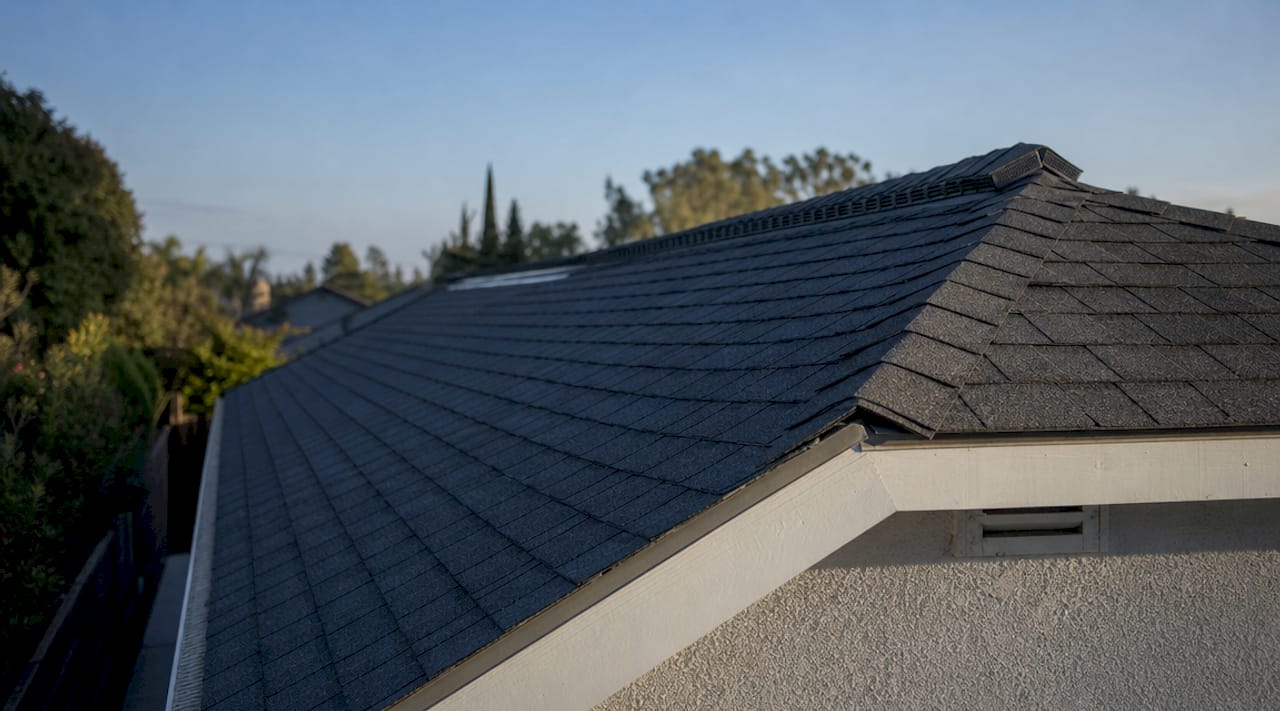
The two main components are intake vents and exhaust vents. Soffit vents, installed along the underside of your roof’s overhang, serve as the intake. Exhaust vents sit near or at the ridge and include ridge vents, box vents, and gable vents. Soffit and ridge vents work as a passive system using warm air rising and wind effects to create continuous airflow. This passive design requires no electricity and runs silently around the clock.
Baffles, also called rafter baffles or vent chutes, are the unsung heroes of this system. They are channels installed between roof rafters that keep the airflow path open from the soffit all the way to the attic space. Without baffles, insulation can collapse against the roof deck and block the intake path entirely, making even a well-designed vent layout useless.
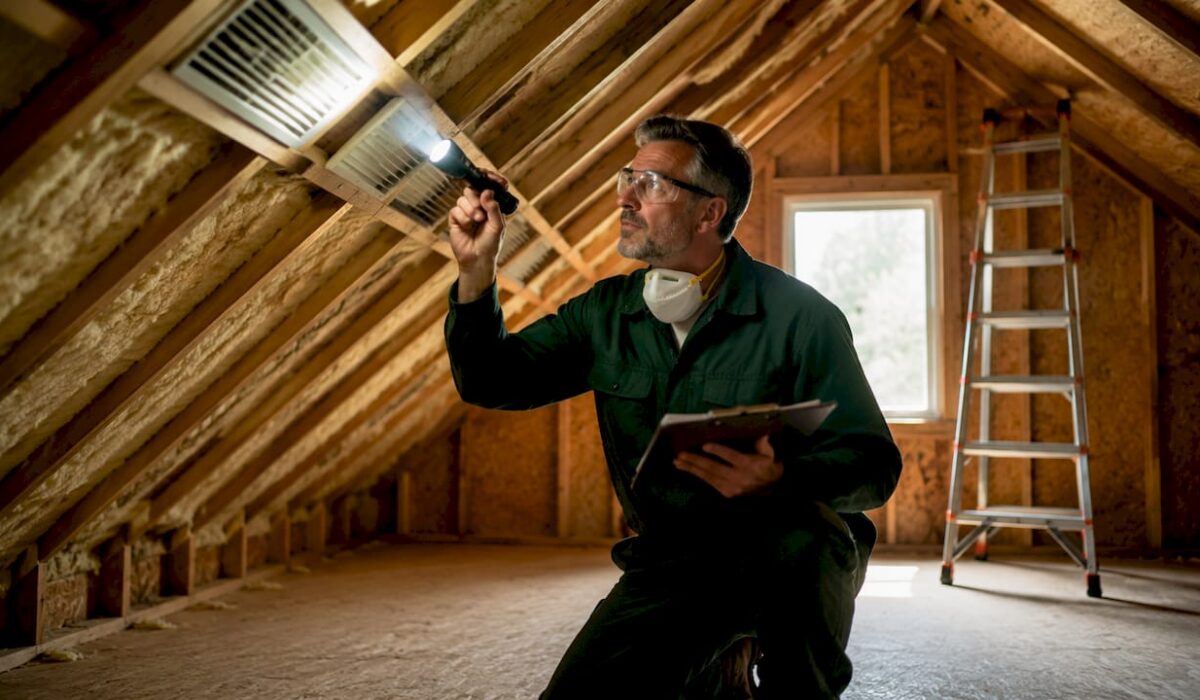
Pro Tip: When inspecting your attic, shine a flashlight along the eaves. If you cannot see daylight through the soffit vents or spot baffles keeping insulation away from the roof deck, your intake is likely compromised.
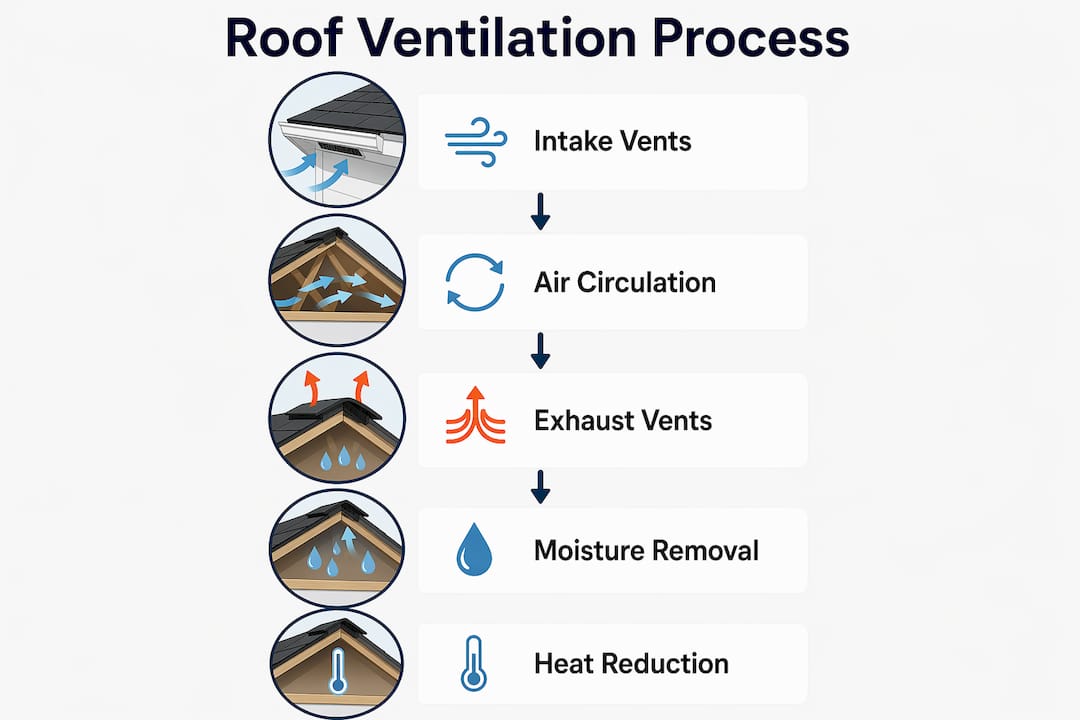
The IRC 2024 R806 standard requires a net free vent area ratio of 1:150 with balanced intake and exhaust venting. That ratio means for every 150 square feet of attic floor space, you need at least 1 square foot of net free vent area, split evenly between intake and exhaust. Balanced ventilation uses both the stack and Venturi effects to exchange attic air efficiently.
What are the real benefits of roof ventilation?
The benefits of roof ventilation fall into three categories: protecting your roofing materials, preventing moisture damage, and reducing your energy costs. Each one has a direct dollar value attached to it.
-
Shingle life extension. Attic temperatures can reach 150°F on sunny days without ventilation, speeding shingle degradation and energy loss. Heat bakes the asphalt oils out of shingles from below while the sun attacks them from above. Proper ventilation keeps attic temperatures closer to outdoor ambient levels, which can add years to your roof’s service life.
-
Moisture and mold prevention. Every shower, cooking session, and breath your family takes adds water vapor to your home’s air. That vapor migrates upward into the attic. Without ventilation to flush it out, it condenses on cold roof sheathing and framing, creating the wet conditions that mold and wood rot require. Structural repairs from rot cost far more than a ventilation upgrade.
-
Ice dam reduction. In cooler climates, a warm attic melts snow on the roof surface. That meltwater runs down to the cold eaves and refreezes, forming ice dams that force water under shingles. A properly ventilated attic stays cold, matching outdoor temperatures and eliminating the uneven melt cycle that creates ice dams.
-
Lower cooling costs. A superheated attic radiates heat downward into your living space, making your HVAC system work harder. Ventilating that heat out reduces the thermal load on your home, which translates directly to lower electricity bills during Florida summers.
Ventilation does not work in isolation. Air sealing is the first defense; ventilation is the second line to remove moisture that gets through. Pairing proper ventilation with quality attic insulation maximizes both comfort and energy savings. You can read more about how these systems interact on the roofing insulation page from Thomasroofingandrepair.
Common mistakes that undermine roof ventilation
Most ventilation failures are not caused by missing vents. They are caused by errors in design, installation, or renovation that quietly undo what the system was built to do.
-
Exhaust exceeding intake. Intake vents must equal or exceed exhaust vent area to prevent negative pressure and pulling conditioned air from the living space. When exhaust capacity outpaces intake, the attic pulls replacement air from inside your home instead of from outside. Your air conditioner pays the price.
-
Venting exhaust fans into the attic. Bathroom fans, kitchen range hoods, and dryer vents must exhaust to the outside. No passive ventilation can effectively remove the high moisture volume introduced from indoor exhausts venting into attics. This single mistake is responsible for a significant share of attic mold cases.
-
Insulation blocking soffit vents. During attic insulation upgrades, blown-in insulation can pile up against the eaves and seal off soffit vents completely. Without baffles, the intake side of the system goes dark.
-
Mixing vent types incorrectly. Combining ridge vents with high gable vents on the same roof creates competing exhaust points. Air short-circuits between the two instead of drawing fresh air from the soffits, leaving most of the attic unventilated.
-
Powered attic ventilators without matched intake. Powered attic ventilators can create negative pressure that increases energy costs if not properly matched with intake vents. Adding turbine vents or powered fans without sufficient intake increases indoor air infiltration and energy costs.
A professional roofing assessment includes verifying that no exhaust fans vent into the attic and that insulation does not block soffit vents. If your last roof inspection skipped these checks, it was incomplete.
Pro Tip: Before adding any exhaust vent, calculate your current intake capacity first. Adding exhaust without matching intake is worse than doing nothing at all.
How do you know if your roof ventilation is adequate?
Recognizing the signs of poor roof ventilation early saves you from expensive repairs. The most common indicators are visible inside your attic and on your energy bills.
Look for these warning signs:
- Attic air that feels noticeably hotter than outdoor air on a mild day
- Moisture stains or dark streaks on roof sheathing or rafters
- Visible mold growth on wood surfaces
- Ice dams forming along your eaves in winter
- Shingles that are curling, blistering, or aging faster than expected
The table below summarizes the IRC 2024 R806 requirements and what they mean for a typical home:
| Requirement | Standard | What it means for your home |
|---|---|---|
| Net free vent area ratio | 1:150 | 1 sq ft of vent per 150 sq ft of attic floor |
| Intake vs. exhaust balance | Intake ≥ exhaust | Soffit vent area must match or exceed ridge vent area |
| Intake vent placement | Lower roof edge | Soffit or eave vents only, not gable vents as primary intake |
| Exhaust vent placement | Upper roof area | Ridge, box, or high gable vents |
Checking your own ventilation starts with a flashlight and a tape measure. Count your soffit vents, measure their net free area (usually stamped on the vent), and compare that to your attic square footage. If the math does not add up to the 1:150 ratio, or if intake and exhaust are mismatched, you have a ventilation deficit. A roof inspection checklist from Thomasroofingandrepair covers these checks in detail.
For Central Florida homeowners, local roofing code requirements add another layer of compliance to consider alongside ventilation standards.
When vented attics are not the right answer
Ventilation is not a universal solution. Unvented, conditioned attics sealed with spray foam are a valid alternative in hot-humid climates, avoiding moisture issues caused by traditional ventilation. In Central Florida’s climate, where outdoor humidity is high year-round, drawing outside air through the attic can sometimes introduce more moisture than it removes.
An unvented attic brings the roof assembly inside the thermal and moisture boundary of the home. Closed-cell spray foam applied directly to the underside of the roof deck seals out moisture and provides insulation in one step. The attic becomes a conditioned space, and the roof deck stays at a stable temperature.
The critical rule with unvented attics is consistency. Mixing vented and unvented assemblies on the same roof causes problems because the two systems work against each other. You cannot spray foam half the attic and vent the other half. The design must be one or the other, applied to the entire roof assembly.
Unvented attics work best when:
- The roof geometry is complex, making continuous soffit-to-ridge ventilation impractical
- Outdoor humidity levels make venting counterproductive
- HVAC equipment or ductwork is located in the attic and needs to stay within conditioned space
- The homeowner wants to eliminate ice dam risk entirely in mixed climates
The tradeoff is cost. Spray foam is significantly more expensive than batt or blown-in insulation, and the installation requires a qualified contractor. For most standard residential roofs in Central Florida, a properly balanced vented system remains the most practical and code-compliant choice.
Key takeaways
Proper roof ventilation protects your shingles, prevents mold and rot, and reduces cooling costs by maintaining balanced airflow between intake and exhaust vents.
| Point | Details |
|---|---|
| Balance is non-negotiable | Intake vent area must equal or exceed exhaust vent area to prevent negative pressure. |
| Heat and moisture are the enemies | Unventilated attics reach 150°F and trap moisture, causing shingle damage, rot, and mold. |
| Exhaust fans must exit outside | Venting bathroom or kitchen fans into the attic introduces moisture no passive system can remove. |
| IRC 2024 R806 sets the standard | The 1:150 ratio and balanced intake/exhaust requirement applies to most residential roofs. |
| Unvented attics are a valid option | Spray foam sealed attics work well in humid climates but must be applied consistently across the entire roof. |
What I’ve learned from seeing ventilation done wrong
After seeing hundreds of attics in Central Florida, the pattern is consistent. Homeowners invest in new shingles, new insulation, even new HVAC systems, and then wonder why their energy bills stay high and their roof ages fast. The answer is almost always in the attic, and it almost always comes down to ventilation that was never properly designed or inspected.
The mistake I see most often is treating ventilation as an afterthought. A contractor adds a ridge vent during a re-roof without checking whether the soffit vents are open or whether baffles are in place. The exhaust is there, but the intake is blocked. The system looks complete from the street and fails silently for years.
The second most common issue is bathroom fans vented into the attic. Homeowners often do not know this is wrong because the fan works fine from inside the bathroom. The damage happens out of sight, on the roof sheathing, until the decking is soft and the mold is visible.
My advice is straightforward. Treat your attic as a system, not a storage space. Ventilation, insulation, and air sealing work together, and a weakness in any one of them undermines the other two. If your roof is more than ten years old and has never had a dedicated ventilation inspection, schedule one. The cost of an inspection is a fraction of the cost of replacing rotted decking or a mold-damaged attic. If you notice roof replacement warning signs, ventilation failure is often a contributing factor worth investigating at the same time.
— Thomasroofingandrepair
Get your ventilation assessed by Central Florida’s roofing experts
If any of the warning signs in this article sound familiar, your attic deserves a professional look before the damage compounds.

Thomasroofingandrepair serves homeowners and property managers across Brevard, Volusia, and Orange counties with thorough ventilation assessments, baffle installation, vent upgrades, and full roof system evaluations. A proper inspection confirms whether your intake and exhaust are balanced, whether exhaust fans are routed correctly, and whether your insulation is blocking airflow. Whether you need a roof installation in Horizon West or repair services in Titusville, the team brings the same standard of craftsmanship to every job. Contact Thomasroofingandrepair today for a free estimate and protect your roof from the inside out.
FAQ
What is roof ventilation and why does it matter?
Roof ventilation is the system of intake and exhaust vents that moves outside air through your attic to remove heat and moisture. It matters because without it, attic temperatures can reach 150°F, causing shingle damage, mold, rot, and higher energy bills.
What are the signs of poor roof ventilation?
The most common signs include excessive attic heat, moisture stains or mold on roof sheathing, blistering or curling shingles, ice dams along the eaves, and rising cooling costs that cannot be explained by other factors.
How much ventilation does my roof need?
The IRC 2024 R806 standard requires 1 square foot of net free vent area for every 150 square feet of attic floor space, split evenly between intake and exhaust vents.
Can I just add more exhaust vents to improve ventilation?
Adding exhaust vents without matching intake capacity makes ventilation worse, not better. The attic pulls replacement air from inside your home, increasing energy costs and creating pressure imbalances.
Are unvented attics a good option for Florida homes?
Unvented attics sealed with closed-cell spray foam are a valid option in hot-humid climates like Central Florida, particularly for complex roof designs. The entire roof assembly must be treated consistently, as mixing vented and unvented sections on the same roof causes airflow problems.