
Florida weather takes its toll on every roof, and when leaks or storm damage strike, homeowners face tough decisions. Hiring a roofer is not just about shingles and nails—it is about protecting your family, finances, and property. Choosing a licensed roofing contractor in Central Florida means meeting stringent state standards for safety, experience, and insurance, so you can trust your home repairs are in skilled, accountable hands.
Table of Contents
- Licensed Roofers Defined for Florida Homes
- Types of Roofing Licenses and Why They Matter
- How Licensed Roofers Protect Your Investment
- Legal and Insurance Requirements in Roofing
- Risks of Unlicensed Roofing Contractors
- Comparing Licensed vs. Unlicensed Roofers
Key Takeaways
| Point | Details |
|---|---|
| Licensed Roofers are Essential | In Central Florida, only licensed roofers can legally perform roofing services, ensuring homeowner protection through established professional standards. |
| Types of Roofing Licenses | Roofing licenses in Florida are categorized into Division I and Division II, defining the scope of work and required expertise for contractors. |
| Importance of Insurance and Compliance | Licensed roofers ensure compliance with state building codes and insurance requirements, protecting homeowners from financial loss and structural damage. |
| Risks of Unlicensed Contractors | Hiring unlicensed roofers poses significant financial and legal risks, including substandard work quality and lack of recourse for issues. |
Licensed Roofers Defined for Florida Homes
In Central Florida, licensed roofers represent far more than just skilled professionals—they are legally certified experts responsible for protecting your home’s most critical structural element. Florida contractor licensing regulations establish stringent requirements that ensure only qualified professionals can legally perform roofing services.
To become a licensed roofer in Florida, contractors must navigate a comprehensive certification process that goes well beyond basic trade skills. The state mandates multiple critical qualifications:
- Passing rigorous state-administered examinations
- Demonstrating substantial professional experience
- Maintaining proper liability insurance
- Providing proof of financial stability
- Completing mandatory continuing education courses
The Florida Legislature established these contractor licensing standards through Chapter 489 statutes, specifically designed to protect homeowners from unqualified or unethical contractors. These regulations create a marketplace that prioritizes safety, competence, and professional integrity.
Professional licensing serves multiple crucial purposes for Florida homeowners. Beyond ensuring technical competence, it provides critical consumer protections by:
- Requiring background checks on contractors
- Mandating minimum insurance coverage
- Establishing clear accountability standards
- Creating formal complaint and resolution mechanisms
- Preventing unauthorized or fraudulent contracting work
Pro tip: Always verify a roofer’s license number through the official Florida Construction Industry Licensing Board before hiring, which provides instant confirmation of their current professional standing.
Types of Roofing Licenses and Why They Matter
In Central Florida, roofing contractor licenses represent a critical framework of professional qualification and consumer protection. Florida contractor licensing classifications establish a comprehensive system that differentiates between various levels of roofing expertise and authorized work scopes.
The state divides roofing licenses into two primary categories, each with distinct responsibilities and permitted activities:
Here’s a concise summary of Florida roofing license categories and their scope:
| License Type | Work Scope | Typical Projects | Required Expertise |
|---|---|---|---|
| Division I | Broad construction | Homes, commercial builds | Building codes, management |
| Division II | Roofing only | Roof installation, repair | Technical roofing knowledge |
- Division I Licenses:
- General Building Contractor
- Residential Construction Contractor
- Comprehensive authorization for broad construction projects
- Division II Licenses:
- Specialty Roofing Contractor
- Focused specifically on roofing installation and repair
- Requires specialized technical knowledge
To obtain a roofing license, contractors must demonstrate substantial professional competence through rigorous licensing requirements. This process involves multiple critical steps:
- Completing a comprehensive trade-specific application
- Passing state-administered examinations
- Verifying professional experience
- Demonstrating financial stability
- Maintaining current liability insurance
These licensing protocols serve multiple essential functions for Florida homeowners. By establishing clear professional standards, the state ensures that only qualified professionals can perform critical roofing work, protecting consumers from potential fraud, substandard workmanship, and financial risk.
Pro tip: Before hiring any roofing contractor, always request and independently verify their current state license number through the official Florida Construction Industry Licensing Board.
How Licensed Roofers Protect Your Investment
In Central Florida’s challenging climate, homeowners face significant risks to their most valuable asset—their home. Fortified roofing standards play a critical role in protecting residential investments against hurricane damage, insurance challenges, and long-term structural integrity.
Licensed roofers provide comprehensive protection through multiple strategic approaches:
- Insurance Compliance:
- Meet strict state building code requirements
- Ensure roof installations qualify for insurance coverage
- Document work to support potential claims
- Risk Mitigation:
- Use approved materials resistant to severe weather
- Follow precise installation techniques
- Implement advanced protective strategies
Recent Florida legislation now requires professional roof inspections to verify roof condition, creating an additional layer of protection for homeowners. These inspections help maintain insurance eligibility and prevent potential coverage gaps that could leave homeowners financially vulnerable.
The financial implications of hiring licensed professionals extend far beyond immediate repair costs. By ensuring proper installation, maintenance, and documentation, licensed roofers help homeowners:
- Reduce long-term repair expenses
- Maintain property value
- Prevent unexpected structural damage
- Qualify for insurance discounts
- Ensure compliance with local building regulations
Pro tip: Request comprehensive documentation of all roofing work, including material certifications and installation details, to protect your investment and support future insurance claims.
Legal and Insurance Requirements in Roofing
Central Florida homeowners navigate a complex landscape of roofing regulations that directly impact their property insurance and long-term financial protection. Home insurance roof requirements establish critical guidelines that determine insurance eligibility and coverage for residential properties.
Key legal requirements for roofing in Florida encompass several critical areas:
- Building Code Compliance:
- Adhere to Florida Building Code standards
- Meet specific wind resistance requirements
- Use approved roofing materials and techniques
- Insurance Policy Regulations:
- Prevent insurers from denying coverage based on roof age
- Mandate professional roof inspections
- Establish clear documentation standards
Recent Florida legislation introduces nuanced insurance rules that protect homeowners’ rights and ensure fair treatment by insurance providers. These regulations specifically address roof condition assessments and prevent arbitrary coverage denials.
The legal framework surrounding roofing in Florida creates multiple layers of protection for homeowners:
- Standardized inspection protocols
- Clear guidelines for roof replacement
- Protection against unfair insurance practices
- Defined pathways for roof condition verification
- Established standards for professional roofing work
Pro tip: Maintain comprehensive documentation of all roof-related work, including professional inspections and repair records, to streamline potential insurance claims and verify compliance with state regulations.
Risks of Unlicensed Roofing Contractors
Central Florida homeowners face significant financial and legal risks when choosing unlicensed roofing contractors. Unauthorized contractor practices can expose homeowners to numerous potential disasters that extend far beyond simple poor workmanship.
Unlicensed contractors create multiple serious risks for property owners:
- Financial Vulnerabilities:
- No guaranteed workmanship
- Potential for complete financial loss
- Risk of paying twice for the same repair
- Absence of professional accountability
- Legal Complications:
- Potential violations of local building codes
- Lack of required permits
- No legal recourse for substandard work
- Personal liability for workplace injuries
The most critical dangers of hiring unlicensed contractors include potentially massive financial exposure. Contractor hiring regulations highlight severe consequences, including potential fines up to $5,000 and complete loss of investment in home improvements.
Homeowners must understand the comprehensive risks associated with unlicensed work:
- Voided home insurance policies
- Potential structural damage
- No warranty protection
- Increased personal liability
- Compromised home safety standards
Pro tip: Always request and independently verify a contractor’s state license number before allowing any work to begin on your property.
Comparing Licensed vs. Unlicensed Roofers
In the complex world of Central Florida roofing, the differences between licensed and unlicensed contractors are stark and significant. Contractor licensing standards establish critical distinctions that directly impact homeowner protection and project quality.
Key differences between licensed and unlicensed roofers include:
- Licensed Roofers:
- Verified professional experience
- Passed comprehensive state examinations
- Maintain current liability insurance
- Ongoing professional education requirements
- Legally accountable for work quality
- Unlicensed Roofers:
- No professional verification
- Lack of formal training documentation
- No guaranteed insurance coverage
- Limited legal accountability
- Higher risk of substandard work
The legal landscape surrounding roofing work in Florida creates significant consequences for contractors who operate without proper credentials. Contractor compliance regulations highlight the extensive protections that licensed professionals provide, including adherence to building codes, proper permitting, and comprehensive workmanship guarantees.
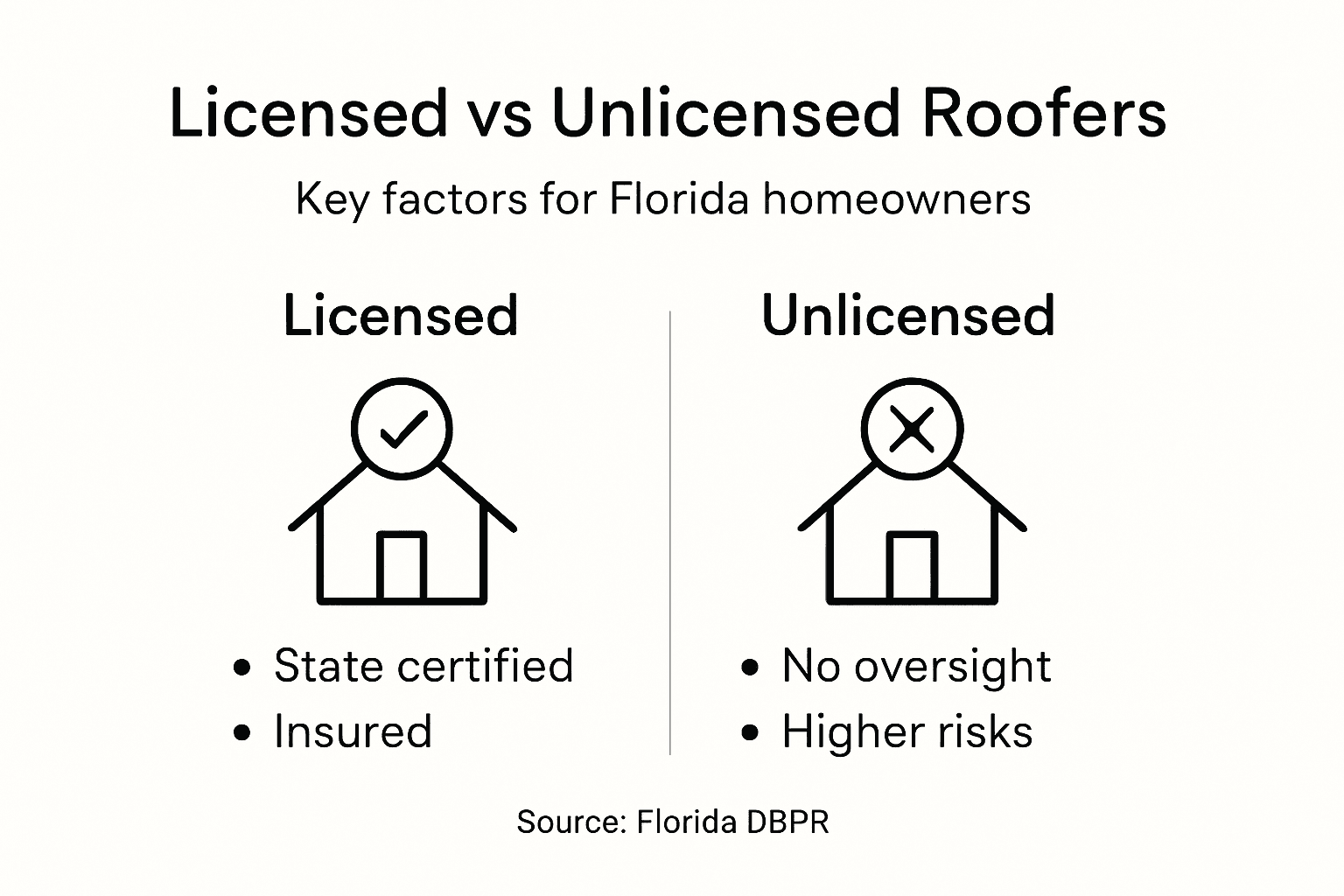
Homeowners can protect themselves by understanding the critical distinctions:
Review the impacts of hiring a licensed vs. unlicensed roofer:
| Factor | Licensed Roofer | Unlicensed Roofer |
|---|---|---|
| Insurance Coverage | Guaranteed; meets requirements | Frequently denied; not compliant |
| Legal Accountability | Liable for workmanship | No legal recourse for issues |
| Quality Assurance | Inspected and regulated | No standardized oversight |
| Financial Protection | Minimizes risk of loss | High risk of unexpected costs |
- Verified professional credentials
- Legal work documentation
- Insurance and liability protection
- Quality workmanship guarantees
- Compliance with local building regulations
Pro tip: Request to see a contractor’s current state license number and independently verify its validity before signing any roofing contract.
Trust Licensed Roofers to Protect Your Central Florida Home
Navigating the complexities of roofing licenses and legal insurance requirements can be overwhelming for homeowners in Central Florida. The risks of hiring unlicensed contractors include financial loss, voided insurance, and substandard workmanship. With Thomas Roofing and Repair, you gain peace of mind knowing that every project is handled by licensed professionals who meet Florida’s stringent standards for roofing expertise, insurance compliance, and building code adherence. Our services cover roof installation, repair, inspection, and storm damage restoration tailored to your specific needs.
Why risk your most valuable investment when you can choose trusted experts? We emphasize integrity, high-quality craftsmanship, and community commitment to keep your home safe and preserve its value. Learn more about our commitment to professional standards and customer satisfaction on our Thomas Roofing and Repair website.
Ready to secure and enhance your home with a licensed roofer who cares?

Contact Thomas Roofing and Repair today for a free estimate and expert guidance. Protect your investment and experience dependable roofing services designed specifically for Central Florida homeowners and business owners. Visit our site at Thomas Roofing and Repair and request your service now to avoid potential insurance issues and costly repairs down the road.
Frequently Asked Questions
What is a licensed roofer?
A licensed roofer is a contractor who has met state certification requirements, ensuring they have the necessary skills, experience, and insurance to perform roofing work legally and safely.
Why is it important to hire a licensed roofer?
Hiring a licensed roofer ensures that the work complies with local building codes, provides legal protections, and minimizes risks such as substandard workmanship or financial loss due to unqualified contractors.
How can I verify a roofer’s license in Florida?
You can verify a roofer’s license by checking the official Florida Construction Industry Licensing Board online, which provides instant confirmation of their current professional standing.
What are the risks of hiring unlicensed roofing contractors?
Hiring unlicensed roofing contractors can expose homeowners to financial vulnerabilities, potential legal complications, and substandard workmanship, which may lead to costly repairs and voided insurance coverage.