When storms sweep through Central Florida, finding the right contractor for roof repairs can feel overwhelming. Protecting your home starts with hiring a local roofer who is accountable to strict Florida licensing rules and community standards. These contractors must meet experience, insurance, and exam requirements through the Department of Business and Professional Regulation. Choosing a local expert means your roof gets reliable repairs, compliance with regional codes, and direct accountability to county oversight—bold concepts that safeguard your investment.
Table of Contents
- What Makes A Contractor Local In Florida
- How Local Roofers Address Storm Damage
- Licensing, Insurance, And Community Reputation
- Faster Response And Personalized Service
- Comparing Local Vs National Contractors
Key Takeaways
| Point | Details |
|---|---|
| Local Contractors Must Be Licensed | Florida roofing contractors need to obtain certified or registered licenses, ensuring they meet state and local regulatory standards. |
| Local Expertise Is Crucial | Local contractors understand the regional climate and building codes, which enhances their ability to manage storm damage effectively. |
| Accountability to the Community | Hiring local contractors means they are subject to local regulatory oversight, which ensures accountability and quality of service. |
| Faster Response Times | Local roofers can respond more quickly during emergencies, offering timely assistance compared to national chains. |
What Makes a Contractor Local in Florida
A local roofing contractor in Florida isn’t just someone who happens to work in your area. They’re bound by specific licensing requirements, regulatory standards, and community accountability that protect you.
Contractors operating in Central Florida must obtain proper licensing from the state’s Department of Business and Professional Regulation (DBPR). This means they’ve passed exams, proven relevant experience, and met insurance requirements before ever touching your roof.
Licensing comes in two forms for Florida contractors:
- Certified licenses allow statewide work across Florida
- Registered licenses limit contractors to specific jurisdictions or counties
Either way, local contractors answer to both state and county requirements. Your county’s building department actively enforces these standards, which is why Florida contractor licensing regulations matter when hiring someone locally.
Here’s a concise reference comparing Florida roofing contractor license types:
| License Type | Scope of Work | Oversight Authority | Typical Coverage |
|---|---|---|---|
| Certified | Statewide projects across Florida | State DBPR regulates performance and discipline | All counties, statewide impact |
| Registered | Limited to specific county or jurisdiction | Local county building departments enforce standards | Only designated local areas |
Beyond licensing, local contractors understand your specific region’s challenges. Central Florida faces unique weather patterns, building codes vary by county, and storm season requires knowledge unique to this area. A contractor who’s worked in Orange, Brevard, or Volusia counties knows exactly what your roof endures.
Local contractors also carry the insurance and bonding requirements mandated by their jurisdiction. Building departments like those in Broward County ensure contractors maintain proper coverage, which protects you if something goes wrong.
When you hire locally, you’re hiring someone subject to local disciplinary boards and regulatory oversight. They can’t disappear; the county knows where they are and what they’ve done. That accountability matters.
Key differences between local and out-of-area contractors:
- Local knowledge of regional building codes and permit requirements
- Subject to local disciplinary boards and complaint processes
- Familiar with county-specific weather challenges and roof damage patterns
- Established reputation within the community
- Direct accountability through local licensing boards
Local contractors in Florida aren’t just licensed—they’re locally accountable through county regulatory systems and disciplinary boards that protect homeowners.
Pro tip: When vetting a contractor, verify their license status directly through your county’s building department website or call their office; this takes five minutes and confirms they’re actually local and properly licensed.
How Local Roofers Address Storm Damage
When a hurricane or severe storm hammers Central Florida, local roofers become your first line of defense. They understand the unique damage patterns that affect homes in Brevard, Orange, and Volusia counties because they’ve repaired roofs hit by these exact storms.
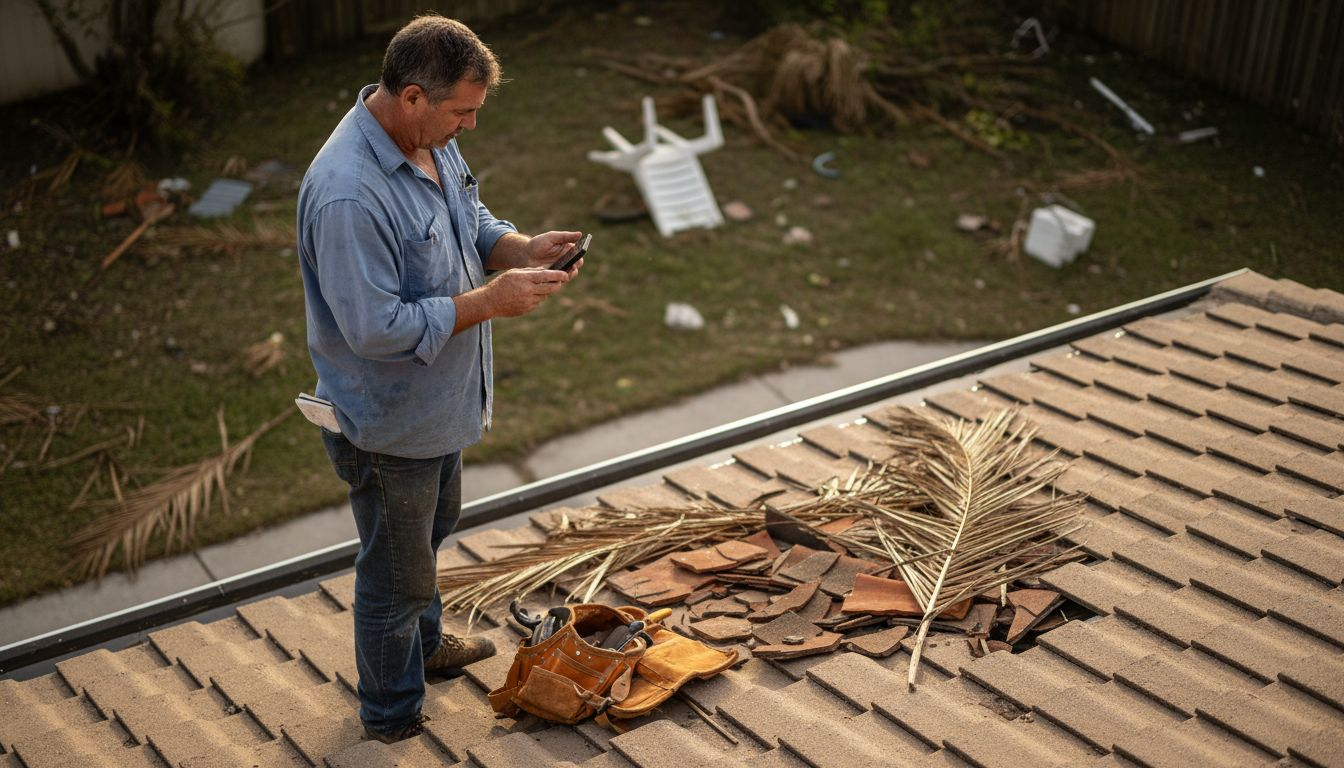
Local roofers start with a thorough damage assessment. They climb onto your roof and evaluate whether damage is superficial or structural. This inspection determines whether repairs will work or if you need a full replacement.
They know exactly what Florida’s Building Code standards require after storm damage. When repairs exceed certain thresholds, updated code compliance becomes mandatory. Local contractors navigate these regulations automatically because they work with them constantly.
Here’s what local roofers typically address after storms:
- Torn shingles and missing granules from high winds
- Water infiltration through roof penetrations and flashing
- Structural damage to rafters, trusses, or decking
- Impact damage from debris and flying objects
- Proper ventilation and drainage restoration
Local roofers also help you access available mitigation programs. Programs like the My Safe Florida Home Program provide matching grants for storm-resistant improvements. These contractors know which improvements qualify and handle the inspection and permitting process.
They coordinate with your insurance company and manage the documentation needed for claims. They’ve handled dozens of storm damage cases and know what inspectors look for. This experience accelerates your claim approval and repair timeline.
Beyond repairs, local roofers recommend preventive upgrades. Hurricane clips, impact-resistant shingles, and reinforced flashing reduce future storm damage. They suggest improvements tailored to your home’s specific vulnerabilities.
Local contractors also understand local permitting timelines. After major storms, permit offices get overwhelmed. Local roofers have relationships with inspectors and know how to navigate the queue efficiently.
Below is a summary of how local roofers efficiently address storm damage in Central Florida:
| Step | Local Expertise Benefit | Outcome for Homeowner |
|---|---|---|
| Damage Assessment | Accurate identification of regional damage patterns | Faster, targeted repairs |
| Building Code Navigation | Familiarity with area-specific regulations | Projects pass inspection quickly |
| Insurance Coordination | Experience with claim documentation requirements | Smoother, quicker payouts |
| Preventive Upgrades | Tailored recommendations for local storms | Reduced future damage risk |
Local roofers don’t just fix storm damage—they prevent it from happening again by implementing code-compliant upgrades suited to Central Florida’s hurricane season.
Pro tip: Document all damage with photos immediately after a storm, then call a local roofer for a free assessment before filing your insurance claim; their damage report strengthens your claim significantly.
Licensing, Insurance, and Community Reputation
Three things separate trustworthy roofers from unlicensed operators: proper licensing, adequate insurance, and a solid reputation in your community. These aren’t just credentials—they’re your protection.
Florida mandates that roofing contractors obtain licenses through the Department of Business and Professional Regulation (DBPR). This process weeds out inexperienced or unqualified workers before they ever touch your roof.
To get licensed, contractors must prove relevant experience, pass exams on construction and business law, carry liability and workers’ compensation insurance, and renew their credentials regularly. It’s not a rubber stamp; it’s verification.
What proper licensing means for you:
- Contractor has met minimum experience and competency standards
- They understand Florida’s Building Code requirements
- They carry required insurance for worker and property protection
- They’re subject to DBPR disciplinary action if they breach standards
- Their work is legally recognized and insurable
Insurance is where licensing becomes real protection. A licensed contractor without adequate coverage leaves you exposed if something goes wrong. Workers’ compensation covers their employees if someone gets hurt on your property. Liability insurance covers damage to your home during repairs.
A contractor carrying proper liability and workers’ compensation insurance demonstrates they’re serious about managing risk and protecting your interests.
Community reputation ties everything together. You can verify a contractor’s credentials through searchable licensing databases maintained by local governments. These public records show complaint histories, insurance status, and good standing with licensing authorities.
When you hire a roofer with a solid local reputation, you’re hiring someone accountable to their neighbors. They can’t disappear or ignore complaints. Their livelihood depends on doing quality work and treating customers fairly.
Red flags to avoid:
- Contractor can’t provide license number or proof of insurance
- No searchable record in county licensing databases
- Unwilling to provide references from recent local jobs
- Pressures you to pay cash or in full upfront
- No permanent local address or phone number
Licensed, insured contractors with community reputation aren’t just qualified—they’re accountable to regulatory boards and their neighbors for every job.
Pro tip: Before hiring any roofer, spend ten minutes verifying their license and insurance status through your county’s online contractor database; this single step eliminates nearly all fraudulent operators.
Faster Response and Personalized Service
When your roof leaks during a downpour, waiting days for a contractor to show up isn’t an option. Local roofers in Central Florida respond quickly because they’re already in your area.
National roofing companies dispatch teams from distant hubs. Local contractors operate from their community, so they can reach you in hours instead of days. This matters most during storm season when every contractor gets slammed simultaneously.
Local roofers understand your specific roofing challenges. They’ve worked on homes in your neighborhood and know which materials hold up best in Central Florida’s humidity and heat. They recognize local building code requirements without needing to research them.
How local contractors personalize service:
- Conduct detailed consultations tailored to your home’s unique situation
- Recommend solutions based on neighborhood weather patterns
- Suggest preventive maintenance specific to your roof type
- Offer flexible scheduling that works around your life
- Provide direct communication with the same person throughout your project
Local contractors have established relationships with building inspectors and suppliers. They know who can fast-track permits and which suppliers stock materials quickly. These connections accelerate your project timeline significantly.
They also understand your financial situation better. National chains push financing packages that may not fit your budget. Local roofers often offer flexible payment terms because they care about your satisfaction, not quarterly earnings.
Personalized service means ongoing maintenance relationships. Local contractors remember your roof and reach out before problems develop. They’re invested in your long-term satisfaction, not just completing one transaction.
Members of roofing contractor associations in Florida emphasize community engagement and personalized service as core business practices. These contractors follow codes of ethics focusing on fair pricing, transparency, and customer satisfaction.
You get consistent communication with someone who knows your address, your roof type, and your concerns. No transferring between departments or explaining your situation repeatedly.
Local roofers provide faster response times and customized solutions because they’re embedded in your community and their reputation depends on your satisfaction.
Pro tip: Call local roofers during non-storm periods to establish relationships; when emergencies happen, you’ll reach someone familiar with your roof instead of a stranger scrambling to learn your situation.
Comparing Local vs National Contractors
When you need roofing work done, you face a simple choice: hire a local contractor or call a national chain. Each option has trade-offs worth understanding before you decide.
National roofing companies bring impressive operational capacity. They have large crews, substantial equipment, and access to financing programs. But that scale comes with a cost—literally and figuratively.
National contractors often lack detailed knowledge of Florida’s unique climate and building codes. A crew dispatched from Atlanta doesn’t understand Brevard County’s specific wind patterns or Orange County’s permitting quirks. They follow standardized procedures designed for nationwide operations, not local conditions.
Local contractors excel where it matters most for Florida homeowners. They understand local building codes, faster project turnaround, and established community trust that national firms struggle to match.
Key differences you should know:
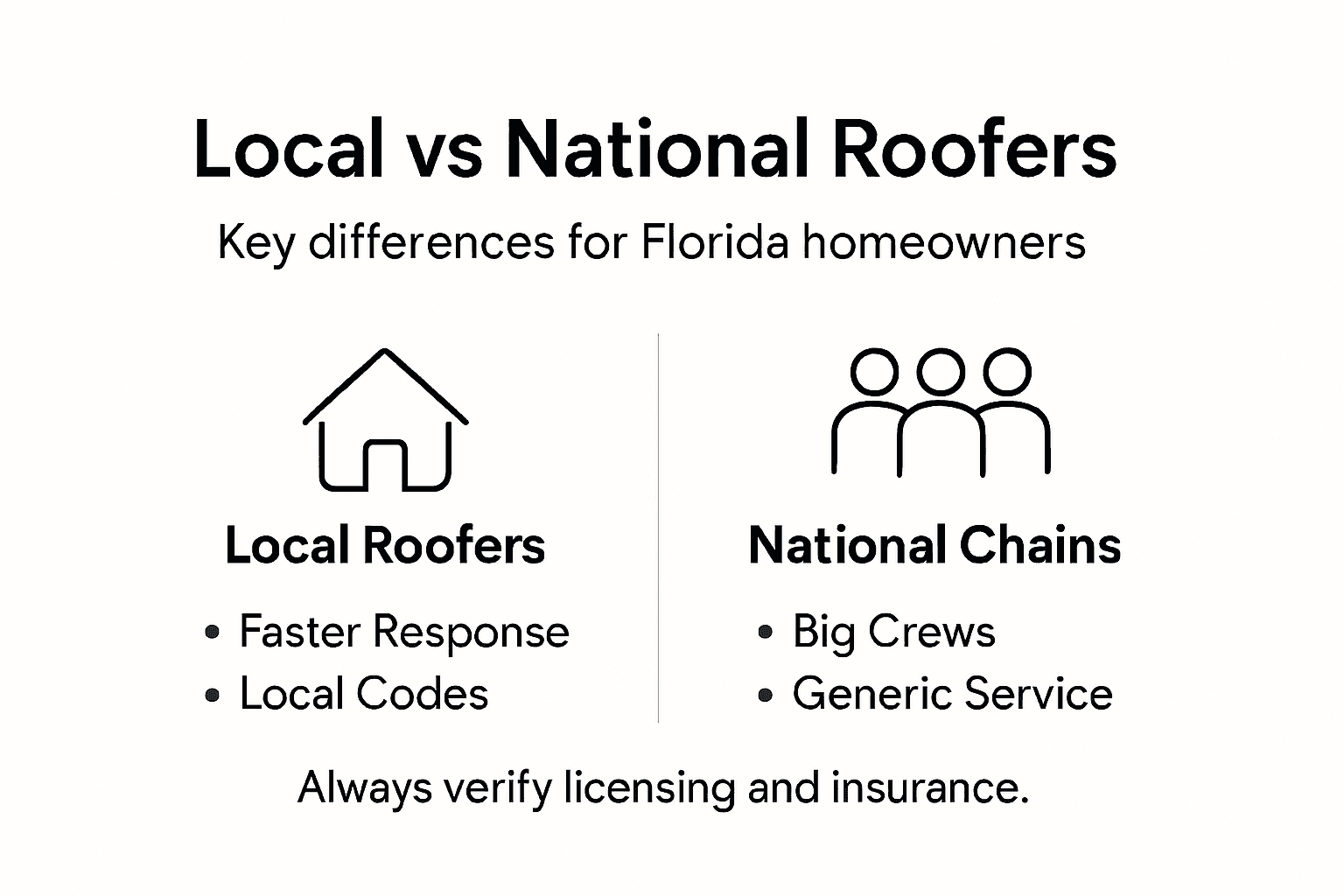
- Local: Know regional weather impacts and permitting processes; respond quickly; maintain community reputation
- National: Larger crews and equipment; standardized processes; may lack Florida expertise
- Local: Direct communication with owner or senior staff; customized solutions; flexible scheduling
- National: Corporate bureaucracy; standardized pricing; longer response times during peak season
Local contractors are more familiar with insurance claim procedures specific to Florida’s roofing demands. When a hurricane hits and thousands of homeowners file claims simultaneously, local roofers know exactly how to navigate the process.
National chains excel at volume but struggle with customization. Your roof is unique, but national contractors apply cookie-cutter solutions. Local roofers tailor their approach to your home’s specific needs, materials, and location.
Cost differences aren’t always obvious. National companies advertise lower prices but often charge for extras that local contractors include. Regional customization and faster timelines save money that national firms’ overhead eliminates.
When storm season arrives and you need emergency repairs, which contractor answers your call faster? Local roofers are already here. National companies dispatch crews from distant service centers, leaving you waiting days while your home deteriorates.
Local contractors offer customization, regulatory compliance, and responsiveness that national firms cannot replicate despite their size and resources.
Pro tip: Get competitive bids from both local and national contractors, but focus on their specific experience with Central Florida’s weather patterns and building codes rather than comparing price alone.
Choose Trusted Local Roofing Experts Who Understand Central Florida
Hiring a roofing contractor who truly knows the challenges of Central Florida means peace of mind that your home or business is protected against storms, strict building codes, and unique weather impacts. If you are facing concerns about storm damage, permit delays, or the need for personalized roofing solutions, partnering with local experts you can trust is essential. Thomas Roofing and Repair specializes in addressing these exact pain points with certified licensing, proper insurance, and a community-first approach tailored to counties like Brevard, Volusia, and Orange.
Our team deeply understands local roofing regulations and storm damage patterns and provides transparent, reliable services from inspection to full replacement. You get fast responses, clear communication, and a contractor who stands behind their work with integrity. Explore how our roof installation, repair, and storm damage services deliver quality craftsmanship backed by real local accountability and expertise.
Looking for a dependable local roofer that prioritizes your community and your safety?

Contact Thomas Roofing and Repair today for a free estimate and experience roofing service that protects your investment with personalized care and proven local knowledge. Don’t wait for the next storm to act. Secure your property with experts who understand Florida roofing inside and out.
Frequently Asked Questions
What are the advantages of hiring a local roofing contractor?
Local roofing contractors possess in-depth knowledge of regional building codes, weather patterns, and community standards. They offer personalized service, faster response times, and are accountable to local regulatory boards, ensuring compliance and quality.
How does local knowledge benefit roof repairs after a storm?
Local contractors understand the specific types of storm damage prevalent in the area, allowing for thorough damage assessments and efficient repairs. They are also familiar with Florida’s Building Code requirements, ensuring that any repairs meet legal standards.
Why is proper licensing and insurance important for roofing contractors?
Proper licensing ensures the contractor has met state standards for experience and competency, while insurance protects you from liability if accidents occur during repairs. Without these, homeowners can risk substandard work and financial loss.
How can I verify a roofing contractor’s credentials in my area?
You can verify a contractor’s licensing and insurance status by checking your county’s building department website or contacting their office directly. This ensures the contractor is local, licensed, and properly insured.
Recommended
- Why Choose Professional Roofing for Florida Homes
- Licensed Roofers: Reliable Roofing for Central Florida
- Clermont Roof Replacement Services | Thomas Roofing and Repair
- Articles – Thomas Roofing & Repair Inc.
- Why Hire a Local Birmingham Accountant? Key Benefits
- Roofing Company Orlando FL
- Roofing Company Titusville FL
- Roofing Company DeLand FL