
TL;DR:
- A roofing ice shield is a self-adhering, waterproof membrane that bonds directly to the roof deck to prevent water intrusion in vulnerable areas. It is essential in Florida for protecting against wind-driven rain and tropical storms, especially at eaves, valleys, and roof penetrations, where standard underlayment may fail. Proper installation and clear contractor communication are crucial to ensure adequate coverage and maximum roof protection against severe weather conditions.
A roofing ice shield is a self-adhering, waterproof membrane installed directly on the roof deck to block water intrusion in the most vulnerable areas of your roof. Most homeowners associate it with frozen northern winters, but in Central Florida, this product earns its keep against wind-driven rain, tropical storms, and moisture that shingles alone cannot stop. Understanding what is roofing ice shield, how it works, and where it belongs on your roof can mean the difference between a dry home and a costly repair bill after the next hurricane season.
What is roofing ice shield and how does it work?
A roof ice barrier is a self-adhering, rubberized asphalt membrane that bonds permanently to the plywood or OSB roof deck. The industry standard term is “ice and water shield,” though contractors and homeowners often call it ice shield, ice barrier, or peel-and-stick membrane. All names refer to the same product.
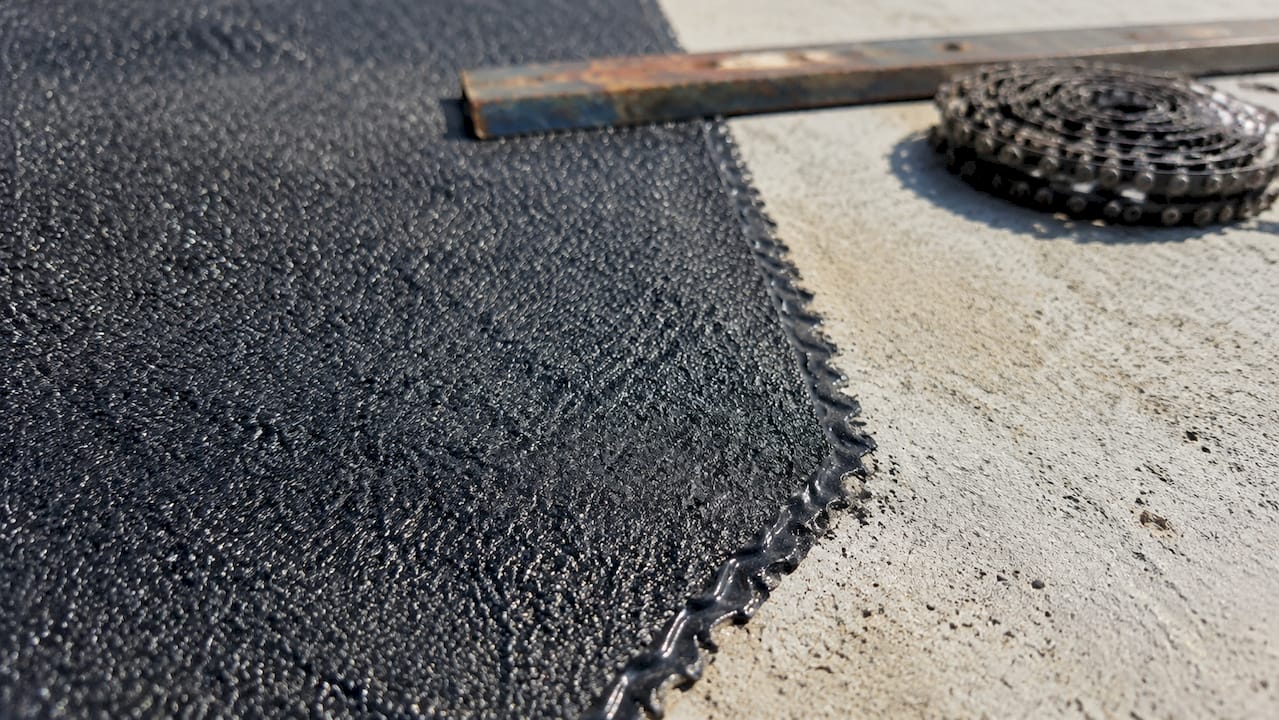
The membrane works in two ways. First, it bonds directly to the deck surface without mechanical fasteners, which eliminates air gaps where water can travel under traditional underlayment. Second, the rubberized asphalt layer self-seals around every nail or screw that penetrates it. That self-sealing feature is what separates ice shield from every other underlayment type.
Here is why that matters in practice. When a roofer drives a nail through standard felt or synthetic underlayment, a small hole remains open. Wind-driven rain can force water through that hole and into the roof structure. Ice shield closes around the fastener automatically, maintaining a continuous waterproof barrier even after the shingles are installed.
Pro Tip: Ask your contractor to confirm that the ice shield is installed on a clean, dry deck with proper overlaps per manufacturer specifications. Moisture trapped under the membrane during installation can compromise the bond and reduce its effectiveness.
Where ice shield gets installed
Building code requires ice barrier coverage to extend at least 24 inches inside the interior wall line at eaves and 36 inches on each side of valleys, totaling 72 inches across each valley. These measurements come from the International Residential Code (IRC) 2026 standards. Code also requires coverage around roof penetrations such as chimneys, skylights, and vents, since these areas are particularly vulnerable to leaks.
The membrane installs first, before any underlayment or shingles go down. Shingles sit on top of the system, and the ice shield acts as the final defense if water gets past them.
How does ice shield compare to other underlayment types?
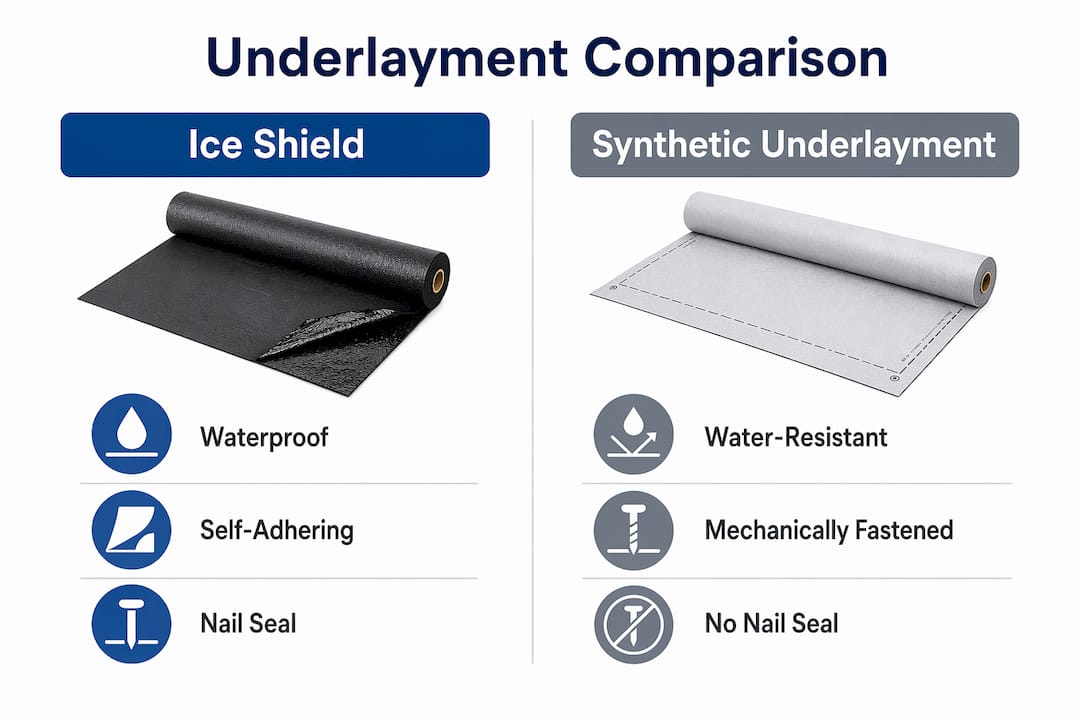
Understanding roofing underlayment types helps you ask better questions when reviewing a contractor’s estimate. The two main options are standard synthetic underlayment and ice and water shield. They are not interchangeable.
Standard synthetic underlayment is water-resistant but not waterproof, and it does not self-seal around fasteners. Ice and water shield is fully waterproof and self-adhering. That distinction matters most in high-risk zones like eaves, valleys, and penetration points.
| Feature | Synthetic Underlayment | Ice and Water Shield |
|---|---|---|
| Installation method | Mechanically fastened | Self-adhering, peel-and-stick |
| Waterproof rating | Water-resistant only | Fully waterproof |
| Seals around fasteners | No | Yes, self-sealing |
| Best application area | Field of the roof | Eaves, valleys, penetrations |
| Relative cost | Lower | Higher |
| Durability under wind-driven rain | Moderate | High |
The practical takeaway is straightforward. Synthetic underlayment works well across the broad field of a roof where water runoff is predictable and fast. Ice shield belongs in the zones where water slows down, backs up, or gets forced upward by wind. In Central Florida, those zones include every valley, every eave, and every spot where a chimney, vent, or skylight breaks the roof surface.
For weatherproof roofing in Florida’s climate, a well-specified roof uses both products together. Synthetic underlayment covers the field; ice shield covers the critical zones.
Benefits of ice shield for central florida homes
Many homeowners assume ice shield only matters in Minnesota or Maine. That assumption is wrong. In climates like Central Florida, the membrane’s primary job is preventing leaks from tropical storms and wind-driven rain, not ice dams. Florida’s hurricane season runs june through november, and a Category 1 storm can push rain horizontally under shingles with enough force to overwhelm standard underlayment.
The benefits of ice shield for Florida properties include:
- Wind-driven rain protection. Horizontal rain during tropical storms reaches areas that vertical rain never touches. Ice shield seals those entry points.
- Moisture damage prevention. Ice shield acts as the last line of defense against water intrusion, helping prevent wood rot and mold in Florida’s humid climate.
- Penetration sealing. Chimneys, skylights, and vents are the most common leak sources on any roof. Ice shield wraps these areas and seals the gaps that flashing alone cannot cover.
- Low-slope roof coverage. Roofs under a 4:12 pitch benefit from full ice shield coverage because water moves slowly on shallow slopes and pools in ways that standard underlayment cannot handle.
- Extended roof life. Keeping moisture out of the roof deck protects the structural wood and extends the lifespan of the entire roofing system.
Pro Tip: If your home has a low-slope section, a flat porch roof, or a roof valley that collects debris, ask your contractor specifically about full ice shield coverage in those areas. Code minimums are a floor, not a ceiling.
For more on roofing materials suited to Florida, the combination of ice shield in critical zones and quality synthetic underlayment across the field is the standard approach used by experienced contractors in Brevard, Volusia, and Orange counties.
What to ask before your contractor installs ice shield
Choosing the right product matters, but so does verifying that your contractor installs it correctly. Here is a practical checklist for homeowners and property managers reviewing a roofing estimate.
- Confirm coverage areas in writing. Contractors should explicitly specify ice shield application areas in the contract. A line item that says “underlayment” without specifying type and location leaves room for a cheaper product to be substituted.
- Ask about the membrane brand. Reputable options include GRACE Ice and Water Shield, GAF WeatherWatch, and Owens Corning WeatherLock. Each meets industry standards, but brand quality and warranty terms vary.
- Verify self-sealing nail penetration capability. Not all peel-and-stick membranes self-seal equally well. Confirm the product spec sheet lists self-sealing around fasteners as a rated feature.
- Request IRC 2026 compliance. Your contractor should confirm that eave coverage extends at least 24 inches past the interior wall line and that valley coverage meets the 36-inch-per-side requirement.
- Ask about low-slope sections. If any part of your roof has a pitch below 4:12, ask whether full ice shield coverage is included or whether it needs to be added.
- Understand the maintenance picture. Ice shield requires no direct maintenance once installed under shingles. However, if shingles are removed during a repair, the exposed membrane should be inspected for tears or lifted edges before new shingles go down.
High-quality shingles provide visible protection, but ice shield protects against the leaks that shingles cannot fully prevent on their own. Treating the two as a system, rather than alternatives, is the right frame for any roofing conversation.
For homes in storm-prone areas, reviewing storm-ready roofing features alongside your ice shield specification gives you a complete picture of how your roof performs under pressure.
Key takeaways
Ice and water shield is a fully waterproof, self-adhering membrane that protects the most vulnerable areas of any roof, and in Central Florida its primary value is defense against wind-driven rain and tropical storm moisture, not ice dams.
| Point | Details |
|---|---|
| Core definition | Ice shield is a rubberized asphalt membrane that bonds to the deck and self-seals around fasteners. |
| Florida relevance | Wind-driven rain and tropical storms make ice shield critical even without ice dam risk. |
| Code requirements | IRC 2026 requires 24 inches past the interior wall at eaves and 36 inches per side in valleys. |
| Underlayment comparison | Synthetic underlayment is water-resistant; ice shield is fully waterproof and self-adhering. |
| Installation verification | Always confirm coverage areas, membrane brand, and IRC compliance in your written contract. |
The part most contractors skip telling you
Here is something I have seen repeatedly on re-roofing jobs across Central Florida. A homeowner gets a competitive bid, the contract says “underlayment included,” and the crew installs standard synthetic felt across the entire roof because it is faster and cheaper. The shingles look perfect. The homeowner is satisfied. Then a tropical storm rolls through, and water finds the valley or the skylight flashing, and suddenly there is a ceiling stain and a mold problem.
Ice shield is not a stand-alone solution. It works as part of a system that includes proper ventilation, quality shingles, and correct flashing. But it is the component that most directly prevents the leaks that shingles and flashing miss. Skipping it in the critical zones is a false economy.
My honest advice: do not let “underlayment” be a vague line item on your estimate. Push for specifics. Ask which product, which brand, and which areas get covered. A contractor who cannot answer those questions clearly is not someone you want on your roof. A contractor who answers them confidently and puts the details in writing is worth every dollar. For Florida homeowners, this is not a northern-climate luxury. It is a baseline standard for any roof that needs to survive a serious storm season.
— Thomasroofingandrepair
Get ice shield installed right the first time
Thomas Roofing and Repair serves homeowners and property managers across Central Florida, including Horizon West, Titusville, and Palm Bay. Every installation includes a detailed specification of underlayment types and coverage areas, so you know exactly what is protecting your home before the first shingle goes down.

Whether you are replacing an aging roof or upgrading after storm damage, the team at Thomas Roofing and Repair brings the expertise to specify and install ice and water shield correctly in every critical zone. Request a free estimate for roof installation in Horizon West, Titusville roof installation, or Palm Bay roofing services and get a written scope that covers every detail.
FAQ
What is roofing ice shield made of?
Roofing ice shield is made from a rubberized asphalt compound bonded to a polyethylene film backing. The rubberized asphalt layer gives the membrane its waterproof and self-sealing properties.
Do i need ice shield on a florida roof?
Yes. While ice dams are not a concern in Florida, wind-driven rain from tropical storms makes ice shield necessary at eaves, valleys, and roof penetrations on any Florida home.
How long does ice shield last under shingles?
Ice and water shield typically lasts as long as the shingles above it, generally 20–30 years depending on the product and installation quality. It requires no maintenance once properly installed under the roofing system.
Where exactly does ice shield go on the roof?
Ice shield installs at eaves, in valleys, and around penetrations like chimneys, skylights, and vents. IRC 2026 standards specify minimum coverage dimensions for each location.
Is ice shield the same as regular underlayment?
No. Standard synthetic underlayment is water-resistant and mechanically fastened. Ice shield is fully waterproof, self-adhering, and seals around fasteners automatically, making it the stronger choice for high-risk roof areas.