Florida storms and relentless sun can leave even sturdy commercial roofs vulnerable to hidden trouble. For property owners and managers in Central Florida, tackling roof damage means more than a quick patch—it demands a systematic approach built on thorough inspection, safety protocols, and meticulous documentation. Whether your roof is aging or recovering from severe weather, knowing each essential step ensures lasting protection and peace of mind. This guide reveals how to handle every phase, from inspection to ongoing maintenance, for true roof reliability.
Table of Contents
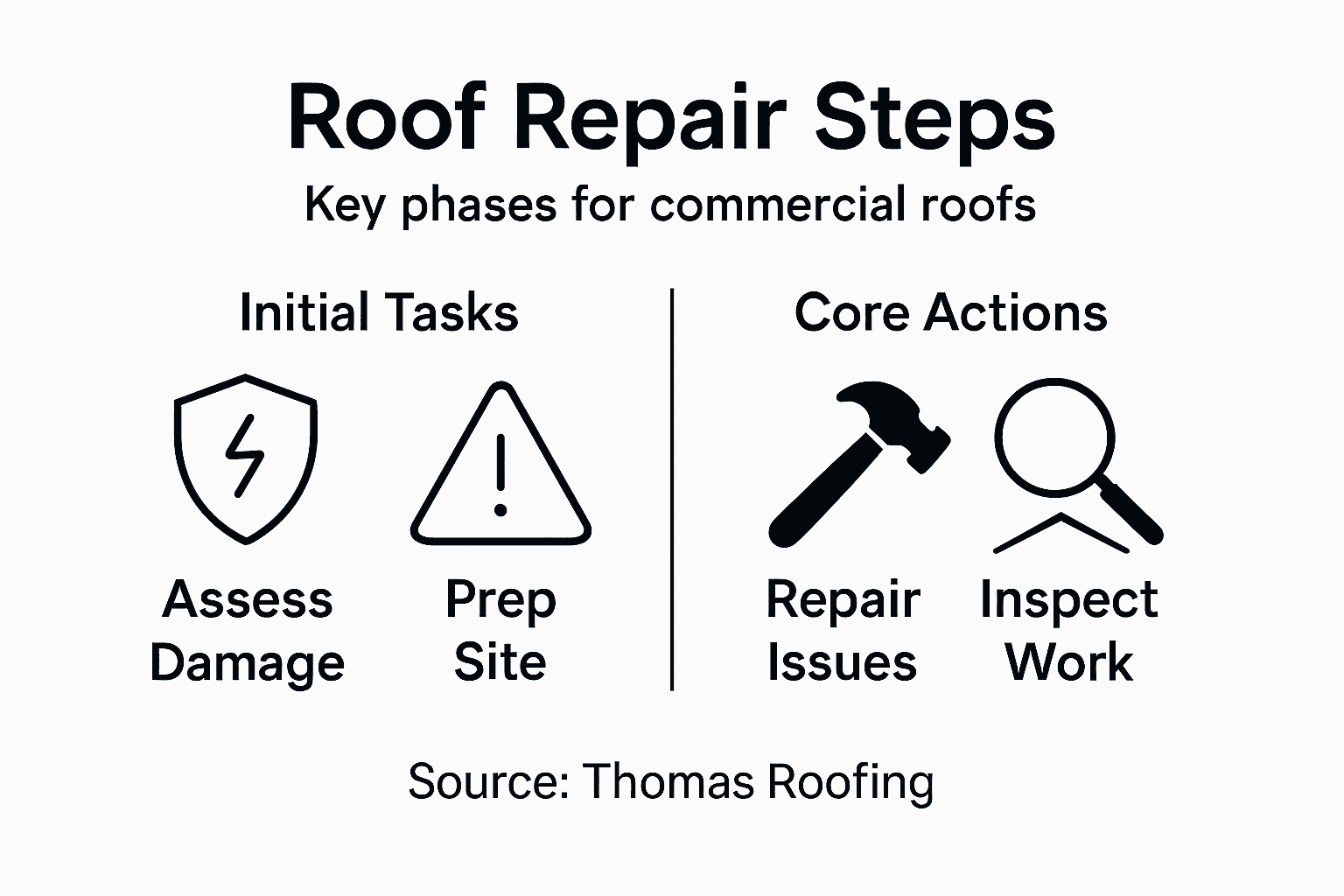
- Step 1: Assess Roof Damage And Prepare Site
- Step 2: Select Suitable Materials And Tools
- Step 3: Perform Essential Roof Repairs
- Step 4: Inspect Completed Repairs For Quality
- Step 5: Implement Maintenance And Future Protection
Quick Summary
| Key Point | Explanation |
|---|---|
| 1. Conduct thorough damage assessment | Systematic inspection reveals existing issues and protects worker safety during the assessment process. Document all problems meticulously, including photos. |
| 2. Choose quality materials and tools | Selecting suitable roofing materials and tools impacts repair success. Each material has specific requirements that must align with project specifications. |
| 3. Implement precise repair techniques | Follow professional standards for effective restoration. Ensure proper sealing and compatible materials to enhance longevity and integrity of the roofing system. |
| 4. Execute quality control inspections | Verify repair quality with thorough inspections post-repair. Document findings to catch potential future issues that could lead to costly repairs. |
| 5. Develop a consistent maintenance program | Regular inspections and proactive repairs minimize long-term costs and extend the life of your commercial roof. Document all maintenance activities for best results. |
Step 1: Assess roof damage and prepare site
Assessing commercial roof damage is the critical first step in any repair process, setting the foundation for a successful restoration strategy. Commercial roofing challenges require systematic inspection techniques and safety protocols to ensure accurate damage evaluation and worker protection.
Before climbing onto any commercial roof surface, establish comprehensive safety measures. Safety protocols from damage assessment guidelines recommend implementing the following preparation steps:
- Verify ladder stability and proper placement
- Use a buddy system for inspection work
- Wear appropriate personal protective equipment (PPE)
- Check for potential tripping hazards
- Inspect roof access points
During the initial damage assessment, document everything meticulously. Look for key indicators of potential roof issues:
- Visible membrane tears or punctures
- Standing water accumulation
- Loose or damaged flashing
- Signs of structural deformation
- Evidence of previous repair attempts
Professional inspectors recommend capturing detailed photographic evidence of each identified problem area. These visual records will serve as critical documentation for insurance claims and repair planning.
Systematic documentation transforms a basic inspection into a comprehensive damage assessment strategy.
Pro tip: Always schedule commercial roof assessments during optimal daylight conditions and when no precipitation is expected to ensure maximum visibility and safety.
Step 2: Select suitable materials and tools
Choosing the right materials and tools is crucial for a successful commercial roof repair, ensuring durability, performance, and long-term protection. The selection process requires careful consideration of multiple factors that impact the roof’s resilience and functionality.
Flat and low-slope roofing materials present diverse options that depend on specific project requirements. Consider these critical material selection criteria:
- Building structure and roof slope
- Local climate conditions
- Expected performance lifespan
- Budget constraints
- Compatibility with existing roofing systems
For commercial roof repairs, common material options include:
- Single-ply membranes (TPO, EPDM, PVC)
- Built-up roofing (BUR) systems
- Modified bitumen membranes
- Metal roofing components
- Liquid-applied roofing systems
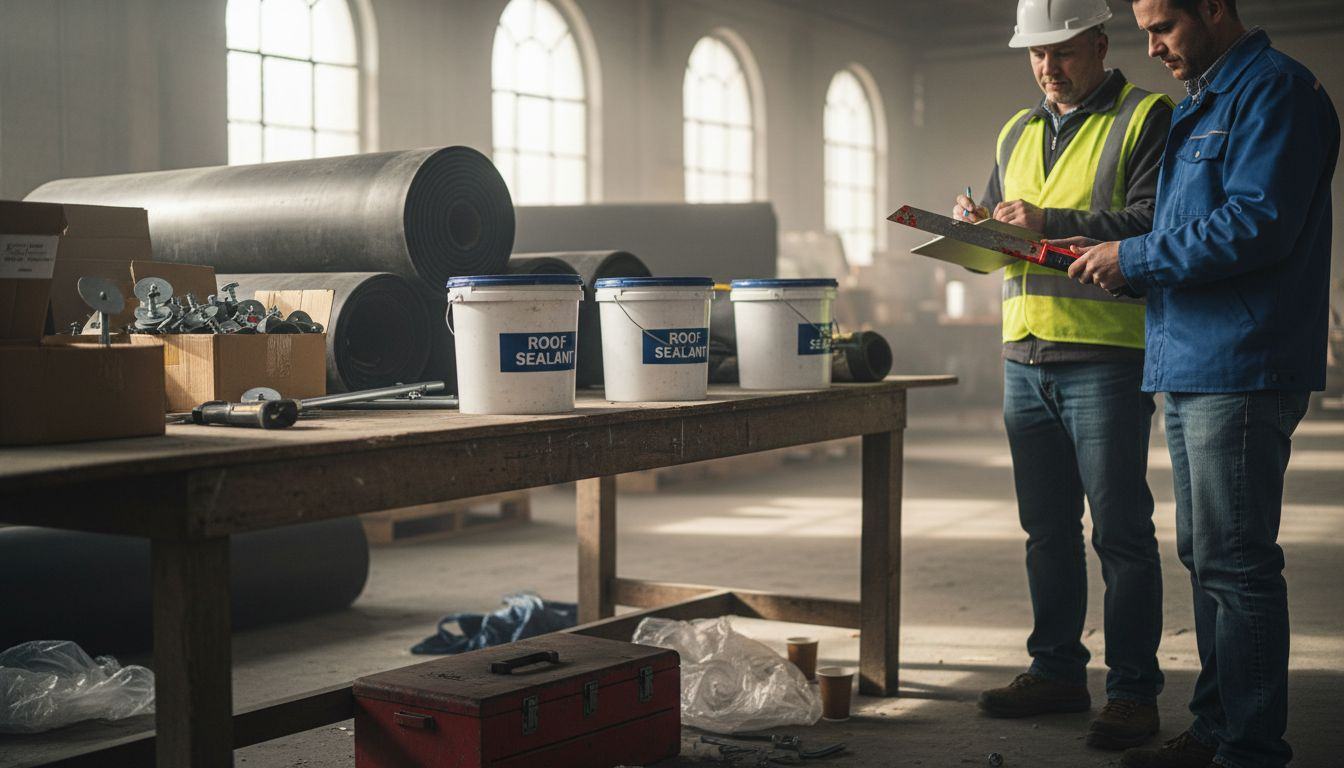
Each material type demands specific tools and expertise for proper installation. Matching materials to project specifications is essential for achieving optimal repair outcomes. Professional roofers typically require specialized equipment like:
Here’s a comparison of common commercial roofing materials and their key strengths:
| Roofing Material | Strengths | Typical Lifespan |
|---|---|---|
| TPO (single-ply membrane) | UV resistance, reflective surface | 15–20 years |
| EPDM (single-ply membrane) | Excellent flexibility, long wear | 20–30 years |
| Modified Bitumen | Proven durability, easy repairs | 10–20 years |
| Built-up Roofing (BUR) | Layered protection, strong seams | 15–30 years |
| Metal Roofing | Extreme longevity, low upkeep | 30–50 years |
- Infrared thermal imaging cameras
- Moisture detection tools
- Professional-grade cutting equipment
- Seam welding machines
- Safety harnesses and fall protection gear
Selecting the right materials is 50% of your repair success – choose wisely.
Pro tip: Always purchase materials from reputable manufacturers and verify warranty coverage before starting your commercial roof repair project.
Step 3: Perform essential roof repairs
Executing precise and methodical roof repairs is crucial for restoring the structural integrity and weatherproofing of your commercial roofing system. The repair process demands careful attention to detail and adherence to professional standards to ensure long-lasting results.
Commercial roof repair standards provide critical guidelines for implementing effective restoration techniques. Prioritize these essential repair steps:
- Clean and prepare the damaged area thoroughly
- Remove compromised roofing materials
- Inspect underlying substrate for additional damage
- Apply appropriate repair materials
- Ensure proper sealing and waterproofing
Key repair techniques for different damage types include:
- Membrane patching for punctures and tears
- Seam resealing for separation issues
- Flashing replacement around roof penetrations
- Liquid membrane application for extensive surface repairs
- Structural reinforcement for significant structural damage
Matching repair techniques to specific damage types requires professional expertise. Pay close attention to:
- Material compatibility
- Manufacturer warranty requirements
- Local building code compliance
- Long-term performance expectations
Precision in repair execution determines the ultimate longevity of your commercial roofing system.
Pro tip: Document every repair step with detailed photographs and written notes to maintain a comprehensive maintenance history and support future warranty claims.
Step 4: Inspect completed repairs for quality
Quality control is the final critical checkpoint in ensuring your commercial roof repair meets professional standards and delivers lasting protection. A thorough post-repair inspection validates the effectiveness of your restoration efforts and identifies any potential issues before they escalate.
Comprehensive roof inspection procedures recommend a systematic approach to assessing repair quality. Focus on these key evaluation areas:
- Verify membrane integrity and seamless connections
- Check for proper waterproofing and edge sealing
- Examine flashing and penetration point installations
- Assess overall surface smoothness and uniformity
- Confirm no residual moisture or trapped debris
Critical inspection techniques include:
- Visual surface examination for irregularities
- Moisture mapping using infrared thermal imaging
- Physical membrane testing for strength and adhesion
- Water drainage pattern analysis
- Detailed photographic documentation
Documenting repair quality requires meticulous attention to detail. Create a comprehensive inspection report that includes:
- Precise location of repaired areas
- Photographs from multiple angles
- Measurements and material specifications
- Identified potential future maintenance points
A thorough inspection today prevents costly repairs tomorrow.
Pro tip: Schedule a follow-up inspection three to six months after repairs to validate long-term performance and catch any emerging issues early.
Step 5: Implement maintenance and future protection
Proactive maintenance is the cornerstone of preserving your commercial roof’s longevity and performance. By establishing a strategic maintenance program, you can prevent minor issues from escalating into costly repairs and extend the overall life of your roofing system.
Preventative maintenance strategies emphasize creating a comprehensive care plan that goes beyond reactive repairs. Develop a robust maintenance approach through these critical components:
- Establish a regular inspection schedule
- Create detailed maintenance documentation
- Track repair and maintenance history
- Budget for periodic professional assessments
- Implement proactive repair interventions
Key maintenance strategies include:
- Quarterly visual roof inspections
- Seasonal cleaning and debris removal
- Professional annual comprehensive evaluations
- Immediate documentation of any observed issues
- Maintaining detailed maintenance logs
Protecting your roofing investment requires systematic documentation and consistent monitoring. Develop a comprehensive maintenance tracking system that includes:
The following table summarizes how key maintenance actions support long-term roof protection:
| Maintenance Action | Prevents | Benefit |
|---|---|---|
| Regular inspections | Early issue detection | Minimizes repair costs |
| Seasonal cleaning | Debris accumulation | Ensures proper drainage |
| Maintenance documentation | Information loss | Supports warranty claims |
| Professional annual evaluation | Overlooked problems | Maximizes roof lifespan |
| Scheduling repairs | Deferred damage escalation | Reduces future expenses |
- Date of inspections
- Identified issues and repair details
- Material specifications
- Contractor information
- Future recommended maintenance actions
Consistent maintenance is the most cost-effective insurance for your commercial roof.
Pro tip: Digitize all maintenance records and set automated reminders for routine inspections to ensure no critical maintenance window is missed.
Secure Your Commercial Roof Repair Success with Trusted Experts
Dealing with commercial roof damage can feel overwhelming when you face challenges like accurate damage assessment, selecting the right materials, or ensuring quality repairs that last. This guide highlights how critical safety protocols, meticulous documentation, and tailored repair techniques come together to protect your building and investment. If you want to avoid costly future issues and achieve expert results, partnering with a reliable roofing company that understands these vital steps is essential.
Thomas Roofing and Repair specializes in comprehensive commercial roofing solutions across Central Florida, including counties such as Brevard, Volusia, and Orange. From detailed inspections to durable materials and precision repairs, we focus on integrity and craftsmanship to give you peace of mind. Explore our full range of services on our commercial roofing page, learn what makes us dependable, and check customer reviews for proven results.

Don’t wait for small problems to become expensive disasters. Schedule your free roof inspection or repair estimate now at Thomas Roofing and Repair and experience a seamless process guided by proven industry standards and local expertise. Protect your commercial property today with confidence.
Frequently Asked Questions
What are the first steps in the commercial roof repair process?
To start the commercial roof repair process, assess the roof damage and prepare the site. Ensure proper safety measures are in place, such as verifying ladder stability and using personal protective equipment. Document visible damage to create a clear plan for repairs.
How do I choose the right materials for commercial roof repairs?
Selecting suitable materials involves considering factors like roof slope, local climate, and expected lifespan. Evaluate different roofing types like single-ply membranes or metal roofing, and consult professionals to determine the best fit for your repairs.
What essential repairs should be performed on a commercial roof?
Key repairs include membrane patching for tears, seam resealing, and flashing replacement. Clean and prepare the damaged area thoroughly before applying repair materials to ensure a proper seal and waterproofing.
How can I ensure the quality of completed roof repairs?
Inspect the repaired areas for membrane integrity, proper sealing, and overall surface smoothness. Perform a detailed examination and document findings with photographs to confirm that repairs meet industry standards before moving forward.
What maintenance should I implement after commercial roof repairs?
Establish a proactive maintenance plan that includes regular inspections and cleaning to prevent future damage. Schedule visual inspections quarterly and document any issues to help extend the life of your roof and reduce repair costs over time.
How often should I conduct inspections on my commercial roof?
Conduct inspections at least every three months to catch small issues before they become larger problems. Incorporate seasonal cleaning to maintain drainage and ensure your roof remains in optimal condition.
Recommended
- How to Repair Roof Leak: Step-by-Step Expert Solutions
- Roof Repair Process Guide for Homeowners: Step-by-Step Success
- 7 Practical Examples of Roof Repairs for Homeowners
- Emergency Roof Repair Workflow for Fast Storm Solutions
- Roofing Company Orlando FL
- Roofing Company Titusville FL
- Roofing Company DeLand FL