
 407-408-0577

TL;DR:
- Roof drainage systems are vital for removing rainwater to protect buildings from structural damage, leaks, and foundation issues.
- Proper maintenance, including regular cleaning and inspection of gutters, scuppers, and internal drains, is essential for system performance under extreme weather conditions.
- Building codes require sizing drainage components based on 100-year rainfall data and include emergency overflow provisions to prevent catastrophic failure during storms.
Roof drainage is defined as the system of components that collects, channels, and discharges rainwater off a roof to protect the building’s structure, interior, and foundation from water damage. The role of roof drainage goes far beyond gutters. It includes scuppers, internal drains, downspouts, and emergency overflow provisions, all governed by standards like the International Plumbing Code (IPC) and the International Residential Code (IRC). For homeowners and property managers in Central Florida, where intense seasonal storms are routine, understanding how these systems work and what keeps them performing is the difference between a dry home and a costly repair bill.
What is the role of roof drainage in protecting buildings?
Roof drainage systems serve one non-negotiable function: remove water from the roof surface before it causes damage. The IPC and IBC standards define this as meeting minimum runoff capture, conveyance, and overflow provisions. That framing matters because it tells you the system must do three things, not one. Capturing water at the roof surface, moving it through gutters or internal pipes, and providing a backup path if the primary route clogs are all required parts of a compliant system.
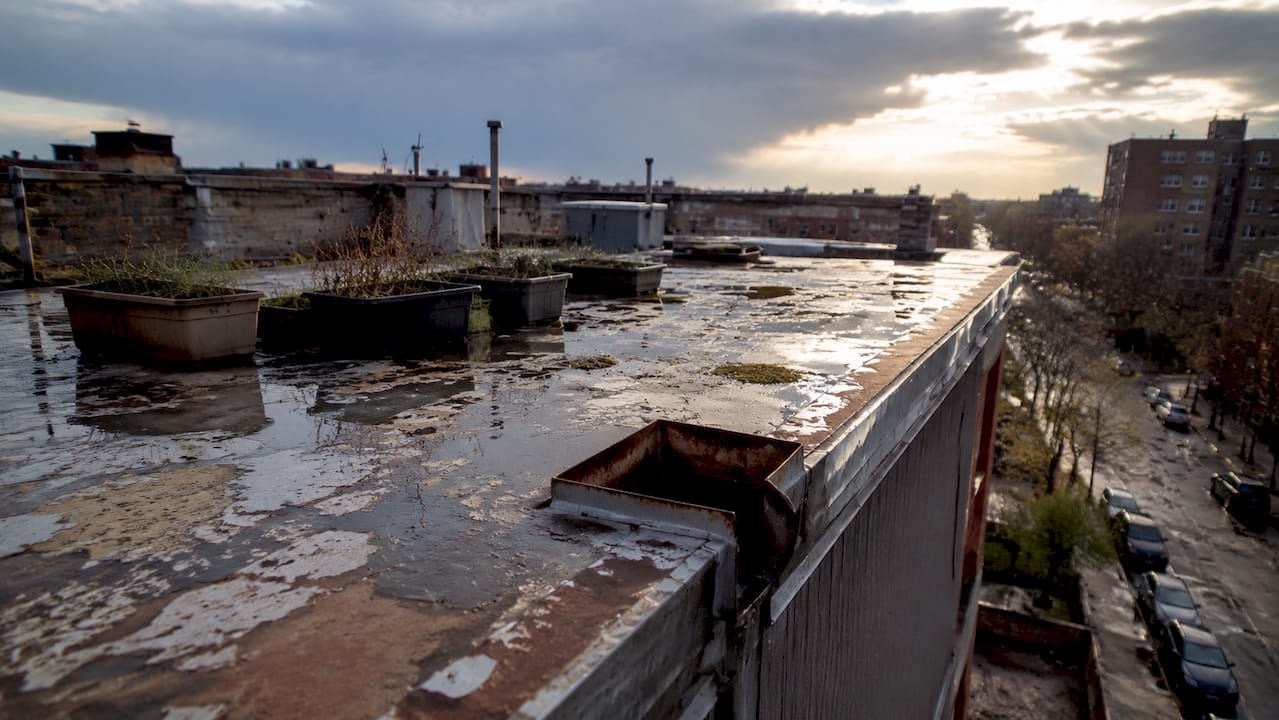
Water that sits on a roof does not just leak. It adds structural load, degrades roofing materials, and eventually finds its way into wall assemblies and foundations. IRC R903.4 requires that downspouts and gutter discharge locations direct water away from foundations and neighboring property to prevent erosion and structural damage. A gutter that dumps water against your foundation wall is technically a drainage failure, even if it looks fine from the street.
The code also focuses on drainage performance, not just the presence of gutters. A roof with gutters that are 80% clogged does not comply with the IRC. Functional water discharge paths and emergency overflow systems are what determine compliance, not hardware alone.
What are the common types of roof drainage systems?
Roof drainage systems fall into three main categories, each matched to a specific roof type and building geometry.
| System Type | Best Application | Key Feature |
|---|---|---|
| Gutters | Sloped residential roofs | Collect runoff at eaves, discharge via downspouts |
| Scuppers | Parapet walls, low-slope roofs | Openings through walls that drain flat roof surfaces |
| Internal drains | Flat commercial and large residential roofs | Drains set at low points, connected to interior piping |
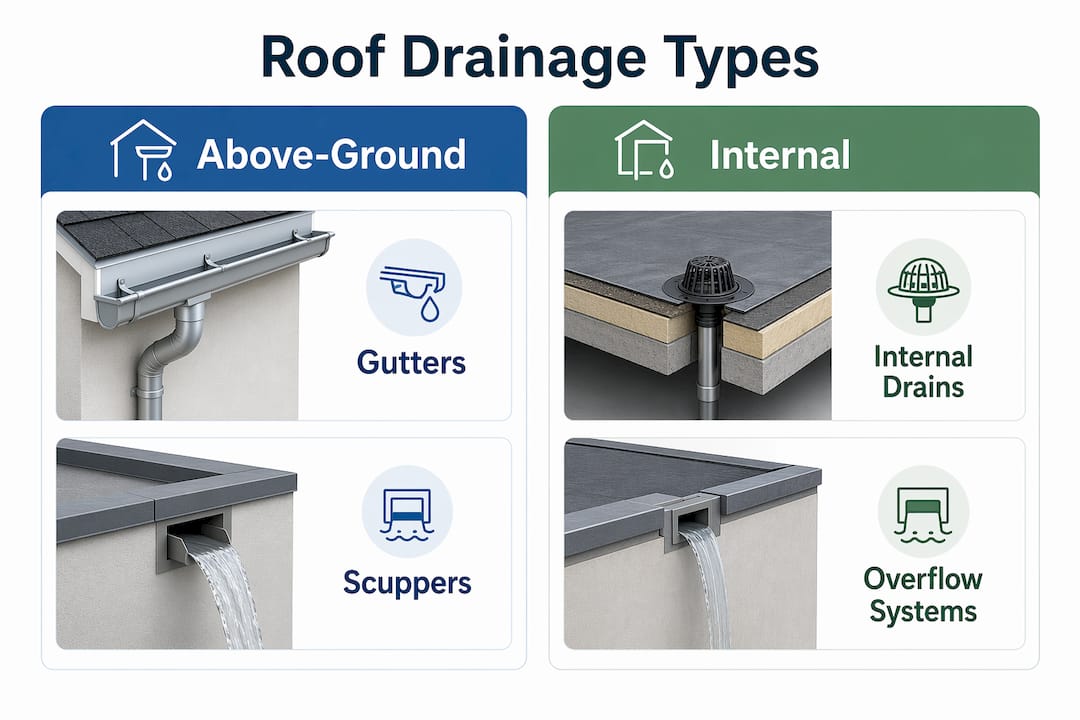
Gutters are the most familiar system for homeowners. They attach along the roof edge and carry water to downspouts, which discharge at grade level. Aluminum and vinyl gutters are standard in residential construction across Central Florida.
Scuppers are openings cut through parapet walls on low-slope or flat roofs. They allow water to exit the roof surface horizontally. Scuppers are common on commercial buildings and some modern residential designs. They also serve as emergency overflow outlets when set slightly higher than primary drains.
Internal drains sit at the lowest points of flat roofs and connect to a piping system running through the building. They are the standard choice for large commercial roofs where routing water to the building’s edge is impractical. Internal drains require regular inspection because debris accumulates at the drain body and is not visible from the ground.
Each system type requires maintenance specific to its design. Gutters need leaf guards and seasonal cleaning. Scuppers need clear openings free of debris and bird nests. Internal drains need strainer baskets checked and cleared after every significant storm.
Why does poor drainage cause structural damage and leaks?
Inadequate roof drainage causes ponding, and ponding causes compounding problems. The IRC requires that roofs prevent water from ponding longer than 48 hours, with primary drains positioned at the lowest points of the roof surface. When that standard is not met, the consequences follow a predictable pattern.
Standing water adds weight. A single inch of water across a 2,000-square-foot flat roof weighs over 10,000 pounds. Roofing materials degrade faster under constant moisture exposure. Seams and membrane edges that would last decades in dry conditions begin to fail within a few seasons of repeated ponding.
Drainage failures often hide until a major storm arrives. Small amounts of unnoticed ponding can escalate into hazardous structural loading, active leaks, or foundation issues if drainage is defective. This is the pattern that catches homeowners off guard. The roof looks fine after a light rain. It fails during a heavy one.
The foundation risk is equally serious. Water concentrated at downspout discharge points saturates soil against foundation walls. Over time, hydrostatic pressure causes cracking and water intrusion in basements and crawl spaces. Proper roof water management requires that discharge points are positioned and graded to move water away from the structure entirely.
Emergency overflow systems exist specifically to prevent catastrophic failure. Overflow drains or scuppers are set 2 inches above primary drains to activate only when the primary system is overwhelmed or blocked. Without them, a single clogged drain during a heavy storm can turn a flat roof into a temporary pond with structural consequences.
What maintenance practices keep roof drainage systems working?
Maintenance is where most homeowners fall short, not because they ignore their roofs entirely, but because they underestimate what “clear enough” actually means. IIBEC warns that mostly clear drains might not perform under extreme rain due to capacity loss or blocked overflow provisions. A drain that handles light rain without issue can fail completely during a design storm.
Follow this maintenance schedule to keep your system performing year-round:
- Clean gutters and downspouts twice a year. In Central Florida, schedule cleanings in late spring after pollen season and in late fall after oak leaf drop. Check that downspouts are fully clear by running a garden hose from the top.
- Inspect scuppers and overflow openings after every major storm. Debris, nesting materials, and sediment collect in scupper throats quickly. A blocked scupper provides zero backup protection.
- Check internal drain strainer baskets monthly on flat roofs. Remove debris by hand and flush the drain body with water to confirm flow. Note any slow drainage and address it before the next storm season.
- Walk the roof surface after heavy rain. Any standing water visible 48 hours after rain indicates a drainage problem that needs professional assessment. Do not wait for it to resolve on its own.
- Confirm downspout discharge locations annually. Splash blocks and extensions should direct water at least 6 feet from the foundation. Replace any that have shifted or deteriorated.
Pro Tip: Check your emergency overflow drains every time you clean your primary drains. Most homeowners never touch them because they rarely activate. But if they are blocked when a primary drain clogs during a storm, the overflow system provides zero protection. Treat them as equally important.
For a structured approach to roof maintenance steps, following a documented process reduces the chance of missing critical drainage components during seasonal checks.
How do building codes shape roof drainage design in 2026?
Building codes do not just describe what drainage systems should look like. They define how they must perform under the worst conditions your region is likely to experience. Roof drainage systems are sized using 100-year, 1-hour rainfall intensity maps to handle extreme weather events rather than average rain. The 2024 IBC updated this process using ASCE 7 rain load procedures, replacing the IPC 1995 rainfall rates that had been the sizing basis for decades.
This matters practically because a system sized for average rainfall will be undersized for the storms that actually cause damage. In Brevard, Volusia, and Orange counties, summer convective storms routinely exceed average hourly rainfall by a significant margin. Code-compliant sizing accounts for that reality.
The IRC 2018 and 2021 editions take a performance-based approach to drainage design. The roof must prevent water damage and ponding beyond 48 hours, primary drains must be at low points, and emergency overflow provisions are required. Multidisciplinary coordination between plumbing and structural engineering is critical for roof drainage system effectiveness and structural safety. A drain sized correctly by a plumber but installed on a roof with inadequate structural capacity for ponding loads is still a code failure.
Pro Tip: When reviewing a contractor’s drainage proposal, ask specifically whether the design accounts for emergency overflow provisions and whether the sizing is based on local 100-year rainfall intensity data. A contractor who cannot answer both questions clearly is not designing to current code standards.
Property managers overseeing commercial buildings should confirm that their drainage design documentation includes both primary and overflow system specifications. If that documentation does not exist, a roof inspection checklist review with a licensed professional is the right starting point.
Key takeaways
Roof drainage systems protect buildings by removing water efficiently through primary and secondary components designed and maintained to code standards.
| Point | Details |
|---|---|
| Primary function | Roof drainage captures, conveys, and discharges water to prevent structural damage and leaks. |
| Three system types | Gutters, scuppers, and internal drains each serve specific roof forms and require distinct maintenance. |
| Emergency overflow is mandatory | Overflow drains or scuppers set 2 inches above primary drains are required by IRC to prevent structural overload. |
| Code sizing uses extreme data | Systems are sized for 100-year, 1-hour rainfall intensity, not average precipitation. |
| Maintenance must be thorough | Partially clear drains can fail under design storm conditions, making complete clearing non-negotiable. |
What most homeowners get wrong about roof drainage
After years of working with homeowners across Central Florida, the most consistent mistake I see is treating gutters as the entire drainage system. Gutters are the visible part. The overflow provisions, the discharge grading, the internal drain strainers on flat sections of the roof, those are the components that actually determine whether the system holds up when it matters.
The second mistake is seasonal thinking. Homeowners clean gutters in the fall and consider the job done. But in Florida, the real drainage stress comes from summer storm season, not leaf fall. A gutter cleaned in November and ignored through August has had nine months to accumulate debris, wasp nests, and sediment before the heaviest rain of the year arrives.
The third mistake is underestimating what a blocked overflow drain means. Most homeowners have never seen their overflow system activate, so they assume it is not important. That logic is backwards. The overflow system is designed to be dormant. It only matters in the one scenario where everything else has already failed. If it is blocked during that scenario, the consequences are immediate and expensive.
A Florida roof maintenance guide tailored to local weather patterns gives homeowners a realistic picture of when and how to inspect drainage systems throughout the year. The investment in regular maintenance is a fraction of the cost of a single water damage repair.
— Thomasroofingandrepair
Get professional drainage assessment from Thomasroofingandrepair
Proper roof drainage design and maintenance requires more than a seasonal gutter cleaning. Thomasroofingandrepair provides professional roof installation, inspection, and repair services across Brevard, Volusia, and Orange counties, with drainage system assessment built into every service call.

Whether you are managing a residential property or a commercial building, the team at Thomasroofingandrepair can confirm your primary and overflow drainage systems meet current IRC and IPC standards. For new construction or full replacements, explore roof installation services designed with proper drainage from the ground up. Contact Thomasroofingandrepair today for a free estimate and a drainage system review that gives you confidence before the next storm season arrives.
FAQ
What is the primary role of roof drainage?
Roof drainage directs water off the roof surface and away from the building to prevent structural damage, leaks, and foundation erosion. It includes both primary systems like gutters and internal drains and mandatory emergency overflow provisions.
How often should roof drainage systems be inspected?
Gutters and downspouts should be cleaned and inspected at least twice a year, with additional checks after major storms. Internal drains and scupper openings on flat or low-slope roofs require monthly strainer checks during storm season.
What happens if emergency overflow drains are blocked?
A blocked overflow drain provides no backup protection when primary drains clog. The IRC requires overflow drains or scuppers set 2 inches above primary drains specifically to prevent structural overload from rapid ponding during heavy rain events.
Are gutters required by building code?
The IRC does not mandate gutters on every residential roof, but it does require that roofs drain effectively without causing damage or ponding beyond 48 hours. If a roof cannot meet that performance standard without gutters, they become a code requirement in practice.
Why does roof drainage design use extreme rainfall data?
Drainage systems are sized using 100-year, 1-hour rainfall intensity maps rather than average precipitation figures. This approach ensures the system can handle the storms most likely to cause structural damage, not just routine rain events.