
 407-408-0577
TL;DR:
- Proactively investing in weatherproof roofing, including sealed decks and durable materials, enhances storm protection and energy efficiency.
- Choosing materials like metal or certified systems significantly reduces damage risk, lowers insurance costs, and extends roof lifespan in Florida’s climate.
Central Florida homeowners know the drill: hurricane season arrives, and suddenly everyone is thinking about their roof. But if you’re only thinking about your roof when a storm is already forming in the Gulf, you’re already behind. Understanding why invest in weatherproof roofing matters goes well beyond storm survival. It’s about stopping energy loss on a 95-degree August afternoon, avoiding five-figure water damage repairs, and protecting a property that represents your largest financial asset. This guide breaks down exactly what weatherproof roofing delivers, which materials perform best in Florida’s climate, and why the upfront investment pays for itself faster than most homeowners expect.
Table of Contents
- Key takeaways
- Why invest in weatherproof roofing: storm protection explained
- Energy efficiency benefits of weatherproof roofs
- Comparing roofing materials for Central Florida homes
- Financial return on weatherproof roofing investments
- My honest take on when and why to invest
- Ready to protect your Central Florida home?
- FAQ
Key takeaways
| Point | Details |
|---|---|
| Sealed decks cut water damage | Sealing the roof deck reduces water intrusion by up to 95%, protecting interiors even when outer materials fail. |
| Material choice changes storm outcomes | Metal roofing showed roughly 12% damage in Hurricane Ian versus 50% for asphalt shingles. |
| Cool roofs lower energy bills | Reflective roofing materials stay up to 50°F cooler than conventional roofs, directly reducing air conditioning costs. |
| FORTIFIED standards reduce claims | Homes built to FORTIFIED standards are 70% less likely to need insurance claims after a hurricane. |
| Proactive upgrades save more money | Waiting for visible damage before upgrading costs far more than investing in weatherproof systems before a storm hits. |
Why invest in weatherproof roofing: storm protection explained
Your roof is not just a covering. It’s the first thing standing between a 120 mph wind gust and your living room ceiling. Most homeowners think about shingles and tile when they picture roof protection, but the real action happens beneath the outer layer.
Sealing the roof deck reduces water intrusion by up to 95% compared to unsealed assemblies. That number matters because outer roof coverings can fail during severe storms while the structure underneath remains intact. Without a sealed deck, that failure becomes a flood. With one, your attic stays dry.
Full-scale tests have proven this out dramatically. Roof assemblies exposed to 2,000 gallons of rain in 30 minutes, combined with 105 mph wind speeds, showed sealed decks protecting interiors effectively while unsealed decks allowed significant water penetration. That is not a lab scenario far removed from Florida reality. That is a moderate hurricane.
Here is what separates genuinely weatherproof roofing from a standard installation:
- Sealed roof deck seams using self-adhering underlayment that bonds across the entire deck surface, not just at edges
- Edge lockdown systems that prevent wind from getting beneath the roofing assembly and peeling it back from the eaves
- Enhanced nailing patterns that hold sheathing and covering materials to the structure under wind uplift loads
- Secondary water barriers that function independently when the primary outer layer sustains damage
Pro Tip: Ask your contractor specifically about sealed deck options, not just the shingle or tile brand. The deck protection layer is what separates a roof that survives a storm from one that requires a $40,000 interior rebuild afterward.
Material choice also changes everything. During Hurricane Ian, metal roofs showed only 12% damage while asphalt shingles came in at roughly 50%. That gap is not a marginal difference. It means the majority of asphalt shingle roofs in the storm’s path needed significant repair while metal roof owners largely moved on without intervention. Reviewing wind resistance ratings for specific materials before purchasing is one of the most financially protective steps a Florida homeowner can take.
Energy efficiency benefits of weatherproof roofs
Storm resilience gets most of the attention, but the energy efficiency argument for weatherproof roofing is just as strong in Central Florida. The climate here does not give your air conditioner a break. A roof that performs poorly thermally means your HVAC system works harder every single day from April through October.
Conventional roofs can reach surface temperatures above 150°F on summer afternoons. Reflective cool roofing materials, by contrast, stay roughly 50°F cooler under the same conditions. That temperature difference translates directly into less heat radiating through your ceiling and into your conditioned living space.
Here is how that thermal performance stacks up across your household:
- Lower cooling loads. Less heat entering the home means your air conditioner runs fewer cycles per day, reducing electricity consumption directly.
- Extended HVAC lifespan. A system that runs less frequently under less thermal stress lasts longer before requiring replacement or major repairs.
- Reduced peak demand charges. Many Florida utilities charge higher rates during peak afternoon hours. Cool roofs can reduce peak electricity demand, potentially qualifying homeowners for rebates as well.
- Improved comfort throughout the home. Rooms on upper floors or with attic exposure feel more consistently comfortable without the temperature swings that plague homes with thermally poor roofing.
Sealed roof decks contribute here too. Sealed decks reduce air movement and moisture infiltration into the attic, which improves conditioned attic performance and reduces the energy load on your HVAC system. Homes with conditioned attics see the most dramatic results, but any home benefits from reduced moisture cycling through the roof assembly.
The concern about losing winter heating efficiency with reflective roofing is essentially irrelevant in Central Florida. Florida winters are short and mild. You learn more about energy-efficient roofing solutions specifically optimized for the hot Florida climate when you compare materials designed for this region versus general-purpose national products.
Comparing roofing materials for Central Florida homes
Not every material that performs well in Atlanta or Houston is the right fit for Brevard County or Orange County. Central Florida’s combination of intense UV exposure, high humidity, hurricane-force winds, and frequent afternoon thunderstorms creates a specific performance environment. Here is how the major options compare:
| Material | Wind resistance | Lifespan | Energy efficiency | Relative cost |
|---|---|---|---|---|
| Asphalt shingles | Moderate (limited above 130 mph) | 15 to 25 years | Low to moderate | Lowest upfront |
| Metal roofing | High (tested to 140 mph or more) | 40 to 70 years | High (reflective coatings available) | Moderate to high |
| Concrete or clay tile | High (wind resistant but heavy) | 30 to 50 years | Moderate (airspace under tile helps) | High |
| Synthetic materials | High (engineered for impact and wind) | 30 to 50 years | Moderate to high | Moderate to high |
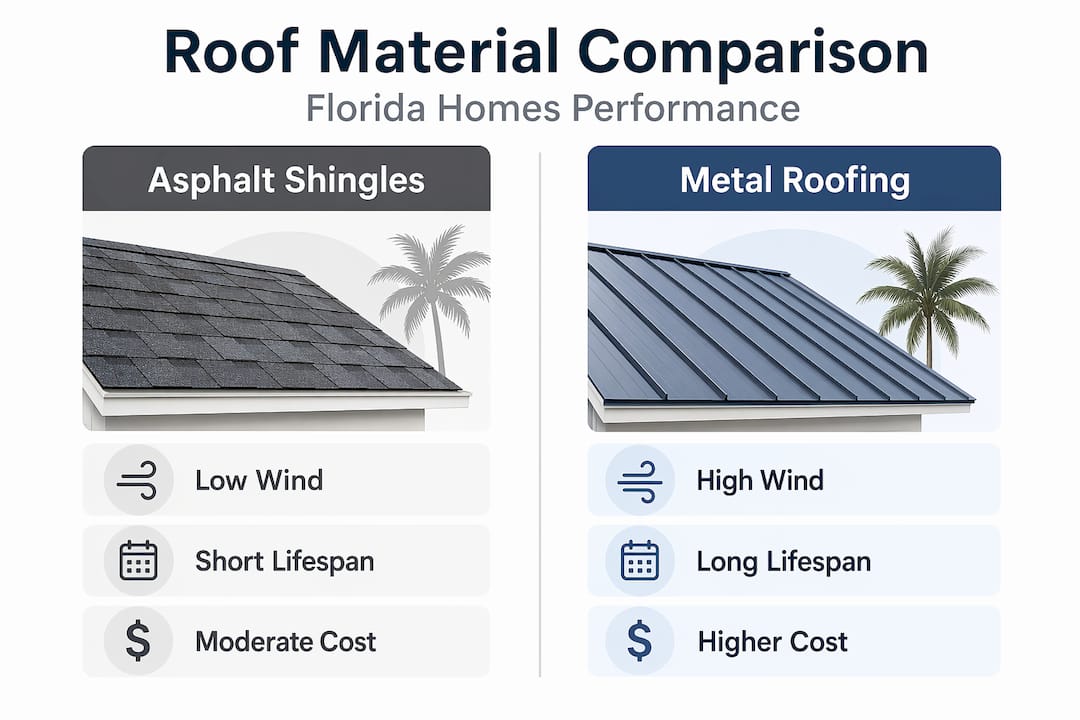
The table above reflects material-only performance. The installation system around that material matters just as much. A metal roof installed without proper edge fastening will fail in conditions where a well-installed tile roof would not.
The FORTIFIED program has now surpassed 100,000 designations nationally, and Florida represents a significant portion of that growth. FORTIFIED certification is a beyond-code standard that specifies not just which materials to use but how they must be installed. The combination of approved materials and verified installation methods is what makes FORTIFIED homes perform differently during storms compared to standard-built homes.
Older roofs deserve special attention here. Roofs more than 10 years old show substantially higher vulnerability to wind damage in storm assessments. Proactive weatherproof upgrades for aging roofs reduce both the risk of expensive post-storm repairs and the likelihood of insurance complications.
Pro Tip: When comparing bids from contractors, ask each one whether the installation meets FORTIFIED standards or equivalent edge-lockdown requirements. The difference in material cost is often smaller than the difference in long-term risk reduction.
Exploring roof upgrade options specific to Florida helps narrow the field considerably when you understand how each material behaves in the actual conditions your roof faces.
Financial return on weatherproof roofing investments
The financial case for weatherproof roofing is not complicated, but most homeowners only see half of it. They see the installation cost. They miss the ongoing savings and avoided expenses that accumulate over years.
Here is where the real return comes from:
- Reduced repair frequency. A weather-resistant roof system simply breaks down less. Fewer cracked tiles, fewer lifted shingles, fewer penetration failures mean fewer service calls and lower cumulative maintenance spending over a 20-year period.
- Lower insurance premiums. Insurers in Florida increasingly recognize certified weatherproof standards. FORTIFIED homes are 70% less likely to file a claim after a hurricane, and insurance carriers have started pricing that risk difference into their premiums.
- Utility savings compounding over time. Even a modest 15% reduction in monthly cooling costs adds up to thousands of dollars over a roof’s lifespan. For a home spending $250 per month on electricity in summer, that is $450 per year back in your pocket.
- Avoided interior damage costs. A single water intrusion event after a storm can easily cost $15,000 to $50,000 once drywall, insulation, flooring, and mold remediation are factored in. Weatherproof roofing eliminates most of that exposure.
- Property value and marketability. Buyers in Florida are increasingly aware of roof age and condition. A certified weatherproof roof is a documented selling point, not just an aesthetic feature.
The best time to upgrade to weatherproof roofing is before you need it. After a storm, repair costs spike, contractors are booked for months, and temporary fixes become expensive permanent problems. Proactive investment is almost always the lower-cost path.
Insurance programs increasingly incentivize certified weatherproof roofing standards like IBHS FORTIFIED, providing financial benefits well beyond direct storm protection. If your current insurer does not offer a discount for FORTIFIED designation, that conversation alone is worth having with your agent before your next renewal.
My honest take on when and why to invest
I’ve spent years watching homeowners in Central Florida make the same calculation mistake. They look at a roof that still passes a basic inspection and decide to wait another two or three years before upgrading. Then a Category 2 comes through, and they’re looking at $30,000 in damage on a roof that was technically still functional the week before.
What I’ve found is that most people underestimate two things. The first is how quickly an aging asphalt shingle roof loses its ability to resist wind once the adhesive strips on the shingles degrade, usually somewhere in year 10 to 15. The second is how much secondary damage follows a roof failure. It’s rarely just the roof. It’s the insulation, the drywall, the furniture, the sense of security.
My take is simple: the best weatherproof roofing investment is the one you make before the damage happens, not during the frantic weeks after a named storm when every contractor in the county is booked solid. The materials and systems that truly protect Central Florida homes are not dramatically more expensive than standard options at the time of installation. But they are dramatically more expensive to retrofit after you’ve already absorbed a loss.
Work with a contractor who can show you exactly what secondary protection layers are included in the installation. If the bid doesn’t mention the deck underlayment specification, ask. If they can’t answer, find someone who can.
— Thomasroofingandrepair
Ready to protect your Central Florida home?
If this article has you reconsidering what your current roof is actually doing to protect your home, that’s a good instinct to follow. Thomasroofingandrepair works with homeowners and property managers across Brevard, Volusia, and Orange counties to design and install roofing systems built specifically for Central Florida’s storm and heat demands.

Whether you need a full weatherproof roof installation or a complete roof replacement that meets current wind and water resistance standards, Thomasroofingandrepair provides free estimates and financing options to make the upgrade accessible. For storm damage that needs immediate attention, the emergency storm repair workflow connects you with fast, professional response across the region. Contact the team today to schedule your inspection before the next storm season gets underway.
FAQ
Why is weatherproof roofing worth the extra cost in Florida?
Florida’s hurricane season, intense heat, and year-round humidity create conditions that wear down standard roofing much faster than in other states. The cost of upgrading to weatherproof materials is typically far lower than a single post-storm interior repair, making it a financially sound investment over any roof’s full lifespan.
What materials perform best for weatherproof roofing in Central Florida?
Metal roofing and FORTIFIED-certified systems show the strongest performance in Florida storm conditions. During Hurricane Ian, metal roofs experienced only about 12% damage compared to roughly 50% for asphalt shingles, making material selection one of the most impactful decisions a Florida homeowner can make.
Does a sealed roof deck actually make a difference?
Yes, substantially. Sealed roof decks reduce water intrusion by up to 95% compared to unsealed assemblies, even when outer shingles or tiles are damaged or lost. This secondary protection layer is often the difference between a dry attic and a $30,000 interior rebuild after a major storm.
Can a new weatherproof roof lower my insurance premiums in Florida?
Many Florida insurers offer discounts for roofs that meet FORTIFIED or equivalent certified weatherproof standards. Homes with FORTIFIED designation are 70% less likely to file a hurricane-related claim, and that reduced risk is increasingly reflected in policy pricing.
How long do weatherproof roofing materials typically last in Florida’s climate?
Metal roofs in Florida regularly last 40 to 70 years, while concrete and clay tile systems typically perform well for 30 to 50 years. Asphalt shingles generally fall in the 15 to 25-year range, and their performance drops off noticeably after year 10 in high-UV, high-humidity environments like Central Florida.