
TL;DR:
- Not all industrial roofs are equal, and assuming they are can lead to expensive mistakes for property managers. Properly matching material choice, environment, and building structure is essential for long-term performance and cost-effectiveness.
Not all industrial roofs are created equal, and assuming they are is one of the most expensive mistakes a property developer or facilities manager can make. Industrial roofing types explained properly reveal a system where material choice, environment, and building structure must align precisely. A TPO membrane on a food processing plant performs nothing like the same material on a cold storage warehouse in a northern climate. This guide breaks down the major industrial roofing systems, compares their real-world performance, and gives you the practical framework to make the right call before a single contractor steps on site.
Table of Contents
- Key takeaways
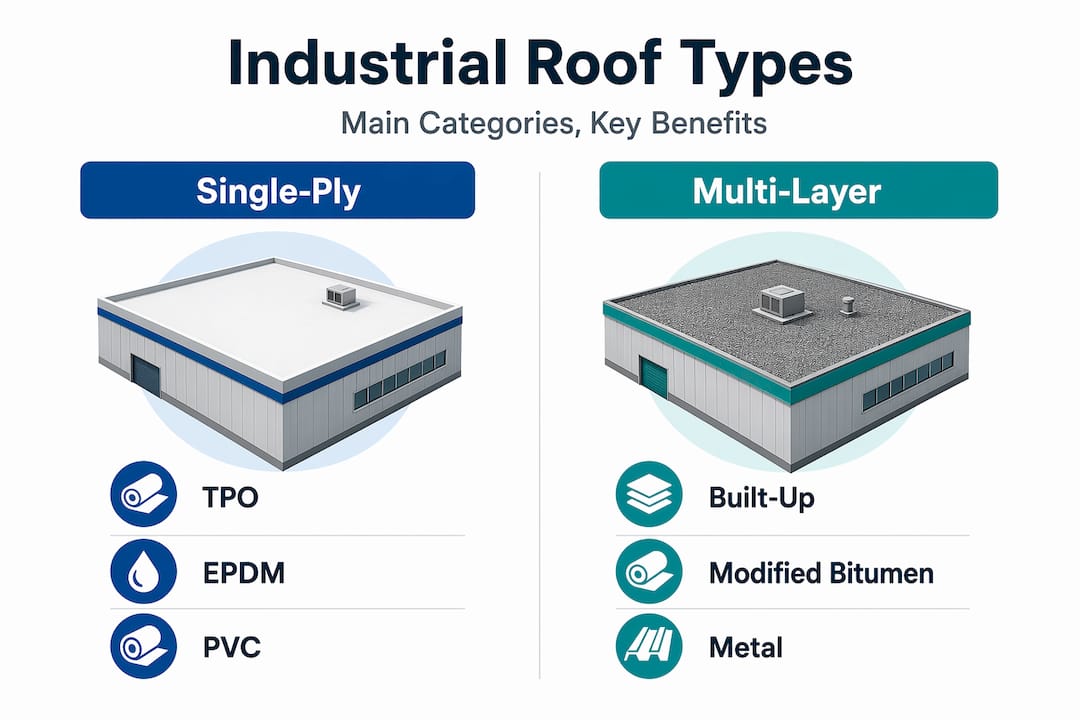
- Industrial roofing types explained: the main categories
- Single-ply membranes: TPO, EPDM, and PVC
- Built-up roofing vs. modified bitumen
- Metal roofing for industrial buildings
- Spray polyurethane foam roofing
- How to choose industrial roofing for your project
- My honest take on industrial roofing decisions
- How Thomasroofingandrepair can help with your project
- FAQ
Key takeaways
| Point | Details |
|---|---|
| No single system fits all | Industrial roofing options vary significantly by environment, load requirements, and chemical exposure. |
| Single-ply membranes dominate | TPO, EPDM, and PVC cover most industrial applications due to their versatility and energy efficiency. |
| Layering has legal limits | Building codes typically cap roof layers at two, triggering mandatory tear-offs that raise project costs. |
| Metal roofs need vapor control | Correct vapor retarder placement in metal roofing installations prevents condensation damage inside structural steel. |
| Lifecycle cost beats upfront price | Choosing materials based on total ownership cost, not installation price, consistently delivers better long-term value. |
Industrial roofing types explained: the main categories
Industrial roofing is a distinct category from standard commercial or residential work. The loads are heavier, the chemical exposure is greater, and the consequences of failure are more severe. Understanding the categories before selecting a system is not optional. It is the starting point.
The major types of industrial roofing you will encounter on projects today are:
- Single-ply membranes (TPO, EPDM, PVC): Lightweight, flexible sheets mechanically fastened, adhered, or ballasted to the roof deck.
- Built-up roofing (BUR): Multiple alternating layers of bitumen and reinforcement fabric, topped with a gravel or cap sheet surface.
- Modified bitumen: A hybrid system combining BUR principles with polymer-modified asphalt for improved flexibility and weathering.
- Metal roofing panels: Standing seam or through-fastened steel and aluminum panels common on pre-engineered metal buildings (PEMBs).
- Spray polyurethane foam (SPF): A monolithic foam system applied directly to the substrate, combining insulation and waterproofing in one layer.
The right classification depends on four variables: roof slope, structural substrate, the building’s occupancy type, and environmental exposure. Industrial facilities classified as Group F (factory) or Group S (storage) under the IBC occupancy standards carry specific fire resistance and structural loading requirements that directly narrow your material choices. Regulatory compliance is not a finishing step. It shapes the decision from the beginning.
Single-ply membranes: TPO, EPDM, and PVC
Single-ply membranes are the most widely specified industrial roofing option today, and for good reason. They offer a strong combination of chemical resistance, reflectivity, and installation flexibility. But the three primary types are not interchangeable.
TPO (thermoplastic polyolefin)
TPO is heat-welded at the seams, creating a watertight bond that outperforms adhesive or tape connections under thermal cycling. TPO’s chemical resistance makes it the preferred choice for facilities with rooftop exhaust from oils, animal fats, or grease, including food processing plants and industrial kitchens. It also reflects solar radiation well, which matters on large, flat industrial roofs in Florida’s heat. Typical lifespan runs 20 to 30 years with proper maintenance.
EPDM (ethylene propylene diene monomer)
EPDM is a synthetic rubber membrane that excels where TPO struggles. EPDM performs in ozone-heavy atmospheres and extreme cold, making it the go-to for cold storage facilities, high-altitude installations, and buildings near industrial zones with atmospheric chemical exposure. It is installed as a single sheet with minimal seams, which reduces leak points. Lifespan typically reaches 25 to 30 years, and it has one of the lowest maintenance profiles of any membrane system.
PVC (polyvinyl chloride)
PVC shares TPO’s heat-welded seam advantage but adds superior resistance to acids, alkalis, and industrial chemicals. It is slightly more expensive per square foot than TPO but earns that cost back in chemical-heavy environments like wastewater treatment facilities or chemical plants.
Pro Tip: When specifying single-ply membranes for an industrial project, confirm which chemicals are in the rooftop exhaust stream before finalizing the material. A mismatch between membrane chemistry and exhaust composition is one of the most common causes of premature membrane failure.
For a broader view of how these systems compare with other types of commercial roofing, the overlap between industrial and commercial applications is worth reviewing before spec finalization.
Built-up roofing vs. modified bitumen
These two systems share a common ancestor but serve different performance profiles. Understanding both is worthwhile if you are working on facilities with heavy rooftop foot traffic, mechanical equipment, or a need for redundant waterproofing layers.
How BUR works
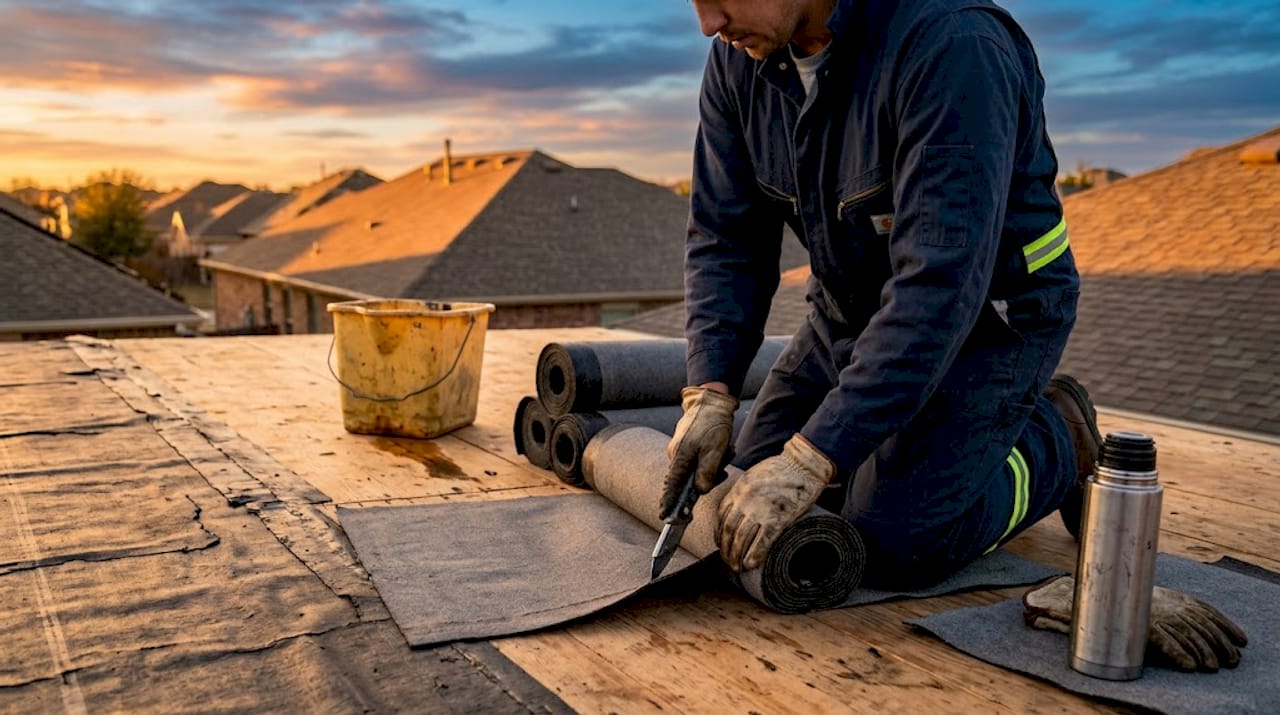
Built-up roofing is exactly what the name says: alternating layers of bitumen and reinforcing felts or fabrics, typically three to five layers deep, finished with gravel or a mineral-surfaced cap sheet. The redundancy is its core strength. A puncture through one layer does not mean an immediate leak. For industrial facilities with rooftop walkways, equipment staging areas, or regular maintenance traffic, that built-in tolerance is a real operational asset.
Modified bitumen variants
| System | Base Material | Key Advantage | Best Application |
|---|---|---|---|
| APP (atactic polypropylene) | Polymerized asphalt + plastic | UV and heat resistance | Sun-exposed, low-slope industrial roofs |
| SBS (styrene-butadiene-styrene) | Polymerized asphalt + rubber | Flexibility in cold temps | Temperature-variable climates, flat roofs |
| Hybrid BUR/Mod-Bit | BUR base + mod-bit cap | Combines redundancy with flexibility | High-traffic, high-load industrial facilities |
Modified bitumen membranes are typically applied in two plies, making them thinner overall than full BUR systems but more flexible and easier to install in complex roof configurations.
Pro Tip: BUR systems add weight. Before specifying either BUR or modified bitumen on an existing structure, get a structural engineer to confirm the deck can handle the load. Retrofitting structural reinforcement mid-project is expensive and avoidable.
One critical compliance point: building codes limit roof layers to two in most jurisdictions. Exceeding that threshold requires a full tear-off before any new system is applied. If you are re-roofing an older industrial building that already has two layers, factor the demolition cost into your budget from day one.
Metal roofing for industrial buildings
Metal roofing is the default choice on pre-engineered metal buildings, logistics warehouses, and manufacturing facilities. Standing seam and through-fastened panels are the two primary installation styles, and they solve different structural and performance problems.
Standing seam panels interlock at raised seams and are not penetrated by fasteners through the panel face. This dramatically reduces the potential for leak points and allows the metal to expand and contract thermally without stressing fastener holes. For facilities in climates with significant temperature swings, standing seam is worth the higher installation cost.
Through-fastened panels use exposed screws that penetrate the panel directly into the structure. They are faster to install and cost less upfront, but the fastener holes create points of thermal movement stress over time. The rubber washers on the screws degrade, and that is typically where leaks originate on aging through-fastened roofs.
Key performance considerations for metal industrial roofing include:
- Span capability: Metal panels handle the large clear-span distances common in industrial buildings without additional structural support.
- Wind uplift resistance: Properly engineered standing seam systems meet or exceed Miami-Dade wind requirements, critical in Florida.
- Longevity: Steel panels with quality coatings regularly achieve 40 to 60 year service lives with minimal active maintenance.
- Condensation control: Vapor retarder placement is one of the most frequently overlooked steps in metal roof installation. Incorrect placement allows moisture to condense inside the building envelope and begin corroding structural steel from the inside. This damage is invisible until it is serious.
For projects in Central Florida specifically, Thomas Roofing and Repair’s commercial metal roofing services address local wind load and humidity requirements that national spec sheets often underestimate.
Spray polyurethane foam roofing
SPF is the least understood system in the industrial roofing category, which is partly why it is underutilized on projects where it would be the best performing option. SPF combines insulation and waterproofing in a single application, sprayed directly onto the existing substrate and expanding into a seamless, monolithic barrier.
The practical advantages are meaningful:
- No seams: The biggest vulnerability of any membrane system is the seam. SPF eliminates seams entirely.
- Thermal performance: R-values of 6 to 7 per inch make SPF the highest thermal performer per thickness of any industrial roofing material. On facilities where HVAC costs are significant, the energy savings compound over a 20 to 25 year service life.
- Restoration potential: SPF can be applied over existing roofing substrates in good condition, avoiding tear-off costs entirely and reducing landfill waste.
- Recoatability: When the protective elastomeric coating over the foam shows wear, recoating restores full performance without replacing the system. This makes lifecycle management straightforward.
The limitation is sensitivity to application conditions. SPF requires specific temperature and humidity ranges during installation. In Florida, scheduling around the wet season matters more with SPF than with any other system.
How to choose industrial roofing for your project
Choosing from the available industrial roofing options requires a structured evaluation, not a material preference. Here is the sequence that consistently produces better outcomes:
- Assess the environment first. Chemical exposure, UV intensity, temperature range, and wind load are non-negotiable constraints. The material must be chemically compatible with the specific environment before any other factor is considered.
- Verify structural capacity. Rooftop mechanical loads and HVAC equipment must be accounted for in the structural analysis. Ignoring this at the specification stage creates expensive retrofits during installation.
- Confirm the existing roof condition. Membrane blistering or flashing separation often signals deeper structural damage. An independent inspection before finalizing a replacement or restoration spec prevents costly surprises.
- Check the layer count. If the building already has two roof layers, a tear-off is legally required in most jurisdictions before a new system can go on. Budget accordingly.
- Calculate lifecycle cost, not just installation price. Restoration coatings can extend a sound existing roof by 10 to 15 years at a fraction of replacement cost. That calculation belongs in the project financial model.
- Confirm IBC compliance. Fire resistance ratings, occupancy classifications, and local permit requirements must be resolved before material procurement.
Pro Tip: Always request a formal roof condition assessment before deciding between repair, restoration, and replacement. The inspection and repair workflow matters as much as the material choice. Skipping this step is where most industrial roofing budget overruns begin.
My honest take on industrial roofing decisions
I’ve watched industrial roofing projects go sideways in predictable ways, and the pattern is consistent. The decision gets made on price, the environment-specific material properties get glossed over, and the facility manager is dealing with premature failures two years into a twenty-year system.
What I’ve found is that the membrane chemistry question almost never gets the attention it deserves in the early spec meetings. Someone picks TPO because it is popular and cost-effective. Nobody asks what the exhaust fans are venting. In a food processing plant, that oversight turns a durable 25-year membrane into a degraded, chemically attacked surface in five years.
The other thing I see consistently underestimated is hidden deterioration. A roof that looks serviceable from the ground, and even from a cursory walk-on inspection, can have moisture infiltration in the insulation layer that has been running for years. That moisture adds load, degrades R-value, and accelerates deck corrosion. The cost to fix it when it finally presents visibly is three to five times what it would have cost to address it at first detection.
My view on the best industrial roofing materials is this: the best material is the one specified for the actual conditions of that specific facility, not the one with the best marketing material or the lowest bid price. That sounds obvious. In practice, it gets ignored on a significant percentage of industrial projects.
— Thomasroofingandrepair
How Thomasroofingandrepair can help with your project
Selecting the right system is only half the work. Proper installation, particularly for metal panel systems and SPF applications, requires contractors who understand the material tolerances specific to Central Florida’s climate: high humidity, UV intensity, and seasonal wind events.

Thomasroofingandrepair installs and repairs industrial and commercial roofing systems across Brevard, Volusia, and Orange counties. Whether you are starting a new installation in Horizon West, need a full system replacement in Titusville, or are managing a repair project in Palm Bay, the team brings hands-on experience with single-ply membranes, modified bitumen, metal panels, and more. Contact Thomasroofingandrepair for a free estimate and a project consultation specific to your facility type.
FAQ
What are the main types of industrial roofing?
The main types of industrial roofing are single-ply membranes (TPO, EPDM, PVC), built-up roofing, modified bitumen, metal roofing panels, and spray polyurethane foam. Each system suits different structural demands, environmental exposures, and budget profiles.
Which industrial roofing material lasts the longest?
Metal roofing panels with quality coatings typically achieve the longest service life, often 40 to 60 years. SPF systems with periodic recoating also perform well over 25-plus years when properly maintained.
Can I add a new roof over an existing industrial roof?
Most building codes allow a maximum of two roof layers. If your building already has two layers, a full tear-off is required before a new system can be installed, which adds significant cost and complexity to the project.
What is the best industrial roofing system for Florida?
In Central Florida, TPO and standing seam metal are strong choices due to their UV reflectivity and wind uplift resistance. Vapor management is critical in metal systems given Florida’s humidity levels.
How do I know if my industrial roof needs repair or full replacement?
A professional inspection is required to make that determination accurately. Surface blistering or flashing separation often indicates deeper underlying damage that visual assessment alone cannot quantify.