
 407-408-0577
TL;DR:
- The roofing substrate is the structural foundation that supports all roofing layers, making its integrity crucial for durability and wind resistance. Proper thickness, material choice, and installation of the substrate directly influence the roof’s longevity and performance, especially in hurricane-prone Central Florida. Regular inspections and early repairs of substrate damage are essential for maintaining a strong, weather-resistant roof.
Most homeowners spending money on a new roof focus entirely on the shingles they can see. But the question of what is substrate in roofing points to something far more important: the structural layer underneath everything else. Many people confuse the substrate with underlayment, or assume it’s just the plywood they glimpse during a re-roof. It’s more than that. The substrate is the foundation your entire roof system is built on, and in Central Florida’s punishing climate of heat, humidity, and hurricane-force winds, getting it right is not optional.
Table of Contents
- What is a roofing substrate and why does it matter?
- Roof substrate thickness requirements and building codes
- Material types and installation nuances of roofing substrate
- How roofing substrate supports your roof’s overall longevity
- Choosing and maintaining your roof substrate: A practical guide
- Why most homeowners underestimate the roofing substrate’s impact
- Trusted roof substrate installation and repair in Central Florida
- Frequently asked questions
What is a roofing substrate and why does it matter?
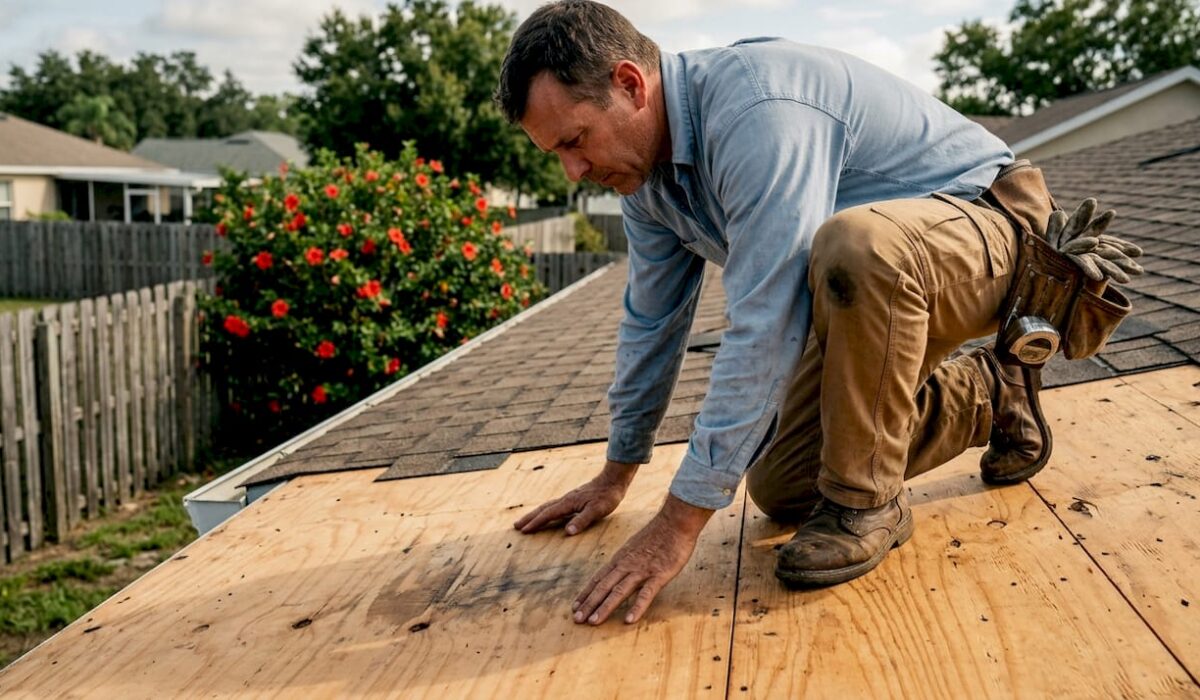
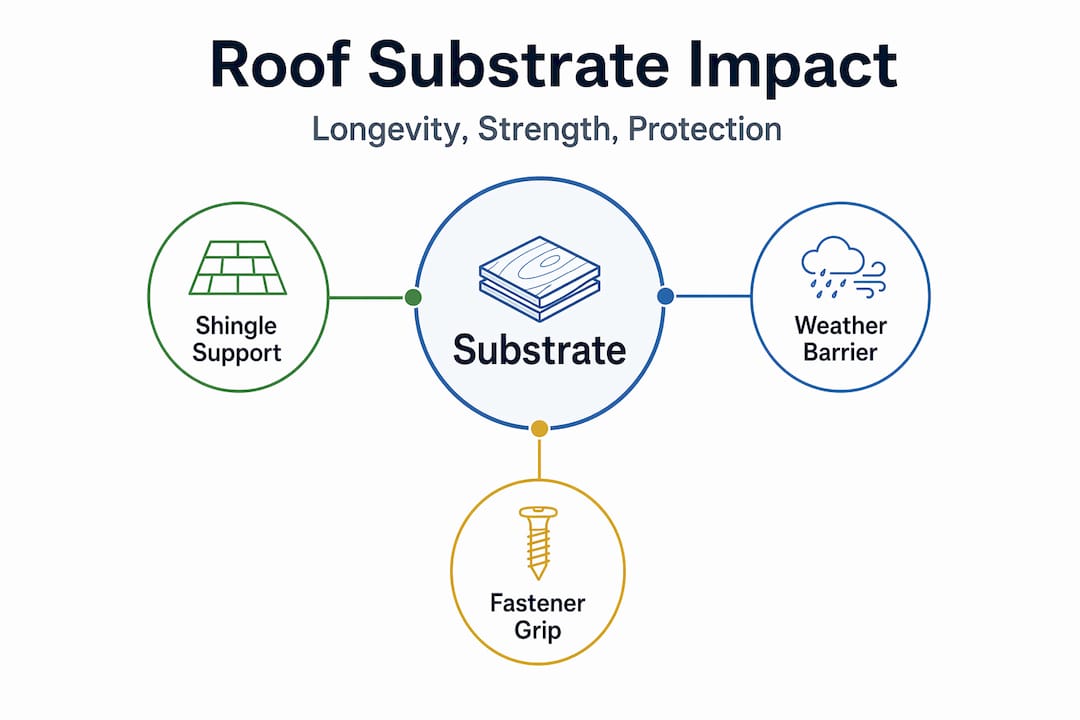
The roofing substrate, also called roof decking or roof sheathing, is the flat structural surface installed directly over your home’s rafters or trusses. Think of your rafters as the skeleton and the substrate as the skin stretched over it. Every other roofing layer, including underlayment, flashing, and shingles, attaches to the substrate. Without it, you have no base to nail to, and nothing to prevent your roof frame from flexing under load.
This is where many homeowners get confused. Underlayment is a thin, moisture-resistant sheet installed on top of the substrate. Shingles go on top of that. The substrate is below all of it. As noted by roofing industry experts, the substrate bridges the framing system and the weather-resistant covering, providing the surface for mechanical fastening of all upper roof layers.
The role of substrate in roofing goes beyond just being a nailing surface. It acts as a structural diaphragm, meaning it distributes forces across the roof and transfers them down through the walls to the foundation. In a hurricane, this matters enormously. A well-secured substrate resists wind uplift and lateral racking forces that can peel a roof apart.
Here is a quick breakdown of what the substrate does:
- Provides a continuous nailing surface for underlayment and roofing materials
- Transfers dead loads (the weight of materials) to the framing system
- Transfers live loads (wind, rain, foot traffic during repairs) across the structure
- Acts as a shear panel to resist lateral wind forces
- Contributes to fire resistance ratings in certain assemblies
Understanding the role of substrate in roof decking explained terms helps you ask the right questions before any roofing work begins.
Roof substrate thickness requirements and building codes
Knowing what the substrate is leads directly to the next question: how thick does it need to be? The answer depends on your rafter spacing and the roofing materials going on top.
Per current building standards, IRC 2024 minimum thickness for roof deck sheathing is 3/8 inch for rafters spaced 16 inches on-center and 7/16 inch for rafters spaced 24 inches on-center. Those are code minimums. They represent the floor, not the target.
| Rafter spacing | Minimum thickness (code) | Industry standard |
|---|---|---|
| 16 inches on-center | 3/8 inch | 1/2 inch |
| 24 inches on-center | 7/16 inch | 1/2 inch |
The industry standard of 1/2 inch exists for one practical reason: most shingle manufacturers require it for warranty compliance. If your contractor installs 3/8-inch panels to save money and your shingles later fail, the manufacturer may deny the claim. You paid for a warranty that no longer applies.
Thickness also affects how well fasteners grip. Thinner panels offer less nail-holding power, which matters during high-wind events. In Brevard, Volusia, and Orange counties, wind events are not rare. A roof deck that passes minimum code but fails the real-world load test is not worth the savings.
Pro Tip: Before any re-roofing project, ask your contractor to confirm the existing deck thickness and verify it meets current shingle manufacturer warranty requirements. This one question can save you thousands in denied warranty claims.
The roof decking options available today make it easy to meet the 1/2-inch standard at a reasonable cost, so there is rarely a good reason to accept thinner panels on a new installation.
Material types and installation nuances of roofing substrate
Beyond thickness, the two main roof substrate materials are plywood and oriented strand board, commonly called OSB. Both are wood-based panels made from different processes, and they behave differently under stress and moisture.
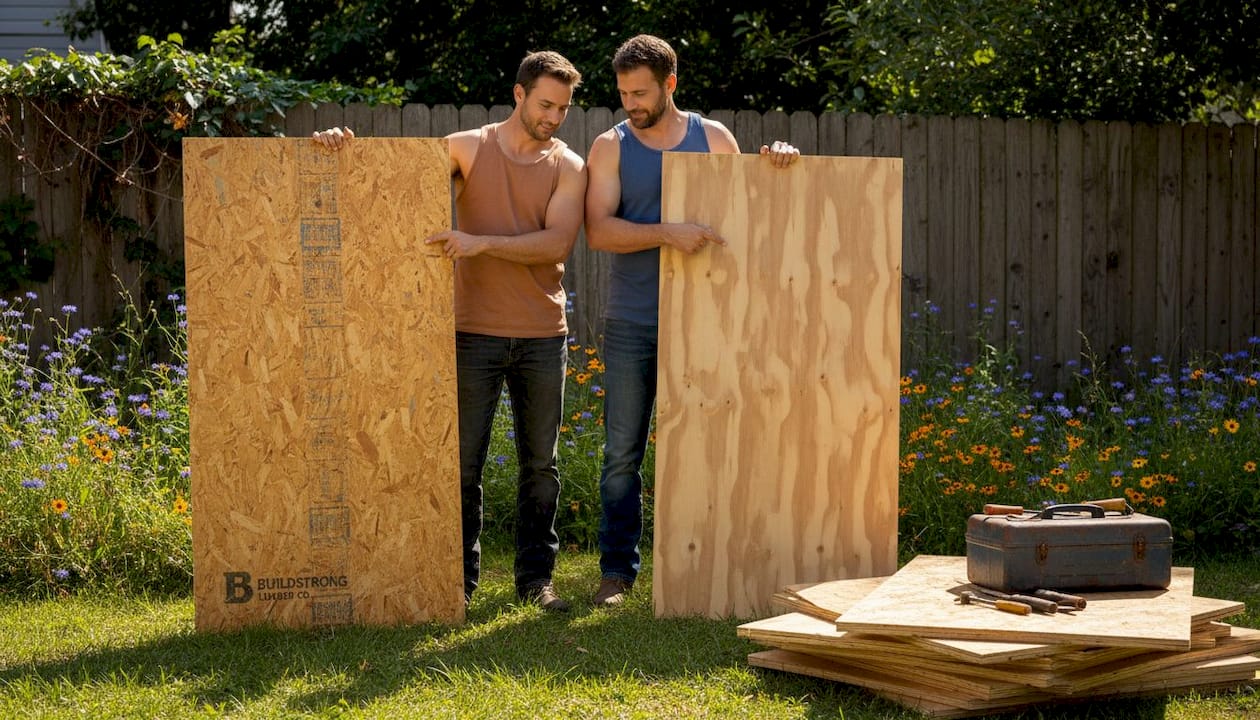
Plywood is made from thin wood veneers glued together with the grain alternating directions. This cross-laminated structure gives it consistent strength in multiple directions and excellent edge stiffness. Plywood also cycles through moisture changes more predictably, which means fasteners hold better over time.
OSB is made from compressed wood strands bonded with resin. It is cost-effective, widely available, and performs well in most climates when properly installed and protected from prolonged moisture exposure. However, the edges of OSB panels are more vulnerable to water damage than plywood edges, which is relevant in Florida’s wet season.
Here is how the two compare on key performance factors:
| Factor | Plywood | OSB |
|---|---|---|
| Moisture edge resistance | Better | Moderate |
| Fastener holding over time | Stronger | Adequate |
| Cost | Higher | Lower |
| Availability | Good | Very good |
| Performance in Florida climate | Preferred | Acceptable with care |
Proper substrate installation in roofing matters as much as material choice. Key installation details include:
- Install panels with the face grain or long axis perpendicular to the rafters for maximum strength
- Stagger panel joints so end seams do not line up between rows
- Use H-clips or blocking at unsupported panel edges between rafters
- Leave a minimum 1/8-inch expansion gap at all panel edges and ends to prevent buckling as panels absorb moisture
Pro Tip: In Florida’s rainy season, OSB panels left exposed before felt or underlayment installation can swell significantly at the edges, creating an uneven roof surface that telegraphs through shingles. Schedule substrate installation and initial weather protection as a same-day sequence.
For Central Florida homes, we generally recommend exploring roof decking best choices with a contractor who understands local humidity patterns and can guide you toward the right material for your specific roof geometry and exposure.
How roofing substrate supports your roof’s overall longevity
The importance of roofing substrate becomes most obvious when you think about what your roof carries every single day. This is not just about shingle weight.
Your substrate manages:
- Dead loads from the weight of all roofing materials sitting on it permanently
- Live loads from wind pressure, rain accumulation, and foot traffic during maintenance
- Wind uplift forces trying to peel the roof away from the structure
- Lateral forces from wind trying to rack the home sideways
According to roofing manufacturer research, the roof substrate helps prevent sagging and distributes the weight of roofing materials, snow, rain, and other objects, contributing directly to the roof’s durability.
“A roof is only as strong as the surface it’s built on. When the deck moves, everything above it moves too, and not in ways you want.”
Substrate damage compounds quietly. A small area of rot or delamination weakens the fastener holding capacity of the panel. Shingles in that zone start to lift slightly. Water infiltrates. The rot spreads. What began as a localized problem becomes a common roofing damage scenario requiring section or full deck replacement.
The good news is that proper upfront installation makes the substrate almost invisible for decades. The bad news is that deferred repairs to substrate problems follow an exponential cost curve. Addressing a 4-square-foot patch of soft decking during a roof repair process costs a fraction of what it costs when that patch grows into 40 square feet of structural failure.
Choosing and maintaining your roof substrate: A practical guide
Here in Central Florida, choosing the right substrate is not the same decision a homeowner in Colorado makes. High humidity, intense afternoon rain, and the threat of tropical systems change the calculus. Here is how to approach it.
Selecting the right material:
- Choose plywood over OSB when budget allows, particularly for homes in coastal Brevard County or low-lying areas prone to moisture infiltration
- Confirm the panel thickness is 1/2 inch minimum regardless of what code allows
- Ask for exterior-grade panels rated for roof applications, not interior-grade products
Ensuring correct installation:
- Verify expansion gaps are maintained during installation, especially on large roof planes
- Confirm panel joints are staggered and supported with H-clips or blocking
- Check that fastening schedules match local wind zone requirements. Central Florida’s wind zones require more nails per panel than most of the country
Maintaining substrate health over time:
- Schedule annual roof inspections that include looking for soft spots, sagging between rafters, or visible unevenness
- Address any roof leaks immediately. Water is the single biggest threat to substrate integrity
- During a roof replacement, insist on a full deck inspection before new materials go down
As roofing industry guidance confirms, the roof deck’s condition directly impacts roof lifespan and future repair costs since it sits buried under multiple layers once installation is complete.
Pro Tip: During any roof repair, ask your contractor to walk the deck and press-test areas around penetrations like vents and skylights. These are the zones where moisture damage starts but stays invisible until it’s expensive.
Pairing these habits with a regular roof maintenance process extends the life of your entire roofing system and protects your home investment.
Why most homeowners underestimate the roofing substrate’s impact
Here is something most roofing articles won’t tell you: the majority of roofing failures we see are attributed to shingles when the real problem started one layer down. Blistered shingles, premature granule loss, and nail pops often trace back to a deck that was improperly fastened, used panels too thin for the span, or was never given expansion gaps.
The shingles are the face of the roof. They’re what homeowners point at in photos, what insurance adjusters photograph, and what the roofing sales pitch focuses on. But shingles are just a weather surface. They do not add structural value. Everything structural lives at the substrate level.
This creates a dangerous blind spot. A homeowner who replaces shingles on a compromised deck has paid for new materials on a failing foundation. When those shingles start showing problems in seven years instead of twenty, the substrate will be the culprit again. And now there is more labor cost to access and replace it because new materials are sitting on top.
Industry standards confirm that deck-level deficiencies including improper fastening or lack of expansion gaps directly compromise roof performance, a problem many homeowners overlook because they never see the deck once the roof is finished.
The practical lesson is this: before any re-roofing project, ask your contractor for a written assessment of the existing deck. Ask what thickness it is, whether it’s showing signs of moisture damage or delamination, and whether the fastening pattern meets current wind zone requirements. A contractor who cannot answer those questions clearly or who dismisses the question is telling you something important about how they work. Your best protection is following the roof repair process with a team that treats the substrate as the priority it actually is.
Trusted roof substrate installation and repair in Central Florida
Getting your roofing substrate right from the start protects everything above it for decades.

At Thomas Roofing and Repair, we serve homeowners and property managers across Brevard, Volusia, and Orange counties with roofing work built for Central Florida’s specific demands. Our team brings expertise in durable, storm-ready roofs that start with properly installed, code-compliant substrate. Whether you need a full roof replacement in Central Florida or a targeted repair, we assess the deck before any materials go down. If you want to know exactly what condition your substrate is in and what your roof actually needs, contact us for a free estimate. Our residential roofing services are built on honest inspections and workmanship you can count on.
Frequently asked questions
Is roofing substrate the same as roof underlayment?
No, the roofing substrate is the structural base layer attached directly to your framing, while roof underlayment is a moisture-resistant barrier installed on top of the substrate beneath the shingles.
What thickness of roof deck is recommended for residential homes?
While minimum code thicknesses vary by rafter spacing, 1/2-inch sheathing is the practical industry standard for most residential roofing systems because most shingle manufacturers require it as a minimum for warranty compliance.
Why is the expansion gap between roof panels important?
The expansion gap allows panels to expand when they absorb moisture, and a minimum 1/8-inch gap must be maintained at all panel edges to prevent buckling and premature roof failure.
Can damaged roofing substrate cause shingles to fail prematurely?
Yes. Deck-level deficiencies directly compromise the performance of the entire roof assembly, meaning shingle problems often originate in a weakened or improperly fastened substrate below.
How can homeowners in Central Florida maintain their roof substrate?
Regular roof inspections that check for sagging or unevenness, prompt repair of any leaks, and working with contractors who know local building codes are the most effective ways to protect your substrate long-term.