
TL;DR:
- Thermal roofing performance in Central Florida depends on achieving high aged solar reflectance, proper insulation, and ventilation for true energy savings.
- Reflective roofs alone are insufficient without a sealed, insulated attic; the system must work as a cohesive whole.
Thermal performance roofing refers to a roof’s ability to limit heat absorption and release absorbed heat efficiently, directly controlling how much solar energy enters your home. In Central Florida’s relentless heat, this isn’t a luxury feature. It’s the difference between a cooling bill that’s manageable and one that runs year-round at full throttle. This thermal performance roofing guide covers the metrics that matter, the materials that perform, and the maintenance decisions that protect your investment over time. Resources like ENERGY.gov and the Cool Roof Rating Council (CRRC) provide the measurement standards that make these comparisons possible and reliable.
What metrics determine roofing thermal performance and why they matter
Three numbers define how well your roof handles heat: Solar Reflectance (SR), Thermal Emittance (TE), and the Solar Reflectance Index (SRI). Understanding each one helps you compare products accurately instead of relying on marketing language.
- Solar Reflectance (SR): The fraction of solar energy a roof surface reflects back into the atmosphere. A value of 1.0 means perfect reflection; 0.0 means total absorption. A white TPO membrane typically carries an initial SR above 0.80, while a standard black EPDM membrane sits near 0.06.
- Thermal Emittance (TE): The roof’s ability to radiate absorbed heat away from the surface. Most roofing membranes score high here (0.85 to 0.90), but coated metals can score lower depending on finish type.
- Solar Reflectance Index (SRI): The combined metric that energy codes use for compliance, with a typical threshold near 78 for low-slope roofs. SRI gives you a single number that accounts for both SR and TE together.
Why do aged values matter more than initial ratings? A product can look great on day one and degrade significantly within three years. The CRRC tests and publishes both initial and aged ratings for every listed product, making their directory the most reliable tool for real-world comparison. Always check the aged SR value before committing to a product, because that number reflects what your roof will actually perform like after Florida’s sun, rain, and biological growth have had their say.
Pro Tip: When reviewing CRRC listings, filter by aged solar reflectance rather than initial values. A product with an initial SR of 0.85 that drops to 0.65 after three years will underperform a product that starts at 0.78 and holds at 0.72.
How do roofing materials compare for hot, humid climates?
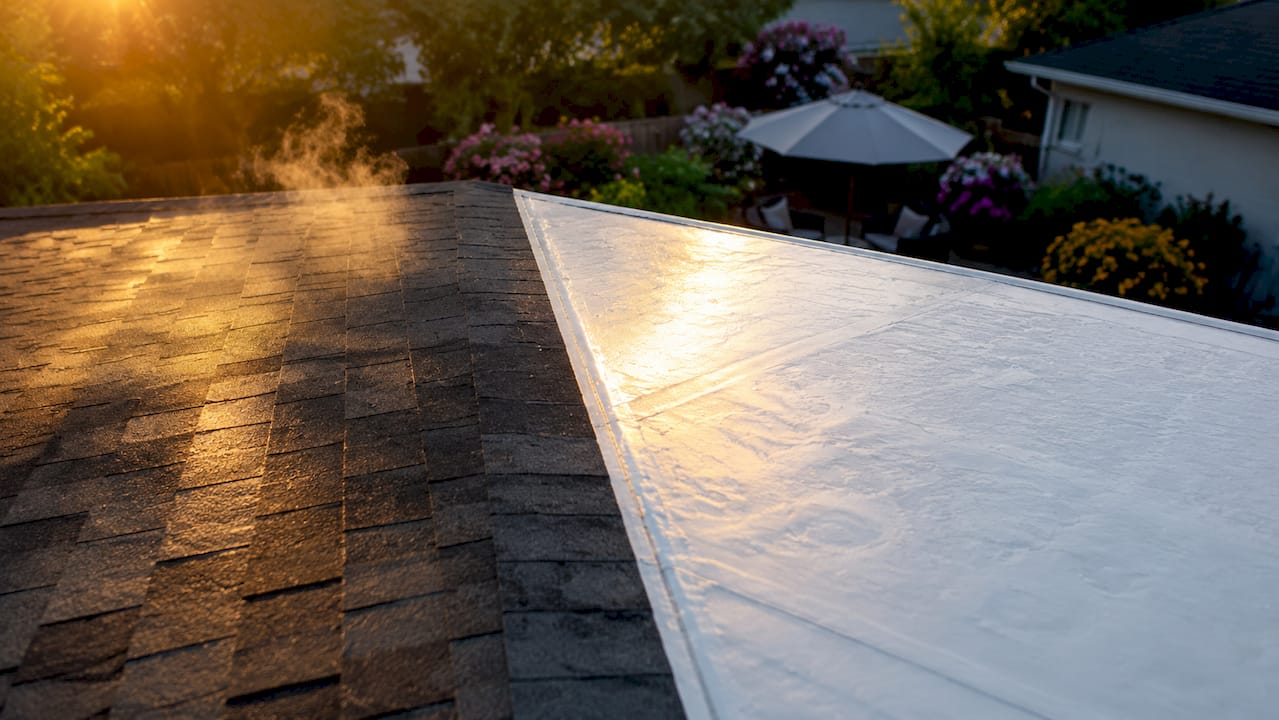
Conventional dark roofs can reach 150°F, while reflective cool roofs stay more than 50°F cooler under the same sun. That temperature gap translates directly into reduced heat flow through your ceiling and lower demand on your HVAC system. In Central Florida, where air conditioning runs most of the year, that gap has real dollar value.
| Material | Initial SR | Aged SR | Best Use Case |
|---|---|---|---|
| White TPO membrane | 0.80+ | 0.65–0.72 | Low-slope commercial and residential |
| PVC membrane | 0.80+ | 0.65–0.70 | Low-slope, chemical resistance needed |
| Coated metal (white/light) | 0.60–0.70 | 0.55–0.65 | Steep-slope residential, long lifespan |
| Acrylic cool roof coating | 0.85+ | 0.65–0.72 | Retrofit over existing flat roofs |
| Black EPDM membrane | 0.06 | 0.06 | Cold climates only; avoid in Florida |
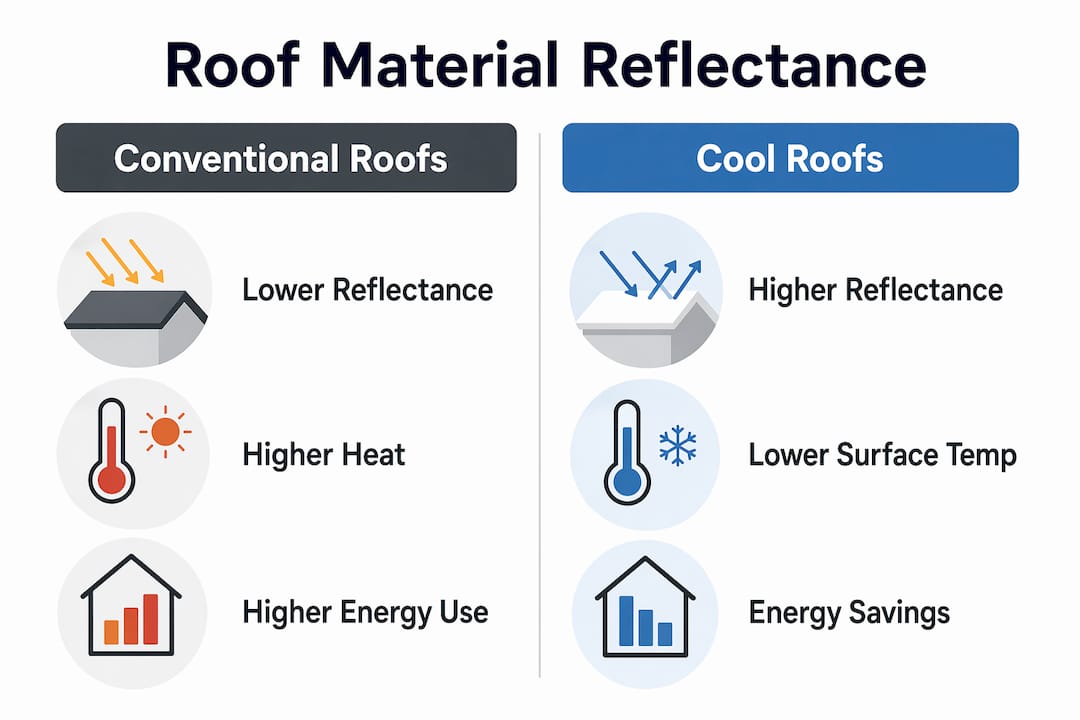
Research comparing conventional, cool, and green roofs found that cool roofs reduce surface temperature by 13.3°C on sunny days. Green roofs show even higher cooling potential, but their installation complexity and maintenance requirements make them impractical for most Central Florida residential properties. Cool roof membranes and coatings remain the most accessible and cost-effective path for the majority of homeowners and property managers here.
Coating durability is where many property owners get caught off guard. Solar reflectance of cool roof coatings degrades by an average of 0.13 over three years, which can push surface temperatures up by roughly 20°F. That degradation comes from three sources: dirt accumulation, biofouling from algae and mold (a serious issue in Florida’s humidity), and substrate bleed-through from the underlying material. Coating formulations with strong dirt-pickup resistance and antimicrobial additives hold their reflectance longer, which is why coating formulation quality matters as much as the initial SR rating.
Pro Tip: Ask your roofing contractor for the CRRC product ID of any coating they propose. Look up the aged SR yourself at the CRRC directory before approving the product. This one step eliminates most low-quality coating recommendations.
Does insulation matter as much as reflectance for roof performance?
Reflectance handles the surface. Insulation handles what happens below it. Cool roofing alone isn’t a substitute for insulation. A high-reflectance membrane reduces the temperature at the roof surface, but heat still conducts through the deck and into your attic unless insulation stops it there. In Central Florida homes, the attic is often the biggest thermal liability in the entire building envelope.
Here’s how a complete roof assembly manages heat transfer from the outside in:
- Reflective surface layer: White TPO, PVC, or acrylic coating reflects the majority of solar radiation before it becomes heat in the structure.
- Roof deck: Plywood or OSB decking conducts heat. Insulation boards installed above or below the deck reduce this conduction significantly.
- Attic insulation: Blown-in fiberglass or spray foam in the attic floor stops residual heat from reaching living spaces. The Department of Energy recommends R-38 to R-60 for attics in Florida’s climate zone.
- Attic ventilation: Attic ventilation prevents heat accumulation that degrades roofing materials and increases HVAC load. Ridge vents combined with soffit vents create continuous airflow that flushes hot air before it builds up.
- Air sealing: Gaps around recessed lights, HVAC penetrations, and attic hatches allow conditioned air to escape and hot attic air to infiltrate. Sealing these before adding insulation multiplies the benefit of both.
The most common mistake Thomasroofingandrepair sees in Central Florida is a homeowner who installs a reflective coating but skips the attic insulation upgrade. The coating helps, but the attic still bakes at 140°F on a July afternoon, and that heat radiates down into the living space all evening. Thermal roofing performance requires integration of reflective properties with insulation and adequate ventilation to produce real energy savings. Treat the roof as a system, not a surface.
What reduces thermal performance over time and how do you maintain it?
A cool roof that isn’t maintained becomes a conventional roof within a few years. Four factors drive reflectance loss in Central Florida specifically:
- Biological growth: Florida’s humidity accelerates algae, mold, and lichen growth on roof surfaces. These organisms darken the surface and reduce SR measurably within one to two years without treatment.
- Dirt and particulate accumulation: Dust, pollen, and airborne debris settle into coating pores and lower reflectance. Annual soft washing restores a significant portion of lost reflectance.
- Substrate bleed-through: Certain substrates, particularly aged modified bitumen, leach dark compounds into coatings over time. Primer selection before coating application controls this.
- Coating film degradation: UV exposure and thermal cycling break down the binder in acrylic coatings. Products with higher-quality latex binders resist this longer.
For most Central Florida flat or low-slope roofs with acrylic coatings, a recoating cycle of every five to seven years maintains performance above the SRI threshold required by energy codes. Selecting cool-roof products with proven aged reflectance metrics is the single most reliable way to extend that cycle. The upfront cost difference between a premium coating and a budget product is typically recovered within two to three years through energy savings alone, particularly given Florida’s high cooling degree days.
When deciding between recoating an existing roof and full replacement with a cool-roof membrane, consider the substrate condition first. A coating applied over a failing deck or deteriorating membrane will not adhere properly and will fail prematurely. If the existing roof has more than two layers or shows widespread moisture intrusion, replacement with white TPO or PVC is the more cost-effective long-term decision. You can explore cool roofing energy benefits in more detail to understand the full lifecycle comparison.
How to choose the right thermal roofing solution step by step
Selecting the right system doesn’t require an engineering degree. It requires asking the right questions in the right order.
- Assess your current roof condition. A professional inspection determines whether your substrate supports a coating retrofit or requires replacement. Moisture scans identify hidden damage that disqualifies coating applications.
- Check CRRC ratings for candidate products. Use the CRRC directory to compare aged SR and TE values for products your contractor recommends. Prioritize aged SR above 0.65 for Central Florida applications.
- Evaluate your attic insulation level. If your attic insulation is below R-38, address it alongside any roofing work. The combined improvement delivers far greater energy savings than either change alone. A roofing insulation guide specific to Florida’s climate zone can help you set the right target.
- Confirm ventilation is adequate. Ridge and soffit vents should provide at least 1 square foot of net free area per 150 square feet of attic floor. Blocked or insufficient venting undermines every other thermal upgrade.
- Plan for maintenance from day one. Build annual inspections and soft washing into your property maintenance schedule. Set a calendar reminder for recoating evaluation at the five-year mark.
- Get bids that specify CRRC product IDs. Any contractor who cannot provide the CRRC product ID for their proposed coating is not working with rated materials. Central Florida roofing materials selection requires climate-specific product knowledge, not just general roofing experience.
Cool roofs provide the greatest savings in hot climates like Central Florida, where heating penalties from reflective roofs in winter are negligible. This climate reality means you can prioritize high SR without the tradeoffs that complicate cool roof decisions in northern states.
Key takeaways
Thermal roofing performance in Central Florida depends on combining high aged solar reflectance with proper insulation and ventilation. Reflectance alone does not deliver the full energy benefit without the complete system working together.
| Point | Details |
|---|---|
| Aged SR beats initial SR | Always compare aged solar reflectance values from CRRC listings, not initial ratings. |
| System integration is required | Reflective roofing without attic insulation and ventilation leaves most of the energy savings on the table. |
| Florida climate favors cool roofs | Heating penalties are negligible here, so high-SR products are the right default choice. |
| Coating degradation is predictable | Plan for recoating every five to seven years and annual soft washing to maintain SRI compliance. |
| Substrate condition drives the decision | A failing deck or widespread moisture intrusion means replacement, not coating retrofit. |
What I’ve learned from roofing Central Florida homes
Most homeowners I talk to think a reflective roof coating is a complete solution. It isn’t. It’s the first layer of a system that only works when insulation and ventilation are doing their jobs underneath. The clients who see the biggest reductions in cooling costs are the ones who addressed all three at once.
The other pattern I see repeatedly: property managers who choose the lowest-bid coating without checking aged performance data. Three years later, the roof is dark again, the energy bills are back up, and they’re paying for another application. Spending a little more on a product with a proven aged SR above 0.65 and antimicrobial additives pays for itself before the next recoating cycle arrives.
Florida’s humidity is the variable that most out-of-state roofing guides ignore. Biological growth here is aggressive. A maintenance schedule that works in Arizona will fail in Brevard County. Annual soft washing isn’t optional in this climate. It’s the single lowest-cost action that preserves the most thermal value between recoating cycles.
My honest recommendation: treat every roofing project as a building envelope project. Pull the attic insulation report at the same time you get the roofing estimate. The numbers almost always justify doing both together, and the combined result is a home that stays cooler, costs less to run, and has a roof that lasts longer because it’s not cycling through extreme temperatures every summer.
— Thomasroofingandrepair
Ready to upgrade your roof’s thermal performance?
Central Florida homeowners and property managers trust Thomasroofingandrepair for roofing installations that go beyond surface-level fixes. The team works with CRRC-rated materials and understands the specific demands of Brevard, Volusia, and Orange County climates, from intense UV exposure to hurricane-season moisture.

Whether you’re in Horizon West, Titusville, or Palm Bay, Thomas Roofing and Repair provides free estimates and installs cool roof systems designed to deliver real, measurable energy savings. If you’re ready to stop overpaying for cooling and start protecting your roof’s lifespan, schedule your free estimate with the Horizon West installation team, the Titusville installation crew, or the Palm Bay roofing pros today.
FAQ
What is the Solar Reflectance Index and why does it matter?
The Solar Reflectance Index (SRI) combines solar reflectance and thermal emittance into a single performance number, with most energy codes requiring a minimum SRI of 78 for low-slope cool roofs. It gives you a reliable way to compare products and confirm code compliance before installation.
How much cooler does a cool roof keep my home in Florida?
Reflective cool roofs stay more than 50°F cooler than conventional dark roofs under direct sun, which directly reduces heat transfer into your attic and living spaces. In Central Florida’s climate, this translates to measurable reductions in air conditioning runtime and energy costs.
How often should I recoat a cool roof in Central Florida?
Most acrylic cool roof coatings in Central Florida require recoating every five to seven years to maintain SRI performance above code thresholds. Annual soft washing between recoating cycles slows reflectance degradation caused by algae, dirt, and biological growth.
Can I apply a cool roof coating over my existing roof?
A coating retrofit is viable when the existing substrate is structurally sound and free of widespread moisture intrusion. If the deck is failing or the existing roof has multiple layers, full replacement with a white TPO or PVC membrane is the more durable and cost-effective option.
Does a reflective roof replace the need for attic insulation?
No. A high-reflectance roof reduces surface temperature but does not stop heat from conducting through the deck and into your attic without adequate insulation below it. The Department of Energy recommends pairing reflective roofing with R-38 to R-60 attic insulation for Central Florida homes to achieve full energy savings.
Recommended
- Roofing Materials – Protecting Your Florida Home
- What is reflective roofing: energy-saving guide for Florida
- Central Florida roofing code requirements 2026: 130 mph standard
- Roofing Materials: Choosing Wisely in Central Florida
- Roofing Company Orlando, FL
- Roofing Company Titusville, FL
- Roofing Company DeLand, FL