
Those dark, wavy streaks running down your shingles are almost always Gloeocapsa magma, an algae that feeds on the limestone in asphalt roofing. In most cases the staining is cosmetic, but it can shorten shingle life if left alone for years. Clean it with a soft-wash treatment or hire a licensed roofer instead of scrubbing or pressure washing.
TL;DR:
- Black streaks on shingles are caused by Gloeocapsa magma algae feeding on limestone fillers, which can damage granules and accelerate aging if untreated.
- Soft-wash treatments using diluted bleach or oxygen-based cleaners are recommended, with no pressure washing to prevent granule loss and further damage.
- Installing zinc or copper ridge strips can significantly reduce algae regrowth by releasing ions that inhibit new colonies, extending the time between cleanings.
- Heavily stained or damaged roofs exhibiting granule loss, curling shingles, or leaks should be inspected by professionals rather than attempting DIY cleaning or delaying replacement.
- Prevention strategies, such as installing algae-resistant shingles and maintaining good attic ventilation, are more cost-effective long-term than repeated cleaning alone.
Table of Contents
- What Causes Black Streaks on Roof Shingles?
- How to Remove Black Streaks Safely (DIY and Professional Options)
- How to Prevent Black Streaks From Returning
- Do Black Streaks Harm Roof Performance or Lifespan?
- When to Call a Roofing Contractor or Consider Replacement
- Why Trust This Guidance? Thomas Roofing and Repair’s Local Expertise
- What Homeowners Get Wrong About Roof Algae
- Get a Professional Soft-Wash and Prevention Plan
- Sources
What Causes Black Streaks on Roof Shingles?
Gloeocapsa magma is a cyanobacterium, not a mold or mildew, and it survives by digesting the limestone filler baked into most asphalt shingles. As colonies grow, they produce a dark, UV-resistant outer coating to protect themselves from sunlight. That coating is the black streak you’re looking at. It isn’t a coincidence that the staining runs vertically. Spores land, take hold, then wash downhill in a thin, dark trail every time it rains, which is why the streaks fan out from the ridge toward the eaves rather than sitting in random blotches.
Shaded, north-facing slopes and roofs in humid climates get hit hardest because the algae needs moisture and cool temperatures to spread. Roofs baking in full southern sun tend to stay cleaner simply because the surface dries out faster between rains.
Not every dark patch is algae, though. Here’s how to tell them apart:
- Algae streaks look sooty or charcoal-colored and follow water flow patterns, usually starting near the ridge.
- Moss grows in raised, fuzzy green or gray clumps, often where debris collects in valleys or against flashing.
- Lichen forms crusty, flat patches in gray, orange, or pale green that feel rough to the touch.
- Granule loss shows up as bald, shiny patches with no color pattern, often paired with granules collecting in the gutters.
How to Remove Black Streaks Safely (DIY and Professional Options)
The Asphalt Roofing Manufacturers Association (ARMA) recommends a soft-wash approach using a diluted sodium hypochlorite (bleach) solution applied at low pressure, never a pressure washer. High-pressure spray strips the protective granules right off the shingle, and industry guidance is blunt about it: once those granules are gone, they don’t come back, and the shingle underneath is exposed to UV damage.
Here’s the general process:
- Cover nearby plants and pre-wet the soil around your foundation to dilute any runoff.
- Mix a soft-wash solution following ARMA’s household-strength bleach guidance, or use an oxygen-based sodium percarbonate cleaner if you’re worried about landscaping.
- Apply the solution with a low-pressure sprayer, working from the ridge down.
- Let it sit for 10 to 20 minutes, keeping the surface wet the whole time. Never let bleach dry on the shingles.
- Rinse thoroughly with a garden hose, ridge to eave, using ordinary tap pressure, not a wand attachment.
- Check gutters and downspouts afterward and flush them if runoff pooled there.
Oxygen-based cleaners are gentler on landscaping but work more slowly than chlorine-based mixes, so plan on a longer dwell time or a repeat application if you go that route.
Pro Tip: Wear rubber boots with good grip and a harness if you’re getting on the roof yourself. Wet shingles covered in soft-wash solution get slick fast, and that combination causes more fall injuries than the cleaning chemicals ever do.
Expect streaks to fade within a day or two, not disappear instantly. If growth returns within a few months, or if your roof has a steep pitch, multiple stories, or heavy moss alongside the algae, call a licensed roofer instead of climbing up there yourself. Shingle repair professionals can also spot damage a homeowner might miss during the cleaning process.
How to Prevent Black Streaks From Returning
Cleaning without prevention is a losing game, because algae spores travel by wind and by birds landing on neighboring roofs, so recontamination is common even on a freshly washed roof. Zinc or copper ridge strips fix that. Installed along the ridge, they release trace metal ions every time it rains, and those ions wash down the slope and keep new colonies from establishing. Installation typically runs $200 to $500 and can extend the time between cleanings considerably, particularly in drier climates.
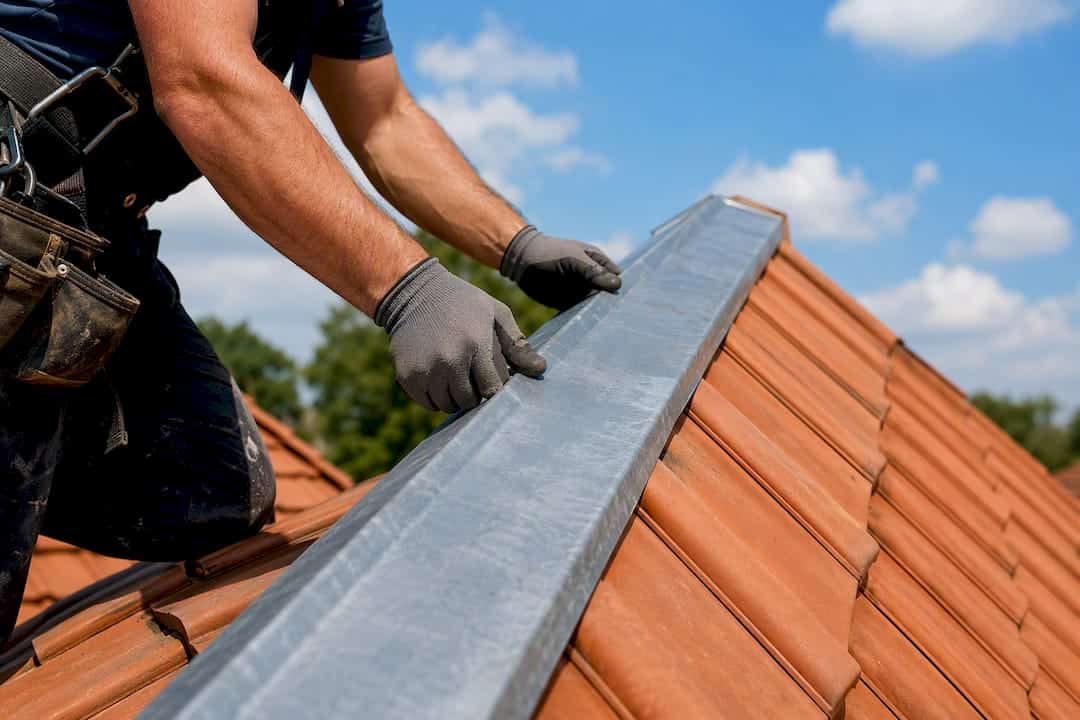
If you’re due for a replacement anyway, algae-resistant shingles are worth the upgrade. Many use copper-infused granules that release the same protective ions as ridge strips, built right into the shingle itself, and most carry a manufacturer warranty specifically covering algae resistance.
A few maintenance habits go a long way too:
- Trim overhanging branches to cut down on shade and reduce leaf litter that traps moisture.
- Clear gutters at least twice a year so water doesn’t back up under the shingle edge.
- Improve attic ventilation to reduce the moisture that seeps upward through the deck.
- Sweep off accumulated debris in valleys, where algae and moss both tend to start.
Darker shingle colors hide new streaking longer than light gray or white roofs, which show contrast almost immediately. If curb appeal matters to you, factor that into your next material choice. Our roof maintenance guide walks through a full seasonal checklist for Florida homes.
Do Black Streaks Harm Roof Performance or Lifespan?
In most cases, black streaks are a cosmetic problem, but ARMA’s own guidance acknowledges the staining can accelerate granule loss and reduce a roof’s reflectivity over time, which means the shingle absorbs more heat and ages faster than it should.
The real risk isn’t the algae itself. It’s what grows on top of it. Left alone long enough, algae colonies trap moisture that invites moss, and moss roots work their way under shingle edges. That’s when a cosmetic issue becomes a structural one.
Watch for these signs that cleaning alone won’t solve the problem anymore:
- Granules collecting heavily in your gutters after every rain
- Shingle edges curling or lifting instead of lying flat
- Bare, exposed asphalt visible in patches
- Water stains or active leaks showing up on interior ceilings
Any of those means it’s time for an inspection, not another round of soft-wash.
When to Call a Roofing Contractor or Consider Replacement
Some situations call for a professional the first time, not as a last resort. If your roof shows heavy granule loss, cracked or curling shingles, a persistent leak, or moss colonies large enough to see from the street, skip the DIY cleaning and get an inspection scheduled.
Rough cost expectations help set the right plan:
- Professional soft-wash cleaning: roughly $300 to $900 for an average single-family home
- Zinc or copper ridge strip installation: $200 to $500 installed
- Full replacement: varies widely based on square footage, material, and pitch, so a contractor quote is the only reliable number
A thorough contractor inspection should cover more than just the stains. It should check shingle condition and remaining granule coverage, attic ventilation, flashing around chimneys and vents, and overall structural signs of moisture damage. Ask about financing options and any workmanship guarantee before signing off on repairs. Signs your roof may be past cleaning and closer to replacement territory are worth reviewing before you spend money on a wash that won’t fix the underlying issue.
Why Trust This Guidance? Thomas Roofing and Repair’s Local Expertise
Thomas Roofing and Repair has spent years handling residential and commercial roofing across Central Florida, a region where humidity and afternoon storms make algae growth a near-constant issue. The crews here follow safety-first soft-wash procedures, protect landscaping before any chemical touches the roof, and install zinc or copper prevention strips as part of standard maintenance work, not as an upsell.
Every inspection follows a checklist covering shingle condition, ventilation, and flashing, the same items outlined earlier in this guide…
That combination of local climate experience and standardized safety practice is what separates a careful cleaning job from one that voids a shingle warranty or strips granules the homeowner never sees coming.
What Homeowners Get Wrong About Roof Algae
Most homeowners treat black streaks as either a five-minute pressure-washing job or an emergency requiring full replacement, and both instincts are wrong. The pressure washer temptation is understandable. It looks fast and satisfying, and it’s also the single most common way homeowners accidentally shorten their own roof’s life by blasting off protective granules they can never replace.
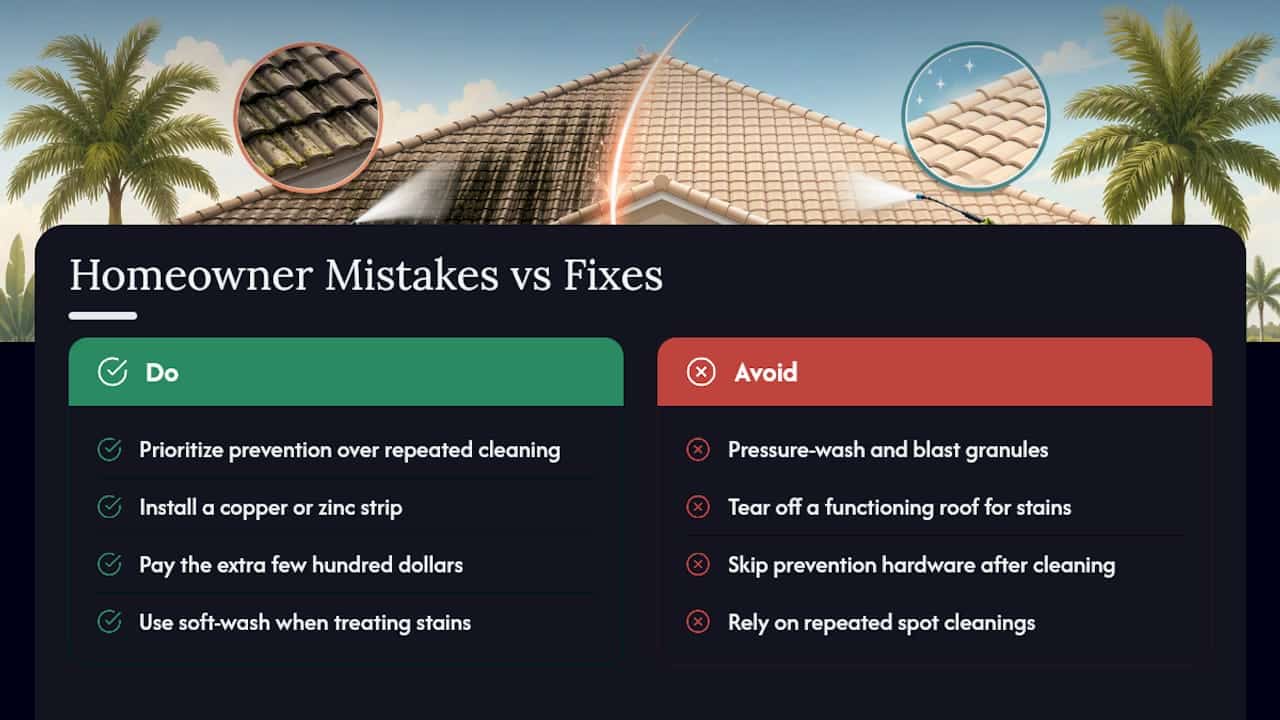
The replacement panic is the opposite mistake. Algae staining alone rarely justifies tearing off a functional roof. What actually matters is catching the transition point, the moment cosmetic staining starts inviting moss and moisture retention that leads to real structural wear.
If there’s one thing worth prioritizing, it’s prevention over repeated cleaning. A one-time soft-wash without a copper or zinc strip installed afterward is treating a symptom that will just come back with the next windborne spore from a neighbor’s roof. Spend the extra few hundred dollars on prevention hardware while you’re already up there, or already paying a contractor’s visit fee. It’s the cheapest insurance available against doing this same job again in eighteen months.
— Results
Get a Professional Soft-Wash and Prevention Plan
Thomas Roofing and Repair is the local alternative to guessing your way through a DIY chemical job on a roof you can’t safely access yourself. We handle the full cycle: professional soft-wash cleaning that follows ARMA’s safety standards, zinc and copper ridge strip installation for long-term prevention, and full replacement with algae-resistant shingles if your roof has moved past the point cleaning can fix.
Getting a free estimate is straightforward. Have your roof’s approximate age, a few photos of the visible streaking, and any interior symptoms like ceiling stains ready before you call. That gives our team what we need to scope the job accurately on the first visit. We also offer financing options for larger prevention or replacement projects, backed by service guarantees and a reputation built on years of work across Central Florida communities. If your roof is showing more than surface staining, our residential roof maintenance plans cover inspection, cleaning, and prevention in one visit. Request your free estimate today and get a straight answer on what your roof actually needs.
Sources
For deeper reading on the science and standards behind this guide, see ARMA’s algae and cleaning guidance, This Old House’s roof algae removal tips, and independent explainers from The Roofing Brief and Alabama’s seasonal maintenance checklist.
- Algae & Moss Prevention and Cleaning for Asphalt Roofing Systems – Asphalt Roofing Manufacturers Association (ARMA)
- Algae streaks on a roof: Cause, clean, prevent | The Roofing Brief
- Algae on Roofs: How to Remove It and Stop It Coming Back | RoofScour
- 3M™ Copper Roofing Granules product page