After Hurricane Ian left thousands of Central Florida homeowners scrambling for repairs, the Better Business Bureau reported a 40% spike in roofing contractor fraud complaints. Choosing a reliable roofing contractor isn’t just about fixing damage quickly, it’s about protecting your home, your investment, and your family’s safety. This guide walks you through verifying credentials, evaluating expertise, comparing estimates, and leveraging insurance assistance so you can hire with confidence.
Table of Contents
- Prerequisites: What You Need Before Hiring A Roofing Contractor
- Verifying Licensing And Insurance For Florida Roofing Contractors
- Understanding Local Code Compliance And Hurricane Standards In Central Florida
- Evaluating Contractor Reputation, Reviews, And References
- Obtaining And Comparing Detailed Roofing Estimates
- How Roofing Contractors Can Assist With Insurance Claims For Storm Damage
- Common Mistakes Homeowners Make And How To Avoid Them
- Expected Results: Timelines, Costs, Warranties, And Durable Outcomes
- Why Choose Thomas Roofing And Repair For Your Central Florida Roofing Needs
Key takeaways
| Point | Details |
|---|---|
| Verify licensing and insurance | All Florida roofing contractors must have a valid state-issued roofing license and active liability and worker’s compensation insurance. |
| Ensure code compliance | Central Florida roofs must withstand wind speeds of up to 130 mph per Florida Building Code requirements. |
| Request detailed written estimates | Itemized quotes covering labor, materials, permits, and cleanup prevent hidden costs and budget surprises. |
| Choose contractors with insurance claims experience | Expert documentation support can reduce insurance claim approval time by 15-20% and accelerate repairs. |
| Review reputation through multiple sources | Check at least 5-10 recent customer testimonials across Google, Yelp, and BBB to confirm reliability and quality. |
Prerequisites: what you need before hiring a roofing contractor
Before you contact any contractor, gather the essential information and documents that will streamline your selection process and protect you from scams. Start by assessing your roof’s current condition through either a professional inspection or a careful self-assessment from the ground. Look for missing shingles, visible damage, water stains on ceilings, or sagging areas that signal urgent repairs.
Next, compile your property documents including deeds, homeowner’s insurance policies, and any existing damage documentation like photos or previous inspection reports. These materials help contractors understand your property history and insurance coverage limits. You’ll also want to familiarize yourself with Florida roofing licensing essentials by visiting the Florida Department of Business and Professional Regulation website to understand what credentials legitimate contractors must hold.
Finally, create a preliminary list of potential roofing contractors by searching for licensed professionals in your area through online databases, local references, and community recommendations. This shortlist becomes your starting point for deeper verification and comparison.
- Assess roof condition via professional inspection or ground-level self-assessment
- Gather property deeds, insurance policies, and damage photos
- Research Florida roofing licensing basics through DBPR resources
- Compile initial contractor shortlist based on licensing status and local reputation
Verifying licensing and insurance for Florida roofing contractors
Your first line of defense against fraudulent contractors is confirming they hold proper licensing and insurance. In Florida, all roofing contractors must have a valid state-issued roofing license registered through the Department of Business and Professional Regulation. Never hire anyone who cannot provide immediate proof of licensure, as unlicensed work leaves you liable for injuries, code violations, and substandard repairs.
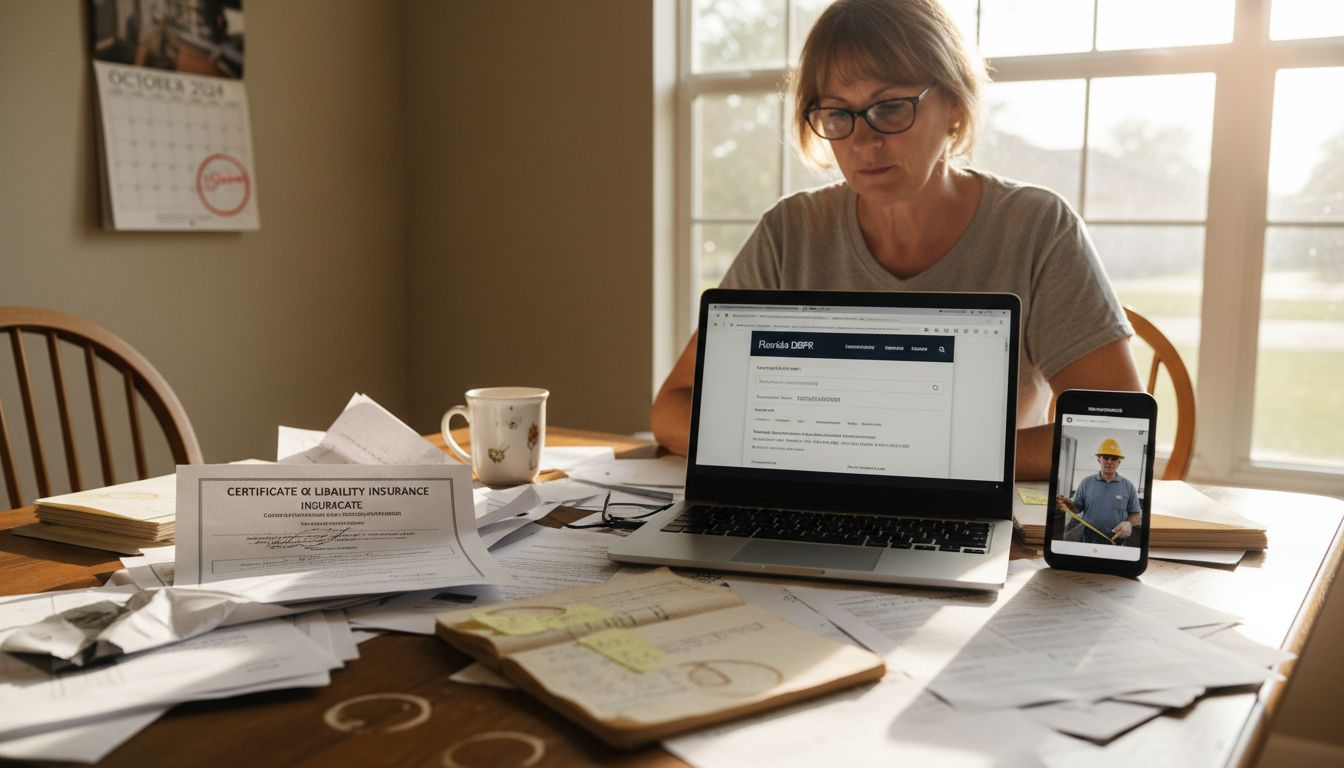
Beyond licensing, verify that contractors carry both general liability insurance and worker’s compensation coverage. Liability insurance protects your property from accidental damage during work, while worker’s compensation shields you from lawsuits if a crew member gets injured on your property. Request certificates of insurance directly from contractors and call the insurance companies listed to confirm policies are current and adequate.
Use the DBPR’s online license lookup tool to cross-check contractor information independently. This database shows license status, expiration dates, and any disciplinary actions or complaints filed against the contractor. If you find expired licenses, unresolved complaints, or no record at all, move on immediately.
Pro Tip: Always request physical copies of both the license and insurance certificates, then verify expiration dates are at least six months out to ensure coverage throughout your project timeline.
- Verify roofing contractor licensing and insurance through DBPR online databases
- Confirm active liability and worker’s compensation insurance coverage
- Call insurance providers directly to validate policy details and coverage amounts
- Check for disciplinary actions or complaints in official state records
Understanding local code compliance and hurricane standards in Central Florida
Once you’ve verified credentials, understand the strict building codes your roofing project must meet. Central Florida roofs must withstand wind speeds of up to 130 mph according to the Florida Building Code, a requirement born from decades of hurricane damage and engineering research. This standard applies to both new installations and major repairs, ensuring your roof can survive the next storm season.
Roofing materials must meet ASTM D7158 Class H hurricane resistance standards, which test shingles and underlayment against extreme wind uplift and impact from flying debris. These specifications aren’t optional, they’re legal requirements that protect your home and maintain your insurance coverage. Any contractor proposing materials below these standards is either ignorant or deliberately cutting corners.
Permits are required for repairs or replacements exceeding $2,500 in value. Your contractor should handle permit applications and schedule required inspections with local building departments. Non-compliance risks hefty fines, insurance claim denials if future damage occurs, and structural failures that endanger your family. Always confirm your contractor will pull permits and arrange inspections before signing any contract.
| Code Requirement | Standard | Consequence of Non-Compliance |
|---|---|---|
| Wind Resistance | 130 mph per Florida Building Code | Insurance claim denial, structural failure |
| Material Certification | ASTM D7158 Class H | Failed inspections, roof replacement required |
| Permit Threshold | Projects over $2,500 | Fines up to $5,000, stop-work orders |
| Inspection Schedule | Multiple stages during installation | Project delays, non-compliant work orders |
- Ensure local roofing code requirements are met for wind resistance
- Verify materials meet ASTM D7158 Class H hurricane standards
- Confirm contractor will obtain permits for work over $2,500
- Schedule required building inspections at appropriate project milestones
Evaluating contractor reputation, reviews, and references
With code knowledge in hand, screen contractors for proven reliability and quality workmanship. Start by reviewing at least 5 to 10 recent customer testimonials across multiple platforms including Google, Yelp, and the Better Business Bureau. Look for consistent patterns in feedback about communication, timeliness, cleanup, and problem resolution rather than focusing on isolated complaints.
Ask contractors directly for references from projects completed within the past year, ideally in your neighborhood or similar properties. Contact these references personally to ask specific questions about the contractor’s responsiveness, how they handled unexpected issues, and whether the final result met expectations. References who hesitate or provide vague answers are red flags.
Be cautious of contractors with disproportionate negative reviews clustered around similar issues like abandoned projects, surprise charges, or poor communication. Also watch for fake positive reviews that use generic language or appear posted in batches. Check if contractors are involved in local community initiatives, hold memberships in professional associations like the National Roofing Contractors Association, or maintain an established physical office rather than operating from a P.O. box.
Pro Tip: When contacting references, ask how the contractor handled problems or changes during the project, not just if they were satisfied overall, because problem-solving ability reveals true professionalism.
- Review 5 to 10 recent customer testimonials across Google, Yelp, and BBB
- Request and contact references from similar recent projects
- Watch for patterns in negative reviews or suspicious positive review clusters
- Evaluate local roofing contractor reputation through community involvement and professional memberships
Obtaining and comparing detailed roofing estimates
After vetting reputation, focus on gathering transparent pricing to make informed budget decisions. Request itemized written estimates from at least three contractors, with each quote breaking down labor costs, material specifications and quantities, permit fees, disposal and cleanup charges, and project timelines. Verbal estimates or vague proposals create opportunities for disputes and surprise charges later.
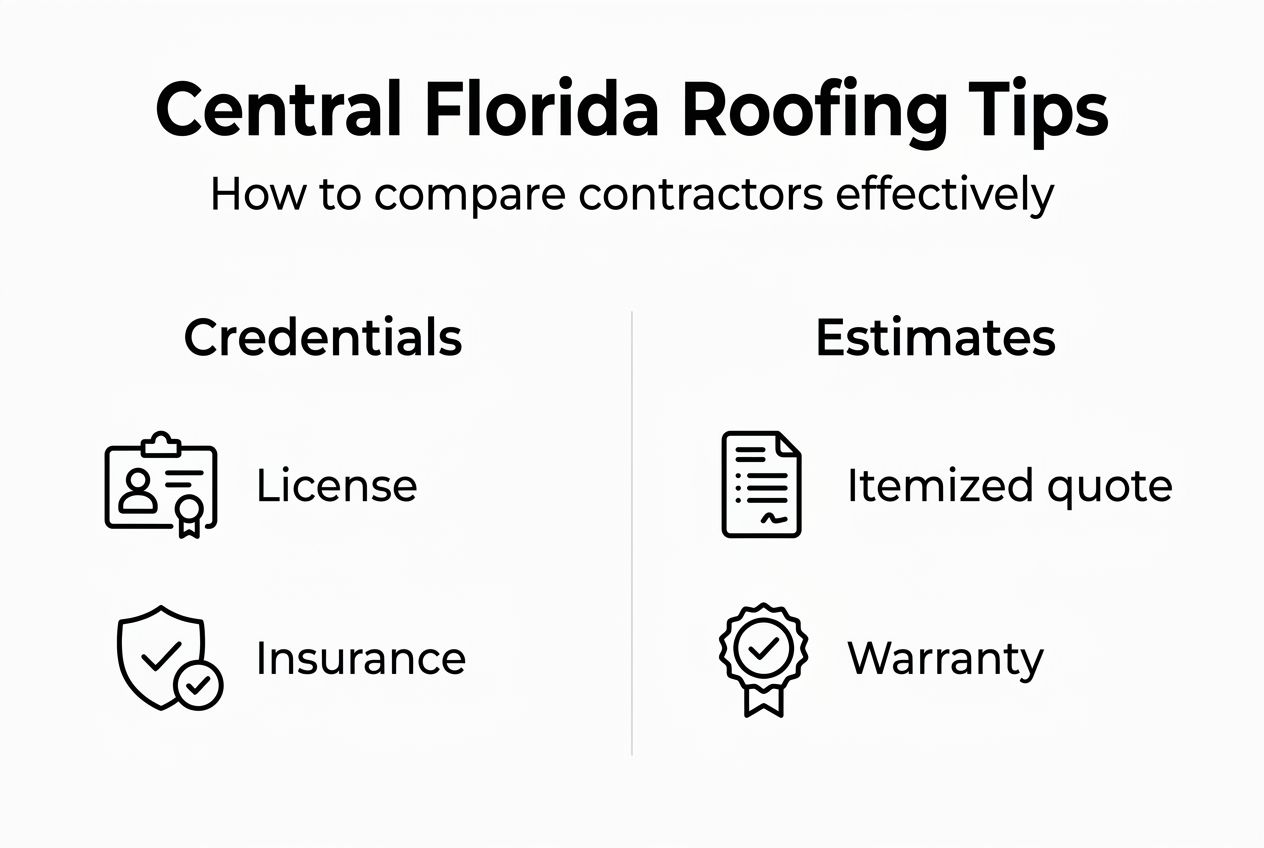
Compare bids carefully to understand why prices differ. Higher quotes might reflect premium materials, more thorough prep work, or longer warranty coverage, while lower bids could indicate shortcuts, inferior materials, or hidden fees that emerge mid-project. Don’t automatically choose the cheapest option, as unusually low bids often signal contractors who lack proper insurance, use unlicensed workers, or plan to demand extra payments once work begins.
Clarify payment terms upfront including deposit amounts (typically 10 to 25% of total cost), progress payment schedules tied to completed milestones, and final payment upon satisfactory inspection. Ask about financing options if you need them, as many reputable contractors offer payment plans or work with lenders. Never pay the full amount upfront or agree to cash-only arrangements, which are common tactics used by scammers.
- Request itemized written estimates from at least three licensed contractors
- Compare material specifications, labor breakdown, and included services across bids
- Investigate significant price differences by asking contractors to explain their approach
- Review payment schedules ensuring deposits stay below 25% and final payment awaits completion
- Verify detailed roofing estimates include permits, cleanup, and warranty terms in writing
How roofing contractors can assist with insurance claims for storm damage
Now that you know how to choose and price contractors, understand the value they bring in managing insurance claims. Select contractors with proven experience handling storm damage insurance claims, as they understand the documentation requirements, technical language, and negotiation strategies that maximize your settlement. They can prepare comprehensive damage assessments with photos, measurements, and material specifications that insurance adjusters need to approve claims quickly.
Experienced contractors often meet directly with insurance adjusters during property inspections, advocating for complete repairs rather than minimal patches that leave underlying damage unresolved. Their technical expertise helps identify hidden damage like compromised decking or water intrusion that untrained eyes might miss, ensuring your claim covers the full scope of necessary work. Reliable contractors’ documentation support can reduce insurance claim approval time by 15-20%, getting your repairs started weeks earlier.
Faster claim processing typically leads to quicker repair starts, which prevents additional damage from weather exposure and gets your family back to normal life sooner. Contractors who specialize in insurance claims assistance also understand policy limitations and can suggest cost-effective approaches that keep projects within your coverage limits while maintaining quality standards.
“Working with contractors experienced in insurance claims cut our approval time from six weeks to just 12 days, and they caught $8,000 in additional covered damage our adjuster initially missed.”
- Choose contractors with documented storm damage insurance claims experience
- Ensure they prepare thorough damage assessments meeting insurance requirements
- Confirm they’ll attend adjuster meetings to advocate for comprehensive repairs
- Leverage their expertise to identify hidden damage and maximize settlement amounts
Common mistakes homeowners make and how to avoid them
Before concluding, review frequent pitfalls that undermine roofing projects and learn how to steer clear of them. Never hire unlicensed or uninsured contractors regardless of how much money they promise to save you, because you’ll bear full legal and financial liability for injuries, code violations, and defective work. The few hundred dollars saved upfront can cost tens of thousands in repairs, fines, or lawsuits.
Avoid rushing to hire contractors immediately after storms when desperation clouds judgment and scammers flood affected areas. Storm chasers often demand large upfront deposits, perform shoddy work, then disappear before completing projects or addressing warranty issues. Take time to verify credentials thoroughly even when you’re eager to start repairs.
Always confirm contractors will pull required permits and schedule building inspections at appropriate stages. Some contractors skip permits to save time or hide substandard work from official scrutiny, leaving you vulnerable to fines and future insurance claim denials. Reject verbal agreements or incomplete estimates that lack itemized costs, material specifications, or warranty terms, as these create opportunities for disputes and surprise charges.
Pro Tip: Resist pressure to sign contracts immediately or pay large deposits upfront, as legitimate contractors understand you need time to review terms and compare options without rushing.
- Never hire unlicensed or uninsured contractors despite promises of savings
- Avoid signing contracts immediately after storms when scammers are most active
- Confirm permits will be pulled and inspections scheduled per code requirements
- Reject verbal or incomplete estimates lacking itemized costs and warranty details
Expected results: timelines, costs, warranties, and durable outcomes
Finally, understand what results you should expect so your roofing investment meets safety and durability goals. Storm damage roof repairs generally complete within 2 to 6 weeks depending on damage extent, material availability, weather delays, and inspection schedules. Emergency tarping happens within 24 to 48 hours to prevent additional water damage, followed by detailed assessments and insurance coordination before actual repairs begin.
Workmanship warranties from licensed contractors commonly cover 5 to 10 years protecting against installation defects, while material warranties vary by manufacturer from 20 years to lifetime depending on shingle quality and grade. Review warranty terms carefully to understand what’s covered, exclusion conditions, and transfer rights if you sell your home. Licensed contractors ensure finished roofs meet hurricane-resistant building codes through proper installation techniques, adequate fastening, and code-compliant underlayment.
Thorough permit compliance and professional cleanup prevent fines from building departments and eliminate debris hazards around your property. Final inspections confirm work meets all code requirements, protecting your insurance coverage and home value. Expect to receive copies of permits, inspection approvals, warranty documentation, and maintenance recommendations upon project completion.
| Project Aspect | Typical Range | What It Covers |
|---|---|---|
| Repair Timeline | 2 to 6 weeks | Assessment, materials, installation, inspections |
| Workmanship Warranty | 5 to 10 years | Installation defects, leak repairs, fastener failures |
| Material Warranty | 20 years to lifetime | Manufacturing defects, shingle deterioration |
| Project Cost | $5,000 to $15,000+ | Materials, labor, permits, disposal, varies by scope |
- Roofing warranty coverage protects against installation and material defects
- Licensed contractors ensure compliance with Florida Building Code standards
- Complete permits and inspections prevent fines and insurance complications
- Professional cleanup removes debris and restores property appearance
Why choose Thomas Roofing and Repair for your Central Florida roofing needs
Having armed you with knowledge on selecting contractors, discover how Thomas Roofing and Repair can be your trusted partner. We’re fully licensed and insured, meeting all Florida requirements while specializing in storm damage repairs and insurance claim assistance that gets your home protected faster. Our team serves multiple Central Florida communities including Horizon West, Titusville, and Palm Bay with expertise in both residential and commercial roofing projects.

Every project starts with a thorough professional roof inspection that identifies all damage and provides transparent recommendations without pressure tactics. We handle permit applications, coordinate inspections, and work directly with your insurance company to streamline claims and maximize coverage. Our roof installation in Horizon West, FL and surrounding areas follows strict code compliance standards ensuring your roof withstands the next hurricane season.
When storms strike, our storm damage roof repair services respond quickly with emergency tarping and comprehensive restoration. Contact us today for a free estimate and experience the difference that local expertise, transparent communication, and warranty-backed craftsmanship make in protecting your most important investment.
- Licensed and insured meeting all Florida roofing requirements
- Specialized storm damage repair and insurance claims expertise
- Transparent itemized estimates with no hidden fees
- Warranty-backed workmanship and code-compliant installations
Frequently asked questions
What questions should I ask a roofing contractor before hiring?
Ask to see their Florida roofing license number and current insurance certificates, then verify both independently through state databases. Request a detailed written estimate breaking down all costs, materials, and timelines. Confirm they’ll pull permits and schedule required inspections per local code.
How long does a typical roof replacement take in Central Florida?
Complete roof replacements typically take 3 to 7 days depending on home size, roof complexity, and weather conditions. This timeline includes tear-off, installation, cleanup, and final inspection. Emergency repairs happen faster, often within 24 to 72 hours.
What should I do if my insurance claim is denied?
Work with your roofing contractor to document all damage thoroughly with photos and detailed assessments. Request a written explanation from your insurance company specifying denial reasons. Consider hiring a public adjuster or attorney who specializes in insurance disputes if the denial seems unjustified.
How can I tell if a roofing contractor is trying to scam me?
Watch for red flags including demands for large upfront payments, pressure to sign immediately, no physical business address, inability to provide license or insurance proof, and prices significantly lower than other bids. Legitimate contractors provide references, written estimates, and allow time for your decision.
What’s included in a comprehensive roofing warranty?
Workmanship warranties cover installation defects, leaks from improper techniques, and fastener failures for 5 to 10 years. Material warranties from manufacturers protect against shingle defects and premature deterioration for 20 years to lifetime depending on product grade. Always get warranty terms in writing specifying coverage scope and transfer conditions.