
 407-408-0577
TL;DR:
- A structured roofing checklist helps property managers prevent costly damages and legal issues.
- Regular inspections focus on drainage, flashing, surface condition, and interior signs, especially after storms.
- Professional evaluations and thorough documentation ensure long-term roof health and smooth insurance claims.
A roof leak discovered on a Tuesday morning is never just a roof leak. It’s emergency calls, displaced tenants, liability exposure, and costs that spiral fast. For property managers overseeing multiple residential or commercial properties across Central Florida’s counties, one missed issue during a routine inspection can turn a minor repair into a full replacement. The good news is that a structured, repeatable roofing checklist removes the guesswork entirely. This guide gives you a step-by-step framework built specifically for the Florida climate, covering everything from pre-inspection prep to final documentation, so you can stay ahead of problems before they get expensive.
Table of Contents
- What you need before you start: Tools, safety, and documentation
- Step-by-step property manager roofing checklist
- Common issues, troubleshooting, and when to call a pro
- verification and reporting: How to document, follow up, and stay compliant
- A fresh perspective: What most property managers miss about roof inspections
- Get professional help for stress-free roof management
- frequently asked questions
Key Takeaways
| Point | Details |
|---|---|
| Comprehensive preparation | Gather the right tools and set up a documentation process before inspection begins. |
| Follow a systematic checklist | Use a detailed step-by-step list to inspect every critical roof element, inside and out. |
| Prioritize drainage and flashings | Focusing on these areas prevents most leaks on Central Florida roofs. |
| Document and report thoroughly | Accurate records support insurance, warranty, and long-term property protection. |
| Know when to call professionals | Engage experts for major damage, storm recovery, or complex flat roof issues. |
What you need before you start: Tools, safety, and documentation
Preparation is the first step to a thorough roofing inspection. Before you set foot near any roof, make sure you have the right equipment and a clear documentation plan in place.
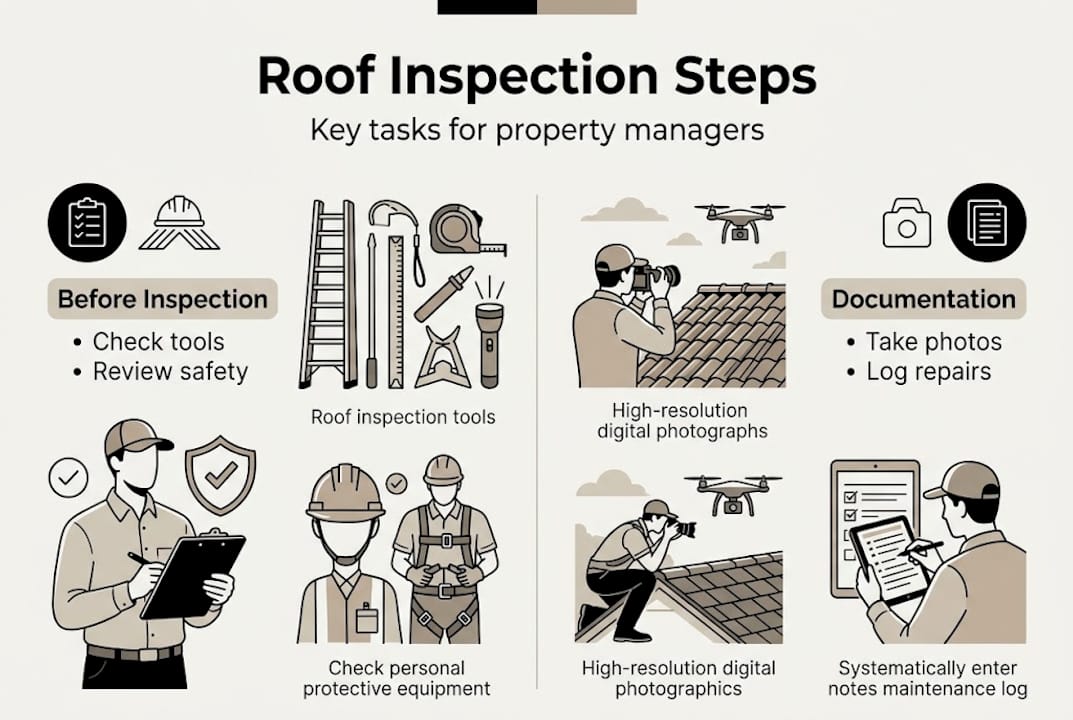
Essential tools and equipment
You don’t need to climb every roof yourself. In fact, for safety and insurance purposes, many property managers conduct initial assessments from ground level using binoculars and a quality camera. Here’s what to have ready:
- Safety-rated ladder (if accessing the roof)
- Personal protective equipment: hard hat, non-slip footwear, harness
- High-zoom binoculars or telephoto lens camera
- Digital camera or smartphone for photos and video
- Pre-printed or digital inspection forms
- GPS-enabled device or app for photo tagging
- Strong flashlight for interior and attic checks
- Note-taking tools or a tablet with inspection software
| Tool | Purpose | Safety note |
|---|---|---|
| Non-slip footwear | Safe roof access | Required for all on-roof work |
| High-zoom binoculars | Ground-level visual check | Best practice for routine scans |
| Digital camera | Photo documentation | Use GPS tagging when possible |
| PPE harness | Fall prevention | Required per local safety codes |
| LED flashlight | Interior/attic moisture check | Use to detect interior moisture effectively |
| Digital inspection form | Record findings | Cloud backup recommended |
Safety first, always
Property managers should understand that walking on roofing surfaces carries real risk, especially on aging or storm-damaged roofs. As a standard practice, prioritize professional inspections post-storm for insurance claims since professionals can access hidden issues that a ground or binocular check will miss. For routine walkthroughs, ground-level observation with binoculars is both safer and sufficient.
Documentation protocols
The value of any inspection lives or dies with your records. A solid paper trail protects you legally, speeds up insurance claims, and gives future contractors a clear history of the roof’s condition. Learn how to properly document roof damage from the start, and build it into every inspection as a non-negotiable step. Your roof repair workflow becomes far more efficient when your team has consistent, timestamped records to reference.
Pro tip: Always photograph findings with GPS tagging enabled. This creates a geo-referenced maintenance history that’s invaluable for insurance adjusters and warranty claims down the road.
Step-by-step property manager roofing checklist
Once you’ve assembled your tools and documentation setup, follow this step-by-step checklist to cover every critical area. Use this list during every scheduled inspection and adapt it for post-storm assessments.
Step-by-step roof inspection checklist
- Surface condition: Look for missing, cracked, or curling shingles. Check for granule loss in gutters or at downspouts. Key checklist items include visual inspection for storm damage such as loose shingles and debris accumulation.
- Materials wear: Look for blistering, splitting, or extensive discoloration on shingles or membrane surfaces.
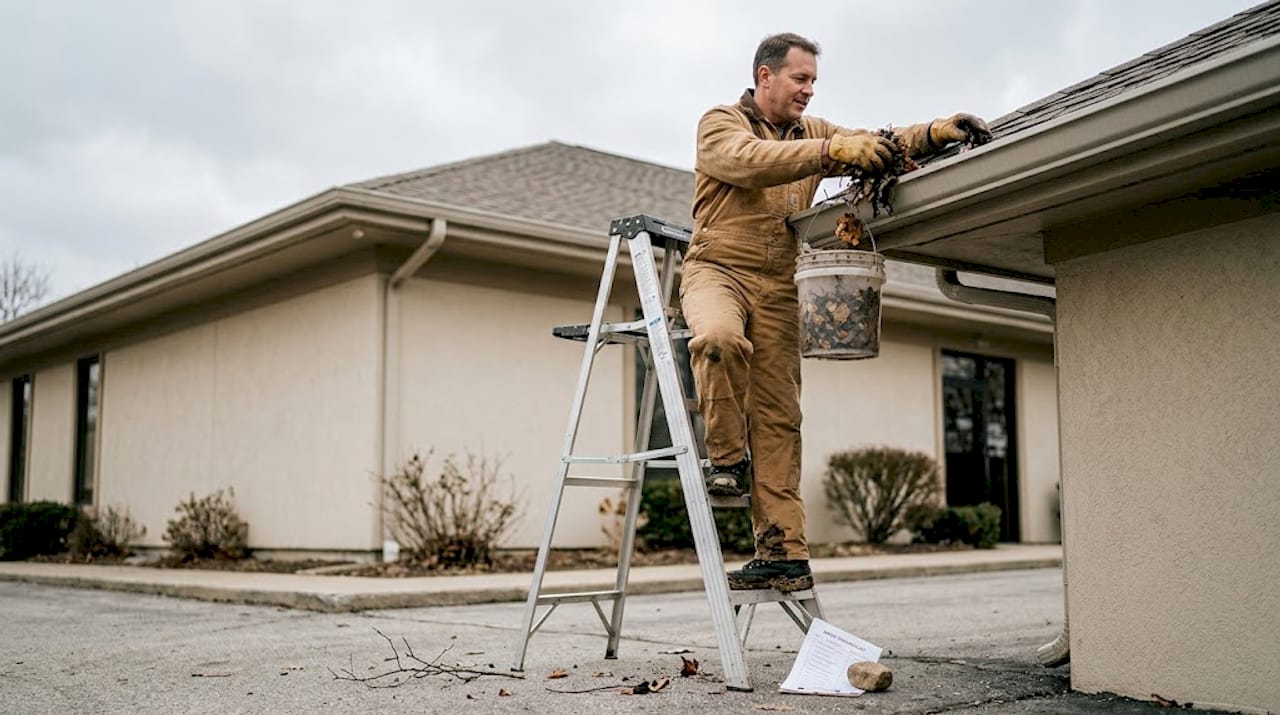
- flashings and seals: Check all penetrations including vents, skylights, chimneys, and AC units. Failed flashings are a leading cause of leaks.
- drainage systems: Clear all gutters, downspouts, and scuppers. Check for ponding water, especially after recent rainfall.
- roof structure: Walk the perimeter and look for sagging ridgelines, damaged fascia, or bowing deck sections.
- Interior signs: Check ceilings, walls, and attic spaces for water stains, mold, or musty odors.
- perimeter and edges: For commercial properties, inspect coping, termination bars, and edge metal for separation.
- Post-storm sweep: After any tropical weather, inspect roof after storms with this checklist before issuing any damage reports.
shingle vs. flat roofs: What to watch for
| Component | shingle roofs | flat/low-slope commercial roofs |
|---|---|---|
| Surface check | Missing/cracked shingles, granule loss | membrane seams for separation, fishmouthing, blisters |
| Water management | Clean gutters, check flashing around valleys | ponding water rings, blocked drains, scuppers |
| Edge/perimeter | Check drip edge and fascia | coping caps, termination bars, perimeter flashings |
| penetrations | seals around vents, chimneys, AC units | seals around curbs, pipes, and rooftop equipment |
| Interior indicators | attic stains, insulation moisture | ceiling tiles, interior watermarks near walls |
Following established roof maintenance best practices for each roof type keeps your inspection thorough and consistent across your portfolio.
Pro tip: drainage and flashings are the source of 65 to 75 percent of all commercial roof leaks. Front-load your inspection time on these two areas before moving to anything else.
Common issues, troubleshooting, and when to call a pro
Even with a thorough inspection, it’s critical to recognize what can go wrong and how to respond. Central Florida’s weather creates a specific set of roof stressors that you’ll encounter regularly.
Most common issues by frequency in Central Florida
- Hurricane and wind damage: lifted shingles, displaced flashing, impact punctures from debris
- granule loss: common on aging shingles, accelerated by intense UV exposure
- ponding water: flat commercial roofs are especially vulnerable after heavy rain
- seam separation: membrane roofs can open at joints under thermal cycling and wind uplift
- clogged drainage: gutters and scuppers choked with Spanish moss, palm debris, and sand
- mold and algae growth: Florida’s humidity makes biological growth on roofs faster than almost any other state
Industry benchmarks to know
Standard roofing maintenance benchmarks hold that no ponding water should remain beyond 48 hours (a common warranty requirement), seam openings exceeding 1/8 inch require prompt repair, and surface damage affecting more than 25 percent of the roof area typically voids the warranty and signals replacement rather than repair. (source)
Stick to these thresholds when evaluating repair urgency. They’re not arbitrary. They’re the lines where problems shift from manageable to expensive.
What you can handle vs. when to call a pro
Minor debris removal, clearing gutters, and basic visual documentation are tasks your maintenance team can manage. Everything else warrants a professional evaluation. Your inspection schedule recommendations should already factor in at least two formal professional inspections per year, with additional ones after any named storm. Use storm damage examples to train your team on what red flags look like so they can escalate quickly.
Pro tip: The moment you identify storm damage, begin your documentation immediately. Insurance adjusters and roofing contractors both rely on time-stamped evidence to establish causation and speed up claim processing.
verification and reporting: How to document, follow up, and stay compliant
After inspection and troubleshooting, the next step is capturing your findings for maximum protection and accountability. A well-structured report protects your property management company legally and operationally.
Must-do steps for every inspection report
- photograph every finding from multiple angles
- GPS-tag each photo to the specific location on the property
- Note the date, time, inspector name, and weather conditions
- Rate severity: minor, moderate, or urgent action required
- Record materials observed (shingle type, membrane brand if known)
- Note any recent repairs and whether they are holding
- Flag items for follow-up and assign a deadline
- Archive all reports in a centralized cloud system accessible to your team
Structuring reports this way means any stakeholder, including owners, insurance adjusters, or your legal team, can understand the roof’s condition at a glance. Strong documentation for claims is one of the most undervalued tools in a property manager’s toolkit. Combined with proper maintenance contracts for compliance, your documentation strategy can drastically cut disputes with insurers.
Follow-up and compliance tracking
Create a repair tracking log that ties each identified issue to a work order, contractor assignment, and completion deadline. This is not just about efficiency. It’s about demonstrating due diligence if a tenant ever claims negligence related to a roof failure. Florida property law takes habitability seriously, and your records are your defense.
Pro tip: Review your roofing warranty terms before every inspection cycle. Many warranties require documented inspections at specific intervals. Missing even one can void coverage on repairs you thought were protected.
A fresh perspective: What most property managers miss about roof inspections
With the checklist in hand, it’s worth considering what traditional approaches might miss and how to truly protect your properties over the long term.
Most property managers think a sharp eye is enough. Walk the perimeter, look for obvious damage, maybe snap a few photos. The problem is that the most expensive roof failures almost never come from obvious damage. They come from drainage systems that are 80 percent blocked, flashings that separated just slightly over the winter, or seams that passed a visual check but were already failing underneath.
We’ve seen it repeatedly. A property gets inspected twice a year, but the inspector never builds a consistent record. When a major leak finally shows up, there’s no baseline to compare against, no pattern to trace, and no proof that maintenance was performed diligently. Insurance claims stall. The owner questions the management. The tenant moves out.
Systematic documentation and drainage-focused inspections aren’t extras. They’re the core of what makes a roof last. Follow a structured storm roof recovery steps process after every weather event, and build that documentation into your standard protocol. The property managers who avoid major roof costs aren’t the ones with the best eyes. They’re the ones with the best records.
Get professional help for stress-free roof management
For property managers who want certainty and time savings, expert support is just a click away.
Managing roofs across multiple Central Florida properties is demanding work. Even the best checklists have limits when you’re dealing with post-hurricane membrane failure, complex flashing repairs, or insurance documentation requirements. That’s where having a professional roofing partner changes everything.

Thomas roofing and repair provides professional roof inspections for residential and commercial properties across Orange, brevard, and volusia counties. Whether you need routine assessment support, storm damage restoration, or a fast emergency repair workflow after a major weather event, our team is equipped to respond quickly and document everything your insurers will need. Contact us today for a free estimate tailored to your property portfolio.
frequently asked questions
What should be included in a property manager’s roofing checklist?
A thorough checklist covers surface damage, materials wear, flashing and seams, drainage systems, roof structure, and interior signs such as stains and mold.
How often should property managers inspect roofs in Central Florida?
Inspections should occur at least twice a year plus after any major storm, because professional post-storm checks catch hidden issues that ground-level observation misses.
What are the most common roofing issues for Central Florida properties?
Storm damage, ponding water, flashing leaks, and membrane seam separation are most frequent on both residential and flat commercial roofs in the region.
When should a property manager call a professional roofer?
Call a pro when you observe ponding beyond 48 hours, seam openings above 1/8 inch, major storm damage, or surface deterioration affecting more than 25 percent of the roof.
Why is documentation important during roof inspections?
Detailed records with photos and GPS data support defensible inspection reports, speed up insurance claims, and protect property managers against liability disputes.
Recommended
- How Smart Roofing Choices Boost Real Estate Returns
- Articles – Thomas Roofing & Repair Inc.
- Central Florida Roofing Trends: What’s Shaping 2026 Choices
- Commercial Roofing Orlando, FL | Repairs, Replacement & Installation
- Rol van onderhoudscontracten – Zekerheid voor vastgoedbeheer
- Safeguarding Your Business in the Sunshine State: General Liability Insurance Florida – Diamondback Insurance – Solutions with Instant Online Quotes