
Central Florida homeowners face a recurring challenge after every storm season: distinguishing between normal wear and actual storm damage on their roofs. With 2026 bringing unpredictable weather patterns, knowing what to look for can mean the difference between a quick insurance claim and costly out-of-pocket repairs. This guide walks you through clear examples of storm damage, from missing shingles to hail dents, helping you identify issues early and take action before minor problems become major headaches. You’ll learn to spot the signs, understand repair urgency, and document damage effectively for insurance purposes.
Table of Contents
- Common Storm Damage Types On Roofs
- Visual Examples Of Storm Damage With Repair Implications
- Comparing Storm Damage Severity And Repair Options
- Tips For Documenting And Preparing Insurance Claims For Storm Damage
- Get Expert Storm Damage Roof Repair In Central Florida
- Frequently Asked Questions
Key takeaways
| Point | Details |
|---|---|
| Identify damage types | Missing shingles, hail dents, leaks, and punctures are the most common storm damage examples to watch for after severe weather. |
| Act quickly | Early detection and repair reduce costs by up to 30% and prevent secondary damage like mold or structural rot. |
| Document thoroughly | Clear photos and professional inspections expedite insurance claims and ensure fair compensation for repairs. |
| Know repair urgency | Mild damage may need patching while severe damage requires full replacement to protect your home investment. |
| Get professional help | Expert assessments catch hidden damage and provide accurate repair estimates for insurance documentation. |
Common storm damage types on roofs
Understanding what storm damage looks like helps you respond quickly and protect your home. Shingle damage and blown-off sections are the most common in Florida storms, leaving your roof vulnerable to water intrusion. When wind speeds exceed 50 mph, shingles can lift, curl, or tear completely away from the roof deck.
Here are the main types of storm damage you’ll encounter:
- Missing or cracked shingles expose the underlayment and create entry points for water
- Dents on metal roofs signal hail impact and compromise the protective coating
- Leaks often stem from punctures in the roofing membrane or loosened flashing around vents and chimneys
- Wind damage lifts shingle edges and breaks the seal between layers
- Fallen branches or accumulated debris can bruise shingles and block drainage systems
Shingle granule loss is another critical indicator. When you spot bare patches or find excessive granules in your gutters, the protective layer has worn away. This accelerates deterioration and reduces your roof’s ability to reflect UV rays. The damage might look cosmetic at first, but it shortens your roof’s lifespan significantly.
Flashing damage deserves special attention because it’s easy to miss during a casual inspection. Storm winds can loosen the metal strips around chimneys, skylights, and roof valleys. Even small gaps allow water to seep into your attic and walls, causing hidden damage that won’t show up until mold appears or ceilings start sagging.
Pro Tip: Check your attic after every major storm for water stains, damp insulation, or light coming through the roof deck. These signs indicate damage that needs immediate attention, even if the exterior looks fine.
If you notice any of these issues, follow an emergency roof repair workflow to prevent further damage while you arrange professional repairs.
Visual examples of storm damage with repair implications
Seeing specific damage examples helps you understand what to look for and how urgent repairs need to be. Hail damage creates distinct patterns that vary based on storm intensity. Small dents (under 1 inch) might only affect the surface, while larger impacts can crack shingles or puncture metal roofing. The frequency and size of dents directly influence repair costs and whether you need full replacement.
Shingle granule loss appears as dark spots or streaks where the protective coating has worn away. You’ll notice:
- Bare patches that expose the asphalt layer underneath
- Color variations across the roof surface
- Excessive granules collecting in gutters and downspouts
- Brittle or cracked shingles in affected areas
Edge damage occurs when wind lifts shingle corners or entire sections. This type of damage creates immediate water intrusion risks because the seal between layers breaks. You might see curled edges, lifted tabs, or completely missing sections along roof perimeters and ridges. Professional inspection helps document damage examples for insurance claims and ensures you don’t miss hidden issues.
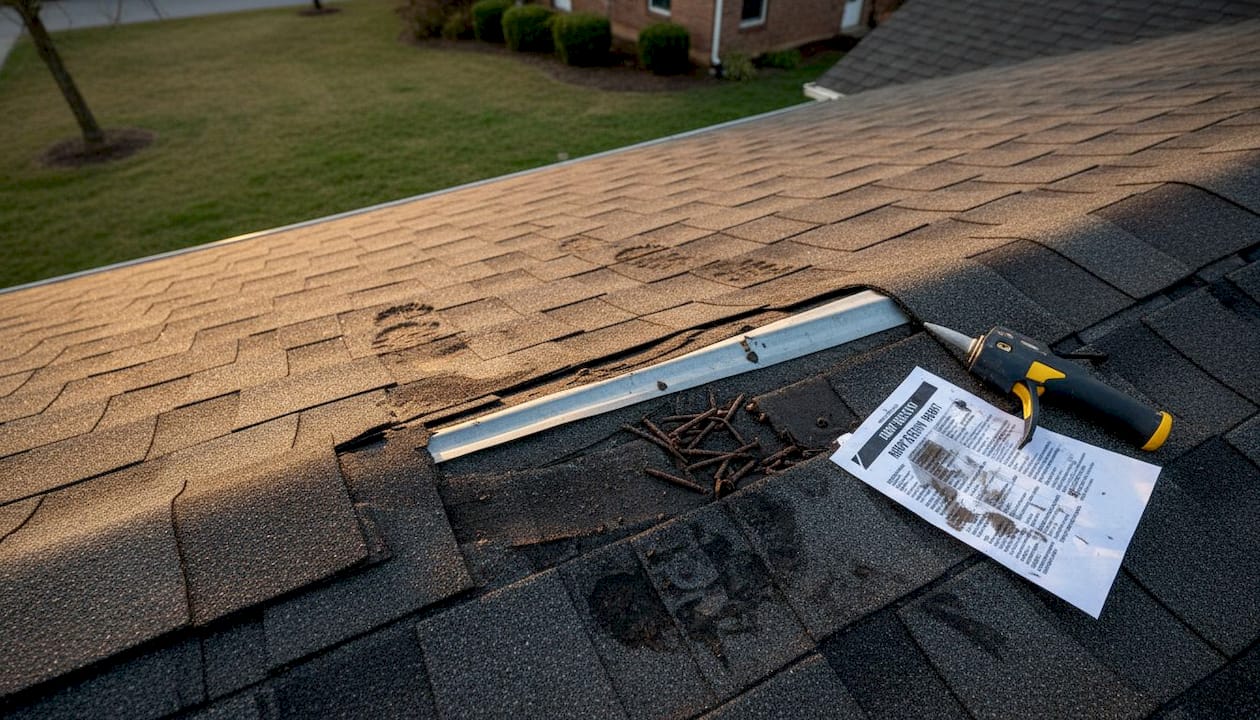
Missing flashing around chimneys, vents, and valleys creates leak pathways that aren’t always obvious from ground level. Water can travel along roof supports before dripping into your attic, making the source hard to pinpoint. Look for rust stains, separated joints, or bent metal strips during your inspection.
| Damage Type | Typical Repair Time | Urgency Level | Insurance Coverage |
|---|---|---|---|
| Missing shingles | 1-2 days | High | Usually covered |
| Hail dents | 3-5 days | Medium | Covered with documentation |
| Flashing damage | 1 day | High | Often covered |
| Granule loss | Varies by extent | Medium | Depends on age |
| Punctures | Same day | Critical | Covered for storm events |
Pro Tip: Take photos from multiple angles immediately after a storm, including close-ups of damage and wide shots showing roof context. These images become crucial evidence for insurance adjusters and help contractors provide accurate estimates.
Review practical roof repair examples to see how different damage types get addressed and what results to expect from professional repairs.
Comparing storm damage severity and repair options
Not all storm damage requires the same response. Mild damage like a few missing shingles might only need patching, while severe damage affecting large sections demands full replacement. Understanding severity levels helps you prioritize repairs and set realistic expectations for insurance coverage.
Insurance companies evaluate damage based on extent, age of your roof, and policy terms. A roof with 25% or more damage often qualifies for full replacement, while smaller areas get repair coverage. Your deductible and coverage limits also affect out-of-pocket costs. Early repairs reduce costs by up to 30% versus delays because secondary damage from water intrusion adds up quickly.
Urgent repairs prevent cascading problems. A small leak today becomes mold growth, rotted decking, and damaged insulation within weeks. Here’s how to file an insurance claim with proper documentation:
- Contact your insurance company within 24-48 hours of discovering damage to start the claims process
- Schedule a professional inspection to document all damage with detailed photos and written reports
- Get multiple repair estimates from licensed contractors to ensure fair pricing
- Keep all receipts, correspondence, and documentation organized in a dedicated claims folder
- Follow up weekly with your adjuster until the claim reaches resolution
| Severity | Repair Scope | Typical Cost Range | Timeline | Insurance Likelihood |
|---|---|---|---|---|
| Minor | Patch 5-10 shingles | $300-$800 | 1 day | May not meet deductible |
| Moderate | Replace section (10-25%) | $1,500-$4,000 | 2-3 days | Usually covered |
| Severe | Replace 25-50% of roof | $5,000-$12,000 | 5-7 days | Covered with documentation |
| Critical | Full replacement | $8,000-$25,000+ | 1-2 weeks | Covered if storm-related |
The key difference between repairable and replacement-level damage is structural integrity. Surface damage to shingles can be patched, but compromised decking or widespread water damage requires more extensive work. Your contractor should check for soft spots, sagging areas, and rot during the inspection.
Review detailed storm damage repair costs timing information to understand how delays affect your total expenses and why immediate action saves money in the long run.
Tips for documenting and preparing insurance claims for storm damage
Proper documentation makes the difference between a smooth claims process and a frustrating battle with your insurance company. Start by taking clear photos immediately after the storm, before any temporary repairs. Capture wide shots showing your entire roof and close-ups of specific damage. Include reference objects like a ruler or coin next to dents and cracks to show scale.
Schedule professional roof inspections quickly because adjusters often visit within days of filing. A licensed contractor can:
- Identify hidden damage you might miss from ground level
- Provide detailed written reports with technical specifications
- Offer repair estimates that match insurance requirements
- Point out pre-existing conditions versus storm damage
Keep copies of all estimates, repair plans, and contractor communications. Create a dedicated folder (physical and digital) for your claim with dates, names, and reference numbers. This organization helps when adjusters request additional information or if you need to appeal a decision.
Notify your insurance company promptly, ideally within 24 hours of discovering damage. Most policies require timely notification, and delays can complicate claims. Ask your adjuster about their documentation requirements upfront so you gather the right information from the start.
“Proper documentation expedites claims and ensures fair compensation by providing clear evidence of storm-related damage and eliminating disputes over pre-existing conditions.”
Maintain a repair workflow checklist that includes inspection scheduling, estimate collection, adjuster meetings, and contractor selection. This systematic approach prevents missed steps and keeps your claim moving forward. Document every phone call with your insurance company, noting the date, representative name, and discussion summary.
Pro Tip: Don’t make permanent repairs before your adjuster inspects the damage unless absolutely necessary for safety. If you must make emergency repairs, photograph everything first and save all receipts for reimbursement.
Learn more about roof inspection benefits and how professional assessments protect your insurance claim and identify issues before they worsen.
Get expert storm damage roof repair in Central Florida
Storm damage won’t fix itself, and waiting only increases repair costs and risks to your home. Thomas Roofing and Repair specializes in identifying and repairing all types of storm damage across Central Florida. Our experienced team responds quickly to assess damage, provide detailed estimates, and work directly with your insurance company to streamline the claims process.

We understand the urgency of storm repairs and offer fast emergency roof repair services to prevent water intrusion and secondary damage. Our comprehensive storm damage solutions include documentation assistance, helping you gather the photos and reports insurance adjusters need for fair compensation. Whether you need minor patching or full roof replacement, our licensed contractors deliver quality workmanship backed by warranties. Contact us today for a free inspection and estimate, or if you’re in the Titusville area, explore our specialized roof repair in Titusville services designed for local weather challenges.
Frequently asked questions
What are the most common types of storm damage to roofs?
Missing or damaged shingles top the list, caused by high winds lifting and tearing roofing materials. Hail creates dents in metal roofs and bruises asphalt shingles, compromising their protective layer. Leaks develop from punctures, loosened flashing, or wind-driven rain forcing water under shingle edges. Tree branches and debris can puncture roofing membranes or damage gutters and valleys.
How soon should I have my roof inspected after a storm?
Schedule an inspection as soon as it’s safe to do so, ideally within 24-48 hours of the storm passing. Early detection helps you file insurance claims promptly and prevents minor damage from becoming major problems. Professional inspectors can access your roof safely and spot issues not visible from the ground. Quick action also protects your claim timeline since most policies require timely damage reporting.
Can I file an insurance claim for minor roof damage?
You can file claims for minor damage, but consider your deductible first. If repair costs fall below your deductible, paying out of pocket makes more sense than filing a claim that might raise your premiums. However, minor damage that could worsen or violates your policy’s maintenance requirements should be reported. Document everything with photos and get a professional assessment before deciding whether to file.
What repairs are typically needed after hail damage?
Hail damage repairs range from replacing bruised shingles to addressing dents in metal roofing and fixing cracked flashing. Contractors assess dent size and frequency to determine if spot repairs suffice or full replacement is necessary. Sealing leaks and replacing damaged underlayment often accompanies shingle work. Professional assessment ensures hidden damage to decking or insulation gets addressed before causing structural problems.
How can I prevent future storm damage to my roof?
Regular inspections catch vulnerabilities before storms hit, allowing you to reinforce weak spots and replace aging materials. Trim trees near your roof to prevent branch damage during high winds. Install impact-resistant shingles or metal roofing rated for Central Florida’s storm conditions. Keep gutters clean so water drains properly and doesn’t back up under shingles. Schedule annual maintenance to extend your roof’s lifespan and maintain warranty coverage.
Recommended
- Emergency Roof Repair Workflow for Fast Storm Solutions
- 6 Common Types of Roofing Damage Homeowners Should Know
- 7 Practical Examples of Roof Repairs for Homeowners
- Storm Damage Repair: 30% Lower Costs When Fixed Fast
- Roofing Company Orlando, FL
- Roofing Company Titusville, FL
- Roofing Company DeLand, FL