
TL;DR:
- Roofing trends for 2026 focus on active systems that generate energy and resist weather rather than passive protection. Sustainable materials like recycled metal, composite shingles, and bio-based fibers lead to durable, eco-friendly options tailored to local climates. Smart sensors and AI drone inspections are becoming essential for preventing costly repairs and optimizing roof longevity.
Residential roofing trends 2026 are defined by one clear shift: roofs are no longer passive protection. They are active systems that generate energy, resist extreme weather, and directly affect property value. Roof replacement costs jumped 33% in 2025 versus prior years, making smart material choices more financially consequential than ever. Building-integrated photovoltaics (BIPV), cool roof coatings, and impact-resistant composites are the three forces reshaping what homeowners and property investors expect from a roof in 2026. The decisions you make this year will affect your energy bills, insurance premiums, and resale value for decades.
1. What are the leading residential roofing trends 2026 for sustainable materials?
Eco-friendly roofing materials are no longer a niche upgrade. They are the mainstream choice for homeowners who want durability and a lower carbon footprint in the same package.
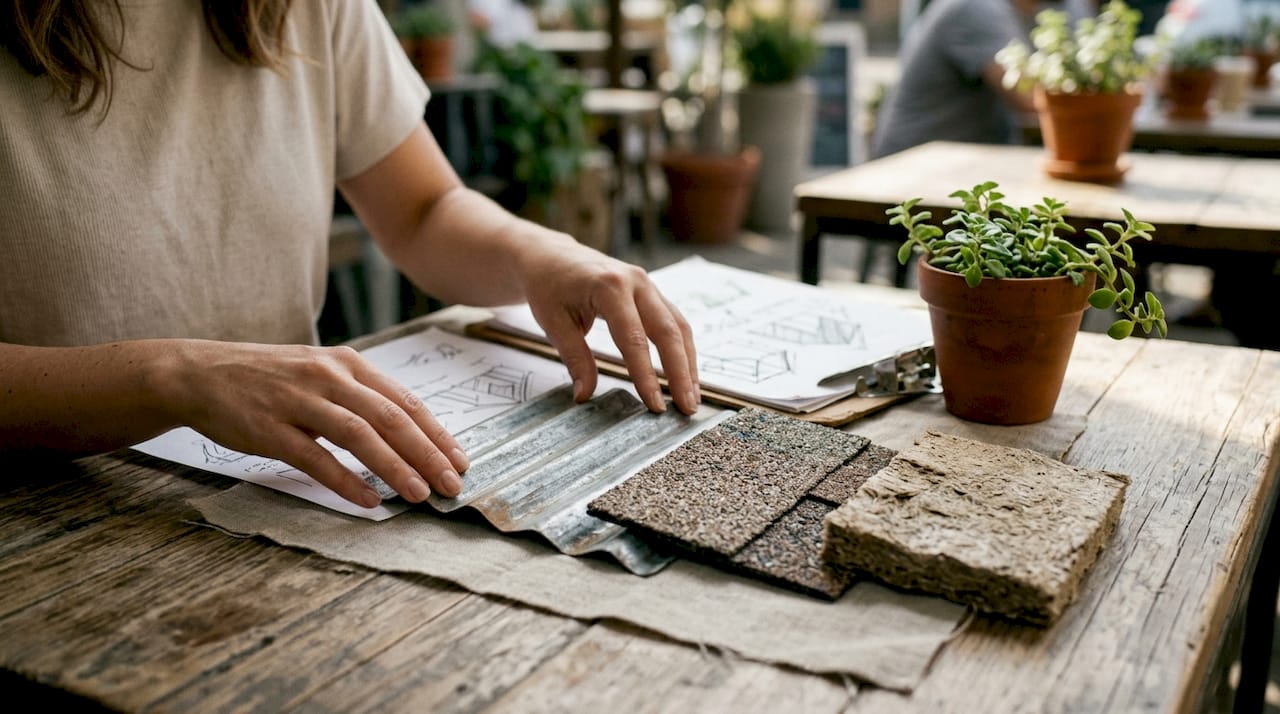
Metal roofing panels contain up to 95% recycled content, making them one of the most environmentally responsible options available. Stone-coated metal combines that recycled content with a textured finish that mimics tile or shake, giving you curb appeal without sacrificing longevity. Bio-based fiber roofing, made from materials like hemp and flax composites, is gaining ground in markets where embodied carbon is a selling point for buyers.
Composite shingles made from recycled rubber and plastics flex better in freeze-thaw cycles than standard asphalt. That flexibility makes them a strong performer in variable climates, from New England winters to Central Florida’s wet seasons. By 2026, composite shingles compete with premium asphalt on price, removing the cost barrier that once held buyers back.
- Recycled metal roofing: Up to 95% recycled content, 40–70 year lifespan
- Composite shingles: Recycled rubber and plastic, superior freeze-thaw performance
- Stone-coated metal: Aesthetic versatility, impact resistance, and recyclability
- Bio-based fiber panels: Low embodied carbon, growing availability in green-certified builds
Pro Tip: Match your material to your local climate first, then weigh sustainability credentials. A bio-based panel that degrades faster in high-humidity conditions defeats the purpose of a green choice.
2. How are solar-integrated roofs transforming residential properties?
Solar roofing is the fastest-growing category in modern roofing designs, and the numbers back that up. The solar shingles market is worth $2.8 billion in 2026, growing at a compound annual rate of 19–24% through 2035. BIPV products now account for 2–4% of all new U.S. residential solar capacity installed each year.
Solar shingles differ from traditional panel-on-rail systems in one critical way: they replace the roof surface rather than sitting on top of it. That integration eliminates the gap where water, debris, and pests typically enter. Aesthetically, a solar shingle roof reads as a uniform surface rather than a retrofit, which matters to buyers in design-conscious markets.
The reroof-plus-solar bundle is the fastest-growing installation approach in 2026. Combining a full roof replacement with solar installation in one project cuts labor costs, reduces permitting trips, and locks in a single warranty structure. For property investors, that single-contract approach simplifies due diligence.
- Aesthetic advantage: Uniform surface appearance versus visible panel rails
- Warranty simplicity: One system, one warranty, one point of contact
- Cost efficiency: Bundled labor reduces total project cost versus two separate installs
- Energy generation: Dual function as both weatherproofing and power source
One real challenge exists. Solar roof installation requires combined roofing and electrical certifications, which limits the contractor pool and can extend permitting timelines. Verify that your contractor holds both licenses before signing a contract.
Pro Tip: Ask your contractor for a solar roofing consultation before your next scheduled replacement. Timing the two projects together is the single best way to maximize return on both investments.
3. Why are cool roofs and advanced coatings key to energy efficiency in 2026?
Cool roofing is the most underrated category in roof design trends 2026. These systems use reflective pigments, specialized coatings, and high-emissivity surfaces to push heat away from the building rather than absorbing it.
Advanced cool roof technologies reduce surface temperatures by up to 50°F compared to standard dark asphalt. That temperature drop translates directly into annual cooling energy savings of 10–25% in warm climates. For a Florida homeowner running air conditioning nine months a year, that reduction is meaningful on every utility bill.
Cool roofs also qualify for LEED credits under the Sustainable Sites category, which adds a certification pathway for property investors pursuing green building designations. Stone-coated metal with reflective factory finishes is one of the most accessible entry points into cool roof performance without sacrificing visual appeal.
One important caveat: cool roof materials must balance reflectance and emissivity to avoid increasing heating costs in colder climates. A roof that reflects aggressively in summer can work against you in a northern winter. Homeowners in mixed climates should consult a roofing professional before specifying a high-reflectance product.
For Central Florida homeowners, the energy savings from cool roofs are particularly significant given the region’s heat load. Pairing a cool roof coating with proper attic ventilation compounds the benefit further.
4. What durability and resilience innovations are shaping roofing investment decisions?
Durability is the top priority for property investors choosing roofing systems in 2026, and the cost data explains why. Average U.S. residential roof replacement costs jumped 33% in 2025, while repair costs rose 25%. Replacing a roof prematurely because of a material failure is now a significantly more expensive mistake than it was three years ago.
The condition of the existing roof stock compounds the problem. 38% of U.S. roofs are in moderate to poor condition, and insurers now use aerial imagery to assess roof risk before issuing or renewing policies. A roof flagged as poor condition carries 60% higher loss costs, which flows directly into premium increases.
Roofs in poor condition show 60% higher loss costs, and insurers increasingly use aerial imagery to assess risk before policy renewal. Choosing a durable material today is not just a construction decision. It is an insurance underwriting decision.
Roofing materials with 50-plus year service lives are in growing demand among investors who want to remove roof replacement from their risk model entirely. Stone-coated metal, fiber cement, and synthetic slate all meet that threshold when properly installed.
- Stone-coated metal: 40–70 year lifespan, Class 4 impact resistance, fire rated
- Fiber cement: Resistant to rot, insects, and fire; performs well in humid climates
- Synthetic slate: Lightweight alternative to natural slate, impact and UV resistant
- Impact-resistant asphalt (Class 4): Most affordable entry point for hail-prone regions
For a detailed breakdown of durable roofing options by material and climate, Thomasroofingandrepair provides a resource built specifically for Central Florida conditions.
5. Which smart roofing technologies are homeowners adopting for roof longevity?
Smart roofing technology is moving from early adopter territory into standard practice among professional contractors in 2026. The core value proposition is simple: catch problems early and avoid emergency repair costs.
Embedded sensors and AI drone inspections reduce emergency repair costs by up to 40% through early leak detection and condition monitoring. Sensors installed at vulnerable points, such as valleys, penetrations, and flashing joints, transmit moisture and temperature data in real time. A homeowner receives an alert before a slow leak becomes a ceiling collapse.
AI-powered drone inspections complement sensor data by providing high-resolution surface imagery without a technician walking the roof. Drones identify cracked tiles, lifted flashing, and granule loss patterns that a ground-level visual inspection misses entirely. The inspection report is generated automatically, reducing both time and subjectivity.
- Moisture sensors: Detect leaks at penetrations and valleys before interior damage occurs
- UV monitoring: Track coating degradation to schedule maintenance before failure
- AI drone inspection: High-resolution imagery with automated condition scoring
- Predictive maintenance alerts: Notify homeowners of developing issues via app or email
Pro Tip: Schedule smart sensor installation during your next reroofing project. Retrofitting sensors onto an existing roof is possible but costs more and requires additional penetrations. Doing it during installation adds minimal cost and maximum value.
Pairing smart tech with a regular roof inspection checklist gives you a complete picture of your roof’s condition at any point in time. If a roof plumbing emergency develops alongside a roofing issue, having sensor data already in hand speeds up the diagnosis and repair process significantly.
Key Takeaways
The top roofing trends for 2026 require homeowners and property investors to treat the roof as a long-term asset, not a maintenance line item.
| Point | Details |
|---|---|
| Sustainable materials lead | Metal, composite, and bio-based options offer durability and lower carbon impact. |
| Solar integration pays off | Bundling reroofing with BIPV installation cuts labor costs and simplifies warranties. |
| Cool roofs cut energy bills | Reflective surfaces reduce cooling energy use by 10–25% in warm climates. |
| Durability protects investment | Materials with 50-plus year lifespans reduce insurance risk and replacement costs. |
| Smart tech prevents emergencies | Sensors and AI inspections cut emergency repair costs by up to 40%. |
What I’ve learned about roofing choices that most guides won’t tell you
Most roofing articles treat material selection as a checklist exercise. Pick the most durable option, add solar if the budget allows, and call it done. That framing misses the most important variable: the relationship between your roof and your insurance policy.
The Verisk data on aerial roof imaging is the detail that changes the conversation. Insurers are not waiting for you to file a claim to assess your roof’s condition. They are reviewing satellite and drone imagery during renewal cycles and adjusting premiums accordingly. A homeowner who defers a roof replacement by two years to save money may spend more in premium increases than the replacement would have cost.
The second thing most guides skip is the regional specificity of material performance. A composite shingle that excels in a New England freeze-thaw cycle may absorb heat differently in a Central Florida summer. The roofing trends shaping Central Florida reflect a specific climate reality that generic national trend lists do not address. Always pressure-test a material recommendation against your local weather data before committing.
My honest recommendation: prioritize durability and insurance positioning first, then layer in solar and smart tech as your budget allows. A 50-year roof that keeps your premiums stable is a better financial decision than a solar-integrated system on a substrate that needs replacement in 15 years.
— Thomasroofingandrepair
Thomasroofingandrepair: expert roofing for 2026 and beyond
Thomasroofingandrepair installs and repairs residential and commercial roofing systems across Central Florida, including Brevard, Volusia, and Orange counties. The team works with sustainable materials, solar-ready substrates, and impact-resistant systems built for Florida’s specific weather demands.

Whether you are a homeowner planning a replacement or a property investor evaluating your portfolio’s roof condition, Thomasroofingandrepair offers free estimates and personalized consultations. The team’s experience with professional roof installation in Horizon West and across the region means you get material recommendations grounded in local climate performance, not generic national trends. Contact Thomasroofingandrepair to schedule your free estimate and get a roofing plan built for 2026 and the decades ahead.
FAQ
What are the top roofing materials for 2026?
Stone-coated metal, composite shingles made from recycled rubber and plastic, and solar shingles are the leading top roofing materials 2026. Each offers a lifespan of 40 years or more with strong performance in variable climates.
How much does a roof replacement cost in 2026?
Average U.S. residential roof replacement costs rose 33% in 2025 compared to prior years. Exact costs vary by material, roof size, and region, so getting a local estimate is the most reliable way to budget accurately.
Are solar shingles worth the investment in 2026?
Solar shingles are worth considering when bundled with a scheduled roof replacement. The BIPV market is growing at 19–24% annually, and combining installation projects reduces total labor costs while delivering long-term energy savings.
How do cool roofs affect energy bills?
Cool roofs reduce annual cooling energy consumption by 10–25% in warm climates by reflecting solar radiation and lowering surface temperatures by up to 50°F. The savings are most significant in regions with long cooling seasons, such as Central Florida.
What is the benefit of smart roofing sensors?
Embedded moisture and UV sensors detect developing leaks and coating degradation before they cause interior damage. Early detection reduces emergency repair costs by up to 40%, making sensors a cost-effective addition during any reroofing project.