
Storm damage to your roof is more urgent than most homeowners realize. Water intrusion risk increases by 65% within just two weeks after initial storm damage, making rapid response critical for Central Florida homeowners. This guide explains why prompt roof repair after storms protects your home structurally, saves you substantial money, improves insurance claim success, and safeguards your family’s health through proper damage mitigation.
Table of Contents
- Understanding Storm Damage And Its Impact On Residential Roofs
- Why Timely Repair Is Crucial To Prevent Further Damage
- Economic Benefits Of Prompt Storm Damage Repair
- Recognizing Common And Hidden Signs Of Storm Damage
- Professional Repair Vs. DIY: Risks And Outcomes
- Insurance Implications Of Repair Timing
- Practical Steps For Homeowners: Financing And Repair Decisions
- Summary: Protecting Your Home And Investment Through Timely Storm Damage Repairs
- Protect Your Central Florida Home With Expert Storm Damage Repair
Key Takeaways
| Point | Details |
|---|---|
| Cost Savings | Prompt repairs reduce total repair expenses by 30% compared to delayed fixes. |
| Health Protection | Mold forms within 3-4 weeks of water intrusion, creating serious health hazards. |
| Insurance Success | 70% of delayed claims face denial due to missed reporting or repair deadlines. |
| Hidden Damage | Professional inspections reveal concealed structural issues in 40% of minor damage cases. |
| Financial Access | Flexible financing options enable immediate repairs to prevent damage escalation. |
Understanding Storm Damage and Its Impact on Residential Roofs
Central Florida faces frequent severe weather that damages roofs through distinct mechanisms. Understanding how storms physically affect your roof helps you recognize when professional intervention is necessary.
Different storm types create specific damage patterns. High winds lift and loosen shingles or tiles, breaking the waterproof seal that protects your home. Hail impacts crack roofing materials and dent metal components, creating entry points for moisture. Flying debris during storms punctures roofing layers or damages structural elements beneath the visible surface.
The region’s storm frequency amplifies these risks significantly. Each weather event compounds existing minor damage, accelerating deterioration that might otherwise take years. Even small compromises in your roofing system allow water infiltration that spreads rapidly through underlayment, decking, and eventually into your home’s interior spaces.
Common storm damage manifestations include:
- Loose, lifted, or missing shingles exposing underlayment to elements
- Cracked or broken tiles that no longer provide adequate protection
- Damaged flashing around chimneys, vents, and roof valleys
- Punctures or tears in roofing membranes from debris impact
- Granule loss on asphalt shingles reducing their lifespan
- Structural damage to roof decking from heavy impacts
Recognizing these issues early is essential. Even seemingly minor damage creates vulnerabilities that worsen with each subsequent rain. Your roof functions as an integrated system, and compromising any component threatens the entire structure’s integrity. Understanding storm damage and roofing vulnerabilities helps you assess when replacement might be more cost-effective than repair. Additionally, knowing the performance characteristics of different roof materials in Florida helps you make informed decisions about repairs.
Why Timely Repair is Crucial to Prevent Further Damage
Delaying storm damage repairs triggers a cascade of worsening problems that multiply your costs and risks. What begins as a small leak quickly evolves into major structural issues affecting your entire home.
Water intrusion escalates rapidly once your roof’s protective barrier is breached. Within days, moisture penetrates insulation, reducing its effectiveness and creating conditions for mold growth. Mold growth from untreated storm damage creates long-term health hazards and remediation costs exceeding $3,000 on average for homeowners. These microscopic organisms release spores that aggravate respiratory conditions, trigger allergies, and pose serious health threats to vulnerable family members.
Beyond health concerns, ongoing water exposure weakens structural components. Roof decking absorbs moisture and begins to rot, losing load-bearing capacity. Interior drywall develops stains, bubbles, and eventually crumbles. Ceiling joists and rafters experience wood rot that compromises your home’s structural integrity, requiring expensive remediation far exceeding simple roof repair costs.
The progression timeline works against homeowners who wait:
- Days 1-7: Initial water infiltration begins affecting underlayment and insulation
- Weeks 2-4: Mold spores colonize damp materials, health risks emerge
- Months 2-3: Structural wood components show rot, interior damage becomes visible
- Months 4+: Major structural repairs needed, costs increase 30% or more
Pro Tip: Schedule a professional inspection within 48 to 72 hours after any significant storm to identify hidden damage before it progresses. Many issues invisible from ground level become apparent during expert assessment.
Prompt action stops this damage progression entirely. Implementing effective roof repair tips immediately after damage prevents water from ever reaching vulnerable areas, protecting both your home’s structure and your family’s wellbeing while keeping repair costs manageable.
Economic Benefits of Prompt Storm Damage Repair
Financial incentives for rapid storm damage repair extend well beyond preventing escalation. The economic case for immediate action is compelling when you examine cost comparisons, property values, and insurance implications.
Homeowners who repair storm damage promptly average 30% lower overall repair costs compared to those who delay repairs and face compounded issues. This substantial savings reflects how small problems caught early remain small, while neglected damage multiplies into multiple interconnected failures requiring comprehensive remediation.
Property values suffer when roof damage remains visible or documented but unrepaired. Potential buyers view unresolved roofing issues as major red flags during home sales, either walking away or demanding price reductions that exceed actual repair costs. Appraisers note roof condition prominently, and lenders may refuse financing for properties with obvious neglected damage.
Insurance considerations add another financial dimension. Most homeowner policies include provisions requiring prompt damage reporting and timely repairs. Delays signal to insurers that subsequent damage resulted from neglect rather than the covered storm event, providing grounds for claim denial. Understanding proper storm damage insurance claims procedures protects your coverage.
| Repair Timing | Average Cost | Insurance Approval | Additional Issues | Property Impact |
|---|---|---|---|---|
| Immediate (0-2 weeks) | $2,500 | 95% approval rate | Minimal secondary damage | Value maintained |
| Delayed (2-8 weeks) | $3,200 | 70% approval rate | Moderate mold, insulation damage | 2-5% value reduction |
| Extended (8+ weeks) | $4,500+ | 30% approval rate | Major structural, interior damage | 5-10% value reduction |
Additional economic benefits of prompt repair include:
- Avoiding emergency repair premiums during peak demand periods
- Preventing interior damage to furnishings, electronics, and personal property
- Maintaining energy efficiency by preserving insulation integrity
- Qualifying for insurance policy renewal without exclusions or rate increases
- Preserving manufacturer warranties that void with neglected maintenance
Pro Tip: Document all damage immediately with photos and videos, then retain every estimate, invoice, and communication with contractors and insurers to strengthen your insurance position and track repair investments for future property transactions.
Recognizing Common and Hidden Signs of Storm Damage
Identifying roof damage requires understanding both obvious indicators and subtle signs that reveal serious underlying problems. Empowering yourself with recognition skills enables faster professional engagement when needed.
Visible damage typically appears as missing or displaced roofing materials. Shingles blown off during high winds leave exposed patches of underlayment or decking. Cracked or broken tiles create gaps in your roof’s protective layer. Dented metal roofing components or damaged flashing around penetrations indicate impact damage requiring attention.
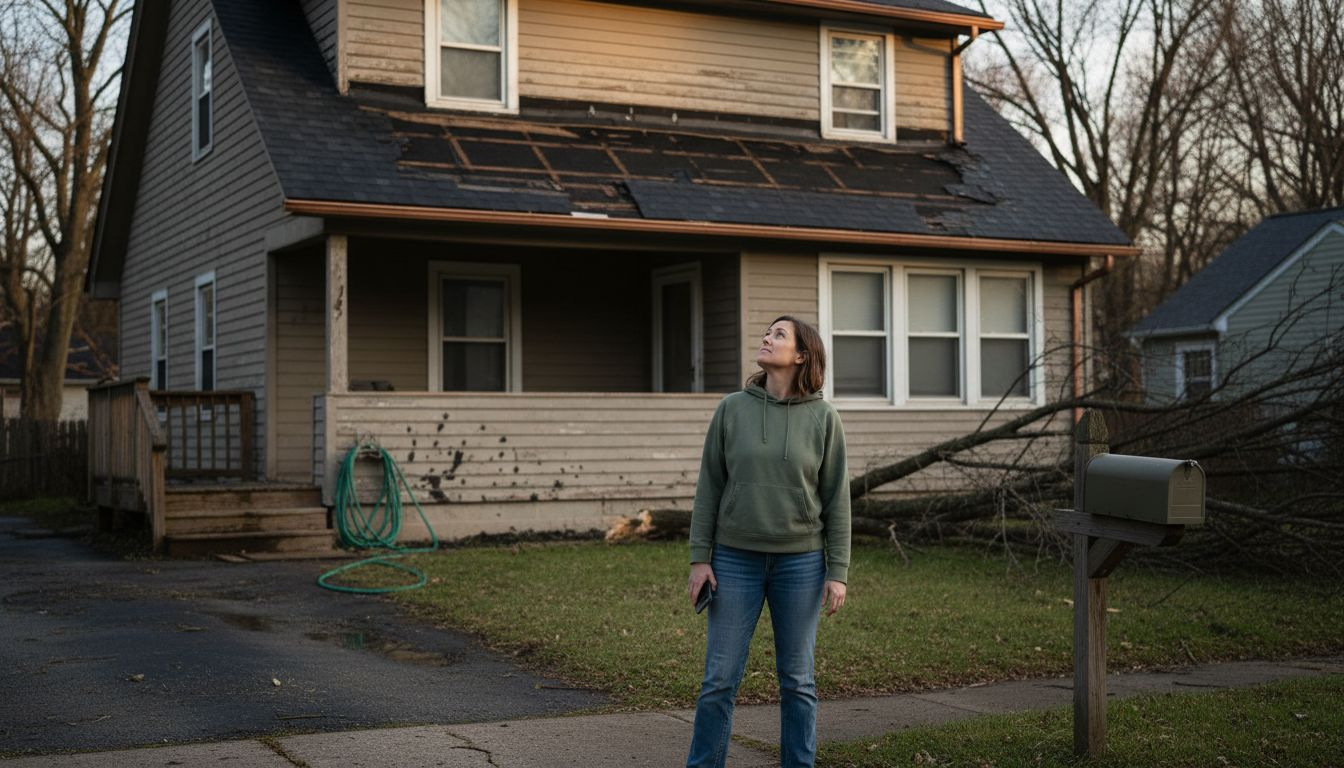
Hidden damage proves more insidious and dangerous. Structural weakening occurs beneath intact-looking surfaces when impacts transfer force to underlying supports. Underlayment tears or separates without visible exterior signs, allowing water infiltration that only becomes apparent once interior damage manifests. Research shows professional inspections uncover serious concealed issues in approximately 40% of roofs with minor visible damage, making expert assessment invaluable.
Conduct systematic visual checks after storms using this approach:
- Survey your roof from ground level using binoculars, looking for obvious displaced or damaged materials
- Inspect your attic interior for water stains, daylight visible through decking, or damp insulation
- Check ceilings and upper walls inside your home for discoloration, bubbling paint, or moisture
- Examine gutters and downspouts for excessive granule accumulation from deteriorating shingles
- Look for debris accumulation in roof valleys or against chimneys that could trap moisture
- Note any sagging areas or changes in roof profile suggesting structural compromise
Signs requiring immediate professional attention include any water intrusion evidence, structural changes, or extensive material damage. Even minor visible issues warrant expert inspection because underlying damage often exceeds what homeowners can assess safely from ground level. Professional roofing inspections provide comprehensive damage assessment using specialized equipment and trained evaluation protocols that identify problems before they escalate into emergencies.
Professional Repair vs. DIY: Risks and Outcomes
The temptation to attempt DIY roof repairs after storms often stems from perceived cost savings, but this approach introduces substantial risks that typically increase total expenses while compromising safety and insurance coverage.
Professional repairs deliver multiple advantages unavailable to homeowners. Licensed contractors provide warranties covering both materials and workmanship, protecting you if issues arise after completion. They maintain proper insurance including liability and workers’ compensation, shielding you from accident-related claims. Their work complies with building codes and manufacturer specifications, requirements essential for insurance claims and future property transactions.
DIY repairs frequently fail due to incomplete sealing, incorrect material selection, or improper installation techniques. Studies indicate amateur roof repairs experience leak rates 50% higher than professional work, as subtle installation errors create vulnerabilities that manifest during subsequent weather events. These failures often void manufacturer warranties on roofing materials and create documentation problems when filing insurance claims.
Insurance implications particularly favor professional repairs. Most carriers require licensed contractor invoices and documentation to process claims. DIY work provides no liability protection if someone is injured during repairs, potentially exposing you to devastating lawsuits. Subsequent damage from failed amateur repairs typically isn’t covered, as insurers classify it as maintenance neglect rather than storm damage.
| Factor | Professional Repair | DIY Repair |
|---|---|---|
| Warranty Coverage | 5-25 years workmanship guarantee | No warranty protection |
| Building Code Compliance | Guaranteed compliance, permits obtained | Risk of code violations, fines |
| Insurance Acceptance | Full documentation, high claim approval | Often rejected, voids coverage |
| Safety Risk | Insured professionals, proper equipment | High injury risk, no liability coverage |
| Leak Rate | 5-10% failure rate | 50%+ failure rate |
| Long-term Cost | Typically lower total cost | Higher due to redoing work |
Common DIY pitfalls include:
- Inadequate safety equipment leading to falls and injuries
- Mismatched materials that accelerate deterioration
- Improper flashing installation creating new leak points
- Insufficient fastener penetration allowing wind uplift
- Missed underlying structural damage requiring expert assessment
Understanding professional repair benefits helps homeowners make informed decisions. Additionally, knowing when situations call for roof replacement versus repair ensures appropriate scope selection for your specific damage scenario.
Insurance Implications of Repair Timing
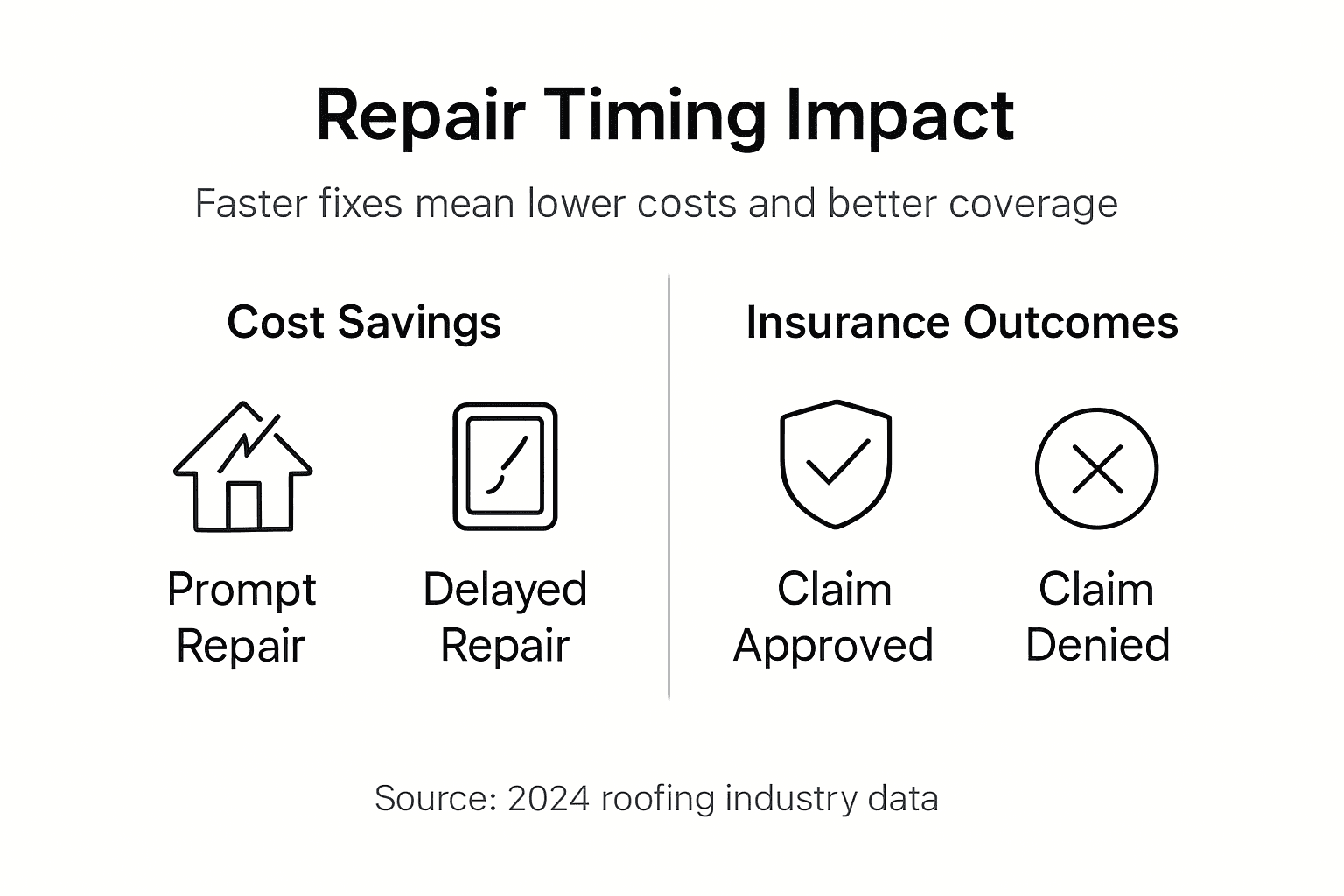
Insurance coverage for storm damage hinges critically on repair timing, with prompt action dramatically improving claim approval rates while delays often result in complete coverage denial.
Most homeowner policies contain specific provisions requiring timely damage reporting and reasonable mitigation efforts. These clauses obligate you to prevent further damage once initial storm impact occurs. Failing to repair promptly can be interpreted as neglect, allowing insurers to deny coverage for subsequent issues that developed after the storm event.
Statistics reveal stark differences in claim outcomes. Approximately 70% of storm damage claims filed more than 60 days after the event face denial, primarily due to questions about damage causation and failure to mitigate. Insurers argue that water damage, mold growth, and structural deterioration resulting from delayed repairs constitute separate, non-covered maintenance issues rather than direct storm consequences.
Documentation becomes your strongest insurance ally. Photograph damage immediately after storms from multiple angles. Obtain professional inspection reports within days of the event. Keep detailed records of all communications with your insurance company, including claim numbers, adjuster names, and conversation dates. Save every estimate, invoice, and receipt related to repairs.
Best practices for insurance claim success include:
- Report damage to your insurer within 24-48 hours of discovery
- Request immediate adjuster inspection before making repairs
- Obtain multiple repair estimates from licensed contractors
- Implement temporary protection measures to prevent further damage
- Never sign release forms or accept settlements without reviewing coverage thoroughly
- Document the complete timeline from storm event through repair completion
Maintaining continuous coverage requires demonstrating responsible property stewardship. Insurers view prompt storm damage repair as evidence of proper maintenance, supporting policy renewal at standard rates. Conversely, documented neglected damage may trigger policy exclusions, premium increases, or non-renewal notices that complicate finding alternative coverage.
Understanding the complete insurance claim process helps you navigate requirements effectively, protecting both your immediate claim and long-term insurability.
Practical Steps for Homeowners: Financing and Repair Decisions
Taking action after storm damage requires coordinating inspection, insurance processes, financing, and contractor selection. This systematic approach ensures thorough, timely repairs that protect your home and financial interests.
Follow these steps for optimal outcomes:
- Conduct initial safety assessment, staying off the roof yourself but documenting visible damage from ground level with photos and video
- Contact your insurance company immediately to report damage and initiate the claims process, requesting adjuster inspection scheduling
- Arrange professional roof inspection within 48-72 hours to identify all damage including hidden structural issues
- Obtain detailed written estimates from multiple licensed, insured contractors for comparison and insurance submission
- Review financing options if insurance doesn’t cover full costs or you need immediate repairs before claim settlement
- Select a qualified contractor based on credentials, reputation, detailed proposal, and communication quality
- Schedule repairs promptly, coordinating with insurance requirements and contractor availability
- Document the complete repair process with before, during, and after photos for insurance and future reference
Financing options enable prompt repairs even when immediate cash isn’t available. Home equity loans or lines of credit offer lower interest rates for homeowners with sufficient equity. Personal loans provide faster approval without home collateral requirements. Many roofing contractors offer financing programs with competitive rates and flexible terms designed specifically for storm damage repairs.
Selecting qualified contractors requires verifying credentials and reputation. Confirm active state licensing and adequate insurance coverage including liability and workers’ compensation. Check online reviews and Better Business Bureau ratings. Request and contact references from recent similar projects. Ensure written proposals include detailed scope, materials specifications, timelines, payment schedules, and warranty terms.
Pro Tip: Verify contractor credentials independently through state licensing boards rather than relying solely on copies they provide, and never pay the full amount upfront regardless of stated material purchasing needs.
Choosing local roofing contractors in Florida offers advantages including familiarity with regional building codes, established local reputations, and proximity for warranty service and emergency response.
Summary: Protecting Your Home and Investment through Timely Storm Damage Repairs
Prompt storm damage repair stands as your most effective strategy for protecting your Central Florida home, finances, and family health. The 30% average cost savings from immediate action versus delayed repairs represents just one dimension of the benefits.
Timely professional intervention prevents mold growth, structural deterioration, and interior damage that multiply repair costs while creating health hazards. Insurance claim success depends heavily on demonstrating prompt reporting and reasonable mitigation efforts, with 70% of delayed claims facing denial.
Your home represents your largest financial investment. Protecting that investment requires proactive responses to storm damage, supported by professional inspections that reveal hidden issues in 40% of seemingly minor damage cases. Don’t wait for small problems to become major crises.
Schedule professional roof assessment after every significant storm event. Document damage thoroughly. Act decisively to implement repairs that preserve your home’s integrity, maintain property values, and protect your family’s safety and wellbeing.
Protect Your Central Florida Home with Expert Storm Damage Repair
When storms damage your roof, Thomas Roofing and Repair delivers the expert assessment and prompt repair services that Central Florida homeowners trust. Our local teams understand regional weather patterns, building codes, and insurance requirements specific to Brevard, Volusia, and Orange counties.

We specialize in comprehensive storm damage repair services that address both visible and hidden damage before problems escalate. Our certified inspectors identify structural issues that homeowners miss, providing detailed documentation that strengthens insurance claims while protecting your long-term investment.
Don’t let storm damage compromise your home’s integrity or your family’s safety. Whether you need immediate Rockledge roof repair or emergency roof repair services anywhere in Central Florida, our experienced teams respond quickly with flexible financing options that enable prompt repairs.
Contact Thomas Roofing and Repair today for your free storm damage inspection and detailed repair estimate. Protect your investment with timely professional service backed by solid warranties and decades of regional expertise.
FAQ
How soon should I have a professional inspect my roof after a storm?
Schedule professional roof inspections within 48 to 72 hours after significant storms to identify hidden damage before it progresses. Early detection enables prompt repairs that prevent escalation while supporting insurance claim documentation requirements.
Can I file an insurance claim if I delay repairing storm damage?
Delaying repairs significantly reduces claim approval likelihood, with approximately 70% of delayed claims facing denial due to missed reporting deadlines or inability to prove damage causation. Prompt repair and thorough documentation dramatically improve insurance acceptance rates.
What financing options are available for storm damage roof repairs?
Homeowners can access roof repair financing options including home equity loans, personal loans, and contractor-provided financing programs with competitive rates. These solutions enable immediate repairs that prevent damage escalation and insurance complications from delayed action.
Does DIY roof repair affect my insurance coverage?
Most insurance carriers require licensed contractor documentation to process storm damage claims and may deny coverage for subsequent issues arising from amateur repairs. Professional repairs provide essential documentation, warranties, and liability protection that DIY work cannot offer.
What hidden damage should I worry about after storms?
Common concealed issues include underlayment tears, structural decking damage, compromised flashing, and moisture infiltration invisible from ground level. Professional inspections reveal serious hidden problems in approximately 40% of roofs with minor visible damage, making expert assessment essential.