
TL;DR:
- PVC roofing is a durable, chemically resistant membrane designed for flat and low-slope roofs, lasting 25 to 35 years. Its heat-welded seams and installation quality are critical for performance, with proper welding preventing leaks and ensuring longevity. Although it costs more upfront, PVC’s long lifespan and energy savings often make it a cost-effective choice over time.
PVC roofing is defined as a single-ply thermoplastic membrane made from polyvinyl chloride, designed specifically for flat and low-slope roofs. It combines chemical resistance, fire protection, and energy efficiency in one system. A well-installed PVC roof lasts 25–35 years, outperforming many competing membrane types. Property owners and managers who understand this material make better decisions about installation, maintenance, and long-term budgeting. Thomasroofingandrepair works with PVC systems regularly across Central Florida and sees firsthand why this membrane earns its reputation.
What is PVC roofing made of, and how does it work?
PVC roofing is a factory-manufactured membrane built from two layers of polyvinyl chloride compound bonded around a reinforcing scrim. That scrim is typically woven polyester or fiberglass, and it gives the membrane its dimensional stability under wind uplift and thermal movement. The finished sheet is typically 45–80 mils thick, with thicker membranes offering greater puncture resistance and longer service life.
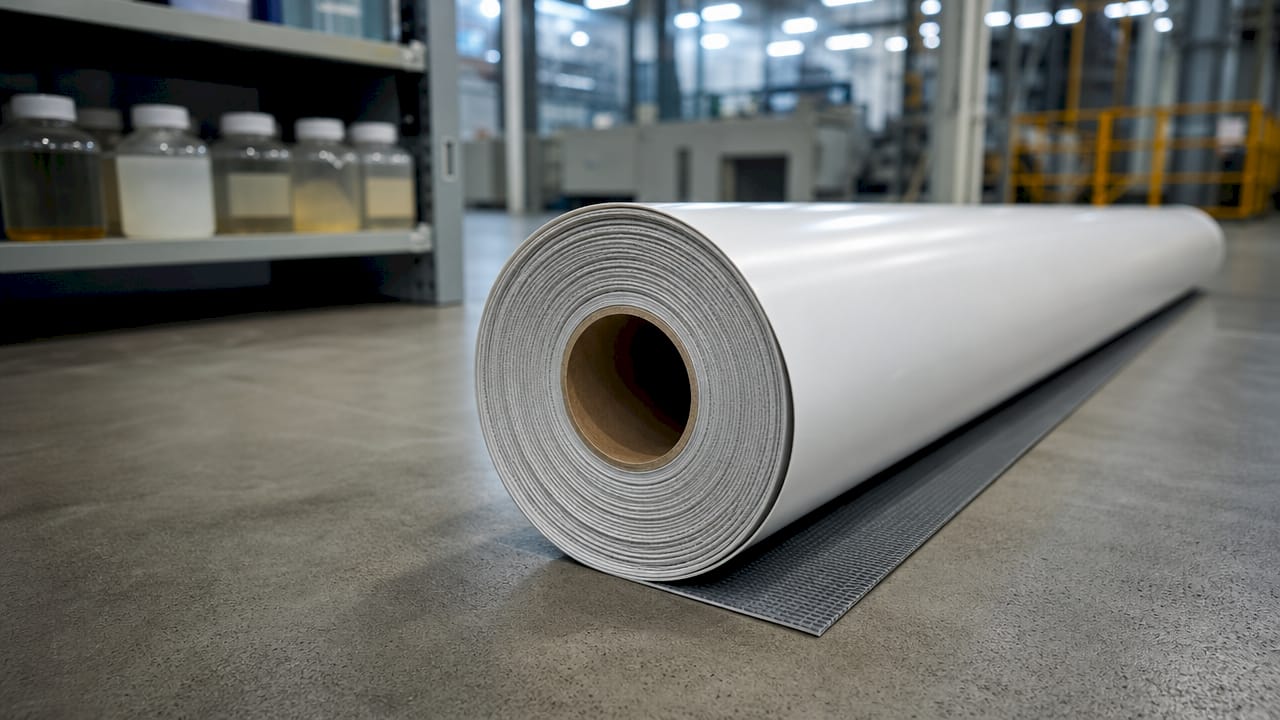
Plasticizers are the chemical agents added to the PVC compound to keep the membrane flexible. Without them, PVC would be rigid and brittle, like a plastic pipe. Plasticizers allow the membrane to flex with the building structure through seasonal temperature swings without cracking. This flexibility also means the membrane conforms well to complex roof geometries, including rooftop penetrations, drains, and curbs.
The defining feature of PVC roofing is its heat-welded seam technology. A hot-air welder fuses overlapping membrane edges at temperatures between 700°F and 1,000°F, melting the two PVC surfaces together into a single continuous bond. That bond is actually stronger than the membrane itself. Adhesive-based systems, by contrast, rely on chemical bonding that can degrade over time from moisture and thermal cycling.
Installation methods for PVC membranes
PVC membranes install three ways: mechanically fastened, fully adhered, or ballasted.
- Mechanically fastened: Fasteners and plates secure the membrane to the roof deck at seams. This is the most common method for commercial roofs and works well on steel decks.
- Fully adhered: The membrane bonds directly to the substrate with adhesive across its entire surface. This method reduces wind uplift risk and suits roofs with irregular shapes.
- Ballasted: Loose-laid membrane held down by gravel or pavers. Less common with PVC due to the added structural load.
Pro Tip: Always confirm your contractor uses a calibrated hot-air welder with a probe thermometer. Seam temperature consistency is the single biggest variable in PVC roof longevity.
What are the main advantages of PVC roofing?
PVC roofing delivers a combination of benefits that few other single-ply membranes match across all categories simultaneously.
Durability and lifespan. A properly installed PVC roof lasts 25–35 years, which is longer than the 20–30 year lifespan typical of thermoplastic polyolefin membranes. That extra service life translates directly into fewer replacement cycles over the life of a building.
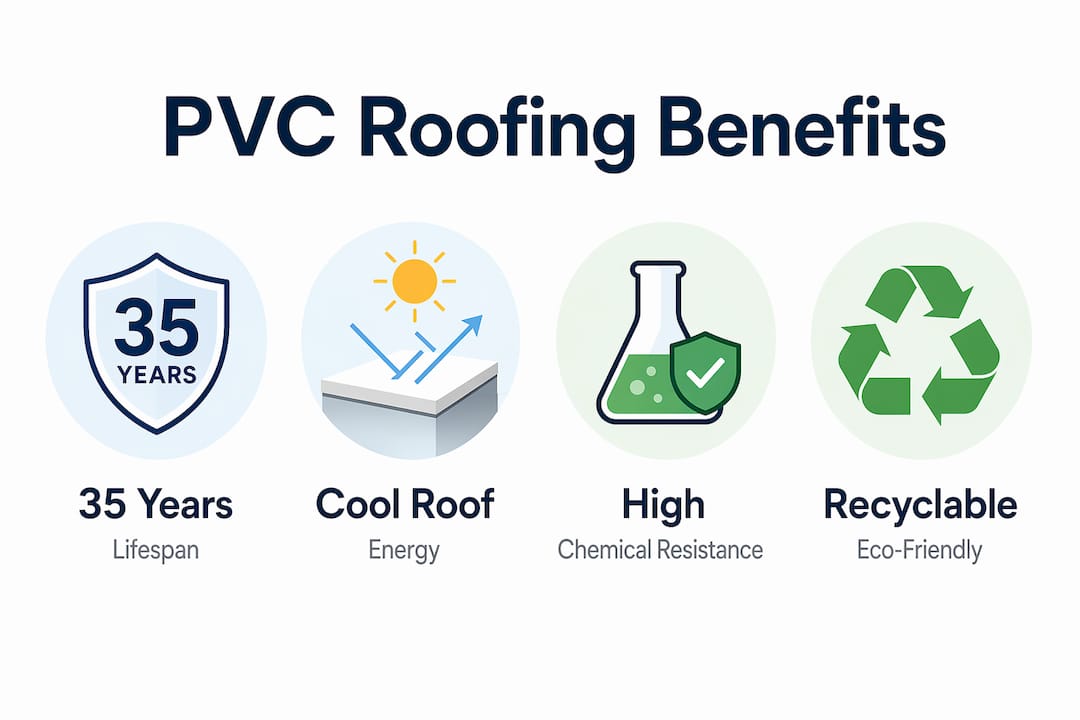
Energy efficiency. Reflective PVC membranes qualify as cool roofs under Energy Star standards. Cool roof PVC membranes reduce summer energy bills by 10%–25% by reflecting up to 80% of incoming solar heat. For Florida property owners dealing with intense summer sun, that reduction is meaningful on monthly utility statements.
Chemical resistance. PVC’s chemical resistance comes from its polymer chemistry, not a surface coating. This makes it the preferred membrane for restaurants, industrial facilities, and any building where grease, oils, or chemical exhaust contacts the roof surface. Other membrane types degrade in these conditions.
Fire resistance. PVC membranes are inherently fire resistant without requiring additional coatings. This matters for insurance ratings and building code compliance.
Recyclability. PVC roofing is recyclable at end of life, which reduces landfill waste compared to modified bitumen or built-up roofing systems.
Limitations worth knowing
PVC roofing does carry real drawbacks that property owners should weigh honestly.
- Higher upfront cost. PVC costs more per square foot than most alternative membranes. That gap narrows over time through lower maintenance and longer lifespan, but the initial check is larger.
- Plasticizer migration. Over decades, plasticizers can slowly migrate out of the membrane, causing it to stiffen. High-quality membranes from reputable manufacturers use stabilized plasticizer formulations that slow this process significantly.
- Installer skill dependency. Proper installation is critical. A poor seam weld on an otherwise excellent membrane will fail. PVC demands skilled, experienced installers with calibrated equipment.
How much does PVC roofing cost?
PVC roofing typically costs between $6.50 and $10.00 per square foot installed, which is higher than the $5.50–$8.00 per square foot range for thermoplastic polyolefin membranes. That price difference reflects PVC’s superior chemical resistance and longer expected service life.
| Cost factor | Impact on price |
|---|---|
| Membrane thickness (45 vs. 80 mil) | Thicker membranes cost more but last longer |
| Installation method | Fully adhered costs more than mechanically fastened |
| Roof complexity | More penetrations and angles increase labor hours |
| Roof size | Larger roofs reduce cost per square foot through economies of scale |
| Geographic location | Labor rates vary by market; Central Florida rates apply locally |
The economic case for PVC becomes clear over a 30-year horizon. A roof replaced once at year 25 costs less in total than a cheaper membrane replaced twice at years 15 and 30. Add in lower energy bills from cool roof reflectivity and reduced maintenance from heat-weld repairability, and the total cost of ownership often favors PVC.
Pro Tip: Request a lifecycle cost analysis from your contractor, not just a material quote. A 30-year projection that includes energy savings and maintenance costs tells the real story of which membrane is cheaper.
Homeowners researching roofing choices and real estate value will find that durable membranes like PVC also support property resale value by reducing buyer concerns about near-term roof replacement.
How is PVC roofing installed and maintained?
Installation quality determines PVC roof performance more than any other factor. Seam welding quality is the most common failure point in flat roofing, and PVC’s heat-welded system eliminates that risk when done correctly.
A standard PVC installation follows these steps:
- Tear-off and deck inspection. Remove the existing roofing system and inspect the deck for rot, damage, or inadequate fastening. Any deck defects must be corrected before membrane installation.
- Insulation installation. Rigid insulation board goes down first, typically polyisocyanurate, to meet energy code requirements and provide a smooth substrate.
- Membrane layout. Rolls of PVC membrane are unrolled and positioned with the correct overlap at seams, typically 3–6 inches depending on manufacturer specification.
- Fastening or adhering. Depending on the installation method, the membrane is either mechanically fastened at seams or fully adhered across its surface.
- Heat welding. A hot-air welder fuses all seams into a continuous waterproof bond. This step requires a trained operator and calibrated equipment.
- Detail work. Flashings, pipe boots, drains, and edge terminations receive custom-fabricated PVC accessories, also heat-welded into the field membrane.
- Final inspection. A probe test checks every seam for voids or cold welds. Any defect found gets re-welded on the spot.
Maintenance best practices
PVC roofing requires less maintenance than built-up or modified bitumen systems, but it is not maintenance-free. Schedule a professional inspection twice per year, typically in spring and fall. Inspections should check seams, flashings, drains, and any penetrations for signs of separation or wear.
Cleaning is straightforward. Remove debris, especially leaves and branches that hold moisture against the membrane. Keep drains clear so water does not pond. Standing water accelerates membrane degradation in any roofing system.
Repairs on PVC are simpler than on most other membranes. PVC membranes remain weldable throughout their service life because they do not cure or harden over time. A damaged section can be patched with a new piece of PVC membrane heat-welded in place, creating a permanent repair rather than a temporary fix. This repairability is a genuine advantage that property managers often underestimate when comparing membrane types.
Key Takeaways
PVC roofing is the most durable and chemically resistant single-ply membrane available, and installation quality determines whether that potential is realized.
| Point | Details |
|---|---|
| Lifespan advantage | PVC lasts 25–35 years, longer than most competing single-ply membranes. |
| Energy savings | Reflective PVC membranes cut summer cooling costs by 10%–25% through solar heat reflection. |
| Chemical resistance | PVC resists grease, oils, and chemicals at the polymer level, not through surface coatings. |
| Cost vs. value | Higher upfront cost of $6.50–$10.00 per square foot is offset by lower lifetime maintenance and energy expenses. |
| Installation is decisive | Seam weld quality determines roof performance more than membrane brand or thickness. |
Why installation quality matters more than membrane brand
After working with PVC roofing systems across Central Florida, the pattern is consistent: the membrane rarely fails. The seams do. Property owners often spend considerable time comparing membrane specifications and brands, then hire the lowest-bid contractor without verifying their welding experience. That decision order is backwards.
PVC’s flexibility is genuinely impressive. I have seen it installed over roofs with dozens of penetrations, unusual angles, and aging substrates where other membranes would have required extensive prep work. The material adapts. But that adaptability only pays off when the installer knows how to exploit it. A cold weld on a complex flashing detail will leak within two seasons, regardless of how good the membrane is.
The environmental angle on PVC is also improving. Manufacturers have reduced plasticizer migration rates significantly over the past decade, and end-of-life recycling programs are expanding. PVC is no longer the environmental liability it was sometimes characterized as in earlier years.
For buildings with chemical exposure, restaurant exhaust, or planned ownership beyond 25 years, PVC is the logical choice. For a simple residential low-slope addition where budget is tight, a thinner membrane type may serve adequately. The honest answer is that the right membrane depends on the building’s use, the owner’s timeline, and the quality of the contractor. Get all three right, and PVC will outperform expectations.
— Thomasroofingandrepair
Thomasroofingandrepair’s PVC roofing services for Central Florida
Thomas Roofing and Repair installs and maintains PVC roofing systems for homeowners and property managers across Brevard, Volusia, and Orange counties. The team brings the calibrated equipment and seam-welding experience that PVC installation demands.

Whether you need a new residential roofing system for a flat addition or a full commercial roof replacement for a managed property, Thomasroofingandrepair provides free estimates and honest lifecycle cost analysis. Florida’s heat, UV exposure, and storm seasons make membrane selection and installation quality especially consequential. Contact Thomasroofingandrepair to schedule a roof inspection and get a clear picture of which system fits your building and budget.
FAQ
What is PVC roofing used for?
PVC roofing is used on flat and low-slope roofs for both residential and commercial buildings. It performs especially well in environments with chemical exposure, such as restaurants and industrial facilities.
How long does a PVC roof last?
A well-installed PVC roof lasts 25–35 years. Lifespan depends heavily on seam weld quality and routine maintenance.
Is PVC roofing the same as vinyl roofing?
PVC roofing and vinyl roofing refer to the same material. Polyvinyl chloride is the chemical name; vinyl is the common consumer term for the same polymer.
What maintenance does a PVC roof need?
PVC roofs need two professional inspections per year, clear drains, and debris removal. Damaged sections can be heat-welded at any point during the roof’s life without losing the watertight bond.
How does PVC roofing compare to other flat roof membranes?
PVC costs more upfront at $6.50–$10.00 per square foot but offers superior chemical resistance and a longer lifespan than most alternative single-ply membranes. For buildings with chemical exposure or long ownership horizons, the total cost of ownership typically favors PVC.