
TL;DR:
- Solar roofing integrates photovoltaic technology directly into the roof, transforming it into both a weather barrier and energy source. It offers options like solar shingles bundled with roof replacement for better value and faster payback, or traditional panels for existing roofs and lower upfront costs. Proper timing and professional installation are essential to maximize financial benefits and preserve home value, especially when replacing an aging roof.
Solar roofing is the integration of photovoltaic technology directly into your roof structure, turning your home’s outer shell into both a weather barrier and an energy generator. Homeowners who ask why consider solar roofing are really asking one question: can a single upgrade pay for itself while making the house better? The answer is yes, under the right conditions. Solar roofing, known in the industry as Building-Integrated Photovoltaics (BIPV), delivers energy savings, stronger curb appeal, and measurable resale value gains. This guide breaks down the technology, the real costs, and the decision points that matter most.
Why consider solar roofing: technology and how it works
Solar roofing uses two distinct approaches, and choosing between them changes everything about cost, appearance, and long-term performance.
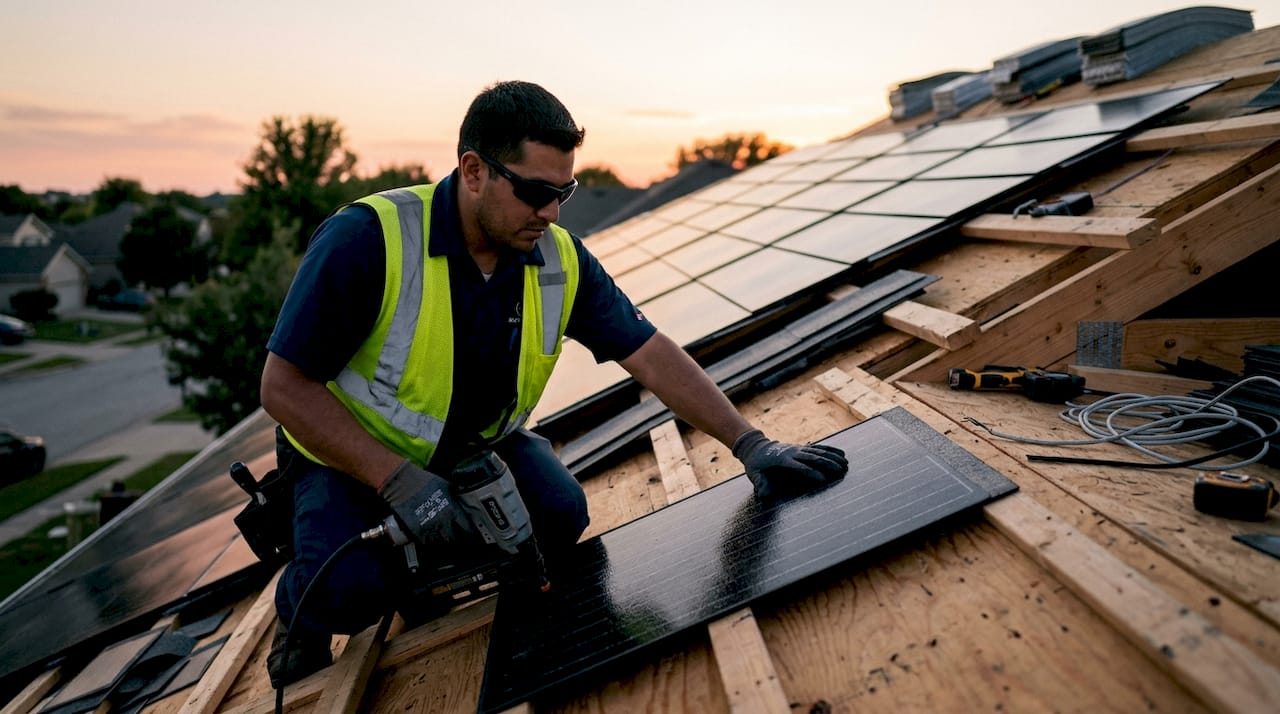
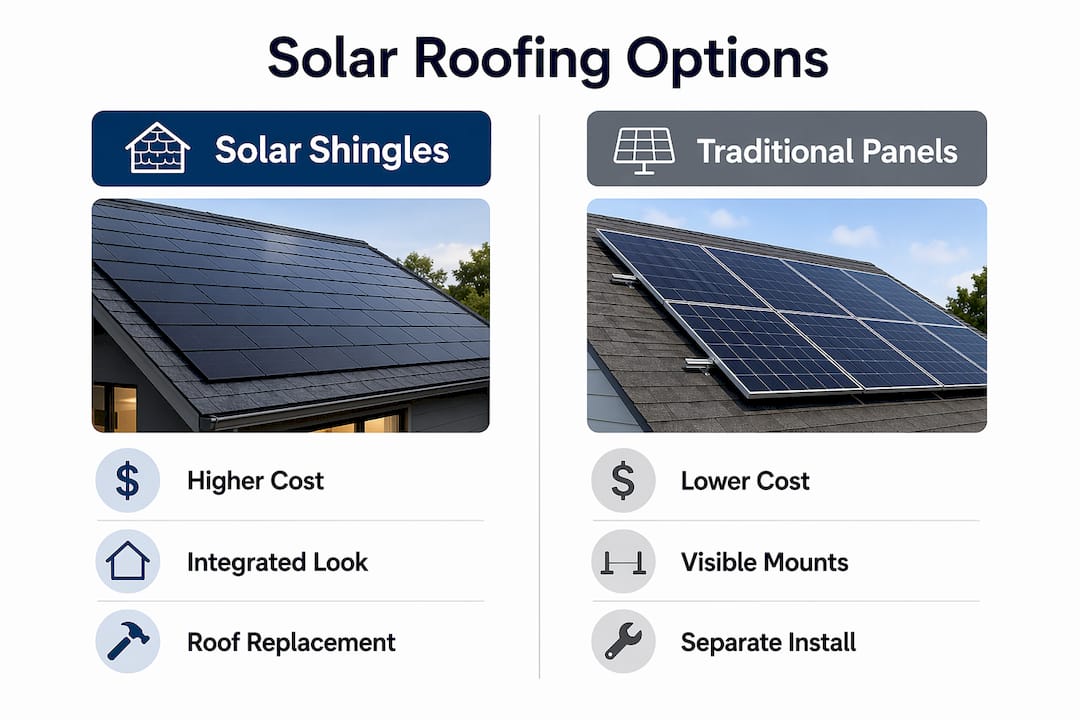
Solar shingles and tiles are BIPV products. They replace your existing roofing material entirely. Brands like Tesla Solar Roof and GAF Energy Timberline Solar produce shingles that look nearly identical to standard asphalt or slate. They carry a Class A fire rating and withstand wind speeds up to 130 mph, putting them on par with premium conventional roofing. That durability matters in Florida, where hurricane season tests every roof every year.
Traditional solar panels mount on racks above your existing roof. They do not replace roofing material. Installation is faster and generally less expensive upfront, but the panels sit visibly above the roofline and require a structurally sound roof underneath them.
Key differences between the two systems:
- Efficiency: Solar shingles deliver 17–23% cell efficiency, while traditional panels can reach up to 23%. The gap is narrow but real.
- Airflow: Solar shingles sit flush against the roof deck. Reduced airflow means slightly higher operating temperatures, which can reduce long-term efficiency compared to rack-mounted panels.
- Repairs: Solar shingles require installers trained in both electrical work and waterproofing. That specialized labor makes repairs more complex and more expensive than fixing a standard panel system.
- Aesthetics: Shingles integrate cleanly into the roofline. Panels sit above it, which some homeowners and HOAs find objectionable.
Pro Tip: Before choosing between shingles and panels, get a professional roof inspection. If your roof has less than 10 years of life remaining, shingles bundled with a full replacement will almost always deliver better value.
What does solar roofing actually cost?
Cost is where most homeowners get surprised, and not always in a bad way.
Solar shingles cost roughly 20–30% more than traditional panels on a straight comparison. That premium sounds steep until you factor in what you are replacing. A full roof replacement in Central Florida typically runs $10,000–$18,000. When you bundle solar shingles with a roof replacement you were already planning, that roofing cost disappears from the solar budget entirely.
The financial math on bundling is significant. Bundling solar installation with a full roof replacement cuts the payback period from roughly 14 years down to as few as 9 years. That is a five-year difference in time to break even, driven entirely by timing.
Here is a simplified cost comparison:
| Scenario | Estimated payback period | Key cost factor |
|---|---|---|
| Solar shingles + roof replacement | ~9 years | Eliminates separate roofing cost |
| Traditional panels on existing roof | ~14 years | Adds future removal/reinstall risk |
| Traditional panels on aging roof | 14+ years | Panel removal costs $3,000–$8,000 |
The hidden cost most homeowners miss: if you install traditional panels on a roof with fewer than 10 years of life left, you will pay panel removal and reinstallation fees of $3,000–$8,000 when the roof eventually needs replacing. That expense erases a significant portion of your energy savings.
Federal incentives reduce the sting considerably. The 30% federal solar investment tax credit applies to qualifying solar roofing installations in 2026. That credit comes directly off your tax bill, not just your taxable income. State and utility incentives vary. The DSIRE database (dsireusa.org) lists every available program by zip code and is the most reliable place to check local options.
Pro Tip: Schedule your solar roofing installation when your roof is already due for replacement. The combined project saves money, reduces project timelines, and qualifies the full roofing cost for the federal tax credit when solar shingles are used.
How does solar roofing affect home value and curb appeal?
Solar roofing delivers a measurable financial return beyond monthly energy savings. Homes with solar systems sell for an average of 4.1% more than comparable homes without them. On a $400,000 home, that is $16,400 in added resale value. That figure alone justifies serious consideration for homeowners planning to sell within the next decade.
The curb appeal story is more nuanced. Traditional panel racks are visible and utilitarian. Solar shingles sit flush with the roofline, giving the home a clean, finished look that buyers increasingly associate with premium construction. The low-profile aerodynamic design of solar shingles also reduces wind uplift risk and ice dam formation, two practical benefits that go beyond appearance.
Buyer perception is shifting. Homeowners choosing solar roofing today prioritize integration and aesthetics over raw cost-per-kilowatt efficiency. That preference shows up in buyer behavior. A home with integrated solar shingles reads as a premium product. A home with rack-mounted panels reads as a retrofit.
Solar roofing advantages that directly affect resale value:
- Integrated appearance appeals to buyers who rejected traditional panels for aesthetic reasons
- Energy-producing roof signals lower utility costs to prospective buyers
- HOA-compliant profile removes a common barrier in planned communities
- Roofing decisions that maximize property value in Florida increasingly include solar as a standard consideration
Who should install solar roofing and how to choose the right system?
Solar roofing is not the right choice for every homeowner. The decision depends on roof age, budget, aesthetic priorities, and long-term plans.
Solar shingles make the most sense when:
- Your roof needs replacement within the next three years
- You are building a new home and want energy generation from day one
- Your HOA restricts or prohibits visible panel racks
- Curb appeal and property value are primary goals alongside energy savings
- You want a single contractor handling both roofing and solar installation
Traditional panels make more sense when:
- Your roof has 15 or more years of life remaining
- Your budget is tighter and you want the lowest upfront solar cost
- Maximum energy output per dollar is the priority
- You plan to expand the system later, since panels are easier to add
Installing solar shingles on a healthy roof is rarely financially justified. The economics only work when solar shingles replace a roof that was already going to be replaced. Contractors who tell you otherwise are not giving you the full picture.
A practical decision framework: ask yourself four questions before signing any contract.
- How many years does my current roof have left?
- Am I planning to stay in this home for at least 10 years?
- Does my HOA restrict traditional panel installations?
- Is my primary goal energy savings, property value, or both?
Your answers will point clearly toward one system or the other. If your roof is healthy and you plan to move within five years, traditional panels on an existing roof deliver faster payback with less upfront cost. If your roof is aging and you plan to stay long-term, bundling solar shingles with a full roof replacement in Central Florida is the stronger financial move.
Pro Tip: Get at least three quotes from installers certified in both roofing and solar. A roofer who subcontracts the solar work, or a solar company that subcontracts the roofing, adds coordination risk and potential warranty gaps.
Key Takeaways
Solar roofing delivers the strongest financial return when shingles are bundled with a roof replacement that was already planned, cutting payback from 14 years to as few as 9 years while adding 4.1% to home resale value.
| Point | Details |
|---|---|
| Bundle for best ROI | Pairing solar shingles with a planned roof replacement cuts payback by up to five years. |
| Federal tax credit applies | The 30% federal ITC reduces upfront solar roofing costs significantly in 2026. |
| Resale value increase | Solar-equipped homes sell for an average of 4.1% more than comparable homes. |
| Avoid panels on aging roofs | Traditional panels on a roof with under 10 years of life create $3,000–$8,000 in future removal costs. |
| Aesthetics drive buyer preference | Solar shingles’ low-profile design appeals to buyers and satisfies most HOA restrictions. |
The timing question nobody talks about enough
The most common mistake I see homeowners make is treating solar roofing as a standalone purchase. They get excited about energy savings, call a solar company, and sign a contract without ever asking about their roof’s remaining lifespan. Two years later, they are paying $5,000 to remove panels so a roofer can replace the deck underneath. That is an entirely avoidable expense.
The technology has genuinely matured. Solar shingles in 2026 are not the fragile, expensive novelties they were five years ago. They meet serious durability standards, carry strong warranties, and look good doing it. But the technology being good does not mean the timing is always right. A great product installed at the wrong time is still a bad decision.
My honest recommendation: treat solar roofing as part of your roof replacement plan, not as a separate energy project. When those two decisions align, the financial case is strong. When they do not align, traditional panels on a sound roof are the smarter move. Check how roofing choices affect real estate returns before committing to either path. And always use certified installers who carry both roofing and electrical credentials. The warranty gaps from split-contractor projects are real and costly.
— Results
Solar roofing services from Thomasroofingandrepair
Thomas Roofing and Repair serves homeowners across Central Florida, including Brevard, Volusia, and Orange counties, with residential roof installation built around your home’s specific needs.

If you are weighing solar roofing as part of an upcoming roof replacement, Thomasroofingandrepair can assess your current roof, walk you through your options, and coordinate the full project from inspection to installation. Getting both the roofing and solar work done under one qualified contractor eliminates the coordination gaps that cost homeowners money. Contact Thomasroofingandrepair for a free estimate on professional roof installation and find out whether bundling solar with your next roof replacement makes financial sense for your home.
FAQ
What is solar roofing, exactly?
Solar roofing, formally called Building-Integrated Photovoltaics (BIPV), replaces traditional roofing material with photovoltaic shingles or tiles that generate electricity. Unlike rack-mounted panels, BIPV products serve as both the roof covering and the energy system.
Are solar shingles worth the extra cost?
Solar shingles are worth the cost when bundled with a full roof replacement, cutting payback to as few as 9 years and adding an average of 4.1% to home resale value. On a healthy roof, traditional panels typically offer better short-term financial returns.
What federal incentives apply to solar roofing in 2026?
The 30% federal solar investment tax credit applies to qualifying solar roofing installations, including BIPV shingle systems. State and utility programs vary by location and can be found through the DSIRE database at dsireusa.org.
How long does solar roofing last?
Solar shingles meet Class A fire ratings and are rated to withstand wind speeds up to 130 mph, comparable to premium conventional roofing materials. Most manufacturers offer product warranties of 25 years or more on both the roofing and energy production functions.
Should I replace a good roof to install solar shingles?
No. Replacing a structurally sound roof solely to install solar shingles is rarely financially justified. The economics of solar shingles work best when a roof replacement was already planned, eliminating the $10,000–$18,000 roofing cost from the solar project budget.