
TL;DR:
- A membrane roof creates a continuous waterproof barrier over low-slope roofs, resisting water intrusion across the entire surface. It can be made of single-ply membranes like TPO, PVC, and EPDM or multi-ply modified bitumen systems, with lifespans of 15 to 30 years depending on material and maintenance. Proper installation and system compatibility are essential for durability, especially in hurricane-prone regions, and regular inspections help extend the roof’s service life.
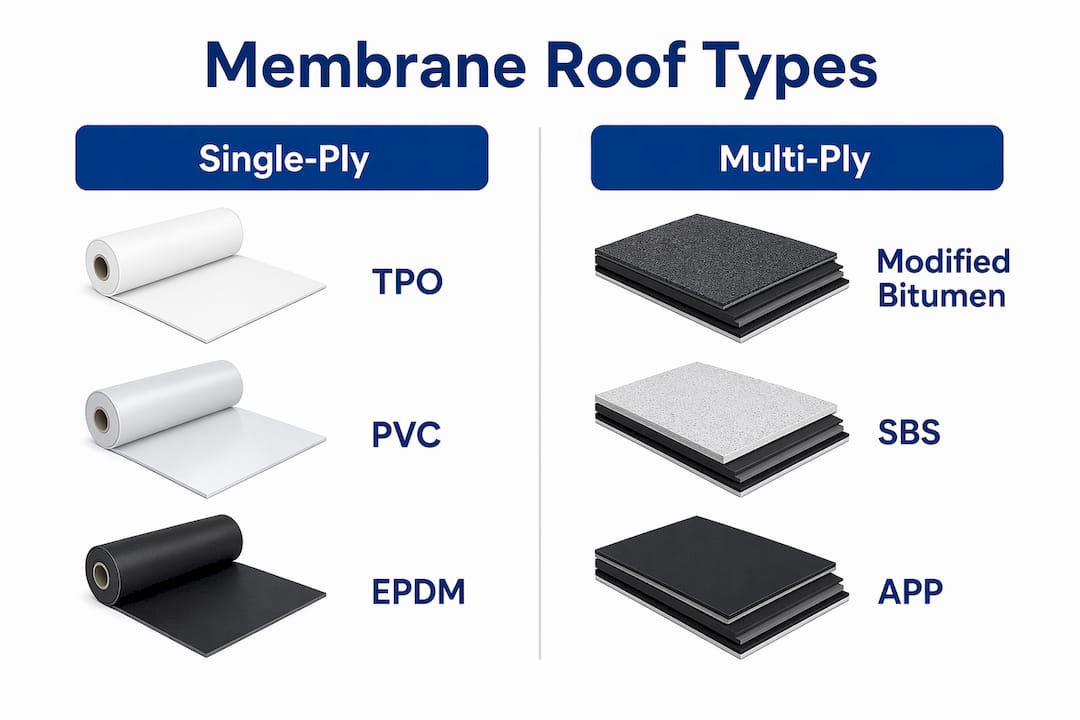
A membrane roof is a continuous waterproof layer installed over low-slope roofs to block water intrusion at every point across the surface. Unlike traditional shingles, which rely on overlapping pieces, a membrane roofing system creates one unbroken barrier. Membrane roofs cover low-slope roofs with a pitch under 3:12, where water drains slowly and standing water is a real risk. The two main categories are single-ply membranes, including TPO, PVC, and EPDM, and multi-ply modified bitumen systems. Installation costs range from $4 to $12 per square foot, and lifespans typically run 15–30 years depending on material and maintenance.
What is a membrane roof system, and what types are available?
Membrane roofing systems fall into two broad families: single-ply and multi-ply. Each uses different materials and construction methods, and the right choice depends on your building’s use, climate, and budget.
Single-ply membranes: TPO, PVC, and EPDM
TPO is the most widely installed low-slope membrane in new U.S. buildings. Its white reflective surface reduces heat absorption, which cuts cooling costs in warm climates like Central Florida. TPO seams are heat-welded, creating bonds that resist water infiltration better than adhesive-only systems. Typical TPO lifespan runs 20–30 years with proper care.
PVC membranes share many traits with TPO but contain plasticizers that improve flexibility in cold temperatures. PVC roofs can last 20–30 years or more when maintained correctly. PVC also resists chemicals well, making it a strong choice for restaurants or industrial buildings where grease or exhaust contacts the roof surface.
EPDM is a synthetic rubber membrane, typically black, that handles temperature swings exceptionally well. It is one of the most established single-ply options and performs reliably on low-traffic flat roofs. Its dark color absorbs heat, which can be a drawback in hot climates but an advantage in colder northern regions.
Multi-ply modified bitumen systems
A modified bitumen membrane uses asphalt reinforced with either SBS rubber or APP plastic polymer. SBS and APP modifiers improve flexibility and UV resistance compared to standard asphalt, and the system is installed in multiple layers for built-in redundancy. Modified bitumen typically lasts 15–25 years and performs well in storm-prone or high-foot-traffic environments.
| Membrane type | Typical lifespan | Best for | Cost range |
|---|---|---|---|
| TPO | 20–30 years | Energy efficiency, new builds | Moderate |
| PVC | 20–30+ years | Chemical resistance, commercial | Moderate to high |
| EPDM | 20–25 years | Temperature extremes, low traffic | Low to moderate |
| Modified bitumen | 15–25 years | High traffic, storm-prone areas | Moderate |
Pro Tip: If your flat roof sees regular foot traffic from HVAC technicians or maintenance crews, modified bitumen’s multi-layer construction gives you a meaningful safety margin that single-ply systems cannot match.
How does membrane roof installation affect long-term performance?
Installation method is one of the biggest variables in how well a membrane roofing system holds up over time. Three primary attachment methods exist, and each has real trade-offs.
- Fully adhered: The membrane bonds directly to the substrate with adhesive across its entire surface. This method resists wind uplift best and produces a smooth, clean appearance.
- Mechanically fastened: Fasteners and plates anchor the membrane through the insulation into the deck. This is faster and less expensive to install, but the fastener points can become stress concentrations over time.
- Loose-laid (ballasted): The membrane lies flat and is held down by gravel or pavers. This method is cost-effective but adds significant weight to the roof structure.
Attachment method directly influences wind uplift resistance, which matters greatly in hurricane-prone regions like Brevard and Volusia counties. A fully adhered system is the standard recommendation for Florida properties where wind events are a regular threat.
A membrane roof is not just the membrane itself. The full assembly must include insulation, vapor retarders, cover boards, and fasteners, and every component must be compatible. FM-approved or UL-classified assemblies set the standard for performance guarantees. Mixing components from different systems without verifying compatibility is one of the most common causes of premature roof failure.
Pro Tip: Ask your contractor for the FM or UL assembly number before work begins. That number confirms every component in your roof has been tested together as a system, not just individually.
You can learn more about how thermal envelope performance interacts with membrane roofing choices, especially in Florida’s climate.
What are the advantages and limitations of membrane roofs?
Membrane roofing offers clear strengths, but it also has real limitations worth understanding before you commit.
Advantages:
- Continuous waterproof surface. A membrane has no seams from overlapping pieces, which eliminates the most common leak points found in shingle roofing.
- Long service life. With routine maintenance, TPO and PVC systems regularly reach 25–30 years. That lifespan compares favorably to standard asphalt shingles on low-slope applications.
- UV and weather resistance. Modern membranes use advanced polymers that outperform built-up roofs in UV protection and expansion resistance, which reduces cracking and surface degradation over time.
- Multi-ply redundancy. If the top cap sheet of a modified bitumen system is punctured, the base sheet continues to waterproof the building until repairs are made. Single-ply systems do not offer this backup layer.
- Energy savings. White TPO and PVC membranes reflect solar radiation, reducing cooling loads in warm climates.
Limitations:
- Puncture sensitivity. Single-ply membranes like TPO and PVC are vulnerable to punctures from dropped tools, foot traffic, or debris. Protection boards can help, but they add cost.
- Foot traffic restrictions. Most single-ply membranes are not designed for regular walking. Rooftop equipment access requires walkway pads or protection layers.
- Seam vulnerability in single-ply. A poorly welded seam is the most likely failure point in a TPO or PVC roof. Quality installation matters more than material brand.
Compared to traditional tile roofing options, membrane systems are the correct choice for low-slope applications where tile cannot shed water effectively.
How long do membrane roofs last, and what do they cost?
Lifespan and cost both vary by membrane type, installation quality, and how well the roof is maintained after installation.
| Membrane type | Expected lifespan | Maintenance frequency |
|---|---|---|
| TPO | 20–30 years | Annual inspection |
| PVC | 20–30+ years | Annual inspection |
| EPDM | 20–25 years | Annual inspection |
| Modified bitumen | 15–25 years | Biannual inspection |
Installation costs average $4 to over $10 per square foot depending on membrane type, roof complexity, and regional labor rates. A 2,000-square-foot flat roof could cost between $8,000 and $20,000 or more for a full replacement. That range reflects real differences in material quality and installation method, not just contractor markup.
Maintenance practices that extend membrane roof life include:
- Annual visual inspections to catch blistering, ponding water, or seam separation early
- Clearing drains and scuppers after storms to prevent standing water, which accelerates membrane degradation
- Prompt repair of punctures before water infiltrates the insulation layer, where damage spreads invisibly
- Avoiding unnecessary foot traffic and using designated walkway pads when roof access is required
A property manager overseeing a commercial building with rooftop HVAC units should budget for biannual inspections. Each service call costs far less than the water damage that follows a missed puncture. You can review roof lifespan factors in detail to set realistic expectations for your specific membrane type.
How do you choose the right membrane roofing system?
Selecting the right system comes down to four practical factors: roof slope, climate, building use, and budget.
- Roof slope: Membrane systems work on roofs with a pitch under 3:12. If your slope is steeper, other roofing types are more appropriate.
- Climate: In hot, sunny Florida, TPO or PVC reflective membranes reduce cooling costs. In colder climates, EPDM’s flexibility in low temperatures is an advantage.
- Building use: High foot traffic from maintenance crews favors modified bitumen. Light-use residential flat roofs can work well with single-ply TPO or PVC.
- Budget: Modified bitumen tends to cost less upfront than premium PVC. TPO sits in the middle and offers strong value for most residential and light commercial applications.
Warranty compliance is a non-negotiable factor. Membrane roofing systems must be installed as FM-approved or UL-classified assemblies to qualify for manufacturer warranties. An installer who substitutes components to cut costs can void your warranty before the roof is even finished.
Pro Tip: Request the full assembly specification sheet from your contractor before signing a contract. Verify the insulation, cover board, and membrane are all listed together under the same FM or UL approval number.
For a broader view of commercial roofing system types, including how membrane roofing fits within the full range of options, that resource covers the topic in practical terms for property owners.
Key takeaways
A membrane roof is the correct waterproofing solution for low-slope buildings, and its performance depends as much on installation quality and system compatibility as on the membrane material itself.
| Point | Details |
|---|---|
| Membrane type determines lifespan | TPO and PVC last 20–30 years; modified bitumen runs 15–25 years with maintenance. |
| System integration is non-negotiable | All components must be FM-approved or UL-classified together to guarantee performance. |
| Attachment method affects wind resistance | Fully adhered systems offer the best wind uplift protection in hurricane-prone regions. |
| Modified bitumen adds redundancy | Its multi-layer design maintains waterproofing even if the top sheet is punctured. |
| Annual maintenance extends roof life | Regular inspections and prompt repairs prevent minor issues from becoming costly failures. |
Why I think most property owners underestimate membrane roofing
Most homeowners treat a membrane roof as a single product they buy and forget. That mindset leads to expensive surprises. After years of working with flat and low-slope roofs across Central Florida, the pattern is consistent: the roofs that fail early almost always had one of two problems. Either the components were mismatched, or the installation skipped the FM or UL assembly requirement to save money upfront.
The multi-ply redundancy of modified bitumen is genuinely underappreciated. Property managers with rooftop equipment access should be specifying modified bitumen as a default, not as a premium upgrade. A punctured top sheet that gets caught at an annual inspection costs a few hundred dollars to fix. The same puncture missed for two years can mean $15,000 in insulation replacement and interior water damage.
Single-ply membranes are excellent products when they are installed correctly and maintained. The problem is that their thin profile leaves no margin for error. One bad weld, one dropped tool, one ignored drain blockage, and you are looking at a repair that costs more than the original installation savings.
My honest recommendation for Florida property owners: prioritize the fully adhered installation method, verify your assembly approval number, and schedule annual inspections without exception. A membrane roof is a long-term investment. Treat it like one.
— Thomasroofingandrepair
Membrane roofing services from Thomasroofingandrepair
Thomas Roofing and Repair specializes in membrane roof installation and repair across Central Florida, serving homeowners and property managers in Brevard, Volusia, and Orange counties. The team understands the specific demands Florida’s heat, humidity, and hurricane season place on low-slope roofing systems.

Whether you need a full membrane roof installation in Horizon West or a repair assessment after storm damage, Thomasroofingandrepair brings the system-level expertise that protects your investment. The company also offers residential roof maintenance programs designed to catch problems before they become costly failures. Contact Thomasroofingandrepair for a free estimate and get a clear picture of what your roof needs.
FAQ
What is a membrane roof used for?
A membrane roof is used to waterproof low-slope and flat roofs where traditional shingles cannot shed water effectively. It creates a continuous barrier that prevents water intrusion across the entire roof surface.
Is a membrane roof waterproof?
Yes, a membrane roof is fully waterproof when properly installed as a complete assembly. The continuous surface eliminates the seam gaps and overlaps that cause leaks in other roofing types.
How long does a membrane roof last?
TPO and PVC membrane roofs typically last 20–30 years. Modified bitumen systems last 15–25 years. Lifespan depends on material quality, installation method, and how consistently the roof is maintained.
What are the main types of membrane roofing systems?
The main types are single-ply membranes, including TPO, PVC, and EPDM, and multi-ply modified bitumen systems. Single-ply options suit most residential and light commercial flat roofs, while modified bitumen is preferred for high-traffic or storm-prone applications.
How much does membrane roof installation cost?
Membrane roof installation costs range from $4 to over $10 per square foot depending on membrane type, roof complexity, and regional labor rates. A full replacement on a 2,000-square-foot flat roof typically falls between $8,000 and $20,000 or more.