Most property owners assume commercial roofs are just bigger versions of residential roofs. In reality, commercial roofing systems are engineered multi-layer assemblies designed for entirely different performance demands. Understanding these differences is crucial for Central Florida property owners managing offices, warehouses, or retail centers. This guide clarifies what a commercial roof system is, explores common types suited to Florida’s climate, and explains installation and maintenance practices that protect your investment.
Table of Contents
- Key takeaways
- Understanding commercial roof systems: structure and purpose
- Types of commercial roof systems and suitability in Central Florida
- Installation techniques and essential maintenance for longevity
- Choosing and applying a commercial roof system: factors for Central Florida investors
- Reliable commercial roofing services in Central Florida
- Frequently asked questions
Key Takeaways
| Point | Details |
|---|---|
| System purpose | Commercial roof systems are multi layer assemblies designed for flat or low slope buildings with a focus on durability, waterproofing, and engineered drainage. |
| Florida drainage priority | In Central Florida the drainage system must move water efficiently through tapered insulation, internal drains, and edge details to prevent ponding and membrane deterioration. |
| Roof types | Common options include BUR, Modified Bitumen, single ply membranes including TPO, PVC, and EPDM, and metal roofs. |
| Lifespan differences | Lifespans vary by system with BUR lasting roughly 15 to 30 years and Modified Bitumen 12 to 20 years under proper maintenance. |
Understanding commercial roof systems: structure and purpose
A commercial roof system is a multi-layered roofing structure designed for non-residential buildings prioritizing durability, waterproofing, and engineered drainage. You’ll find these systems on office buildings, warehouses, retail centers, and industrial facilities throughout Central Florida. Unlike residential pitched roofs, commercial roofs typically feature flat or low-slope designs that require specialized engineering to handle water drainage and thermal expansion.
The typical commercial roof system consists of several critical layers working together. The vapor barrier prevents moisture infiltration from the building interior. Insulation layers provide thermal performance and energy efficiency. The waterproofing membrane serves as the primary weather barrier. Finally, protective surfacing shields the membrane from UV damage and physical wear.
“Commercial roofing systems must withstand extreme temperature fluctuations, standing water, and constant UV exposure while maintaining structural integrity across large surface areas.”
Drainage engineering is particularly crucial in Florida’s heavy rain environment. Commercial roofs incorporate tapered insulation systems, internal drains, scuppers, and edge details to move water efficiently off the surface. Poor drainage leads to ponding water, which accelerates membrane deterioration and can cause structural damage over time.
Florida’s intense UV exposure and thermal cycling create unique challenges for commercial roof systems. The multi-layer design addresses these issues through reflective coatings, reinforced membranes, and expansion joints that accommodate material movement. Understanding what is commercial roofing helps you appreciate why these systems require specialized installation and maintenance approaches.
Key components of commercial roof systems include:
- Structural deck providing the base support
- Vapor retarder controlling moisture migration
- Insulation layers for thermal resistance
- Primary waterproofing membrane
- Flashings and edge details for transitions
- Drainage components including drains and scuppers
- Protective surfacing or ballast
Types of commercial roof systems and suitability in Central Florida
Common types include BUR, Modified Bitumen, single-ply membranes (TPO, PVC, EPDM), and metal roofs, each with different lifespans and characteristics. Understanding these options helps you select the right system for your building’s specific needs and budget constraints.
Built-Up Roofing (BUR) represents the traditional approach, consisting of multiple layers of asphalt-saturated felt or fiberglass reinforcement alternated with hot asphalt or coal tar. The surface typically features gravel or mineral surfacing for UV protection. BUR systems offer excellent waterproofing and durability, with lifespans of 15-30 years in Florida’s climate. They handle foot traffic well but require significant labor during installation.
Modified Bitumen systems use polymer-modified asphalt sheets that provide enhanced flexibility and durability compared to traditional BUR. These sheets can be torch-applied, hot-mopped, or self-adhered depending on the specific product. Modified Bitumen performs well in Florida’s heat, offering 12-20 year lifespans with proper maintenance. The reinforced structure resists punctures better than some single-ply alternatives.
Single-ply membranes dominate the modern commercial roofing market. TPO (thermoplastic polyolefin) membranes are heat-welded at seams, creating watertight bonds. TPO’s white reflective surface reduces cooling costs, making it popular in Florida. However, TPO can experience shrinkage over time, potentially stressing seams and fasteners. Expect 15-25 year performance.
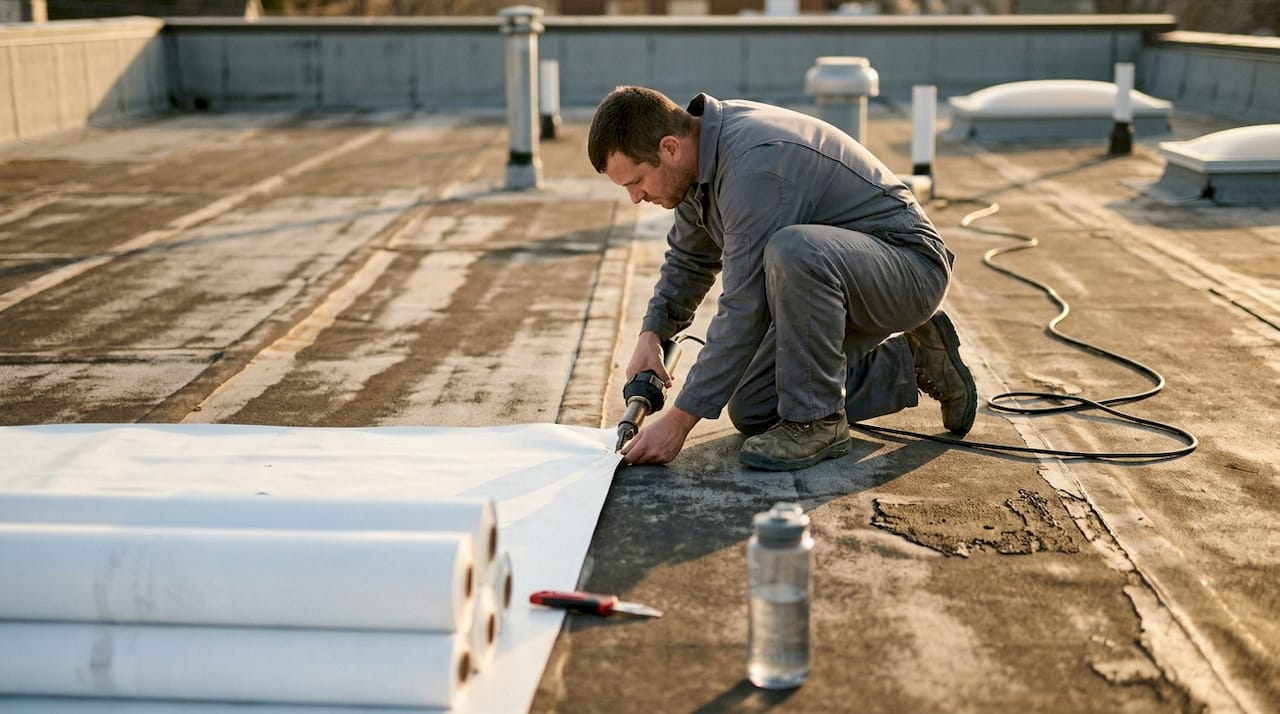
PVC (polyvinyl chloride) membranes offer superior chemical resistance and welded seam strength compared to TPO. PVC handles grease, oils, and foot traffic exceptionally well, making it ideal for restaurants or facilities with rooftop equipment. PVC vs TPO roofing reveals that PVC typically costs 15-20% more but delivers longer service life of 20-30 years.
EPDM (ethylene propylene diene monomer) rubber membranes provide excellent flexibility and weather resistance. EPDM comes in large sheets that minimize seams, though seam adhesion requires careful installation. Black EPDM absorbs heat, which can increase cooling costs in Florida. White EPDM addresses this issue but costs more. Lifespan ranges from 15-25 years.
| Roof Type | Typical Lifespan | Cost Range | Best For |
|---|---|---|---|
| Built-Up Roofing | 15-30 years | $4-7/sq ft | Heavy foot traffic, traditional buildings |
| Modified Bitumen | 12-20 years | $4-8/sq ft | Moderate traffic, puncture resistance |
| TPO | 15-25 years | $5-8/sq ft | Energy efficiency, budget-conscious projects |
| PVC | 20-30 years | $6-10/sq ft | Chemical exposure, high-traffic areas |
| EPDM | 15-25 years | $4-7/sq ft | Simple installations, minimal penetrations |
| Metal | 30-50+ years | $8-14/sq ft | Longevity, aesthetic appeal, steep slopes |
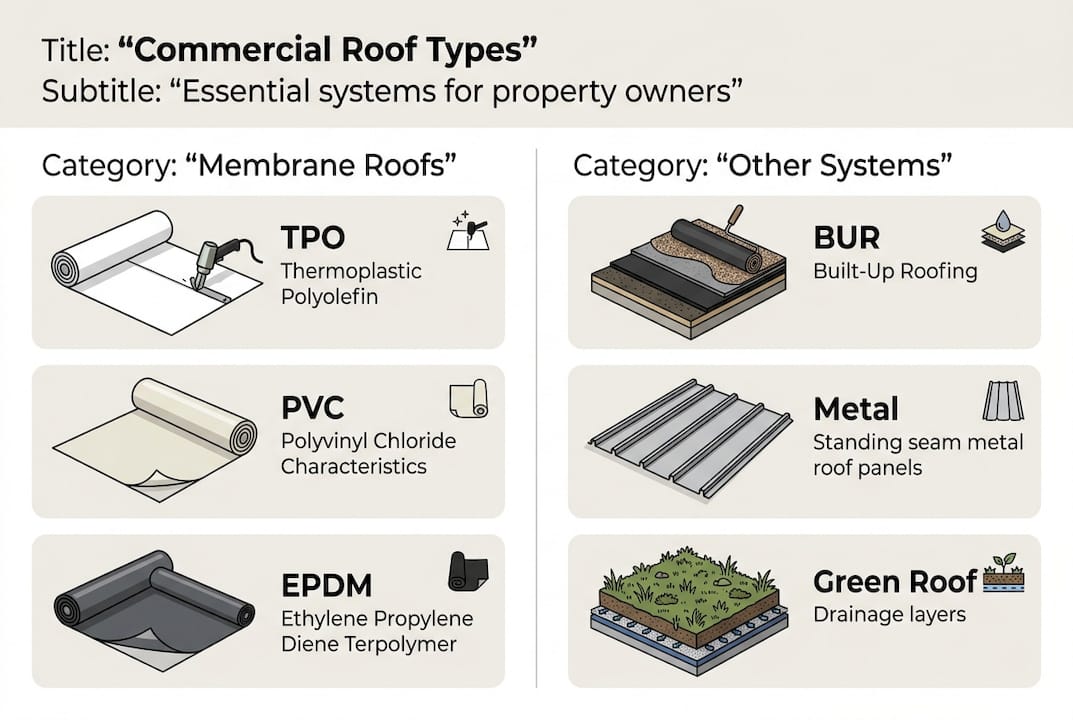
Metal roofing systems use standing seam panels or structural metal panels. These systems excel in longevity and aesthetic appeal, often lasting 30-50 years or more. Metal roofs shed water quickly, resist algae growth, and reflect solar heat effectively. They cost more initially but deliver exceptional value over their service life.
Exploring types of commercial roofing reveals additional specialty options like green roofs with vegetation layers or spray polyurethane foam systems. These alternatives suit specific applications but require specialized expertise.
Pro Tip: Match your roof system to your building’s actual use patterns. Restaurants need chemical-resistant PVC, while warehouses with minimal equipment can use cost-effective TPO or EPDM.
Installation techniques and essential maintenance for longevity
Installation methods vary: BUR built on-site in layers; single-ply membranes heat-welded or adhered; metal panels seamed; drainage and expansion joints critical. Proper installation directly impacts your roof’s performance and lifespan, making contractor selection crucial.
BUR installation follows a sequential layering process:
- Prepare and clean the structural deck
- Install vapor barrier if required
- Apply insulation boards and secure mechanically
- Mop hot asphalt and embed felt or fiberglass plies
- Repeat layering process for specified number of plies
- Apply final flood coat and embed gravel surfacing
- Install flashings and edge metal details
Single-ply membrane installation varies by attachment method. Fully adhered systems use bonding adhesive across the entire membrane surface. Mechanically fastened systems use plates and fasteners through the membrane into the deck, then cover fasteners with membrane strips. Ballasted systems use loose-laid membrane held down by river rock or pavers. Heat welding creates permanent seams in TPO and PVC installations, while EPDM typically uses tape or liquid adhesives.
Metal roof installation requires precise panel alignment and seaming. Standing seam panels interlock and crimp together, creating weathertight seams without exposed fasteners. Structural panels fasten through the panel face into purlins. Both systems need careful attention to thermal expansion and contraction.
Tapered insulation systems are engineered specifically for your roof’s drainage needs. These systems create slope toward drains, eliminating ponding water. Expansion joints accommodate thermal movement in large roof areas, preventing membrane stress and cracking.
“Proper drainage design and installation prevent 80% of premature commercial roof failures in flat roof applications.”
Biannual inspections and maintenance can extend roof life by 5-10 years, addressing seam issues, ponding, punctures, and uplift risks. Establishing a proactive maintenance program protects your investment far more cost-effectively than reactive repairs.
Essential maintenance tasks include:
- Inspect roof surface twice yearly (spring and fall)
- Remove debris from roof surface and drains
- Clean and flush all drains and scuppers
- Check seams and flashings for separation or damage
- Identify and mark ponding water areas
- Document any punctures, tears, or surface damage
- Inspect penetration flashings around equipment
- Check edge details and coping caps
- Schedule prompt repairs for any identified issues
Common failure points require regular attention. Seams can separate due to thermal stress or installation defects. Flashings around penetrations often develop gaps as sealants age. Ponding water accelerates membrane deterioration and can hide underlying damage. Punctures from maintenance activities or debris compromise waterproofing. Wind uplift can loosen mechanically fastened systems if fasteners corrode or pull out.
Maintenance coatings provide an additional protective layer and can restore reflectivity to aged membranes. Silicone, acrylic, and urethane coatings each offer specific benefits. Recover systems install a new roof system over the existing roof, avoiding tearoff costs when the deck and insulation remain sound.
Understanding the commercial roof maintenance process helps you work effectively with roofing contractors. When repairs are needed, following a structured commercial roof repair process ensures quality outcomes.
Pro Tip: Schedule maintenance during Florida’s dry season (November through April) when contractors can access roofs safely and complete repairs before summer storms arrive.
Choosing and applying a commercial roof system: factors for Central Florida investors
PVC has higher cost but better chemical and foot traffic resistance; TPO is cheaper but may shrink; overlays possible on lightweight systems; metal roofs offer longest life at higher cost. Making informed decisions requires balancing multiple factors specific to your property and budget.
Cost comparison shapes most roofing decisions. Budget-conscious projects often select TPO or EPDM for their lower installed costs. Mid-range projects might choose Modified Bitumen or PVC for enhanced durability. Premium projects select metal roofing for maximum longevity and aesthetic appeal. Remember that installed cost per square foot tells only part of the story. Calculate lifecycle costs by dividing total installed cost by expected lifespan.
| Factor | TPO | PVC | EPDM | Metal |
|---|---|---|---|---|
| Chemical resistance | Moderate | Excellent | Good | Excellent |
| Foot traffic tolerance | Moderate | Excellent | Moderate | Excellent |
| Coastal salt exposure | Good | Excellent | Good | Excellent (coated) |
| Reflectivity | Excellent | Excellent | Poor (black) | Excellent |
| Seam reliability | Good | Excellent | Moderate | Excellent |
Chemical exposure significantly impacts material selection. Restaurants, manufacturing facilities, or buildings with rooftop HVAC equipment may expose roofs to oils, greases, or chemical condensates. PVC resists these substances far better than TPO or EPDM. Metal roofs also handle chemical exposure well, though specific coatings may be required.
Foot traffic from maintenance personnel affects membrane longevity. Buildings with extensive rooftop equipment need durable surfaces. PVC and metal roofs tolerate regular foot traffic with minimal damage. TPO and EPDM require walk pads or pavers in high-traffic areas to prevent premature wear.
Florida’s coastal environment introduces salt spray and high humidity. PVC and properly coated metal roofs perform exceptionally well in coastal zones. TPO and EPDM also work but may show slightly shorter lifespans near the coast. Regular cleaning removes salt deposits that can degrade membranes over time.
Overlay and recover options reduce project costs when existing roof systems remain structurally sound. Single-ply membranes can sometimes be installed over existing BUR or Modified Bitumen systems, eliminating expensive tearoff and disposal costs. However, overlays add weight to the structure and may hide underlying problems. Structural engineers should evaluate load capacity before proceeding with overlay installations.
Green roof systems provide environmental benefits through stormwater management, improved insulation, and urban heat island reduction. These systems incorporate waterproofing membranes, root barriers, drainage layers, growing media, and vegetation. Green roofs cost significantly more than conventional systems but deliver benefits beyond basic weather protection. They work best on buildings with adequate structural capacity and owner commitment to ongoing landscape maintenance.
Metal roofs appeal to property owners seeking premium aesthetics and maximum longevity. Standing seam metal roofs complement modern architectural styles while delivering 40-50 year service lives. The higher initial investment pays dividends through minimal maintenance needs and exceptional durability. Exploring commercial metal roofing options reveals various panel profiles and finishes.
Roof system selection factors include:
- Total project budget and financing availability
- Expected building ownership duration
- Structural load capacity
- Building use and chemical exposure
- Maintenance capabilities and budget
- Energy efficiency goals
- Local building code requirements
- Warranty requirements from manufacturers
Understanding the commercial roof replacement process helps you plan projects effectively and minimize business disruption.
Pro Tip: Don’t select roofing based solely on lowest installed cost. A roof system costing 20% more but lasting 40% longer delivers superior value and fewer disruptions over its service life.
Reliable commercial roofing services in Central Florida
Protecting your commercial property investment requires expert installation and ongoing maintenance from qualified professionals. Thomas Roofing and Repair specializes in commercial roofing systems throughout Central Florida, serving Brevard, Volusia, and Orange counties with comprehensive solutions tailored to your building’s specific needs.
Our team installs all major commercial roof types, from single-ply membranes to metal roofing systems. We understand Florida’s unique climate challenges and engineer drainage solutions that prevent common failure modes. Whether you need roof installation in Horizon West or anywhere across Central Florida, we deliver quality craftsmanship backed by manufacturer certifications.

Comprehensive maintenance programs extend your roof’s service life and prevent costly emergency repairs. Our inspection services identify potential problems before they cause interior damage. When repairs are necessary, our commercial roof repair services restore system integrity quickly and effectively.
For property owners considering metal roofing, our commercial metal roofing services provide expert installation of standing seam and structural panel systems. Metal roofs deliver unmatched longevity and performance in Florida’s demanding environment.
Pro Tip: Schedule regular inspections with qualified professionals to spot minor issues before they escalate into major problems requiring expensive repairs or premature replacement.
Frequently asked questions
What is a commercial roof system?
A commercial roof system is a multi-layer assembly designed for flat or low-slope roofs on non-residential buildings. It includes structural deck, insulation, waterproofing membrane, and drainage components engineered to handle large surface areas and specific performance requirements.
How long do commercial roof systems last?
Commercial roof lifespans range from 12-50+ years depending on material type and maintenance quality. Single-ply membranes typically last 15-25 years, Modified Bitumen 12-20 years, and metal roofs 30-50+ years. Regular maintenance can extend these lifespans by 5-10 years.
What is the difference between TPO and PVC roofing?
TPO costs less but may experience shrinkage over time, while PVC offers superior chemical resistance and stronger welded seams at 15-20% higher cost. PVC performs better in high-traffic areas and environments with chemical exposure, making it ideal for restaurants and industrial facilities.
How often should commercial roofs be inspected?
Inspect commercial roofs twice yearly, ideally in spring and fall, to identify damage before Florida’s severe weather seasons. Additional inspections after major storms help catch wind or hail damage early. Professional inspections detect issues invisible to untrained observers.
Can you install a new roof over an existing commercial roof?
Overlay installations are possible when existing roof structure remains sound and building codes permit additional weight. Single-ply membranes can sometimes cover existing BUR or Modified Bitumen systems, reducing costs by eliminating tearoff. Structural engineers must evaluate load capacity before proceeding.
What causes commercial roof failures?
Common failure modes include seam separation from thermal stress, ponding water from inadequate drainage, punctures from maintenance activities or debris, and wind uplift loosening mechanically fastened systems. Poor installation and deferred maintenance accelerate these failures significantly.