
TL;DR:
- A true cool roof reflects more sunlight and releases heat efficiently, reducing cooling costs in Central Florida. Proper assessment, certification, and installation are essential for maximizing energy savings and roof longevity. Marketing color alone is unreliable; validated SR and TE ratings determine a roof’s real cool performance.
Florida summers are no joke. On a typical sunny afternoon, a conventional dark roof in Central Florida can reach 150°F or more, while a properly rated cool roof stays more than 50°F cooler under the exact same conditions. That gap is the difference between an air conditioner working overtime and one running at a manageable pace. But here is where most homeowners get tripped up: they assume any light-colored roof counts as a cool roof. The reality is more nuanced, and understanding it could save you serious money every single month.
Table of Contents
- What is cool roofing?
- How does cool roofing work in Central Florida?
- Types of cool roofing solutions
- When is cool roofing most effective—and when is it not?
- Why most homeowners misunderstand cool roofing—and what actually works
- Upgrade your Central Florida home with the right cool roof
- Frequently asked questions
Key Takeaways
| Point | Details |
|---|---|
| Cool roofing defined | Cool roofing uses materials that reflect sunlight and emit heat to reduce surface temperatures and lower energy use. |
| Central Florida benefits most | Homeowners in hot, sunny climates like Central Florida see the largest energy and comfort improvements from cool roofing. |
| SR and TE matter | Solar reflectance and thermal emittance ratings, not just ‘light color’, indicate true cool roofing performance. |
| Choose the right solution | Select a CRRC-rated product, check compatibility, and combine cool roofs with proper insulation and ventilation for best results. |
| Expert validation is key | A local roofing pro can ensure that your cool roof strategy matches your home for maximum savings and durability. |
What is cool roofing?
A cool roof is not just a roof painted white or made from light materials. According to the Department of Energy, cool roofing is designed to reflect more sunlight and absorb less solar heat than a conventional roof. That difference comes down to two specific, measurable properties.
Solar reflectance (SR) measures how much sunlight a roof surface bounces away. It runs on a scale from 0 to 1, where 0 means the roof absorbs everything and 1 means it reflects everything. Most conventional asphalt shingles score between 0.05 and 0.15. A quality cool roof product might score 0.65 or higher.
Thermal emittance (TE) measures how efficiently a roof releases absorbed heat back into the atmosphere. Again, the scale runs from 0 to 1. A roof with high TE releases heat quickly rather than letting it soak into your attic. Most roofing materials have a TE between 0.85 and 0.95, so this metric matters most when comparing lower-emittance materials like bare metal.
Here is a quick comparison to illustrate the real-world difference:
| Feature | Conventional roof | Cool roof |
|---|---|---|
| Surface temperature | Up to 150°F+ | As low as 100°F |
| Solar reflectance (SR) | 0.05 to 0.20 | 0.65 to 0.90 |
| Thermal emittance (TE) | 0.85 to 0.95 | 0.85 to 0.95 |
| Energy cost impact | Higher cooling bills | 10 to 15% cooling savings |
| Roof material longevity | Average | Extended |
One common misconception worth addressing right away: color alone does not define a cool roof. A dark roof treated with special infrared-reflective pigments can outperform a light gray roof with no such treatment. The science is in the material, not just what your eye sees.
“There is no single definition of a cool roof; SR and TE ratings vary by program, location, and roof slope.” Department of Energy
This matters for Central Florida homeowners who want to make smart roofing choices. Relying on paint color or a salesperson’s word instead of certified SR and TE data is one of the most expensive mistakes you can make when upgrading your roof.
Key features that define a true cool roof:
- CRRC certification: The Cool Roof Rating Council independently tests and rates products for SR and TE.
- Rated performance under real conditions: Products are tested before and after aging, so you know what to expect over time.
- Material variety: Cool roof performance is available in shingles, metal, tile, membranes, and coatings. There is no single “cool roof look.”
- Code alignment: Florida building codes recognize specific SR/TE thresholds, so product ratings also determine compliance.
How does cool roofing work in Central Florida?
Central Florida sits in a climate zone where cool roofs achieve the greatest energy savings. That is not a generic claim. It reflects the specific combination of intense solar radiation, high humidity, and a cooling season that runs nine or ten months out of the year. Your AC system is almost always working. A cool roof reduces the heat load it fights against every single day.
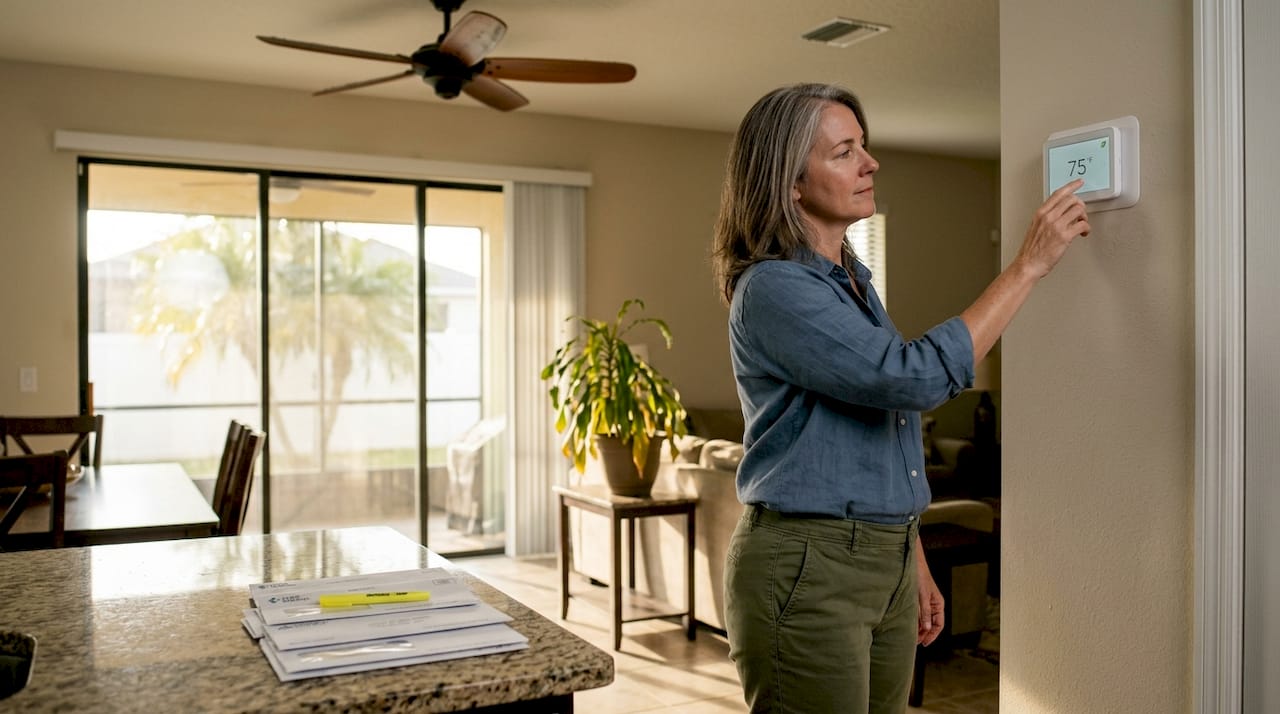
Here is a simplified comparison of what roof surface temperatures mean for your cooling costs:
| Roof surface temp | AC effort | Estimated monthly impact |
|---|---|---|
| 150°F (conventional dark) | Very high | +$40 to $80 added cooling costs |
| 120°F (conventional light) | Moderate | Baseline |
| 100°F (rated cool roof) | Lower | 10 to 15% cooling savings |
Those numbers add up fast when you live in Brevard, Volusia, or Orange County and run central air from March through November.
Getting the most out of a cool roof requires more than just picking the right product. For homeowners in Central Florida, starting with a CRRC-rated product and expert validation is best practice. Here is how the process should work:
- Assess your existing roof assembly. A roofer inspects your current substrate, insulation, and ventilation before recommending a cool roof product. Skipping this step leads to mismatches.
- Select a CRRC-rated product. Use the Cool Roof Rating Council’s rated products directory to compare SR and TE values side by side. This removes guesswork.
- Verify Florida code compliance. Florida’s Energy Code outlines minimum SR thresholds for low-slope and steep-slope roofs. Your installer should confirm the product meets or exceeds these.
- Install with proper technique. Even the best-rated product underperforms if it is installed without proper sealing, overlap, or fastening.
- Combine with ventilation improvements. A cool roof paired with ridge venting and adequate attic insulation drops attic temperatures even further, compounding the energy savings.
Pro Tip: Before committing to any cool roof product, check how it performs when properly paired with your home’s insulation and HVAC system. A reflective roof on a poorly insulated attic delivers far less benefit than one on a well-sealed home. Ask your contractor for an energy model or at minimum a heat load estimate.
There is also an overlooked benefit worth mentioning. Cool roofs can improve rooftop PV performance by keeping panel temperatures lower. Solar panels lose efficiency as they overheat. A cool roof surface that reflects more radiation helps nearby panels operate closer to peak output. If you are considering solar in Central Florida, a cool roof is a logical complement to that investment.
Exploring the right cool roofs in Florida guide and comparing roofing materials for Central Florida homes will give you a solid starting point before you talk to a contractor.
Types of cool roofing solutions
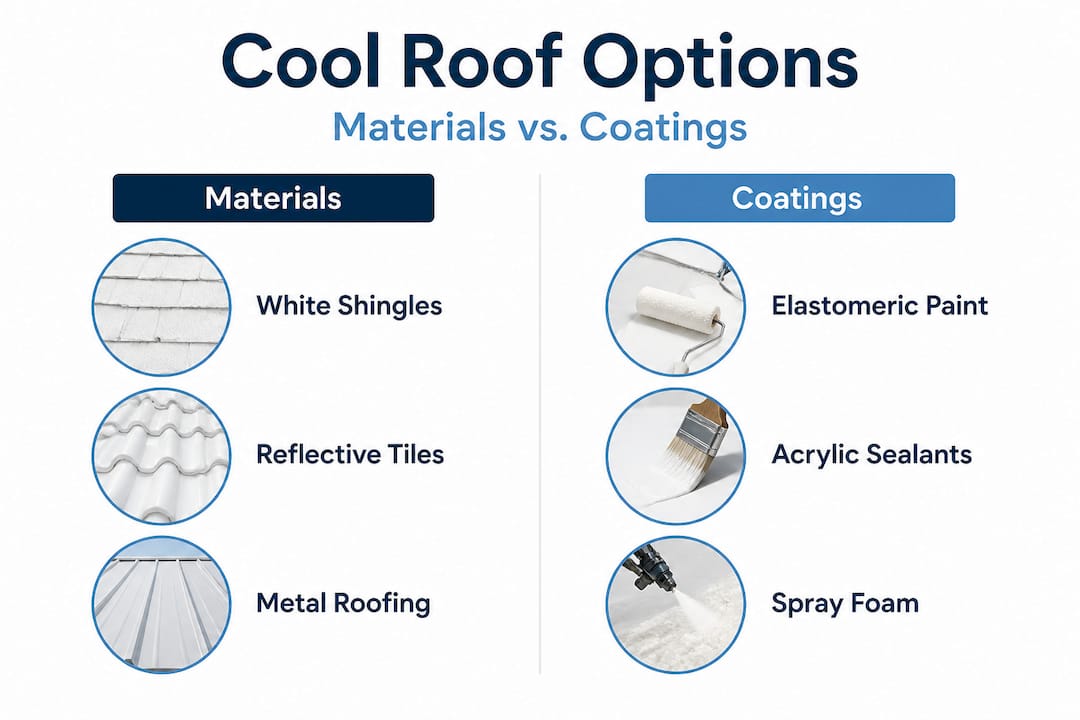
Having seen how cool roofing works, let’s explore which materials and methods can make your home roof cooler. Cool roofing can be implemented during new construction or retrofitted onto existing roofs, and thousands of products across every major category are CRRC-rated. Here is what each option looks like in practice:
- Reflective asphalt shingles: These are the most popular choice for steep-slope residential roofs in Central Florida. Manufacturers embed infrared-reflective granules into standard shingles, boosting SR without changing the appearance dramatically. Many products qualify for ENERGY STAR certification.
- Cool roof coatings: A retrofit-friendly option for flat or low-slope roofs, coatings are applied directly over an existing membrane or built-up roof. White elastomeric coatings are the most common and can raise SR from 0.10 to 0.70 or higher. This is one of the most cost-effective upgrades for homeowners who are not yet due for a full re-roof.
- Metal roofing: Metal is naturally high in TE and, when finished with reflective paint or Kynar coatings, can achieve SR values well above 0.60. Metal roofs also last 40 to 70 years, making the upfront cost easy to justify over time. For Central Florida storm exposure, metal’s durability is a serious bonus.
- Cool roof tiles: Concrete and clay tiles have long been popular in Florida, and many now come with factory-applied reflective coatings that meet CRRC thresholds. Their geometry also creates natural airflow underneath, adding another layer of thermal performance.
- Single-ply membranes: TPO (thermoplastic polyolefin) and PVC membranes are widely used on low-slope residential additions, screened enclosures, and flat-roof sections. White TPO in particular delivers excellent SR performance right out of the box without any additional coating.
The most cost-effective strategy for most Central Florida homeowners is to combine a cool roof upgrade with a scheduled re-roofing project. You avoid paying twice for labor, your existing roof gets replaced at its natural end of life, and you walk away with a system that is both durable and energy-efficient.
Comparing roof upgrade options can help you identify whether a coating, a new shingle product, or a full material change makes the most sense for your specific home.
When is cool roofing most effective—and when is it not?
No roofing solution is universal. Here is how to ensure cool roofing delivers the best results for your home, and when it might not be the right choice.
The conditions that maximize cool roof performance are fairly specific:
- High-quality attic insulation. A cool roof reduces heat entering through the roof deck, but without adequate insulation below, that benefit leaks away. R-30 or higher is recommended for Central Florida attics.
- Efficient HVAC systems. Cool roofs are most effective when paired with a properly sized, well-maintained air conditioning system. An oversized or aging unit does not translate reflectance savings into actual bill reductions as efficiently.
- Good roof ventilation. Ridge vents, soffit vents, and attic fans work with a cool roof to actively move hot air out of the attic. Without airflow, heat still accumulates even on a reflective surface.
- Expert installation. SR and TE values are measured under controlled conditions. Poor installation, inadequate sealing, and skipped steps all erode real-world performance.
There are also real scenarios where a cool roof alone is not the right answer:
- Heavily shaded roofs: A roof under mature tree canopy gets very little direct solar gain to begin with. The reflectance advantage barely registers.
- Poorly insulated attics: Without insulation upgrades, you are addressing heat at the roof surface while it pours in through uninsulated walls and ceilings.
- Mismatched roof assemblies: Some roof systems are not designed for high-reflectance surfaces, particularly older built-up roofs with specific drainage designs.
“Policies that mandate reflective roofs can risk condensation and moisture issues if not properly designed for climate and assembly.” Roofing Contractor
This point about cool roof complexity is not theoretical. In high-humidity climates like Central Florida, a cool roof that dramatically lowers surface temperature during cooler months can increase the risk of moisture condensation in the roof assembly if the design is not right. This is not a reason to avoid cool roofing. It is a reason to work with an experienced local contractor who understands Florida-specific assembly requirements.
Pro Tip: Always verify SR and TE with third-party CRRC ratings rather than relying on manufacturer marketing claims or paint color. A contractor who references actual rated values is worth trusting. One who only talks about “bright white” or “energy-saving color” is not giving you the full picture.
Staying current with roof maintenance tips specific to Central Florida also helps ensure your cool roof keeps performing as rated year after year.
Why most homeowners misunderstand cool roofing—and what actually works
Here is the uncomfortable truth we see repeatedly in Central Florida: homeowners spend money on a “cool roof” upgrade based on color or a contractor’s promise, and then wonder why their energy bills barely moved. The problem is almost never the concept of cool roofing. It is the gap between marketing and measured performance.
The single biggest mistake is treating white as a performance guarantee. We have inspected roofs painted bright white that had SR values well below what was needed to qualify for any energy credit or code benefit. And we have seen dark charcoal metal roofs with specialty coatings that outperformed them significantly. What your eye sees has almost nothing to do with what a radiometer measures.
The second mistake is skipping roof assembly validation. A cool roof surface is just one part of a system. If your attic has three inches of compressed, aging insulation and soffit vents blocked by old insulation batts, the reflective surface above it does relatively little. We always look at the whole assembly before recommending a specific product, because a well-matched system delivers predictable results, while a poorly matched one delivers disappointment.
The most reliable path to real, lasting energy savings combines three things: a CRRC-rated product with appropriate SR and TE values for your roof pitch, a roof assembly that is properly insulated and ventilated for Florida’s heat and humidity, and installation by a contractor who knows how those pieces work together in this specific climate. That combination consistently delivers lower cooling bills and longer roof life.
Homeowners who understand the advantages of roof replacement as a system upgrade rather than just a surface swap tend to get far better outcomes. A new roof is an opportunity to get the whole system right, not just the top layer.
Upgrade your Central Florida home with the right cool roof
If the numbers and details in this guide have made one thing clear, it is that cool roofing done right is a meaningful investment for any Central Florida homeowner. The energy savings are real, the extended roof life is real, and the indoor comfort improvement is something you feel every day from June through October.

At Thomas Roofing and Repair, we serve homeowners across Brevard, Volusia, and Orange Counties with roofing solutions that are rated, tested, and installed to perform in Florida’s demanding climate. Whether you need a full Central Florida roof replacement, a cool coating retrofit, or guidance after storm damage repair, our team brings the expertise to match the right product to your specific home. We back our work with integrity and durable roof craftsmanship built for the Florida market. Contact us today for a free estimate and a straightforward cool roof assessment.
Frequently asked questions
How much can cool roofing lower my energy bills in Central Florida?
Cool roofs achieve the greatest savings in hot climates like Central Florida, typically reducing cooling energy use by 10 to 15%, which can translate to meaningful monthly savings given Florida’s long cooling season.
Is a cool roof only about the color being lighter?
No. True cool roof performance is determined by rated solar reflectance and thermal emittance, not color, which means a dark roof with specialty pigments can outperform a plain light-colored one.
Can I apply a cool roof coating to my existing roof?
Yes, certain products can be retrofitted with reflective cool coatings, but your existing roof’s condition, material, and slope all influence whether a coating is the right fit or whether a full replacement makes more sense.
Will cool roofing increase my winter heating costs?
In Central Florida, the heating penalty is minimal and is almost always offset by the much larger cooling savings you accumulate across a nine-to-ten-month cooling season.
Do cool roofs work with solar panels?
Yes. Cool roofs may improve PV performance by keeping roof and panel temperatures lower, since solar panels lose efficiency when they overheat, making a cool roof a smart pairing with any residential solar installation.
Recommended
- Energy-efficient commercial roofing: Cut costs 30%
- Cool Roofs in Florida: Slash Energy Costs and Beat the Heat
- What is reflective roofing: energy-saving guide for Florida
- Upgrade Your Roof: Top Options for Florida Homes
- Top Energy-Saving Bathroom Devices for Sustainable Homes– Smart Toilets & Bidet Seats | Premium Bidet