
TL;DR:
- Choosing the right shingles for Central Florida depends more on proper installation and wind-rated products than on material type alone.
- Expert installation following Florida’s strict codes ensures your roof withstands hurricanes, UV exposure, and storms, providing long-term protection.
Not all shingles are built the same, and in Central Florida, choosing the wrong type can mean the difference between a roof that survives hurricane season and one that leaves you filing a damage claim. Many homeowners assume any shingle from a big-box store will do the job, but Florida’s storm exposure, intense UV radiation, and strict building codes create a very specific set of demands. This guide breaks down every major shingle type, explains what the field data actually shows, and helps you make a confident, informed decision before your next roof replacement or repair.
Table of Contents
- Understanding shingle basics: Types and how they work
- Comparing shingle types: Performance, cost, and durability
- Florida code and installation: Why details matter more than material
- New trends: Synthetic and composite shingles in Central Florida
- Our take: What actually protects your Florida home
- Next steps: Connect with trusted roof repair and installation experts
- Frequently asked questions
Key Takeaways
| Point | Details |
|---|---|
| Choose storm-rated shingles | Florida codes require shingles resistant to winds of 130 mph or higher for best protection. |
| Installation is critical | The majority of shingle failures are caused by poor installation, not material flaws. |
| Architectural best for most | Architectural shingles combine solid durability, cost effectiveness, and reliable performance. |
| Synthetic offers promise | Synthetic shingles are resilient but their exact lifespan in Florida is unproven. |
| Verify licensed contractors | Only licensed, code-compliant roofers can ensure warranties and true storm protection. |
Understanding shingle basics: Types and how they work
A shingle is more than just a flat piece of material nailed to your roof deck. Each shingle is designed to overlap the one below it, shedding water down and away from your home while also providing a layer of protection against wind, impact, and heat. The way shingles are manufactured, layered, and installed determines how well they hold up through the weather events that Central Florida homeowners know all too well.
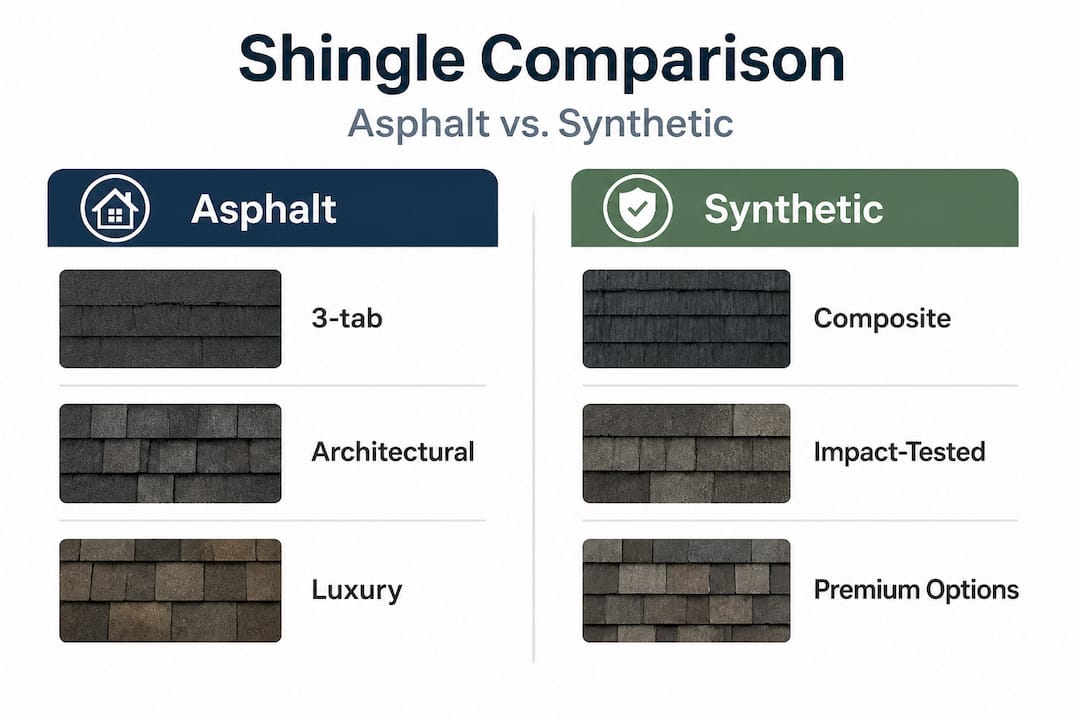
Here is a quick overview of the four main shingle types you will encounter:
- 3-tab shingles: The thinnest and most affordable option, featuring a single flat layer with cutouts that create the appearance of three separate tabs. These are lightweight but have limited wind resistance and a shorter lifespan.
- Architectural (dimensional) shingles: Made with multiple laminated layers, these are thicker, heavier, and more durable than 3-tab. They are the most popular choice across Florida right now.
- Luxury (designer) shingles: The premium tier of asphalt shingles, engineered to mimic slate or wood shake. They offer superior thickness, better impact resistance, and longer warranties.
- Synthetic and composite shingles: Made from materials like rubber, plastic, or polymer composites, these aim to replicate the look of natural materials while delivering enhanced durability and longevity.
Each type varies significantly in weight, wind rating, and expected lifespan. Here is a baseline comparison to frame the discussion:
| Shingle type | Avg. lifespan | Wind rating | Relative cost |
|---|---|---|---|
| 3-tab asphalt | 15 to 20 years | 60 to 90 mph | Lowest |
| Architectural asphalt | 25 to 30 years | 110 to 130 mph | Moderate |
| Luxury asphalt | 30 to 50 years | 130+ mph | Higher |
| Synthetic/composite | 40 to 50+ years | 110 to 150 mph | Highest |
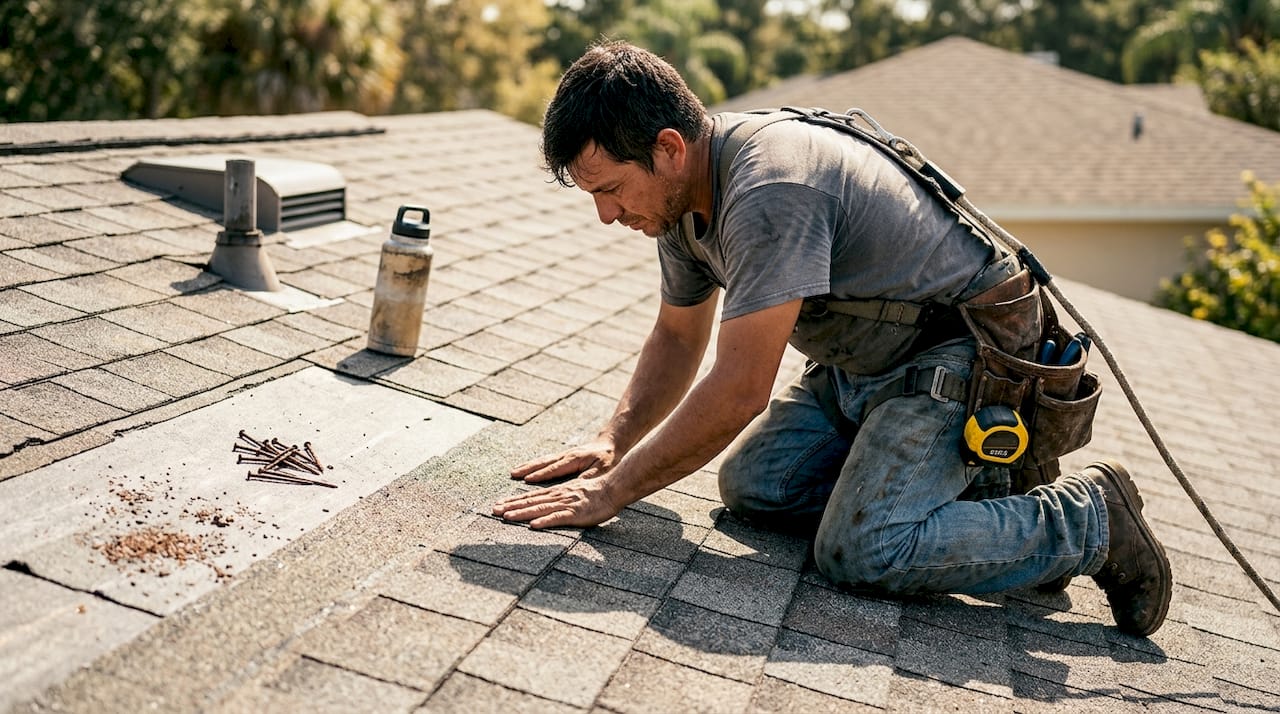
Installation is where most roofs either succeed or fail, regardless of which shingle type you choose. Proper installation requires starter strips at eaves to seal the first row, four to six nails per shingle in reinforced nailing zones, a five to six inch exposure on each course, and correctly installed underlayment and flashing. Overdriving nails or skipping proper sealing accounts for 80% of shingle failures, and Florida’s High Velocity Hurricane Zone (HVHZ) code requires products rated for 130+ mph winds.
You can explore the range of roofing materials examples used locally and learn more about protecting your Florida home with the right roofing system.
Pro Tip: Always ask your roofer to show you the product’s wind rating label before installation begins. If they can’t produce it, that’s a red flag.
With these basic distinctions clear, let’s compare shingle performance under real Florida conditions.
Comparing shingle types: Performance, cost, and durability
Florida’s weather does not give any shingle an easy life. Between summer thunderstorms, the occasional hurricane, sustained UV exposure, and high humidity, your roof faces a full spectrum of stressors year-round. That context matters a lot when choosing wisely between shingle types.
3-tab shingles are the most budget-friendly option upfront, but they are genuinely unsuitable for Central Florida hurricane conditions. Their low wind ratings and short lifespan mean you are likely to replace them sooner, which erases any initial savings. They simply were not engineered for the kind of sustained wind loading that even a Category 1 hurricane produces.
Architectural shingles hit the sweet spot for most homeowners in Brevard, Volusia, and Orange counties. They offer a solid balance of cost, lifespan, and storm resistance. Many architectural products now carry 130 mph wind ratings, which meets Florida code minimums in most zones outside the HVHZ. They are widely available, and licensed contractors in the region install them constantly, meaning the labor knowledge base is deep.
Luxury asphalt shingles step up the game for homeowners who want premium aesthetics alongside better durability. Their additional thickness improves both impact resistance and wind uplift performance. If you want impact-resistant roofing without going fully synthetic, luxury shingles are worth the added cost. Warranties often run 30 to 50 years with these products.
Here is a more detailed side-by-side comparison:
| Feature | 3-tab | Architectural | Luxury | Synthetic |
|---|---|---|---|---|
| Storm resistance | Low | Good | Very good | Excellent |
| UV performance | Moderate | Good | Very good | Excellent |
| Installation complexity | Simple | Moderate | Moderate | Varies |
| Warranty length | 20 to 25 yrs | 25 to 30 yrs | 30 to 50 yrs | 30 to 50+ yrs |
| Insurance benefit potential | None | Sometimes | Often | Often |
One statistic that surprises many homeowners: the difference in material cost between 3-tab and architectural shingles is often less than $1 per square foot, but the performance gap is enormous. You can review the full roof replacement guide for a clearer picture of total project costs.
Pro Tip: Ask your insurance carrier whether upgrading to architectural or luxury shingles qualifies you for a premium discount. In Florida, some carriers reward wind-resistant roofing upgrades with meaningful savings.
The core principle here is that the cheapest shingle almost never delivers the best long-term value in Florida. Storm resilience and durability should drive your decision, with budget as a secondary filter.
Next, we explore how local codes and installation quality shape real outcomes in Central Florida.
Florida code and installation: Why details matter more than material
Here is something the shingle manufacturers do not always emphasize: even the best shingle on the market will fail if it is installed incorrectly. This is not a minor footnote. It is arguably the single most important factor in your roof’s long-term performance.
“Overdriving nails or poor sealing causes 80% of shingle failures, and Florida code requires 130+ mph ratings in the High Velocity Hurricane Zone (HVHZ).”
The HVHZ covers Miami-Dade and Broward counties specifically, but the broader Florida Building Code applies strict wind standards throughout the state, including here in Central Florida. Understanding these requirements protects you from both storm damage and voided warranties.
Major causes of shingle failure break down this way:
- Overdriven or underdriven nails: Nails that penetrate too deep crack the shingle mat; nails that are too shallow allow shingles to lift in wind. Both are installation errors, not material defects.
- Improper sealing strips: Each shingle has a factory-applied adhesive strip that must bond to the shingle below it. In Florida’s heat, this usually activates quickly, but if shingles are installed in cold weather or without proper alignment, the seal never forms.
- Missing or misaligned starter strips: The first row of shingles at your eave is the most vulnerable point of your roof. Starter strips provide the critical adhesive bond that anchors everything above them.
- Inadequate underlayment: Florida code requires specific underlayment products that act as a secondary moisture barrier. Skipping a quality underlayment is a gamble you cannot afford in a hurricane zone.
- Flashing failures: Metal flashing around chimneys, vents, and valleys is the most common source of leaks. Even perfect shingles cannot compensate for flashing installed without proper overlap and sealing.
To protect yourself, here is exactly what to ask any roofer before signing a contract:
- Can you show me the wind rating certification for the shingles you plan to use?
- Are you licensed and insured in Florida, and can I verify that with the state?
- What type of underlayment do you plan to install, and does it meet current code?
- How many nails per shingle will your crew use, and where will the nails be placed?
- Will you provide documentation I can submit to my insurance carrier?
You can review the specifics of Florida roofing code 2026 requirements to understand exactly what your project should meet. The certified roofing benefits of working with a licensed contractor extend beyond just quality workmanship. They include warranty activation and legal protection.
When it comes to choosing a roofing contractor, verify their license number through the Florida Department of Business and Professional Regulation. This step takes two minutes and can save you tens of thousands of dollars.
Pro Tip: Request a copy of the permit pulled for your roof replacement. In Florida, a permit is required for most full replacements, and the inspection process is one of your best quality-control checkpoints.
Having established the importance of code and craftsmanship, let’s examine new materials and trends.
New trends: Synthetic and composite shingles in Central Florida
Synthetic and composite shingles are gaining real traction in the Florida market, and homeowners are right to pay attention. These products are manufactured from materials like polymer composites, rubber, or recycled plastics engineered to mimic the appearance of slate, cedar, or tile without the weight and fragility of the natural versions.
Here is what makes them attractive for Florida homeowners:
- Impact resistance: Many synthetic shingles carry a Class 4 impact rating, the highest available under UL 2218 testing standards. This is valuable in hail-prone areas and during storms with wind-driven debris.
- Lightweight profile: Synthetic products are typically lighter than tile or natural slate, reducing structural load on your home’s framing.
- Color stability: Advanced UV inhibitors help synthetic shingles retain color longer than standard asphalt in Florida’s intense sun.
- Longevity claims: Manufacturers often advertise 40 to 50 year lifespans, which would be exceptional if proven out over time.
However, IBHS testing shows synthetic composite shingles perform very well in impact resistance tests, but their claimed 50-year lifespan remains unproven in Florida field conditions. The products simply have not been installed long enough in real-world storm environments to validate those long-term projections.
There is an active debate in the industry between those who champion premium asphalt evolution, pointing to improved sealants and high-wind asphalt products, and those pushing synthetic alternatives. What field data shows is that premium asphalt consistently outperforms basic asphalt in storms, but all shingle types remain vulnerable when poorly installed. Synthetics are promising per IBHS test results, but homeowners should approach 50-year warranty claims with realistic expectations.
Emerging roofing trends 2026 show growing adoption of synthetic options in new construction and higher-end remodels. For multi-family roofing solutions, synthetic products are also being evaluated for their low maintenance and durability profile.
The bottom line on synthetics: they are worth considering if you plan to stay in your home long-term, your budget allows for the higher upfront cost, and you select a contractor with direct experience installing that specific product.
With these choices and caveats in mind, it’s time for a practical summary and expert perspective.
Our take: What actually protects your Florida home
After years of working on roofs across Brevard, Volusia, and Orange counties, we have a perspective that goes beyond the manufacturer brochures. The truth is simple and a little uncomfortable: the material you choose matters far less than most people think. The installation is what determines whether your roof survives a storm or becomes a repair job.
We have seen brand-new luxury shingles fail after a single tropical storm because a crew cut corners on nailing. We have also seen 15-year-old architectural shingles come through a direct hurricane impact with minimal damage because they were installed by a skilled, code-compliant crew from day one. The pattern is consistent.
What this means for you practically is that your energy should go into vetting your contractor at least as carefully as you vet your material selection. A beautiful shingle installed by an unlicensed crew is a liability. A mid-grade architectural shingle installed by a certified professional following every line of Florida code is protection you can actually count on.
We are also direct about one thing: the 3-tab era is effectively over for Central Florida homeowners. The price difference between 3-tab and architectural is small enough that there is no logical reason to accept the performance downgrade. Spend a little more upfront and protect both your home and your wallet long-term.
When you are planning your next roof project, review roof replacement best practices and approach it with the same care you would give any major structural investment in your home. Because that is exactly what it is.
Next steps: Connect with trusted roof repair and installation experts
Choosing the right shingle is just the first step. Getting it installed by a team that knows Florida code, respects manufacturer specifications, and stands behind their work is what actually delivers the peace of mind you’re after.

At Thomas Roofing and Repair, we work with homeowners across Central Florida to ensure every roof we install or repair meets current code, activates full manufacturer warranties, and is built to handle whatever storm season brings. Whether you need a full replacement, storm damage assessment, or just an honest second opinion, our team is ready to help. Our roof installation in Horizon West and broader service area covers everything from initial consultation to final inspection. If you have already experienced storm damage, our detailed storm damage repair guide walks you through exactly what to expect. Reach out today for a free estimate and talk to a real roofing professional who knows your neighborhood.
Frequently asked questions
Which shingle type lasts longest in Central Florida?
Synthetic and luxury shingles claim the longest lifespan, but architectural asphalt offers the best balance between longevity, cost, and storm resistance based on field experience. IBHS tests show synthetics perform well, but their 50-year lifespan claims are not yet verified in Florida field conditions.
What shingle damage is most common after hurricanes?
The most common issues are shingle blow-off, torn edges, and water intrusion, and they usually trace back to poor installation rather than material failure. Overdriving nails or poor sealing causes 80% of shingle failures even when the material itself meets Florida’s 130+ mph code standard.
Are synthetic shingles worth the extra upfront cost?
Synthetic shingles offer superior impact resistance and impressive test results, but their ultra-long lifespans are not yet fully proven in real Florida conditions. Weigh the warranty terms, your home’s resale timeline, and your own risk tolerance before committing to synthetics over proven premium asphalt options.
How do I verify my shingle installation meets Florida code?
Ask your roofer for proof of 130+ mph wind rating on the specific product being installed, along with documentation of reinforced nail zones and code compliance. Only a licensed contractor can activate manufacturer warranties and provide the permits required for a code-compliant roof replacement in Florida.
Recommended
- Roof decking explained: Best choices for Florida homes
- Central Florida Roofing Trends: What’s Shaping 2026 Choices
- 7 Essential Roof Replacement Tips for Florida Homeowners
- Roofing Materials: Choosing Wisely in Central Florida
- Expert Roofing Survey Services | SurveyMerchant roof surveyor
- 10 tips to make residential and commercial roofs last longer