TL;DR:
- Choosing a certified roofing contractor with active insurance and bonding is essential to protect your home and legal rights. Verifying licenses, bonds, and insurance documents on the job start date ensures ongoing compliance and prevents costly issues. Working with state-certified roofers guarantees broader jurisdictional authority and access to manufacturer warranties, offering peace of mind for property owners.
Hundreds of roofing companies operate across Brevard, Volusia, and Orange counties, and not all of them carry the credentials your home deserves. Choosing the wrong contractor after a storm or routine wear can mean botched repairs, voided warranties, and zero legal recourse when things go wrong. Understanding which certifications actually matter, and knowing how to verify them before anyone climbs on your roof, is the single smartest thing you can do to protect one of your largest investments. This guide walks you through exactly what to look for, step by step.
Table of Contents
- How to verify a roofer’s credentials in Central Florida
- Top essential roofing certifications to require
- Roof certification inspections: What they are and why they matter
- Registered vs. certified roofers: What’s best for Central Florida?
- The overlooked truth about roofing certifications in Central Florida
- Choose certified roofing for worry-free home protection
- Frequently asked questions
Key Takeaways
| Point | Details |
|---|---|
| Check certifications first | Never hire a roofer before confirming their state certification, insurance, and active bond. |
| Certified beats registered | Certified roofing contractors offer broader protection and can work anywhere in Florida. |
| Roof inspections protect you | Certified roof inspections help secure insurance and catch issues before they become costly. |
| Demand recent proof | Insist on current, written documentation for licenses, insurance, and roof certifications before work begins. |
| Insurance lapses suspend licenses | If a roofer’s insurance or bond lapses, their license is immediately suspended by law. |
How to verify a roofer’s credentials in Central Florida
Before you commit to any contractor, you need to know what “certified” actually means in Florida. A certified roofing contractor holds a statewide license issued through the Florida Department of Business and Professional Regulation, commonly called the DBPR. A registered contractor, by contrast, holds only a local license tied to a specific jurisdiction. Both terms get thrown around loosely, and that ambiguity costs homeowners real money every year.
Here is what to check before you sign anything:
- DBPR license number: Every licensed Florida roofer must have one. Search the DBPR’s online portal to confirm the status reads “current, active.” If it says anything else, walk away immediately.
- General liability insurance: Florida law requires general liability minimums of at least $300,000 for bodily injury and $50,000 for property damage, though most reputable contractors carry $1 million or more. A lapse in this coverage automatically suspends the contractor’s license.
- Workers’ compensation: Unless the contractor qualifies for a narrow exemption, workers’ comp is mandatory. If one of the crew gets injured on your roof without it, you could face a lawsuit.
- Surety bond confirmation: This bond exists to protect you if the contractor abandons the job or fails to perform. Confirm the bond is active, not just claimed verbally.
- Active status verification: Insurance and bonding must stay current throughout the entire job, not just on the day you hire them.
Pro Tip: Ask every contractor to hand you physical proof of their license, insurance certificate, and bond before you discuss pricing. A trustworthy roofer will hand it over without hesitation. One who stalls or offers excuses is already showing you who they are.
For additional roofing contractor hiring tips specific to the Central Florida market, reviewing what local experts recommend can save you from the most common hiring mistakes homeowners make every season.
Top essential roofing certifications to require
Now that you know the verification process, let’s be specific about which credentials every contractor must carry before work begins. This is your non-negotiable checklist, not a wish list.
- State Certified Roofing Contractor license (CCC): This is the gold standard in Florida. The CCC designation means the contractor passed a state exam, demonstrated financial responsibility, and holds statewide authority. A registered license (RC) is limited to specific counties, which creates real problems when jurisdictional rules shift after a storm.
- DBPR surety bond: Florida law requires a $5,000 surety bond filed with the DBPR for all licensed roofing contractors. Think of this bond as your safety net. If the roofer fails to finish the job or causes damage they refuse to fix, the bond provides a financial recovery path.
- General liability insurance: As noted above, the state minimum is $300,000 per occurrence for bodily injury, but in practice you want to see $1 million or more. Any lapse in this policy means the license is automatically suspended.
- Workers’ compensation coverage: Required for any contractor with employees. If the crew is working without it, you are exposed to liability that no homeowner should carry.
- Manufacturer certifications: These are credentials issued directly by roofing material manufacturers like GAF, Owens Corning, or CertainTeed. They indicate the contractor has been trained to install that manufacturer’s products correctly, which is what unlocks the best warranty tiers for you as the homeowner.
Important: Florida law is clear. Any lapse in a contractor’s insurance or bonding does not just put them in violation. It automatically suspends their license with no grace period. This means that even a roofer who was fully compliant last month might be operating illegally today if their policy lapsed. Always verify current status, not just the status on the day you met them.
Pro Tip: When you request insurance documents, look at the expiration date on the certificate of insurance. If a big roofing job runs six weeks and the policy expires in three, ask for an updated certificate before work resumes.
Understanding which roof certifications for Central Florida homeowners apply to your specific situation helps you match the right contractor credentials to your project scope.
Roof certification inspections: What they are and why they matter
Contractor licenses and your home’s roof are two separate things, and both need to be certified. A roof certification inspection is a formal assessment conducted by a licensed inspector that documents the current condition of your roof and estimates how many years of serviceable life remain. Insurers and mortgage lenders rely on these documents to make coverage and lending decisions, especially on older homes.
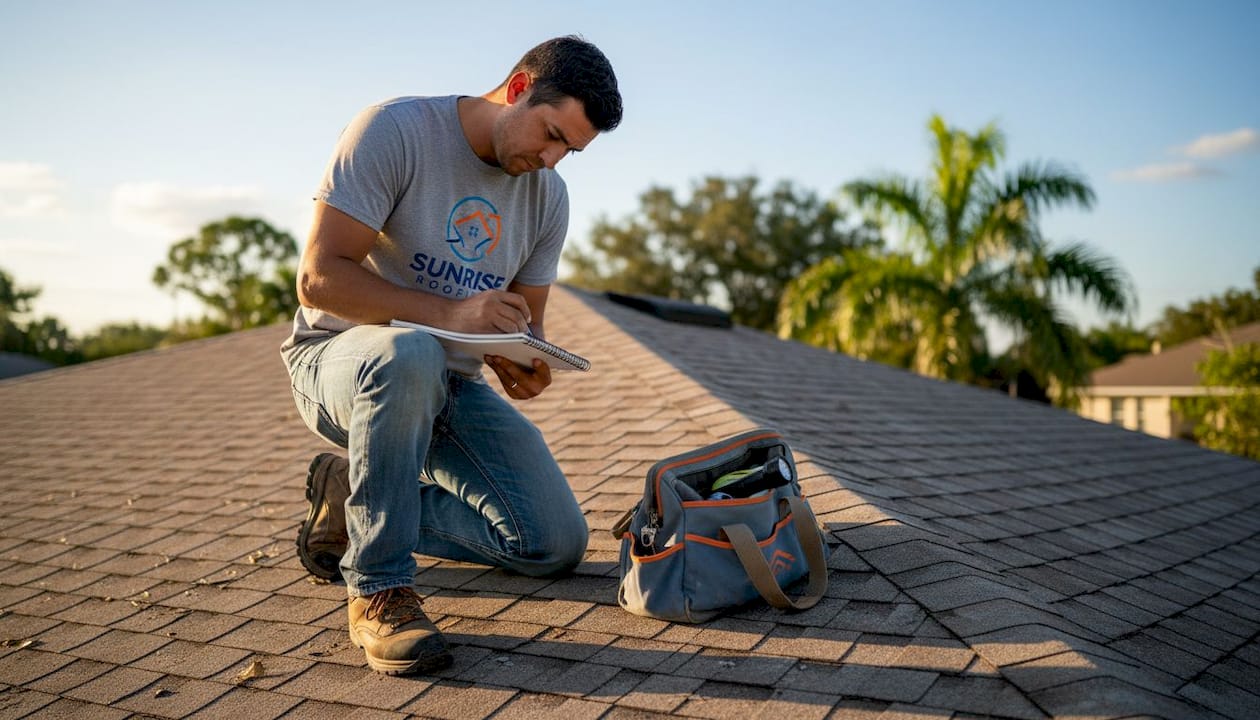
Licensed inspectors assess the remaining life of a roof (typically requiring at least five or more years remaining) to determine whether a property qualifies for insurance coverage. In Central Florida, where roofs face year-round UV exposure, intense humidity, and hurricane season stress, this matters enormously for homes with roofs older than ten to fifteen years.
Here is how roof age typically affects your insurance options:
| Roof age | Insurance impact | Certification benefit |
|---|---|---|
| Under 10 years | Typically no issues with coverage | Standard coverage available without inspection |
| 10 to 15 years | Insurer may require inspection before renewal | Certification can confirm remaining life and preserve coverage |
| Over 15 years | High risk of non-renewal or coverage denial | Certified inspection is often the only path to continued coverage |
| Over 20 years | Most insurers require replacement before coverage | Inspection documents exact condition for negotiation |
The value of a certified roof inspection goes beyond just checking boxes for an insurer. It gives you an honest picture of where your roof actually stands. Many Central Florida homeowners discover during a certification inspection that their roof has specific sections with accelerated wear from a past storm, often in areas not visible from the ground. Catching those issues early means a targeted repair instead of a full replacement.
If you want to understand how proper defect and claims reduction connects to regular inspections, the data makes a compelling case for scheduling one before your next insurance renewal cycle.
The roof inspection benefits extend to property managers overseeing multiple units as well. A documented inspection history is powerful leverage when negotiating commercial insurance rates or preparing a property for sale.
Registered vs. certified roofers: What’s best for Central Florida?
This is one of the most common points of confusion for homeowners, and it has real consequences. Florida issues two types of roofing licenses, and the difference matters more than most people realize.
| Feature | Registered contractor | Certified contractor |
|---|---|---|
| License scope | Local jurisdiction only | Statewide authority |
| Exam requirement | Local or county level | State-level exam |
| Insurance requirements | Locally determined | Statewide DBPR standards |
| Best suited for | Small, single-county projects | Multi-county, complex projects |
| Recommended for Central FL? | Situational | Yes, preferred |
A registered vs. certified license distinction creates real jurisdictional limits that catch homeowners off guard. If a registered contractor’s license is tied to one county and your property sits on the county line, or if county code updates after a major storm, you could face permit issues or work stoppages mid-project.
Here are situations where a certified contractor is clearly the better choice:
- You live in a community that crosses county boundaries (common along the Brevard and Orange county line).
- Your project involves storm damage repair that requires multiple permits across jurisdictions.
- You want manufacturer-backed warranty coverage that requires statewide contractor certification.
- You are selling or refinancing the property and need documentation that will hold up to lender scrutiny in any Florida county.
Registered contractors are not necessarily bad. They simply have more limitations. For routine, small-scale work on a property deep within a single county, a registered contractor with solid local references may perform well. But for anything involving significant investment, storm damage, or insurance claims, demanding a certified roofing contractor is the right call.
It also pays to understand how roofing code requirements in Central Florida have evolved. The 130 mph wind standard now in effect demands contractors who understand current compliance standards, which is far more likely with a state-certified professional who must stay current through continuing education.
The overlooked truth about roofing certifications in Central Florida
Here is something most roofing articles will not tell you: having the right certifications on paper is not the same as working with a contractor who operates with real integrity. We have seen situations across Central Florida where homeowners verified a license number, got a signed contract, and still ended up in serious trouble. Why? Because they checked the license once but never confirmed the insurance was still active when the job started weeks later.
One situation that comes up more often than people think involves surety bond lapses. A homeowner hires a contractor who appears fully compliant on the day of signing. The contractor collects a deposit and begins the job. Then a dispute arises over additional costs. The homeowner expects the surety bond to cover the issue, only to discover the bond lapsed two months earlier and the contractor never renewed it. With no active bond, the legal path forward is expensive and uncertain.
The lesson is not just to ask for documents. It is to ask for current documents and verify them independently. Pull the DBPR record yourself on the day work begins, not just the day you hired them. Call the insurance company listed on the certificate of insurance to confirm the policy is active. These two steps take less than fifteen minutes and can save you thousands.
Beyond paperwork, build a relationship with a contractor who welcomes transparency. The best roofers in Central Florida are not the ones who pitch you fastest or come in cheapest. They are the ones who proactively hand you their license number, invite you to verify it, and explain what their insurance actually covers. That kind of openness is what separates a business built on community reputation from one chasing the next storm and moving on.
When the time comes for your roof replacement, you want to work with a team whose track record in your specific community is already established. Reviews, referrals, and transparency are the real certifications that matter most.
Choose certified roofing for worry-free home protection
Protecting your home starts with choosing a roofing contractor who carries every credential discussed in this article, including a state-certified license, active general liability insurance, workers’ compensation, and a valid surety bond.

At Thomas Roofing and Repair, we carry all required Florida state certifications, maintain full insurance and bonding, and serve homeowners and property managers throughout Brevard, Volusia, and Orange counties. Whether you need a certified roof inspection to satisfy your insurer, storm damage repair, or a full roof replacement, our team brings the credentials and the community reputation to back up every job we do. Request your free estimate today and experience the difference that genuine certification makes.
Frequently asked questions
How do I check if my roofer’s license is valid in Florida?
You can verify a roofing contractor’s license by checking the Florida DBPR’s online portal to confirm the license is current and active. Always check it on the day work begins, not just on the day you hired the contractor.
Why is general liability insurance important for roofers?
It protects you from financial loss if there’s property damage or injuries during roofing work, and it’s required for legal operation in Florida. A lapse in coverage automatically suspends the contractor’s license.
When is a roof certification required for insurance in Central Florida?
Most insurers require a roof certification for homes with roofs older than 10 to 15 years before renewing or issuing a homeowners policy. Without it, coverage can be denied or dropped.
What’s the difference between registered and certified roofing contractors?
Registered contractors are licensed locally and limited geographically, while certified contractors hold statewide licenses with broader authority. For Central Florida homeowners, certified is almost always the better choice.