
TL;DR:
- Class 4 roofing is the highest impact resistance rating under UL 2218, with shingles that can withstand severe hail and storm damage without cracking. The full certified system includes ridge caps and accessories, and proper installation is essential to ensure maximum performance and warranty coverage. This upgrade provides homeowners with reduced damage, potential insurance discounts, and long-term cost savings, especially in high-risk hail areas like Florida, Texas, and Kansas.
Class 4 roofing is defined as the highest impact resistance rating under the UL 2218 standard, certifying that roofing materials can withstand severe hail and storm damage without cracking or structural failure. If you live in a region where hailstorms are a real threat, this rating is the most important number on any shingle spec sheet. Manufacturers like GAF produce Class 4 certified products specifically engineered to outlast standard roofing in punishing weather conditions. This article covers how Class 4 roofing is tested and certified, how it compares to Class 3, what the full system looks like, and how to make a smart purchase decision that could also lower your homeowner’s insurance premium.
What is Class 4 roofing and how does UL 2218 testing work?
Class 4 is the top rating on the UL 2218 impact resistance scale, which runs from Class 1 through Class 4. The higher the class, the more punishment a shingle can absorb before showing damage. Class 1 shingles are tested with a 1.25-inch steel ball, while Class 4 shingles must survive a 2-inch steel ball dropped from 20 feet without cracking or fracturing. That test simulates the force of large hailstones hitting your roof at terminal velocity.
The UL 2218 protocol is not a marketing claim. It is a laboratory certification issued by Underwriters Laboratories, and each product must pass independently. A shingle line earns its Class 4 designation product by product, not brand by brand. This distinction matters because a manufacturer can sell both Class 3 and Class 4 shingles under the same brand name, and only the certified product carries the rating.
What makes Class 4 shingles physically different comes down to material engineering. SBS polymer-modified asphalt and reinforced fiberglass mats give these shingles the flexibility to absorb impact energy rather than crack under it. Styrene-Butadiene-Styrene polymer is the same material used in high-performance rubber products, and its inclusion in asphalt shingles is what separates a Class 4 product from a standard architectural shingle.
Key characteristics that define a certified Class 4 shingle:
- Passes the 2-inch steel ball drop test under UL 2218 without visible cracking
- Uses SBS polymer or reinforced fiberglass mat construction
- Carries product-specific UL certification documentation
- Qualifies for impact-resistant roofing discounts with participating insurers
- Available in full system configurations including ridge caps and accessories
Pro Tip: Ask your contractor to show you the actual UL 2218 certification document for the specific product being installed, not just a brand brochure. The certification is product-specific and lists the exact model number.
Benefits of Class 4 roofing for homeowners
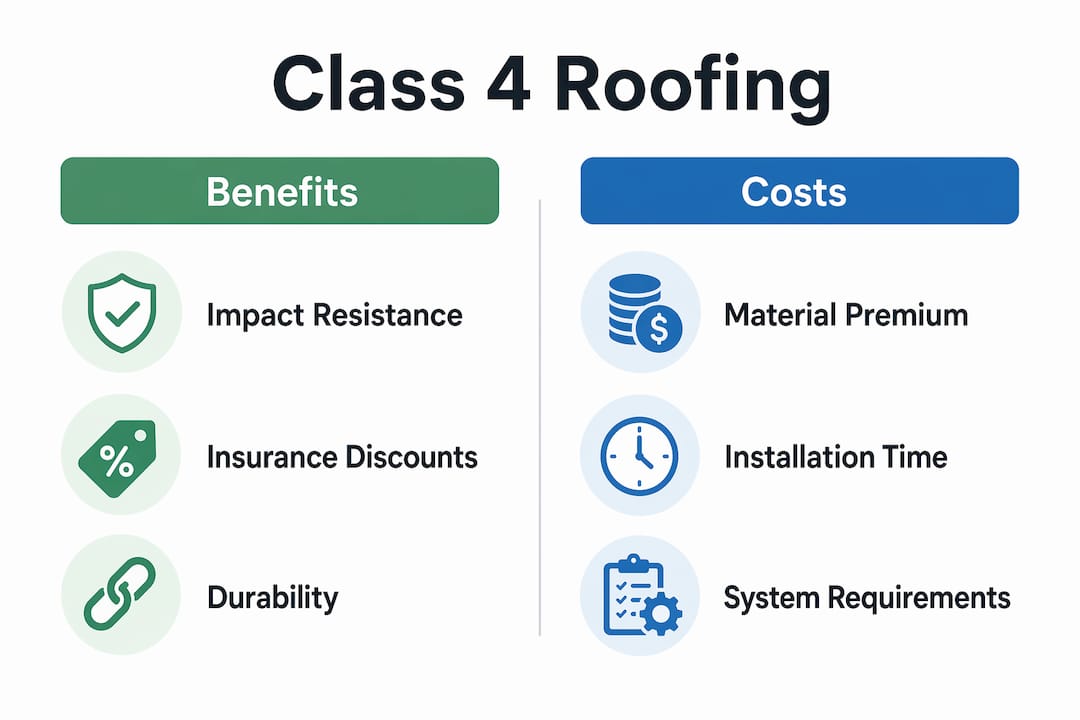
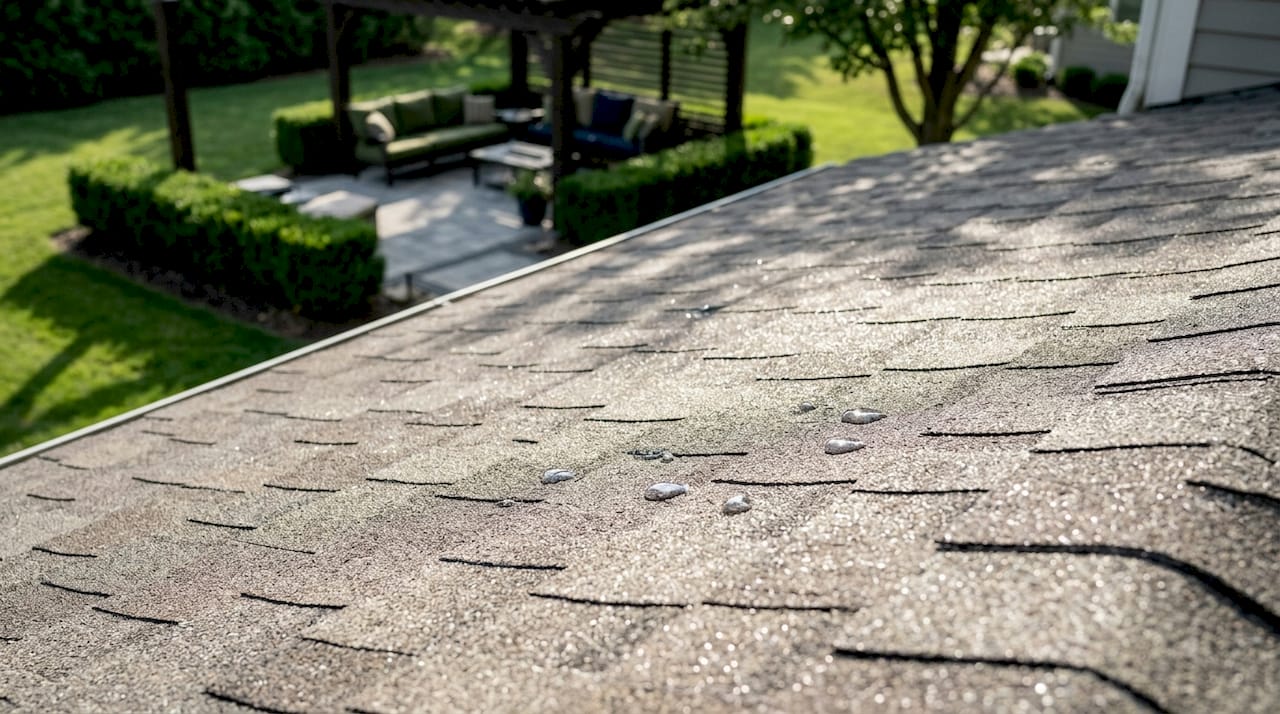
The most direct benefit of Class 4 roofing is reduced physical damage after a hailstorm. Standard architectural shingles can suffer granule loss, cracking, and bruising from hailstones larger than one inch. Class 4 shingles resist that damage at the material level, which translates to fewer post-storm repairs and a longer roof lifespan overall. Fewer repairs also means fewer insurance claims, which keeps your claims history clean.
Insurance premium discounts are available from many insurers for homeowners who install UL 2218 Class 4 certified roofs. The discount varies by insurer, state, and policy form, so you need to call your insurance agent before installation to confirm eligibility and the exact percentage reduction. In hail-prone states like Texas, Colorado, and Kansas, some insurers offer meaningful reductions that can offset a portion of the upgrade cost over time.
The long-term cost math works in favor of Class 4 roofing for most homeowners in high-risk areas. A roof that survives a major hailstorm without needing replacement saves you the cost of a full re-roof, which in Central Florida typically runs several thousand dollars depending on home size and material choice. That repair cost avoidance, combined with any insurance savings, is the real financial argument for the upgrade.
Additional benefits worth considering:
- Reduced granule loss preserves shingle performance and appearance longer
- Lower likelihood of leaks developing after storm events
- Potential increase in home resale value, particularly in storm-prone markets
- Fewer contractor visits for spot repairs after seasonal weather events
- Stronger warranty coverage from manufacturers on certified Class 4 products
Pro Tip: Before committing to a Class 4 upgrade, check NOAA hail frequency maps for your zip code. If your area averages more than two significant hail events per year, the premium pays for itself faster than you might expect.
Class 3 vs. Class 4 shingles: which is right for your home?
Class 4 roofing is recommended primarily for high-risk hail zones, while Class 3 is a practical choice for moderate-risk areas. Class 3 shingles pass the UL 2218 test using a 1.75-inch steel ball, which still represents solid impact resistance above standard shingles. The performance gap between Class 3 and Class 4 is real but not dramatic in low-hail environments. Where it becomes significant is in regions that regularly see hailstones exceeding 1.5 inches in diameter.
The cost difference is the most common reason homeowners choose Class 3. Class 4 shingles cost approximately 10 to 20% more than Class 3 products, driven by the advanced materials and more rigorous testing requirements. On a mid-sized home, that premium can add up to a noticeable difference in total project cost. Whether that premium is worth paying depends almost entirely on your local hail risk and your insurer’s discount structure.
| Feature | Class 3 | Class 4 |
|---|---|---|
| UL 2218 test ball size | 1.75 inches | 2 inches |
| Typical cost premium vs. standard | Moderate | 10 to 20% above Class 3 |
| Recommended hail risk zone | Moderate | High |
| Insurance discount eligibility | Possible, varies by insurer | More widely available |
| Material construction | Standard asphalt or fiberglass | SBS polymer or reinforced fiberglass |
| Best use case | Lower hail frequency areas | Frequent or severe hail regions |
For Central Florida homeowners, hail is less frequent than in the Great Plains, but severe thunderstorms and tropical systems can still produce damaging hail. Checking with Thomasroofingandrepair about local storm risk and material options is a practical first step before deciding between Class 3 and Class 4.
What does a complete Class 4 roofing system include?
A common misconception is that Class 4 roofing means only the field shingles carry the rating. The full system matters. Class 4 products include ridge caps, hip caps, and accessories that are independently certified under UL 2218, and installing a complete certified system is what delivers the full performance and warranty benefits.
GAF’s product lineup illustrates this well. The Timberline AS II, Timberline UHDZ, and Grand Sequoia AS shingles are all Class 4 certified field shingles. GAF also offers Class 4 ridge caps designed to complete the system, because ridge lines are among the most exposed and vulnerable areas of any roof. Installing Class 4 field shingles with a non-rated ridge cap creates a weak point that undermines the whole assembly.
The practical implications for homeowners are straightforward:
- Confirm that ridge caps and hip caps specified for your project are also UL 2218 Class 4 certified
- Ask your contractor for a complete product list, not just the shingle model number
- Verify that the underlayment and deck condition meet manufacturer specifications for the Class 4 system
- Check that all accessories are from the same certified product family where possible
- Understand that evaluating the whole roofing system is key to achieving expected impact resistance
A certified system also protects your warranty. Most manufacturer warranties for Class 4 products require that compatible certified accessories are used throughout. Mixing certified and non-certified components can void coverage, which defeats the purpose of paying the Class 4 premium.
How to select and install Class 4 roofing the right way
Selecting Class 4 roofing starts with documentation. Request UL 2218 Class 4 certification documentation for every product in the proposed system before signing a contract. This is not an unusual request. Reputable contractors keep this documentation on hand because insurers and warranty administrators often require it.
Follow these steps to protect your investment from purchase through installation:
- Verify certification. Confirm the UL 2218 Class 4 rating on the specific product model, not just the brand name.
- Review manufacturer installation requirements. Proper installation is critical to achieving expected performance. Fastener type, spacing, and underlayment requirements are all specified and must be followed.
- Assess your deck condition. Deck integrity affects how stress transfers through the system during impact. A compromised deck reduces real-world impact resistance regardless of shingle rating.
- Confirm contractor experience. Ask specifically whether the contractor has installed the product before and whether they are familiar with the manufacturer’s installation guide.
- Notify your insurer before installation. Confirm the discount amount and any documentation they need to apply it to your policy.
- Document everything. Photograph the installation process, keep all product receipts and certification documents, and store the warranty paperwork. This record is valuable for insurance claims and future home sales.
The decision to pay the Class 4 premium should weigh local hail risk, your insurer’s discount availability, the roof’s expected lifespan, and the cost of repairs you are trying to avoid. For homeowners in Florida, where severe weather is a seasonal reality, the calculus often favors the upgrade. Reviewing top roofing materials for Florida storms can help you compare your options before making a final call.
Pro Tip: Take timestamped photos of the installed shingles, ridge caps, and product labels before the crew cleans up. If you ever file a storm damage claim, that documentation proves the system was Class 4 certified at installation.
Key takeaways
Class 4 roofing is the highest UL 2218 impact resistance rating available, and its value is realized only when the full certified system is correctly installed.
| Point | Details |
|---|---|
| Class 4 defined | The top rating under UL 2218, requiring shingles to survive a 2-inch steel ball drop from 20 feet. |
| Material advantage | SBS polymer and reinforced fiberglass give Class 4 shingles flexibility that standard asphalt lacks. |
| Cost premium | Class 4 shingles cost 10 to 20% more than Class 3, justified by hail risk and potential insurance savings. |
| Full system required | Ridge caps and accessories must also be Class 4 certified to preserve performance and warranty coverage. |
| Documentation matters | Request UL 2218 certification documents and photograph installation to support insurance claims and warranties. |
Why Class 4 roofing is worth the conversation, not just the cost
After years of working on roofs across Central Florida, the most common mistake I see homeowners make is treating Class 4 as a blanket upgrade without asking the right questions first. The rating is real and the protection is real, but it only delivers what it promises when the entire system is certified and installed correctly. I have seen Class 4 shingles installed over deteriorated decking with non-rated ridge caps, and that combination does not give you Class 4 performance. It gives you Class 4 shingles on a compromised system.
The other misconception worth addressing directly: Class 4 is a certified standard, not a guarantee against all storm damage. A Category 4 hurricane or a golf-ball-sized hailstorm can still damage any roof. What Class 4 certification means is that your roof will perform significantly better than standard materials in the same conditions, and that performance difference is what insurers are pricing when they offer discounts.
My honest advice: if you are in a moderate-to-high hail zone and your roof is due for replacement anyway, the Class 4 upgrade is almost always worth it. If you are in a low-risk area and your current roof has years of life left, the math is less clear. Either way, go into the conversation with your contractor knowing what questions to ask. The certification documentation, the full product list, and the installation requirements are not optional details. They are the difference between a Class 4 roof and a roof that just looks like one.
— Thomasroofingandrepair
Get expert Class 4 roofing help from Thomasroofingandrepair
Thomas Roofing and Repair installs Class 4 certified roofing systems across Central Florida, including Brevard, Volusia, and Orange counties. The team works with leading manufacturers and carries the product documentation and installation experience needed to deliver the full performance and warranty benefits of a certified system.

Whether you need a full roof installation in Palm Bay or are exploring impact-resistant options for a replacement project, Thomasroofingandrepair provides free estimates and can walk you through insurance discount eligibility before you commit. For homeowners in Brevard County, roof installation in Titusville is another option with the same certified expertise. Contact Thomasroofingandrepair today to get a clear picture of what Class 4 roofing costs and what it can save you.
FAQ
What does Class 4 impact resistant mean on a shingle?
Class 4 is the highest rating under the UL 2218 standard, meaning the shingle passed a laboratory test where a 2-inch steel ball was dropped from 20 feet without causing cracking or structural damage. It is the most rigorous impact resistance certification available for residential roofing products.
Do Class 4 shingles lower homeowner’s insurance?
Many insurers offer premium discounts for homes with UL 2218 Class 4 certified roofs, though the discount amount varies by insurer, state, and policy type. Contact your insurance agent before installation to confirm eligibility and the specific reduction you qualify for.
How much more do Class 4 shingles cost than standard shingles?
Class 4 shingles typically cost 10 to 20% more than Class 3 shingles, with the premium driven by advanced materials like SBS polymer-modified asphalt and more rigorous testing requirements. The total project cost difference depends on home size and the specific products selected.
Are Class 4 shingles worth it in Florida?
Florida sees less frequent hail than the Great Plains, but severe thunderstorms and tropical weather systems can still produce damaging hail. For homeowners replacing an aging roof, the Class 4 upgrade often makes financial sense when combined with available insurance discounts and reduced repair costs over the roof’s lifespan.
What is the difference between Class 3 and Class 4 roofing?
Class 3 shingles are tested with a 1.75-inch steel ball and suit moderate hail risk areas, while Class 4 shingles use a 2-inch ball test and are recommended for high-risk zones. The material construction, cost, and insurance discount eligibility differ between the two ratings.