
TL;DR:
- Impact-resistant roofing materials are tested and rated for impact durability, unlike standard roofing.
- UL 2218 Class 4 is the highest impact resistance rating, suitable for Central Florida’s storm risks.
- Proper installation and ongoing maintenance are essential for maximum impact protection and longevity.
Most Central Florida homeowners assume their roof is built to handle whatever the sky throws at it. That assumption is expensive. Standard shingles and conventional roofing materials were never designed to absorb the kind of punishment that Central Florida storms deliver regularly. Hail, high winds, and airborne debris can crack, puncture, or loosen standard roofing within minutes. Impact-resistant roofing is a different category entirely, built and tested to resist those exact forces. This guide walks you through what qualifies as impact-resistant, how materials are rated, the real benefits for local property owners, and what it takes to keep that protection working year after year.
Table of Contents
- What is impact-resistant roofing?
- Impact-resistant roofing standards and ratings
- Benefits of impact-resistant roofing for Central Florida
- Installation, care, and limitations of impact-resistant roofing
- A practical perspective: What most guides miss about impact-resistant roofing
- Ready for durable, impact-resistant roofing in Central Florida?
- Frequently asked questions
Key Takeaways
| Point | Details |
|---|---|
| Weather-tested protection | Impact-resistant roofing is designed and tested to block hail, debris, and severe weather, outlasting standard materials. |
| UL 2218 ratings matter | Choosing a Class 3 or 4 material ensures proven defense against harsh Central Florida storms. |
| Long-term savings | These roofs can lower insurance premiums and cut repair costs considerably over time. |
| Maintenance is essential | Regular inspections and careful sealant upkeep are key to keeping impact resistance effective. |
| Professional installation counts | Expert installation and locally tailored roofing solutions maximize storm protection for your property. |
What is impact-resistant roofing?
Impact-resistant roofing is not just a marketing label. It refers to roofing materials that have passed specific laboratory tests proving they can absorb hard impacts without cracking, splitting, or allowing water to get underneath. The key difference between impact-resistant and standard roofing is what happens after something hits the surface. Standard shingles often crack or fracture on impact, creating entry points for water. Impact-resistant materials flex or absorb the force instead.
Several material types qualify, and choosing the right one for your home matters. The most common options include:
- Class 4 asphalt shingles with a modified polymer base that adds flexibility
- Metal roofing panels made from steel or aluminum, which resist denting and puncture
- Concrete and clay tiles with reinforced cores designed to handle debris strikes
- Synthetic roofing materials like polymer slate or rubber composites, engineered specifically for impact resistance
Central Florida faces a specific set of weather threats that make material selection especially important. The region sees frequent afternoon thunderstorms, tropical storm activity, and occasional hail events that can produce stones ranging from pea-sized to golf ball-sized. Wind-driven debris is also a major factor, since trees, branches, and loose objects become projectiles during strong storms.
One of the most persistent misconceptions is that any newer roof is automatically impact-resistant. That is not true. A roof installed last year using standard three-tab shingles offers no more impact protection than one installed a decade ago. As impact-resistant roofing details confirm, only materials specifically tested and rated for impact resistance can genuinely withstand hail, debris, and severe weather without cracking or water intrusion.
“Not all modern roofing materials are created equal. Impact resistance is a tested, verified property, not a general feature of newer roofs.”
When you’re comparing roofing materials for Florida homes, the impact rating should be one of the first filters you apply. You can also review roofing material examples specific to Central Florida homes, or explore what contractors consider the best roofing materials for this region’s climate.
Impact-resistant roofing standards and ratings
With a clear definition in mind, it’s critical to understand how impact-resistant roofing is actually tested and rated. The standard that matters most is UL 2218, developed by Underwriters Laboratories. This test uses steel balls of specific sizes dropped from specific heights onto roofing samples to simulate hail impact. The goal is to see whether the material cracks, fractures, or allows water penetration after repeated strikes.
The rating system runs from Class 1 to Class 4, with Class 4 being the highest level of protection. Here’s what each class means in practical terms:
| Rating class | Steel ball size | Drop height | What it withstands |
|---|---|---|---|
| Class 1 | 1.25 inches | 12 feet | Light hail, minor debris |
| Class 2 | 1.5 inches | 15 feet | Moderate hail events |
| Class 3 | 1.75 inches | 17 feet | Significant hail, wind debris |
| Class 4 | 2 inches | 20 feet | Severe hail, heavy storm impact |
As the UL 2218 testing standard outlines, a Class 4 rating means the material survived two direct hits from a 2-inch steel ball dropped from 20 feet without cracking or fracturing. That is a meaningful benchmark.
Here is how to use these ratings when making a purchase decision:
- Always ask for the UL 2218 class rating before agreeing to any roofing material
- For Central Florida conditions, target Class 3 or Class 4 materials as a minimum
- Verify the rating applies to the specific product, not just the manufacturer’s general line
- Ask your contractor whether the installation method preserves the rated performance
- Keep documentation of the rating for insurance purposes
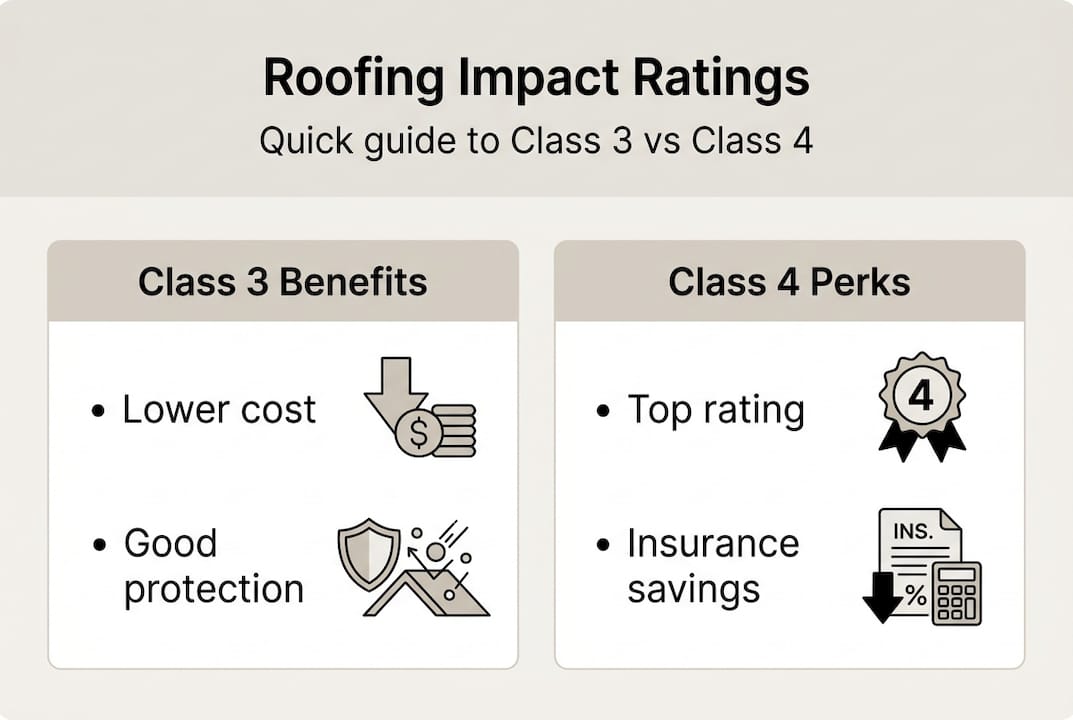
Class 4 is the gold standard, but Class 3 still offers meaningful protection and may come at a lower cost. The right choice depends on your budget, your insurance provider’s requirements, and the specific storm risks in your neighborhood. Homes near open fields or bodies of water often face higher wind speeds and more debris exposure, which pushes the case for Class 4 even further.
Benefits of impact-resistant roofing for Central Florida
Understanding the ratings helps, but what do these features actually mean for property owners battling Central Florida’s intense storms? The benefits go well beyond just avoiding a cracked shingle.
The most immediate benefit is physical protection. Impact-resistant materials dramatically reduce the chance of water intrusion after a storm. A cracked or fractured shingle is an open door for moisture, and in Florida’s humid climate, that moisture leads to mold, rot, and structural damage fast. Fewer cracks mean fewer leaks, and fewer leaks mean lower repair bills.
Financial benefits are also significant. Many insurance companies offer premium discounts for homes with Class 3 or Class 4 rated roofing. As shingle durability research from the Insurance Institute for Business and Home Safety confirms, Class 4 materials perform measurably better in real storm conditions, and insurers price their policies accordingly. The discount varies by provider, but even a 10 to 20 percent reduction in annual premiums adds up quickly over the life of a roof.
| Benefit area | Standard roofing | Impact-resistant roofing |
|---|---|---|
| Post-storm repair frequency | High | Low to moderate |
| Insurance premium potential | Standard rate | Possible 10-30% discount |
| Average lifespan | 15 to 20 years | 25 to 30 years or more |
| Water intrusion risk | Moderate to high | Low |
Additional benefits include:
- Higher resale value, since buyers in storm-prone areas pay attention to roof ratings
- Longer lifespan, reducing the frequency of full replacements
- Lower maintenance costs over time, since impact-resistant materials degrade more slowly
Pro Tip: After any significant storm, check your roof’s sealant strips along the shingle edges. These are often the first point of failure after hail impact, even when the shingle itself looks intact. You can see how roof replacement examples from local projects illustrate the difference proper materials make. Also consider documenting roof damage immediately after storms to support insurance claims and track long-term performance. If you’re weighing a full upgrade, explore Central Florida roof replacement options tailored to the region.
Installation, care, and limitations of impact-resistant roofing
With benefits clear, you need to know how to ensure your impact-resistant roof delivers over time. The material rating only holds up when installation is done correctly. A Class 4 shingle installed with the wrong nail pattern or inadequate underlayment will not perform like a Class 4 shingle in the field.
Installation best practices include:
- Using the manufacturer’s specified fastener type and spacing
- Installing a high-quality synthetic underlayment beneath the primary material
- Sealing all penetrations, including vents, chimneys, and skylights, with compatible materials
- Ensuring proper overlap and alignment so wind cannot lift edges
- Working with a contractor who is certified or trained on the specific product being installed
Care routines matter just as much as installation. Impact-resistant does not mean maintenance-free. Regular inspection, especially after storms, is essential. Clean debris off the surface promptly, since standing organic material accelerates surface degradation. Check the sealant strips along shingle edges after hail events, because as sealant performance research from IBHS shows, sealant strength is critical for maintaining wind resistance after hail impact.
Pro Tip: Schedule a professional inspection within two weeks of any named storm or hail event. Visible damage is only part of the picture. A trained eye catches compromised sealant, lifted edges, and cracked underlayment that a homeowner walking the yard would miss entirely.
Limitations are real and worth knowing. Impact-resistant roofing is not indestructible. Extreme storms, like a direct hit from a Category 3 or higher hurricane, can damage even Class 4 materials. The rating system tests for hail, not sustained 150 mph winds or falling trees. Maintenance gaps also reduce performance over time. A roof that was Class 4 certified at installation but has not been inspected in five years may not perform at that level anymore.
For ongoing guidance, review roof maintenance advice that covers the full inspection cycle. Property managers can also use a commercial roof checklist to stay on schedule. For a step-by-step breakdown, the roof care process and residential roof maintenance guides are both practical starting points.
A practical perspective: What most guides miss about impact-resistant roofing
Most articles stop at the ratings table and call it done. Here is what we have seen after years of working on roofs across Brevard, Volusia, and Orange counties: the gap between a lab rating and a roof that actually holds up is almost always about sealant and maintenance, not the shingle itself.
A Class 4 label gets you in the door with your insurer and gives you a strong starting point. But the IBHS research is clear that even the highest-rated materials can sustain damage in severe storms, and that ongoing maintenance and careful material selection matter most. We have inspected roofs with premium Class 4 shingles that failed because the sealant was never checked after the first hail season.
The uncomfortable truth is that a well-maintained Class 3 roof often outperforms a neglected Class 4 roof. Ratings reward the material. Performance rewards the owner. If you want your roof maintenance wisdom to translate into real protection, treat your post-storm inspection as non-negotiable. And when it’s time to replace or upgrade, lean on local contractors who know Central Florida’s specific storm patterns, not just national product specs. Choosing expert roofing materials with local installation expertise is what actually keeps your home dry.
Ready for durable, impact-resistant roofing in Central Florida?
If you’re ready to move from learning to action, Thomas Roofing and Repair can help. We work across Brevard, Volusia, and Orange counties, installing and repairing roofing systems built specifically for Central Florida’s storm season.

Our team selects materials rated for local conditions and installs them to manufacturer specifications so the performance you pay for is the performance you get. Whether you need a full replacement, a post-storm assessment, or fast emergency help, we’re ready. Explore our storm repair guide to understand the process, learn about our emergency roof repair workflow, or see what storm-ready roof craftsmanship looks like when done right. Contact us for a free estimate today.
Frequently asked questions
How do I identify impact-resistant roofing materials?
Look for a UL 2218 Class 3 or Class 4 label on the product packaging or data sheet. A Class 4 rating means the material survived two hits from a 2-inch steel ball dropped from 20 feet without cracking.
Will impact-resistant roofing lower my insurance premiums?
Many insurers offer discounts for Class 3 or Class 4 rated roofs, though the amount varies by provider. Insurers discount based on actual claims data showing better performance from high-rated materials, so ask your agent directly.
Can impact-resistant roofing prevent all storm damage?
No. Even Class 4 materials can sustain damage in extreme storms, particularly when winds exceed design limits or large debris strikes the surface. The IBHS field data confirms that Class 4 is superior but not indestructible.
What maintenance does impact-resistant roofing require?
Inspect after every major storm, remove debris promptly, and check sealant strips along shingle edges. Sealant strength is the most overlooked factor in maintaining long-term wind and water resistance.
Is impact-resistant roofing worth the investment in Central Florida?
Yes, especially given the region’s active storm season. Verified impact protection reduces repair frequency, supports insurance savings, and extends roof lifespan, making the upfront cost pay off over time.
Recommended
- Roofing Materials – Protecting Your Florida Home
- Roofing Integrity: Protecting Your Central Florida Home
- Roofing Materials: Choosing Wisely in Central Florida
- Roof Replacement in Central Florida – What Homeowners Need to Know
- Roofing Company Orlando, FL
- Roofing Company Titusville, FL
- Roofing Company DeLand, FL