
 407-408-0577
TL;DR:
- Verify that contractors hold a valid Florida CCC or RC roofing license and appropriate insurance.
- Choose local, experienced contractors with strong reputations and verified references.
- Obtain multiple detailed written estimates and ensure contracts include clear scope, warranties, and permits.
Central Florida’s storm season doesn’t give you a second chance. One bad hire can mean a leaking roof, a denied insurance claim, and thousands of dollars in repairs that should never have been necessary. Too many homeowners in Brevard, Volusia, and Orange counties have learned this the hard way after trusting an unlicensed or out-of-town contractor who disappeared when problems surfaced. The good news is that hiring the right roofer isn’t complicated once you know what to look for. This guide walks you through every critical step, from verifying credentials to reading the fine print, so you can make a confident decision before the next storm rolls in.
Table of Contents
- Verify licenses and credentials
- Prioritize experience and local reputation
- Compare estimates: price, scope, and hidden costs
- Confirm protection: warranties, insurance, and contracts
- Why credentials aren’t enough: the questions only locals ask
- Get expert roofing help for your Central Florida home
- Frequently asked questions
Key Takeaways
| Point | Details |
|---|---|
| Check all licenses | Always ensure your roofer holds a valid Florida roofing license (CCC or RC) and verify it online. |
| Choose local experience | Contractors with a strong local track record are best for Central Florida’s unique weather and service needs. |
| Get multiple estimates | Secure at least three written quotes and focus on value, not just price. |
| Insist on protection | Never hire without written contracts, warranties, and proof of insurance for your peace of mind. |
Verify licenses and credentials
After understanding the stakes, the first critical step is ensuring your potential roofer is legitimate. In Florida, this isn’t optional. It’s the law, and it protects you in ways that go far beyond a piece of paper.
Florida requires roofing contractors to hold a Certified (CCC) or Registered (RC) license. A general contractor license does not qualify for roof work, no matter what a salesperson tells you. This distinction matters enormously. A CCC license means the contractor can work anywhere in the state. An RC license limits them to the county or municipality where they registered. Knowing which one your contractor holds tells you a lot about their scope and accountability.
You can verify contractor licenses directly through the Florida Department of Business and Professional Regulation’s MyFloridaLicense.com portal. It takes about two minutes. Enter the contractor’s name or license number and you’ll see their current status, any disciplinary history, and whether the license is active or expired. Don’t skip this step, even if a contractor comes highly recommended.
Beyond the license itself, you need to confirm two types of insurance before anyone sets foot on your roof:
- General liability insurance: Covers property damage if something goes wrong during the job.
- Workers’ compensation insurance: Covers medical costs if a crew member is injured on your property. Without it, you could be held liable.
Always request a certificate of insurance directly from the contractor’s insurer, not just a copy the contractor hands you. A quick call to the insurance company confirms the policy is active.
Florida law demands a CCC or RC license for roof work. No exceptions. A contractor who can’t produce one on request is a contractor you should walk away from immediately.
Understanding how to choose a Central Florida roofing contractor starts here. Watch for these red flags: a license that expired recently, a license number that doesn’t match the company name in the database, or a contractor who hesitates to provide their license number at all. Certified roofer credentials aren’t just bureaucratic formalities. They signal that a contractor has passed state exams, maintains ongoing education, and carries the financial responsibility to back their work.
Pro Tip: Ask for the license number and a certificate of insurance before you schedule an estimate. Any reputable contractor will provide both without hesitation. If they stall or make excuses, move on.
Prioritize experience and local reputation
Once credentials are confirmed, the next step is to assess the contractor’s actual track record. A license tells you a roofer is legally allowed to work. Their reputation tells you whether they’re actually good at it.
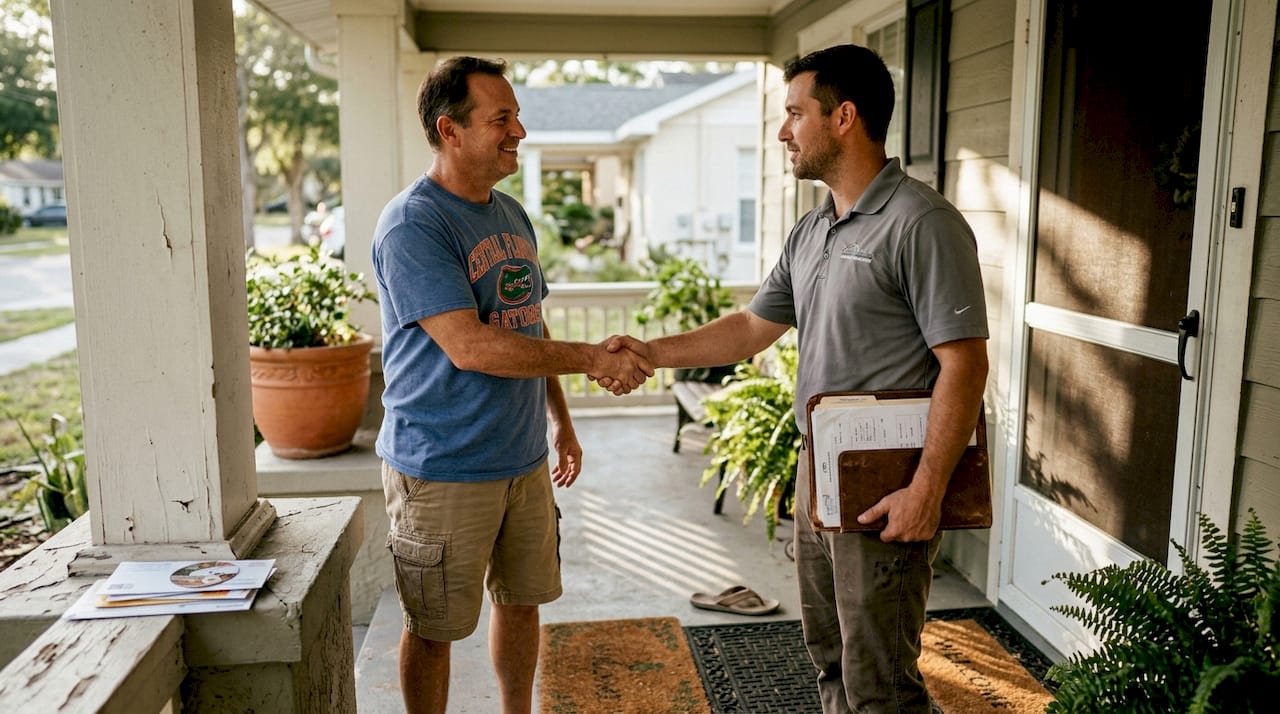
Local experience is especially valuable in Central Florida. Contractors who have worked through multiple hurricane seasons understand how wind-driven rain behaves, which materials hold up under intense UV exposure, and how to install roofs that meet Florida’s strict building codes. These aren’t skills you pick up overnight.
Start your reputation check online. Google reviews, the Better Business Bureau, and local community Facebook groups are all useful. Look for patterns rather than individual complaints. One bad review among dozens of glowing ones is different from a pattern of complaints about poor communication or unfinished work. Licensed, insured, and well-reviewed contractors are a universal standard, and avoiding storm chasers is equally critical.
Here’s what to watch for when evaluating reputation:
- Consistent 4-star or higher ratings across multiple platforms, not just one.
- Detailed responses to negative reviews, which show the company takes feedback seriously.
- Verifiable project photos on their website or social media, not just stock images.
- A physical local address, not just a P.O. box or out-of-state headquarters.
- References you can actually call, not just names on a sheet.
After a major storm, a specific threat appears: storm chasers. These are contractors who flood into affected areas, often from other states, offering quick deals and fast fixes. They may be licensed somewhere, but they’re rarely accountable here. They collect payment, do substandard work, and leave town before the first leak shows up. The benefits of local roofing contractors go beyond familiarity. Local pros have a reputation to protect in your community. They’ll answer the phone when you call six months later.
Pro Tip: When you call a reference, ask two specific questions: Did the crew show up on time every day, and did the contractor address any post-job concerns promptly? These two factors reveal more about a company’s character than any review.
Compare estimates: price, scope, and hidden costs
Even reputable contractors can bid differently. Knowing what to ask and compare helps prevent surprises once the job starts.
Get at least three written estimates. Not verbal quotes. Not ballpark figures over the phone. Written estimates that detail every line item. Multiple estimates are essential, and the National Roofing Contractors Association emphasizes credentials and project details over the lowest price. The cheapest bid is rarely the best value.
Here’s a simple comparison table to help you evaluate bids side by side:
| Item | Contractor A | Contractor B | Contractor C |
|---|---|---|---|
| Material type and brand | Listed | Listed | Vague |
| Labor cost breakdown | Itemized | Lump sum | Itemized |
| Permit fees included | Yes | No | Yes |
| Debris removal | Yes | Yes | Not mentioned |
| Workmanship warranty | 5 years | 2 years | 1 year |
| Estimated completion time | 2 days | 3 days | 1 day |
When a line item is vague or missing, ask about it directly. A contractor who can’t explain their own estimate is a warning sign.
Follow these steps when collecting and comparing estimates:
- Request all estimates within the same week so pricing reflects current material costs.
- Confirm permit fees are included, since pulling permits is legally required in Florida for most roofing work.
- Ask what happens if hidden damage is found once old materials are removed. Get their process in writing.
- Compare materials by brand and grade, not just category. “Architectural shingles” covers a wide quality range.
- Clarify payment terms before signing anything. Avoid contractors who demand more than 10-15% upfront.
Cost drivers in Central Florida include roof pitch (steeper roofs cost more to work on), material choice, square footage, and the complexity of features like skylights or multiple valleys. Getting roofing estimates in Orlando and Central Florida from local contractors also ensures pricing reflects regional labor rates and material availability. An accurate roof estimate should never leave you guessing.
Confirm protection: warranties, insurance, and contracts
Before you sign, protect yourself further with essential documents and guarantees. This step is where many homeowners get burned, not because they skipped the paperwork, but because they didn’t read it carefully enough.
There are two types of warranties you need to understand:
| Warranty type | What it covers | Typical length | Who provides it |
|---|---|---|---|
| Manufacturer warranty | Defects in roofing materials | 20 to 50 years | Material manufacturer |
| Workmanship warranty | Installation errors and labor quality | 1 to 10 years | Roofing contractor |
Both matter. A manufacturer warranty can be voided if the materials are installed incorrectly. That means a strong workmanship warranty is just as important as the product warranty itself.
Florida requires adequate insurance, including both general liability and workers’ compensation, and strongly recommends that all contractor promises be documented in writing. If it’s not in the contract, it doesn’t exist legally.
Your contract must include these clauses at minimum:
- Full scope of work, including materials, quantities, and specific brands.
- Start and projected completion dates, with a process for delays.
- Payment schedule tied to project milestones, not arbitrary dates.
- Warranty terms for both labor and materials, in plain language.
- Permit responsibility, confirming the contractor will pull and manage all required permits.
- Cleanup and disposal, specifying who removes old materials and debris.
Everything in writing, every time. Florida’s own consumer protection guidance reinforces this. A handshake deal has no legal standing when a dispute arises.
Understanding professional roofing protections means knowing that a well-written contract isn’t just a formality. It’s your primary defense if the work falls short. Never let a contractor pressure you into signing something incomplete or unclear.
Why credentials aren’t enough: the questions only locals ask
Most hiring guides stop at the paperwork. Check the license, get three quotes, read the contract. That’s solid advice, but it misses something important. The real test of a Central Florida roofer comes after the job is done, specifically when the first summer storm hits and you notice a soft spot on your ceiling.
We’ve seen it happen. A contractor checks every box on paper but is completely unreachable when a warranty issue surfaces three months later. The license is valid. The insurance was real. But the owner lives four hours away and the crew has moved on to the next job. That’s the gap that standard checklists don’t address.
The questions worth asking go deeper. Where is the owner based? Has this crew personally navigated a named storm in Central Florida? What’s their process for post-job inspections? Do they do a final walkthrough with the homeowner before collecting the last payment? Experienced Winter Park roofing contractors and other long-standing local teams have answers to these questions because they’ve lived through the situations that create them.
Pro Tip: Ask the contractor to name two or three specific storms they’ve repaired roofs after in your county. A contractor with genuine local experience will answer immediately and specifically.
Get expert roofing help for your Central Florida home
If you’ve made it through this guide, you now have a solid framework for vetting any roofer who knocks on your door or shows up in a search result. But knowing the steps and having the right team in your corner are two different things.

At Thomas Roofing and Repair, we’re fully licensed, insured, and rooted in the Central Florida communities we serve across Brevard, Volusia, and Orange counties. Whether you need to review our storm damage repair guide after a recent weather event, explore roof installation options in Horizon West, or need emergency roof repair solutions right now, we’re ready to help. Contact us today for a free, no-pressure estimate from a team that will still be here long after your roof is done.
Frequently asked questions
How do I check a roofer’s license in Florida?
Visit MyFloridaLicense.com and search by the contractor’s name or license number to instantly confirm whether they hold an active CCC or RC roofing license. A general contractor license is not a valid substitute for roofing work.
Why avoid storm chaser roofing contractors?
Storm chasers typically follow disaster events from out of state, lack local accountability, and often disappear before warranty problems surface. A local contractor with a verifiable reputation is always the safer choice.
How many estimates should I get for a new roof in Central Florida?
Get at least three written estimates so you can compare scope, materials, warranty terms, and pricing side by side. Multiple estimates help you spot outliers and make a more informed decision.
What must be included in a roofing contract?
Your contract should clearly list the full scope of work, specific materials and brands, start and completion dates, payment schedule tied to milestones, warranty terms for both labor and materials, and confirmation that the contractor will pull all required permits.