
TL;DR:
- Insurance adjusters inspect roofs for damage, document findings, and determine insurance payouts based on coverage. Homeowners should carefully document, attend inspections, and understand that adjusters work for insurers, not them, to maximize claim outcomes. Public adjusters are beneficial for large or disputed claims, but thorough preparation and contractor involvement improve settlement results for homeowners.
An insurance adjuster is the person who inspects your roof, determines what caused the damage, and decides how much your insurance company will pay. The role of adjuster in roof damage claims sits at the center of every settlement decision you will face as a homeowner. Adjusters are not neutral parties. They work for the insurer, and their findings directly shape your payout. Understanding what they do, how they think, and how to work with them is the difference between a fair settlement and a shortfall that comes out of your pocket.
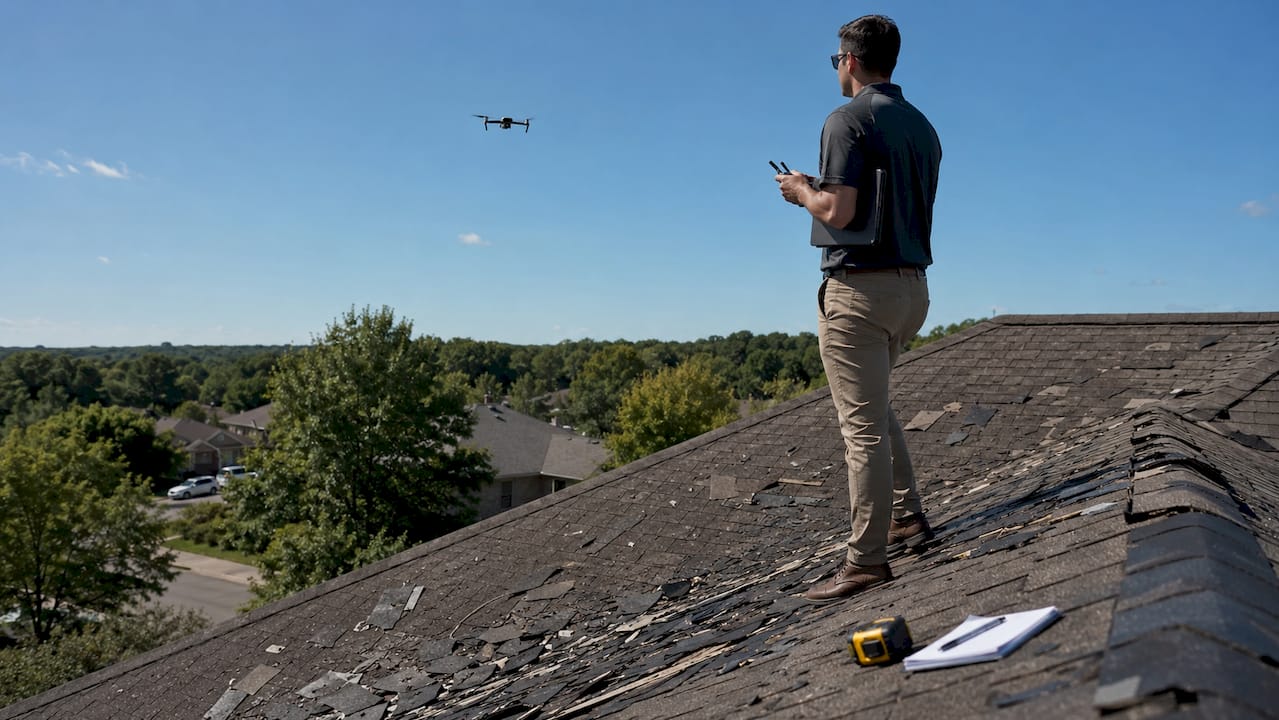
How do insurance adjusters assess roof damage?
The roof damage assessment process follows a clear sequence. Adjusters inspect the roof by climbing it or using drones, photographing every area of concern, and measuring the affected sections. They check shingles, flashing, vents, and gutters for signs of damage. They also document the directional pattern of damage, the age of the roof, and any pre-existing issues that could affect the claim decision.
What tools and software do adjusters use?
After the physical inspection, adjusters enter their findings into estimating software. Xactimate is the industry standard for translating observed damage into itemized cost estimates. A field adjuster collects the measurements and photos, while a desk adjuster prices the scope and issues the settlement offer. Strong field documentation reduces back-and-forth between the two and speeds up your settlement.
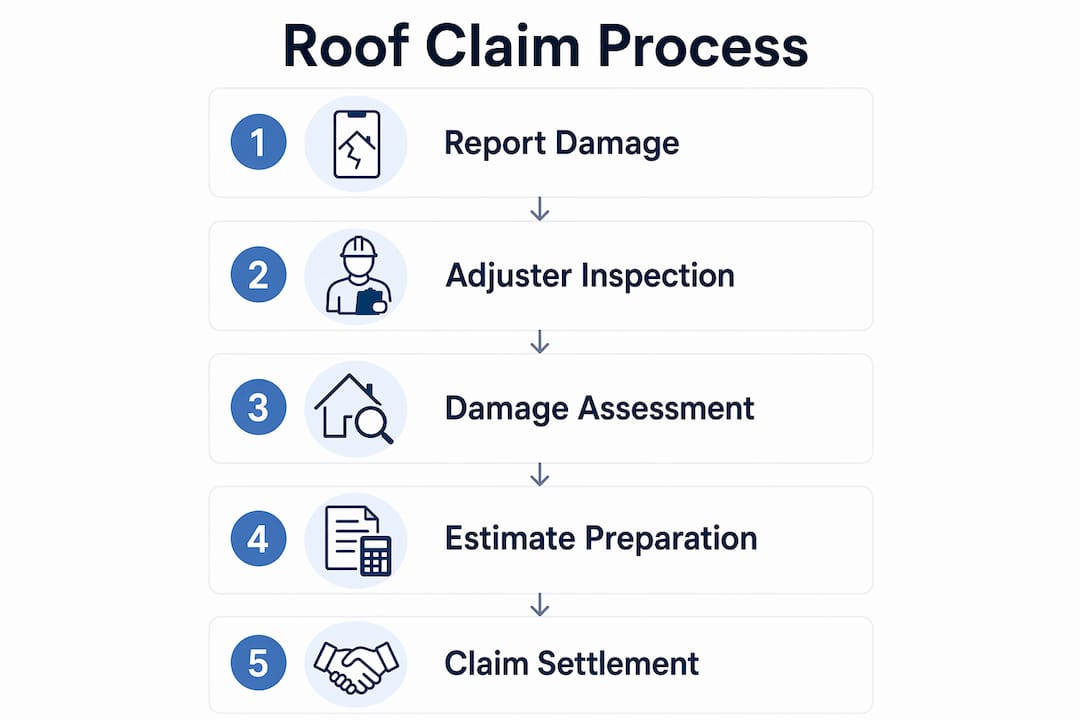
How long does it take to get an estimate?
Adjusters typically issue a written estimate within 14 to 21 days of the roof inspection, depending on the insurer and claim complexity. Catastrophe situations, such as a major hurricane hitting Central Florida, can push that timeline out further. Ask your adjuster for a specific delivery date at the end of the inspection visit.
Pro Tip: Take your own photos of every area the adjuster photographs. Your images create an independent record that supports your claim if disputes arise later.
- The adjuster schedules and conducts the physical roof inspection.
- Damage is photographed, measured, and documented by zone.
- Findings are entered into estimating software like Xactimate.
- A desk adjuster reviews the scope and prices the line items.
- A written estimate is issued, typically within 14 to 21 days.
What factors determine whether roof damage is covered?
Coverage decisions hinge on causation. Adjusters distinguish between damage caused by covered perils such as wind, hail, fallen trees, and fire versus damage caused by wear, aging, or improper installation. That distinction drives whether your claim is accepted or denied. A shingle that cracked during a hailstorm is covered. A shingle that cracked because it was 25 years old is not.
Covered perils under a standard homeowner’s policy typically include:
- Wind and hail: The most common storm-related claims in Florida.
- Fallen trees or debris: Covered when the impact causes direct structural damage.
- Fire: Covered regardless of origin in most standard policies.
- Lightning: Covered as a named peril in nearly all homeowner policies.
Non-covered causes adjusters flag regularly include:
- Gradual wear and tear from age.
- Lack of maintenance, such as clogged gutters causing water backup.
- Improper installation by a previous contractor.
- Damage that predates the current policy period.
“Storm roof assessment reports serve as the official story of damage for claim evaluation. Clearer reports ease the adjuster’s job and strengthen claims.” — NRCIA
Adjusters also verify that the damage occurred within the active policy period. They cross-reference weather data, satellite imagery, and inspection findings to confirm timing. Your policy deductible, coverage limits, and any exclusions all factor into the final settlement number. Read your declarations page before the adjuster arrives so you understand your own policy terms.
How do homeowners best work with adjusters?
Homeowners improve claim outcomes by being present during inspections, providing thorough photo documentation, and having a roofing contractor attend to highlight all damage and required repairs. Adjusters welcome evidence. They are not trying to miss damage. They are working from what they can observe, and your documentation fills in the gaps.
Pro Tip: Organize your photos by roof zone before the adjuster arrives. Label each image with the location and date. A location-specific damage scope that links photos to roof components improves adjuster accuracy and claim outcomes.
Practical steps to take before and during the adjuster visit:
- Document before mitigation starts. Photos taken before tarping or repairs carry full evidentiary weight. Photos taken after work begins may be discounted as not showing original damage.
- Bring your own contractor. A roofing contractor who knows Xactimate can point out line items the adjuster may have missed and support a more complete scope.
- Ask questions during the visit. Ask the adjuster what they are documenting, what they are excluding, and why. You have the right to understand every finding.
- Get everything in writing. Request the adjuster’s name, contact information, and claim number before they leave.
Adjusters represent the insurer, not you. That is not a criticism. It is simply the structure of the relationship. Treating the inspection as a cooperative documentation session, rather than an adversarial one, tends to produce better results than confrontation.
Company adjusters vs. public adjusters: what is the difference?
The adjuster role in roofing claims splits into two distinct types, and knowing which one you are dealing with changes your strategy.
| Feature | Company adjuster | Public adjuster |
|---|---|---|
| Who employs them | The insurance carrier | The homeowner |
| Fiduciary duty | Owed to the insurer | Owed to the homeowner |
| Primary role | Inspect, document, and estimate | Advocate, negotiate, and maximize settlement |
| Cost to homeowner | None | Typically 10–15% of the claim payout |
| Best suited for | Standard, straightforward claims | Large, complex, or disputed claims |
Company adjusters owe their fiduciary duty to the carrier, not to you. Public adjusters work exclusively for the homeowner and charge a fee, typically 10–15% of the final payout. That fee is worth considering on large claims where the initial settlement offer is significantly below actual repair costs. For a straightforward wind damage claim with a clear scope, a public adjuster may not add enough value to justify the cost. For a complex storm loss involving structural damage, interior water intrusion, and disputed causation, a public adjuster can recover substantially more than the initial offer.
What does a typical roof damage claim workflow look like?
A typical roof damage claim moves through five stages from your first call to the insurer through final settlement. Knowing the sequence helps you stay ahead of delays and avoid missteps.
- Homeowner files the claim. You report the damage, gather initial photos, and receive a claim number.
- Carrier assigns a field adjuster. The insurer schedules an inspection, often within 7 to 14 days of the claim filing.
- Field adjuster inspects and documents. Measurements, photos, and damage notes are entered into Xactimate or equivalent software.
- Desk adjuster prices the scope. The desk adjuster reviews the field findings, applies pricing, and generates the settlement offer.
- Settlement is issued or negotiated. Your contractor can file supplements with additional documentation to recover costs the initial scope missed.
Contractors fluent in Xactimate can amplify the adjuster’s scope with line-item references, photos linked to each damaged component, and supplements that recover additional costs. That contractor involvement is not adversarial. It is the standard way complex claims get fully resolved. A Florida storm damage assessment follows this same workflow, with the added complexity of hurricane and tropical storm damage patterns that require specific documentation.
| Stage | Key action | Who is responsible |
|---|---|---|
| Claim filing | Report damage and gather photos | Homeowner |
| Adjuster assignment | Schedule field inspection | Insurance carrier |
| Field inspection | Document and measure damage | Field adjuster |
| Scope pricing | Review and price line items | Desk adjuster |
| Supplement filing | Add missed items with documentation | Contractor and homeowner |
Key Takeaways
The role of an insurance adjuster in roof damage claims is to inspect, document, and price the damage based on policy coverage, not to advocate for the homeowner.
| Point | Details |
|---|---|
| Adjusters work for the insurer | Company adjusters owe their duty to the carrier, so homeowners must advocate for themselves. |
| Documentation before mitigation is critical | Photos taken before tarping or repairs carry full evidentiary weight and prevent disputes. |
| Xactimate drives the settlement number | Adjusters use this software to price every line item, so contractor fluency in it matters. |
| Public adjusters serve a specific purpose | Hiring one makes sense for large or disputed claims, not routine straightforward losses. |
| Being present improves outcomes | Homeowners who attend inspections and bring contractors consistently receive more complete scopes. |
What I have learned from watching homeowners navigate adjuster visits
The biggest mistake I see homeowners make is treating the adjuster visit like a passive event. They let the adjuster walk the roof alone, hand over a single photo from their phone, and wait for a check. That approach almost always produces an underestimated scope.
The second mistake is misreading the adjuster’s role. Adjusters are not enemies. They are fact-finders operating within policy language and settlement authority limits. Understanding that adjusters function as the link between the homeowner and insurer changes how you interact with them. You stop arguing and start documenting.
The third mistake is allowing mitigation to start before capturing sufficient evidence. Poor documentation before tarping can reduce supplement payouts or undermine damage expansion claims later. Take every photo you can before a single tarp goes up. Organize them by roof zone. Include something in the frame that shows scale.
The homeowners who get the best outcomes are the ones who show up prepared. They have a contractor with them who speaks the adjuster’s language. They have photos organized by location. They ask specific questions and write down the answers. That preparation is not aggressive. It is professional, and adjusters respond to it positively.
— Thomasroofingandrepair
Thomasroofingandrepair is ready to support your roof damage claim
Facing an adjuster visit without a professional in your corner puts you at a disadvantage. Thomasroofingandrepair helps Central Florida homeowners through every stage of the roof damage insurance process, from the initial roof inspection in Central Florida through full repair or replacement.

The team at Thomas Roofing and Repair documents damage thoroughly, attends adjuster inspections, and prepares contractor scopes that align with Xactimate line items. Whether you need storm damage repair in Titusville or a full replacement after a major loss, Thomasroofingandrepair brings the documentation, the expertise, and the local knowledge to get your claim handled right. Contact Thomasroofingandrepair for a free estimate and let a professional stand beside you when it matters most.
FAQ
What does an insurance adjuster do during a roof inspection?
An insurance adjuster inspects shingles, flashing, vents, and gutters, photographs and measures all damage, and documents findings to produce an itemized repair or replacement estimate. The adjuster also determines whether the damage was caused by a covered peril or by wear and aging.
How long does a roof damage claim take after the adjuster visits?
Adjusters typically issue a written estimate within 14 to 21 days of the inspection, though catastrophe events can extend that timeline. Homeowners can ask the adjuster for a specific delivery date at the end of the visit.
Should I hire a public adjuster for my roof damage claim?
A public adjuster makes sense for large, complex, or disputed claims where the initial settlement offer is significantly below actual repair costs. For straightforward claims with clear damage and a cooperative insurer, the 10–15% fee may outweigh the benefit.
Can my roofing contractor attend the adjuster inspection?
Yes, and bringing a contractor is one of the most effective steps you can take. A contractor familiar with Xactimate can identify missed line items, support the damage scope, and file supplements that recover additional costs after the initial estimate is issued.
What happens if the adjuster misses damage on my roof?
Your contractor can file a supplement with additional photos, measurements, and line-item documentation to recover costs for damage not included in the original scope. This is a standard part of the claims process and does not require starting the claim over.