
TL;DR:
- Orlando homeowners face faster gutter deterioration due to hurricane season and dense tree canopies. Regular ground-level inspections, timely repairs, and multiple cleanings annually help prevent costly water damage and soffit rot. Professional services recommend replacing extensive damage with system-wide repair over localized fixes for long-term durability.
Gutter repair is defined as the process of restoring a home’s drainage system to prevent water from damaging the roof, fascia, foundation, and interior walls. Orlando homeowners face a specific challenge: the city’s storm season runs from june through november, and the dense tree canopy drops debris year-round. Both factors accelerate gutter wear faster than in most other U.S. cities. Thomasroofingandrepair works with Central Florida homeowners daily and sees the same pattern repeat: a clogged or damaged gutter ignored for one season turns into a soffit rot repair costing several times more. Catching problems early is always the cheaper path.
How to assess gutter repair in Orlando after a storm
The first step after any storm is a ground-level visual inspection. You do not need to climb a ladder to spot the most obvious warning signs. Walk the perimeter of your home and look for these issues:
- Sagging sections: Gutters pulling away from the fascia board indicate failed hangers or rotted wood behind them.
- Separated seams: Gaps between gutter sections let water pour directly onto your foundation.
- Overflow stains: Dark streaks on siding below the gutter line mean water is spilling over rather than draining through downspouts.
- Pooling water: Standing water near your foundation after rain points to a blocked or disconnected downspout.
- Visible cracks or holes: Even small splits expand quickly under Florida’s heat and humidity.
Once you identify a problem area, use binoculars or a camera with zoom to get a closer look before climbing. Inspecting storm roof damage safely starts at ground level and works upward.
The repair versus replacement question comes down to how widespread the damage is. Isolated damage like a loose hanger or a single leaking seam almost always warrants repair. Widespread sagging across multiple sections, or a system still hung with old spikes, typically needs full replacement.
Pro Tip: Take photos of every damaged section before you touch anything. Timestamped photos support insurance claims and help a contractor give you an accurate estimate without a second visit.
What tools and materials do you need for gutter repair?
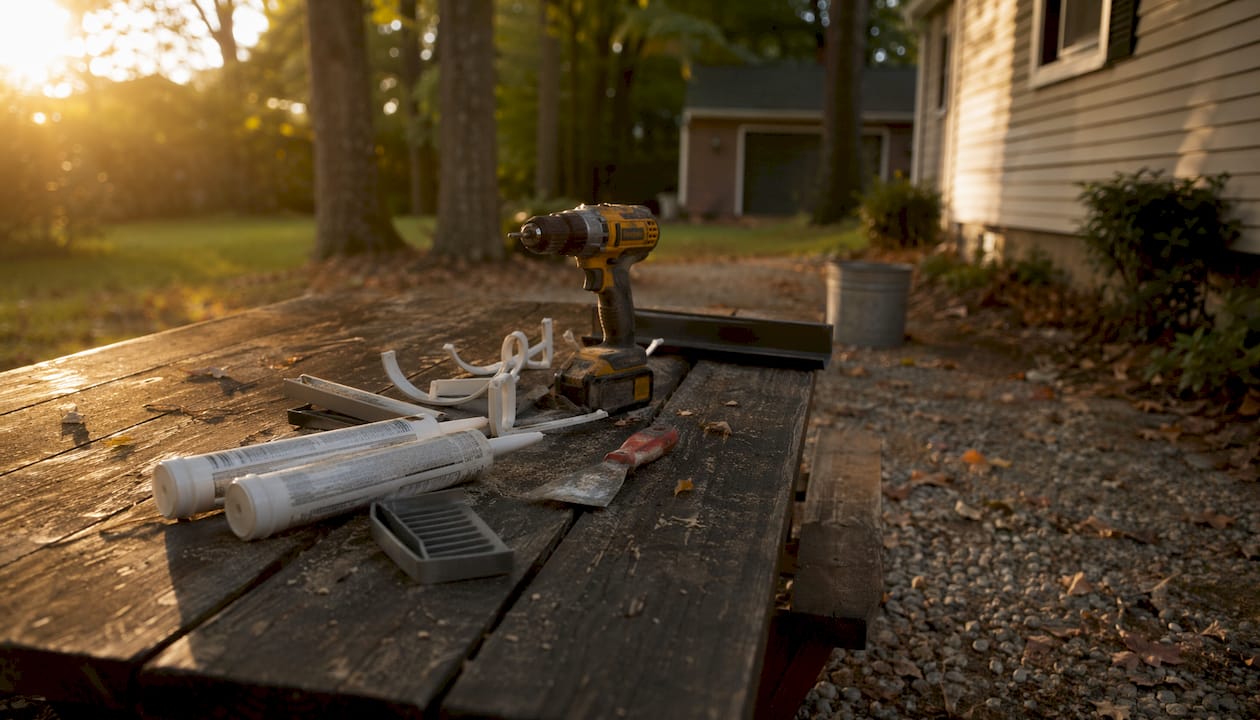
Having the right supplies on hand before you start saves time and prevents half-finished repairs. The table below covers the core items for most residential gutter repair jobs.
| Tool or Material | Purpose |
|---|---|
| Gutter sealant (silicone or polyurethane) | Seals leaking joints and small cracks |
| Screw-secured hangers | Replaces failed spike hangers for lasting support |
| Sheet metal screws (1.5 inch) | Fastens loose gutter sections to fascia |
| Gutter patch kit or aluminum flashing | Covers holes larger than a quarter inch |
| Stiff-bristle brush | Cleans debris from joints before sealing |
| Cordless drill | Drives screws quickly and accurately |
| Caulking gun | Applies sealant evenly |
| Extension ladder (fiberglass preferred) | Provides safe access to gutters |
| Work gloves and safety glasses | Protects hands and eyes from debris and sharp edges |
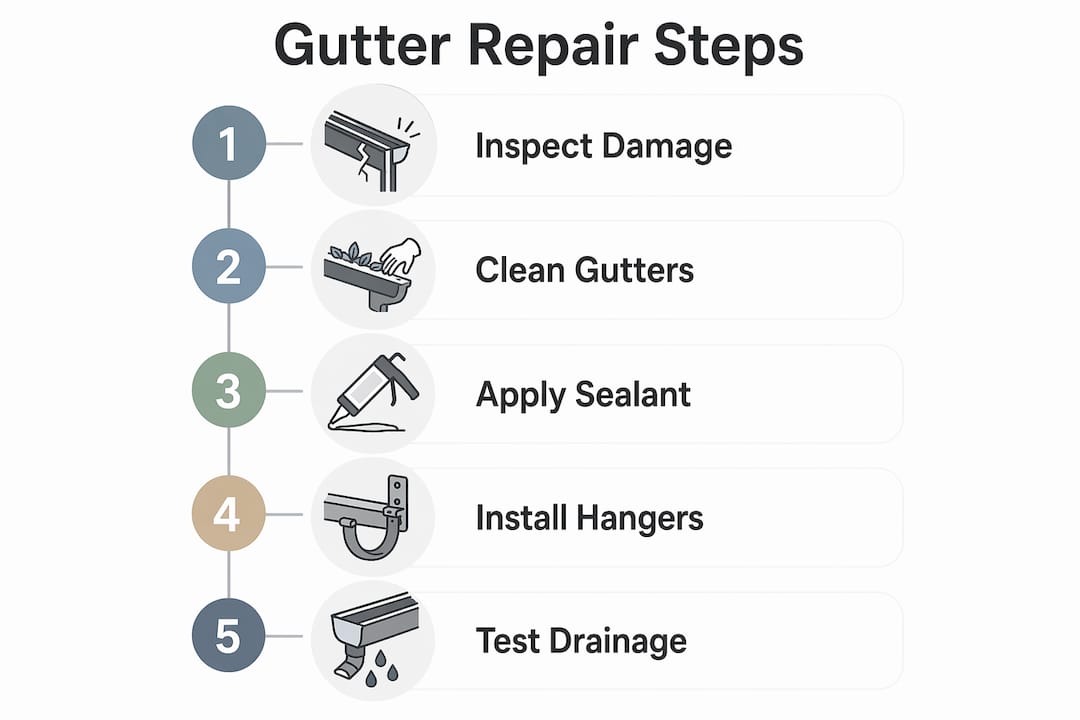
Screw-secured hangers outperform spike hangers in Florida’s climate because thermal expansion and humidity cause spikes to work loose over time. Replacing spikes with screws during any repair job adds years to the system’s life at minimal cost.
Most of these materials are available at Home Depot or Lowe’s locations throughout the Orlando metro. Buy slightly more sealant than you think you need. Florida’s humidity means joints dry slower, and you may need a second application.
Pro Tip: Clean and dry every surface before applying sealant. Applying it over wet or dirty metal is the single most common reason DIY gutter repairs fail within one season.
Step-by-step guide to fixing common gutter problems
Sealing a leaking joint or crack
- Clear all debris from the affected section using a brush and garden hose.
- Dry the area completely. Use a heat gun or wait for a dry, sunny day.
- Apply gutter sealant generously to the inside of the joint, pressing it into the seam.
- Smooth the sealant with a gloved finger and allow it to cure for the manufacturer’s recommended time, typically 24 hours.
- Test with a garden hose before the next rain.
Reinstalling a loose or sagging hanger
- Remove the old spike or failed screw using a drill or pry bar.
- Check the fascia board behind the hanger location for soft spots or rot. Replace rotted wood before proceeding.
- Position a new screw-secured hanger at the same location or shift it two inches if the original hole is stripped.
- Hanger spacing every 2–3 feet provides the stability gutters need against Florida’s wind and rain loads. Add hangers if the existing spacing is wider.
- Confirm the gutter still slopes toward the downspout at roughly a quarter inch of drop per 10 feet of run.
Clearing a clogged downspout
- Remove the downspout elbow at the bottom and flush the pipe from the top with a garden hose at full pressure.
- If the clog holds, feed a plumber’s snake or a dedicated downspout cleaning tool from the top.
- Once clear, flush again and watch the exit point to confirm full flow.
- Reattach the elbow and check the downspout strap. Tighten or replace loose straps to keep the pipe secure against the wall.
Patching a hole
- Cut a patch from aluminum flashing or use a pre-cut gutter patch kit, sized at least two inches larger than the hole on all sides.
- Clean and dry the area around the hole.
- Apply sealant around the hole’s perimeter, press the patch firmly into place, and apply a second bead of sealant around the patch edges.
- Allow full cure time before testing.
Pro Tip: Orlando’s afternoon thunderstorms can arrive with little warning from june through september. Schedule repairs for morning hours when skies are typically clear, and never apply sealant if rain is forecast within 24 hours.
A common mistake is fixing the visible damage without checking the downspout extension at ground level. Extensions should direct water at least four feet away from the foundation. Short or missing extensions are a leading cause of foundation moisture problems in Central Florida homes.
When a section is crushed, heavily corroded, or longer than six feet of continuous damage, replacement of that section is more cost-effective than patching. Repair vs. replacement decisions follow the same logic for gutters as for roofing: isolated damage favors repair, systemic failure favors replacement.
Maintenance tips to keep Orlando gutters working year-round
Regular maintenance is the most affordable gutter strategy available to any homeowner. Orlando homes need gutter cleaning 3–4 times per year due to storm frequency and tree canopy density. Homes under heavy oak or pine coverage may need five or more cleanings annually. That frequency surprises most homeowners who are used to a once-a-year schedule.
A practical maintenance calendar for Orlando looks like this:
- February or March: Clean before spring pollen and storm season buildup begins.
- May: Clear debris before the june storm season starts.
- September: Mid-season cleaning to handle summer accumulation.
- December: Post-storm-season cleaning to remove fall debris and prepare for winter rain.
Clogged gutters cause overflow water to saturate fascia boards and seep into soffit and rafter tails. In Central Florida’s humidity, that moisture accelerates wood rot faster than in drier climates. By the time you see soft spots on your soffit, the damage has usually been building for months.
Gutter guards reduce debris accumulation and lower cleaning frequency. Gutter guards do not eliminate maintenance entirely in Orlando’s environment, though. Fine debris like pine needles and seed pods still work past most guard systems. Think of guards as a tool that extends the interval between cleanings, not one that eliminates them.
A roof maintenance checklist that includes gutters as a line item keeps the whole system working together. Gutters and roofing are connected: a failed gutter sends water back under the drip edge and into the roof deck.
Key Takeaways
Timely gutter repair in Orlando prevents water damage that costs far more to fix than the original gutter problem.
| Point | Details |
|---|---|
| Inspect after every storm | Walk the perimeter and look for sagging, separated seams, and overflow stains before climbing. |
| Repair isolated damage fast | A loose hanger or single leaking seam is a repair job; widespread sagging or old spike systems need replacement. |
| Use screw-secured hangers | Screw hangers outperform spikes in Florida’s heat and humidity and add years to any gutter system. |
| Clean gutters 3–4 times per year | Orlando’s storm frequency and tree canopy demand more frequent cleaning than most U.S. cities. |
| Watch for soffit rot | Clogged gutters cause overflow that saturates fascia and soffit boards, creating hidden structural damage. |
What I’ve learned from watching Orlando gutters fail
The repair that gets skipped in october is the one that turns into a $2,000 soffit job by march. I’ve seen this pattern enough times to say it plainly: Orlando homeowners consistently underestimate how fast water damage compounds in this climate. The combination of heavy rain, high humidity, and organic debris creates conditions that punish neglect faster than almost anywhere else in the country.
The repair versus replacement question trips people up more than any other decision. My honest read is this: if more than a third of your gutter system shows damage, replacement is almost always cheaper over a five-year horizon than repeated spot repairs. Seamless aluminum installation runs $6–$12 per linear foot in Florida. That number sounds high until you price out fascia board replacement, soffit repair, and interior water damage remediation.
DIY repairs make sense for a single leaking joint or a loose hanger. They stop making sense when the fascia behind the gutter is soft, when multiple sections sag, or when you are not comfortable on a ladder at roof height. At that point, the risk of injury or a missed diagnosis outweighs the savings. Thomasroofingandrepair offers free estimates, which means you can get a professional read on the scope of the problem before committing to anything.
The homeowners who come out ahead are the ones who treat gutter maintenance as a scheduled task, not a reaction to a visible problem. Set four calendar reminders per year. Walk the perimeter after every named storm. Catch the small stuff before it becomes the expensive stuff.
— Results
Thomasroofingandrepair: professional gutter and storm repair for Orlando homes
Thomas Roofing and Repair serves homeowners across Central Florida with gutter repair, gutter installation, and full storm damage restoration. The team handles everything from a single leaking seam to complete system replacement, with free estimates and no-pressure assessments tailored to your home’s specific condition.

After a storm, fast action matters. Thomasroofingandrepair’s storm damage repair guide walks you through what to document, what to fix immediately, and when to call a professional. For homeowners in Brevard, Volusia, and Orange counties, the team is available for inspections, repairs, and full roof and exterior repair services when the damage goes beyond the gutters. Request your free estimate today and get a clear picture of what your home actually needs.
FAQ
How much does gutter repair cost in Orlando?
National gutter repair averages around $384, with a typical range of $215 to $685 depending on building height, materials, and labor. Orlando projects may vary based on storm damage complexity and system age.
How often should I clean my gutters in Orlando?
Most Orlando homes need gutter cleaning 3–4 times per year due to storm frequency and tree coverage. Homes under heavy tree canopy may need five or more cleanings annually.
When should I repair vs. replace my gutters?
Repair isolated damage like a single loose hanger or leaking seam. Replace the system when sagging is widespread, the gutters are spike-hung, or more than a third of the run shows damage.
What causes soffit rot in Central Florida homes?
Clogged gutters overflow and saturate fascia boards, which then wick moisture into soffit and rafter tails. Florida’s humidity accelerates the rot, often creating hidden structural damage before any visible signs appear.
What should a professional gutter repair estimate include?
A complete estimate should specify footage, material gauge, downspout details, color, removal costs, fascia repair scope, and warranty terms. Detailed quotes allow accurate comparisons between contractors and prevent surprise charges.