
Roof repair in the winter is not only possible — it’s often necessary. Waiting until spring when you have a missing shingle or an active leak can turn a manageable fix into a mold problem, rotting decking, or structural damage. The key condition professionals work around is temperature: below 40°F, asphalt shingles become brittle and their factory adhesive strips stop sealing on their own. That single threshold shapes every decision a qualified roofer makes in cold weather.
Here’s what that means in practice:
- Repairs and replacements are feasible in winter with the right techniques and materials
- 40°F is the industry threshold below which manual hand-sealing with roofing cement becomes mandatory
- Shingles must be stored in a heated trailer or truck until the moment of installation
- Projects take longer than in summer due to shorter daylight hours and weather-related pauses
- Work stops entirely during active storms, high winds, or icy conditions
What types of roof repairs can actually be done in winter?
Most targeted repairs are fair game even in January. Full replacements require more planning, but they happen too.
Common repairs that work well in cold weather:
- Shingle replacement: Wind tears off a section; a crew replaces those shingles using cold-weather hand-sealing techniques. Straightforward, focused, effective.
- Flashing resealing: The metal flashing around chimneys, skylights, and vent pipes expands and contracts with temperature swings, breaking the sealant bond. Rediagnosing and resealing these spots is a standard winter job.
- Ice dam fixes: Ice dams form when heat escapes the attic, melts roof snow, and that water refreezes at the eaves. Addressing the leak path and improving attic ventilation is a classic cold-weather repair.
- Pipe boot replacement: Rubber boots crack over time and let water follow the pipe straight into the attic. Swapping one out is a focused, manageable task in any season.
Material considerations matter. Asphalt shingles installed without manual sealant may not seal until spring, leaving them vulnerable to wind uplift in the meantime. Metal roofing holds up better in cold, though closure strips and sealants typically need surface temperatures above 20°F to adhere correctly. Rubber (EPDM) gets stiff below 50°F and requires cold-weather adhesives with specific curing specs.
When a full replacement isn’t urgent, ethical contractors often recommend a secure, watertight temporary repair to carry the home through winter, with a permanent solution scheduled for spring. That’s not a cop-out — it’s the responsible call.
Winter is also the slow season for roofing contractors, which means better availability and sometimes more flexible pricing than you’d find in May.
Pro Tip: Ask any contractor you’re considering for their cold-weather material plan before signing anything. A prepared crew will tell you exactly how they warm shingles, which adhesives they use below 40°F, and how they verify surface temperatures before applying materials.
Safety precautions that apply to every winter roofing job
The pitch of a roof feels steeper when it’s coated in ice. Clear ice — the kind that forms a glass-like layer on shingles — is invisible and gives zero warning before a fall. That’s why the first rule of winter roofing is non-negotiable.
Never get on your roof yourself in winter. Icy and snow-covered roofs are dangerously unstable even for professionals, let alone homeowners without fall protection equipment. Your damage assessment happens from two places: the ground and the attic.
- Ground-level inspection: Look for missing or lifted shingles, visible sagging, thick ice ridges at the eaves, and uneven snow loads
- Attic inspection: Check for daylight coming through the decking, water stains, or active drips
- Safe snow removal: Use a roof rake from the ground only, working the bottom few feet of the eave to relieve ice dam pressure — never from a ladder
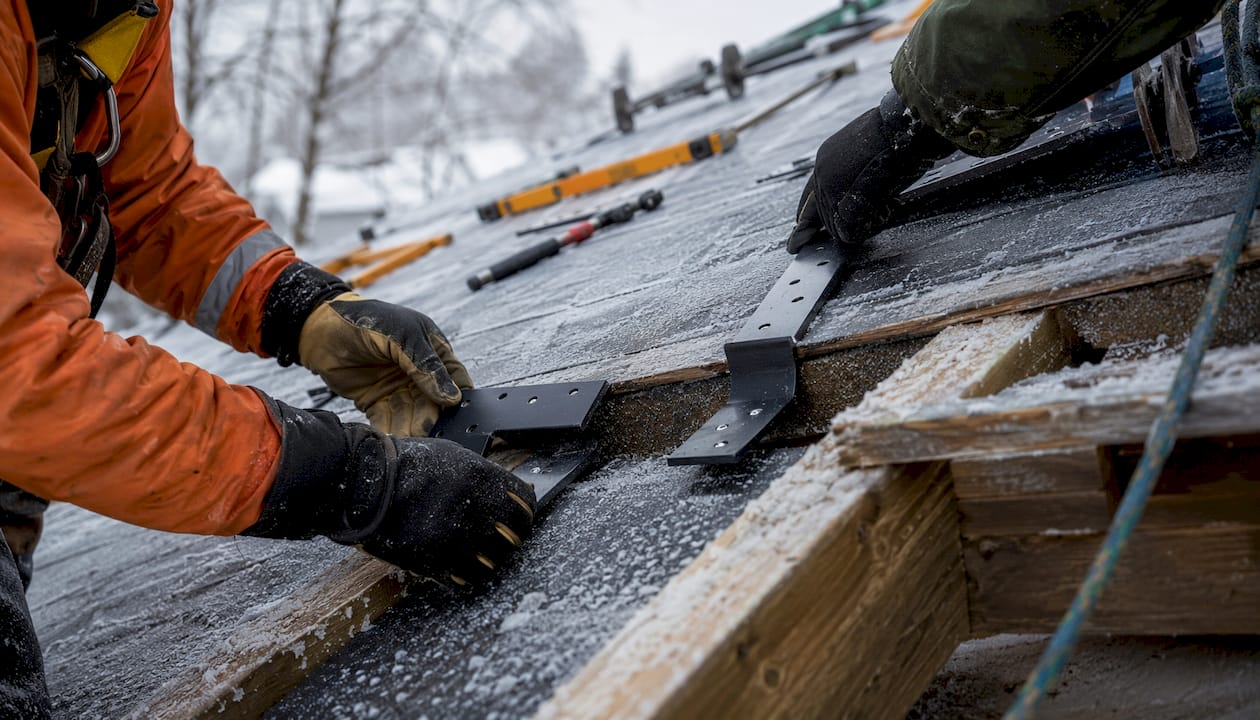
For the crew doing the actual work, cold shingles must be nailed with precision: an overdriven nail cracks the tab, an underdriven nail won’t hold. Professionals use infrared thermometers to check surface temperatures and may warm sections of the deck with a propane torch before laying materials. Seams get cleaned and primed before adhesive application, even in the cold, to guarantee a proper bond.
Pro Tip: Before any crew gets on your roof in winter, ask specifically how they handle clear ice and what their weather-stop policy is. A contractor without a clear answer is one you don’t want up there.
What to do if your roof leaks or gets damaged this winter
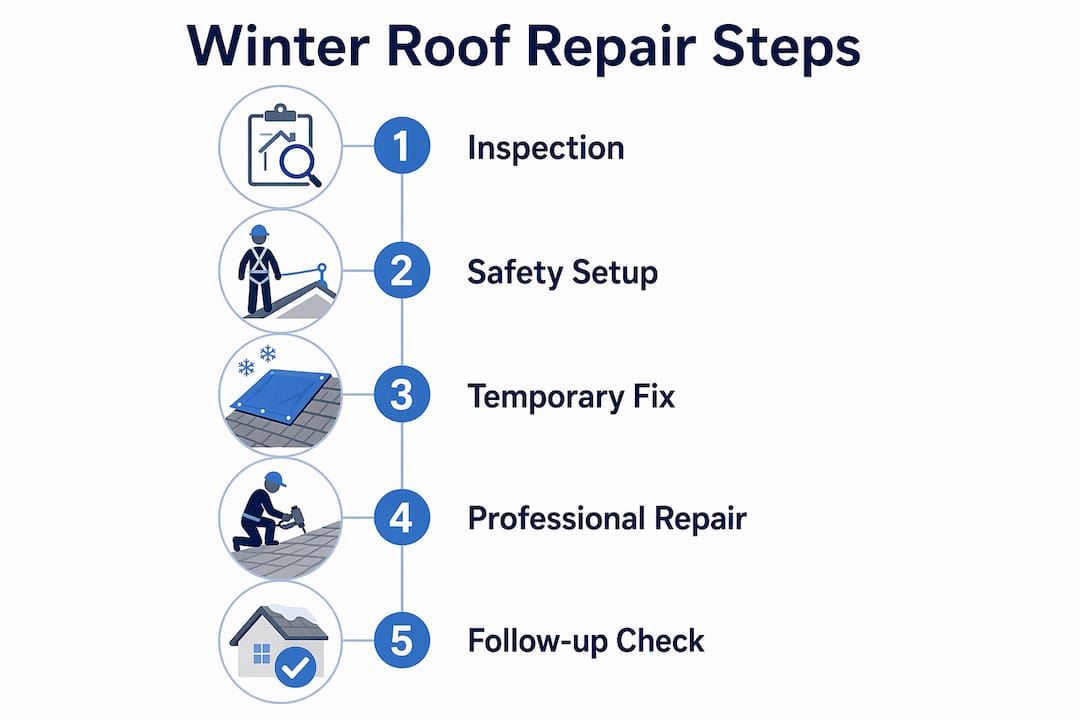
A water stain on your ceiling in January is not a “wait and see” situation. Water that enters the attic can freeze, thaw, and refreeze, causing damage to drywall, insulation, and structural decking. Act the same day.
Immediate steps you can take safely:
- Place buckets under active drips inside the attic
- Drape a tarp over the affected area inside the attic to channel water toward a drain — do not nail or staple anything to the roof deck from the inside
- For ice dams, fill a nylon stocking with calcium chloride ice melt and lay it vertically across the dam to melt a drainage channel. Avoid rock salt, which damages shingles and gutters.
- Use a roof rake from the ground to remove snow from the lower few feet of the eave
These are temporary holds, not fixes. Their only job is to limit damage until a professional crew can make a permanent repair. For a step-by-step approach to urgent situations, the emergency roof repair workflow from Thomasroofingandrepair covers the full process.
On insurance: Homeowners insurance covers sudden, accidental winter storm damage — wind damage, roof collapse from snow load, ice dam leaks — but excludes damage from neglect or deferred maintenance. If your roof was already in poor shape before the storm, your insurer may deny the claim. Keeping up with cold weather roof maintenance before winter hits isn’t just good practice; it protects your coverage. Document damage with photos immediately and contact your insurer before scheduling repairs.
For homeowners planning ahead, understanding how seasonal factors affect scheduling and contractor availability can help you time your project for the best outcome.
Thomasroofingandrepair handles winter roofing the right way
When your roof is damaged and the temperature is dropping, you need a crew that already knows how to work in those conditions — not one learning on the job at your expense.

Thomasroofingandrepair serves homeowners across Central Florida, including Brevard, Volusia, and Orange counties, with roof repair and storm damage services built around honest assessments and quality craftsmanship. The team handles everything from emergency tarping and shingle replacement to full roof installations, with financing options available for larger projects. If your situation calls for a temporary fix now and a full replacement in spring, that’s exactly what they’ll recommend — no pressure, no rushed jobs. Get a free estimate from Thomasroofingandrepair and find out what your roof actually needs.
Key Takeaways
Winter roof repair is entirely feasible when contractors follow the 40°F temperature threshold, use manual hand-sealing, and store materials in heated conditions to prevent brittle shingles and adhesive failure.
| Point | Details |
|---|---|
| Temperature threshold | Below 40°F, asphalt shingles won’t self-seal; manual roofing cement becomes mandatory for every tab. |
| Best repairs for winter | Shingle replacement, flashing resealing, ice dam fixes, and pipe boot swaps are all manageable in cold weather. |
| Homeowner safety rule | Never get on an icy or snow-covered roof; use ground-level observation and attic inspection only. |
| Insurance coverage | Sudden storm damage is typically covered; neglect or wear and tear is not, so maintain your roof before winter. |
| Thomasroofingandrepair | Serves Central Florida homeowners with honest winter repair assessments, storm damage fixes, and free estimates. |