
 407-408-0577
TL;DR:
- Tile roofing is a durable, long-lasting system that combines tiles, underlayment, and structural support to protect homes from water intrusion. Proper installation, structural assessment, and routine maintenance are essential for maximizing its lifespan and performance. Despite higher upfront costs, tile offers significant long-term value, fire resistance, and aesthetic versatility, especially in demanding climates like Florida.
Most homeowners picture decorative tiles when they think about tile roofing. The reality is more interesting and more important to understand before making any roofing decision. Tile roofing is actually a complete system, not just a surface covering. The tiles themselves shed water and add structure, but the waterproof underlayment beneath them does the real work of keeping your home dry. Understanding what tile roofing entails, from the materials and system layers to installation requirements and maintenance needs, puts you in a much stronger position when evaluating whether it belongs on your home or property.
Key takeaways
| Point | Details |
|---|---|
| Tile roofing is a system | Tiles, underlayment, and a structural deck work together to protect your home from water intrusion. |
| Material choice affects structure | Clay tiles weigh 6–10 lb/ft² while concrete tiles weigh 9–12 lb/ft², requiring structural assessment before installation. |
| Lifespan is exceptional | Properly installed tile roofs last 50 years or more, far outlasting most other residential roofing materials. |
| Underlayment is the hidden risk | A tile surface can look perfect while the underlayment beneath is failing, causing leaks that go undetected for months. |
| Maintenance is straightforward | Regular debris clearing, tile inspections, and scheduled professional evaluations keep tile roofs performing for decades. |
What tile roofing is: materials, layers, and how it works
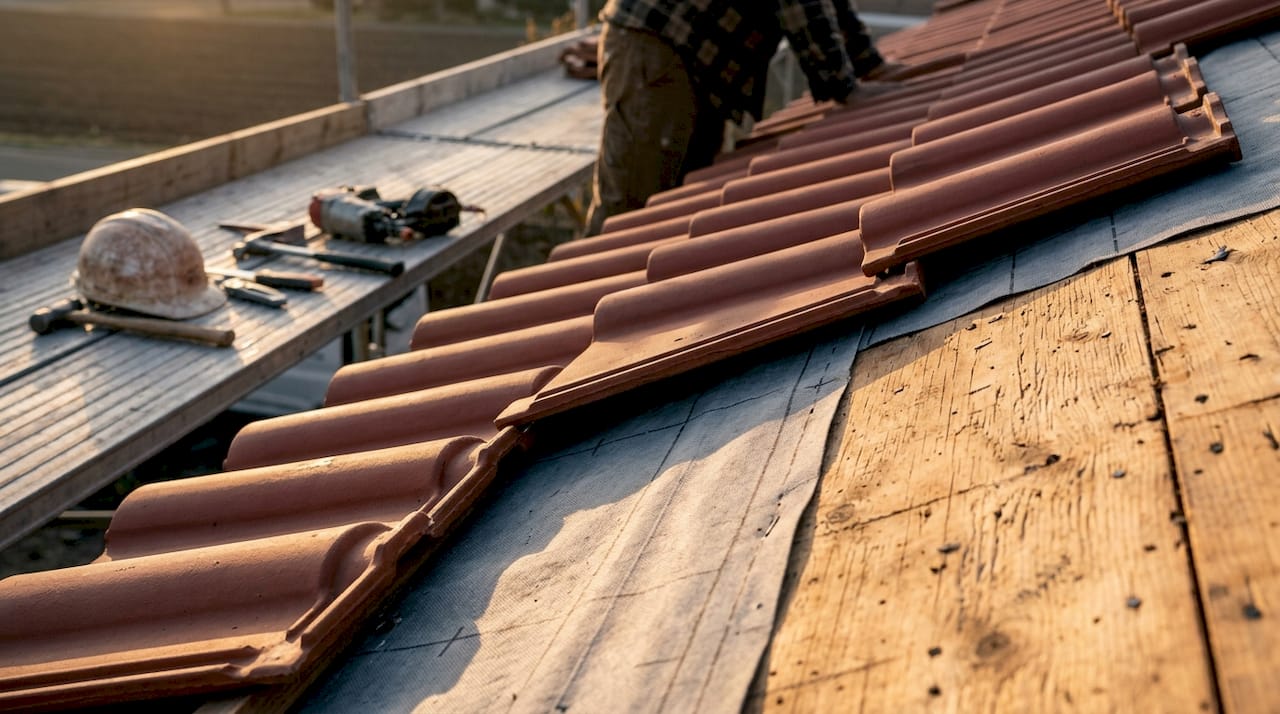
Tile roofing refers to a roof system that uses individual overlapping or interlocking tiles as the outermost layer, supported by a waterproof underlayment and a structural roof deck beneath. Roof tiles are designed to keep out precipitation through overlapping placement, typically made from clay or concrete, covering an underlayment that seals against water intrusion. Think of the tiles as a suit of armor and the underlayment as the actual skin keeping moisture out.
The main tile roofing materials
The three most common tile roofing materials each bring distinct advantages:
- Clay tiles are the classic choice, fired from natural clay at high temperatures. They are lightweight relative to concrete, weighing approximately 6–10 lb/ft², and resist fading for decades because the color runs through the full thickness of the tile.
- Concrete tiles are manufactured from a mix of sand, cement, and water pressed into molds. They weigh roughly 9–12 lb/ft² and can mimic slate, wood shake, or barrel tile profiles at a lower material cost than clay.
- Slate tiles are cut from natural stone and carry the highest cost. They are exceptionally dense and durable but add significant weight, making structural assessment non-negotiable before installation.
Beyond material, tiles also come in profiles. Flat tiles lay nearly flush to the roof deck. S-curve or barrel tiles create the rounded ridges you see on Mediterranean and Spanish-style homes. Low-profile tiles split the difference with a gentle wave pattern.
How the system sheds water
The tile layer itself channels most rainfall down the slope and off the roof edge. But the underlayment below catches anything that penetrates through seams, cracked tiles, or wind-driven rain. Without a sound underlayment, water reaches the deck and works its way into the structure. This is why tile roofing is best understood as an assembly rather than a single product.
Pro Tip: Always ask a roofer about the underlayment spec, not just the tile brand, when getting quotes. The underlayment is what separates a 20-year roof from a 50-year one.
Tile installation requires each tile to be fastened with corrosion-resistant nails or screws and, in many cases, set in foam adhesive at the eave and ridge courses. Proper fastening prevents tile displacement during high winds, which matters especially in storm-prone regions like Central Florida.
Why tile roofing is worth the investment
The benefits of tile roofing go well beyond how it looks. The practical advantages explain why tile has remained a preferred choice across centuries of construction.
- Longevity: Tile roofs are known for lasting 50 years or more, with centuries-old tile installations still intact across Europe. Even in demanding climates, a well-maintained tile roof outlasts asphalt shingles by two to three times.
- Fire resistance: Tile roof systems carry a Class A fire rating, the highest possible fire resistance designation. This can qualify homeowners for reduced fire insurance premiums depending on location and insurer.
- Durability against the elements: Tile resists water absorption, frost, high winds, and insect damage. Unlike wood shake or asphalt, tile does not rot, warp, or become a food source for termites.
- Energy efficiency: The natural air gap created under interlocking tiles allows passive ventilation, keeping attics cooler and reducing cooling loads in warm climates.
- Sustainability: Clay and concrete tiles contain no synthetic chemicals, do not off-gas, and can often be recycled at end of life. Their 50-plus-year lifespan also means far less material waste over time compared to roofing that needs replacement every 15 to 20 years.
The lifespan advantage compounds over time. A homeowner who installs a tile roof at age 40 may never need to replace their roof again. That permanence changes the cost calculation significantly when you factor in the expense and disruption of repeated replacements.
The aesthetic flexibility also matters. Whether your property is a Spanish colonial, a Florida ranch, or a contemporary commercial building, there are tile profiles and colors to match. And unlike painted finishes, many tile colors are baked or fired in, meaning they do not fade the way painted metal or asphalt does over years of sun exposure.
Structural and installation considerations
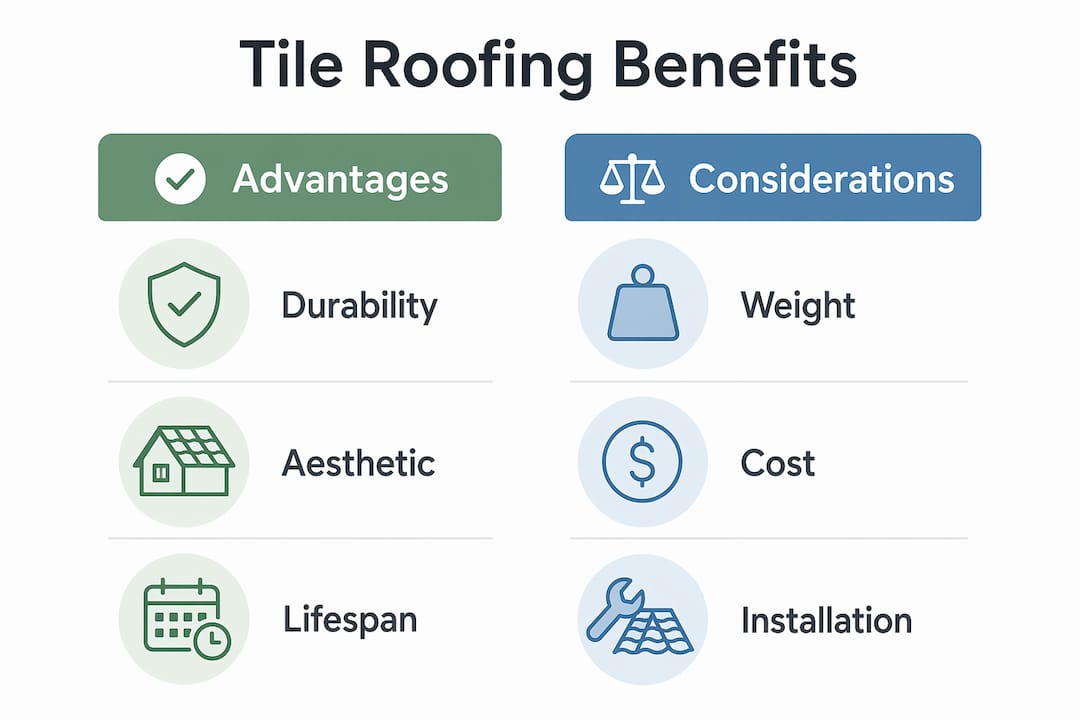
Tile is heavier than most other roofing materials, and that weight has real implications. Before any tile installation, a structural engineer or experienced roofing contractor should evaluate whether the existing roof framing can handle the added load.
| Tile type | Approximate weight (lb/ft²) | Common profile | Key consideration |
|---|---|---|---|
| Clay tile | 6–10 | Barrel, flat, S-curve | Lighter than concrete, longer color retention |
| Concrete tile | 9–12 | Barrel, flat, low-profile | Lower material cost, heavier load |
| Slate tile | 10–15 | Flat | Highest durability, maximum structural demand |
| Asphalt shingles | 2–4 | Flat | Lightweight baseline for comparison |
The IRC 2024 building code requires clay and concrete tile roofs to have a minimum slope of 2.5:12. Roofs with slopes between 2.5:12 and 4:12 need enhanced underlayment systems to manage water ponding risks. Below that threshold, tile simply is not the right material.
Installation must follow industry standards to protect both performance and warranties. The Tile Roofing Industry Alliance publishes detailed installation manuals for clay and concrete tile that professional contractors reference to meet code and manufacturer requirements. Skipping steps or cutting corners during installation accounts for a significant share of premature failures.
Pro Tip: If you are retrofitting tile onto an existing structure, have a licensed contractor or structural engineer check your rafters and sheathing before ordering materials. Reinforcing framing after tiles are on the roof costs far more than doing it before.
One of the most common installation mistakes is neglecting the underlayment quality and overlap specifications. Tile placement looks correct from the street, but underlayment deterioration beneath tiles causes leaks even when the tile surface appears flawless. That is a problem hiding behind a beautiful exterior.
Tile roof maintenance and long-term care
Tile roofs are often marketed as low maintenance, and compared to asphalt shingles, that is largely true. But “low maintenance” does not mean “no maintenance.” A few consistent habits keep a tile roof performing for its full expected life.
- Clear debris twice a year. Leaves, pine needles, and organic material accumulate in valleys and around penetrations. Left in place, they retain moisture and accelerate underlayment wear.
- Inspect for slipped or cracked tiles after storms. A displaced tile creates an unprotected opening. Individual tiles are generally replaceable without disturbing the rest of the roof, which is one of the cost advantages of tile over full-membrane systems.
- Check gutters and downspouts. Blocked gutters push water back under eave tiles, putting stress on the first course of underlayment.
- Schedule a professional inspection every two to three years. A trained inspector checks underlayment condition, flashing integrity, and fastener corrosion. You can read more about what that process looks like if you want to know what to expect.
- Pay attention to interior signs. Water stains on ceilings or walls during rain are often the first visible indicator of underlayment failure. Do not wait for the stain to grow.
Pro Tip: The best time to schedule an inspection in Florida is just before hurricane season. You want to find cracked tiles or deteriorated underlayment in May, not after August puts your roof through a tropical storm.
Understanding how your local climate affects tile care is especially relevant in Central Florida, where heat, humidity, and storm seasons accelerate wear on roofing components more aggressively than cooler, drier climates.
How tile compares to other roofing materials
When you are weighing roofing options, the comparison between tile and other common materials often comes down to upfront cost versus long-term value.
| Factor | Tile roofing | Asphalt shingles | Metal roofing |
|---|---|---|---|
| Lifespan | 50+ years | 15–25 years | 40–70 years |
| Fire resistance | Class A | Class A–C (varies) | Class A |
| Weight | Heavy (6–15 lb/ft²) | Light (2–4 lb/ft²) | Medium (1–3 lb/ft²) |
| Maintenance | Low to moderate | Moderate | Low |
| Upfront cost | High | Low to moderate | Moderate to high |
| Aesthetic variety | High | Moderate | Moderate |
The upfront cost of tile is real. But when you calculate cost per year of service, tile frequently comes out competitive against asphalt, and far ahead of repeated replacement cycles. For homeowners planning to stay in a property long term, whether tile makes financial sense usually depends less on the price tag and more on how long they intend to own the home.
My honest take after years of seeing tile roofs fail and succeed
I have seen tile roofs that were 60 years old and still watertight, and I have seen tile roofs that started leaking after 12 years. The difference in almost every case came down to one thing: the underlayment.
Homeowners walk outside, look up at the tiles, and think everything is fine. The tiles look great. What they cannot see is the felt or synthetic underlayment aging underneath, drying out, cracking at seams, and losing its ability to shed water. By the time a ceiling stain appears inside, the water has often been traveling through the roof structure for months. Catching underlayment degradation early is the single most important thing a tile roof owner can do.
I also watch homeowners skip the structural assessment and regret it. Adding tile weight to framing that was designed for asphalt shingles is not always catastrophic immediately, but it does create stress on rafters and sheathing over time. That shows up as sagging, cracking, or worse during a severe storm.
My honest opinion: tile roofing is an excellent investment for the right property with the right foundation work done first. Get the structure assessed, invest in quality underlayment, and do not ignore maintenance just because the tiles themselves look pristine.
— Thomasroofingandrepair
Ready to explore tile roofing for your property?
At Thomasroofingandrepair, we work with homeowners and property managers across Central Florida, including Brevard, Volusia, and Orange counties, to install, repair, and maintain tile roofing systems built to handle Florida’s demanding climate. Our team evaluates structural capacity, recommends the right tile profile and underlayment spec for your property, and backs every project with dependable craftsmanship.

Whether you are starting fresh with a new roof installation or dealing with a leak you suspect is underlayment-related, our crews handle both planned projects and storm damage repairs with the same attention to detail. We offer free estimates and financing options so cost does not prevent you from getting a roof that actually lasts. Contact Thomasroofingandrepair to schedule your evaluation and find out whether tile is the right fit for your home or commercial property.
FAQ
What is the difference between tile roofing and roof shingles?
Tile roofing uses rigid clay, concrete, or slate tiles that interlock and overlap, while shingles are typically flat asphalt pieces layered in rows. Tiles last significantly longer and carry a higher fire resistance rating, but they are heavier and cost more upfront.
How long does a tile roof last?
A properly installed tile roof lasts 50 years or more, and many clay tile roofs have remained functional for well over a century with routine maintenance.
Can every home support a tile roof?
Not automatically. Concrete tile weighs 9–12 lb/ft² and clay tile weighs 6–10 lb/ft², which is significantly more than asphalt shingles. A structural assessment of your roof framing is required before installing tile on most existing homes.
What causes leaks in tile roofs?
Most tile roof leaks trace back to underlayment deterioration, not cracked or broken tiles. The underlayment is the actual waterproof barrier, and it wears out long before the tiles do.
Is tile roofing a good choice in Florida?
Yes. Tile’s Class A fire resistance, wind resistance, and longevity make it well-suited for Florida’s heat, humidity, and storm season. The key is proper installation that follows current IRC slope and underlayment requirements and regular maintenance before and after storm season.