
TL;DR:
- Proper attic ventilation extends roof life, reduces energy costs, and prevents moisture-related damage in Florida’s climate.
- Balancing intake and exhaust vents according to code standards is essential to avoid costly repairs and warranty issues.
Roof ventilation is defined as a balanced system of intake and exhaust airflow that regulates attic temperature and moisture levels to protect your roof structure and lower energy costs. For Central Florida homeowners, the stakes are especially high. Summer attic temperatures regularly exceed 140°F, and the region’s humidity creates the perfect conditions for mold, wood rot, and shingle failure. Knowing why update roof ventilation decisions matter, and acting on them, is one of the most cost-effective moves you can make for your home’s long-term health. Products like GAF Master Flow vents and code standards like IRC Section R806 set the baseline, but the real payoff is measured in years added to your roof and dollars saved on energy bills.
Why updating roof ventilation protects your home from heat and moisture
Attic heat is the silent killer of roofing systems in Florida. Without proper ventilation, attic temperatures can hit 140°F on a 90°F day, and that sustained heat accelerates the breakdown of asphalt shingles, dries out adhesive strips, and warps roof decking. That means a roof that should last 25 years may start failing at 15.
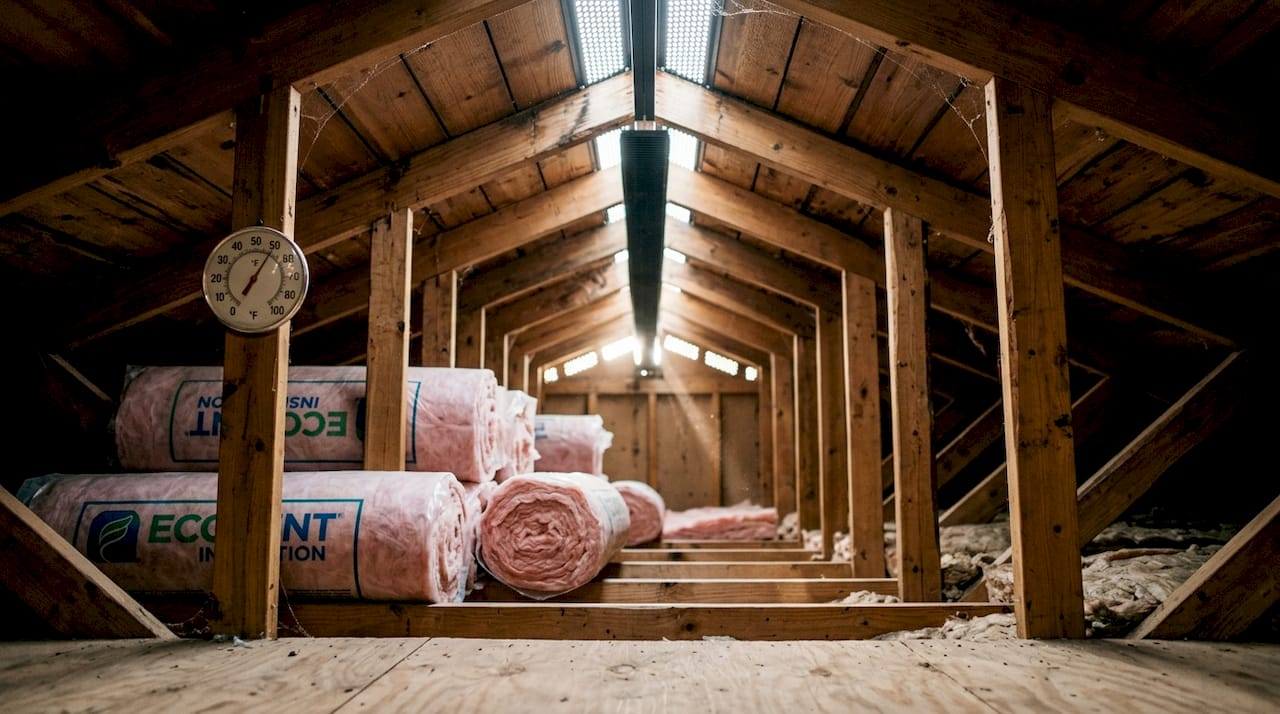
The mechanism behind effective ventilation is called the stack effect. Cool air enters through intake vents at the soffits and eaves, rises as it warms, and exits through exhaust vents at the ridge or upper roof. This continuous airflow flushes out both heat and moisture before they can do structural damage. Without it, moisture from cooking, bathing, and breathing migrates into the attic and condenses on wood framing, insulation, and sheathing.
The consequences of poor ventilation compound quickly:
- Shingles blister and curl from heat trapped beneath them
- Roof decking softens and loses structural integrity from moisture
- Insulation absorbs moisture and loses its R-value, driving up cooling costs
- Mold colonies establish in attic framing within weeks of sustained moisture exposure
- HVAC systems work harder because the attic heat radiates into living spaces below
Pro Tip: If your second floor is noticeably hotter than your first floor in summer, your attic ventilation is almost certainly underperforming. That temperature gap is a direct signal, not a comfort complaint.
The importance of attic ventilation goes beyond shingles. Roof decking failure is expensive, often requiring full replacement rather than repair. Catching ventilation problems early costs a fraction of what structural repairs demand.
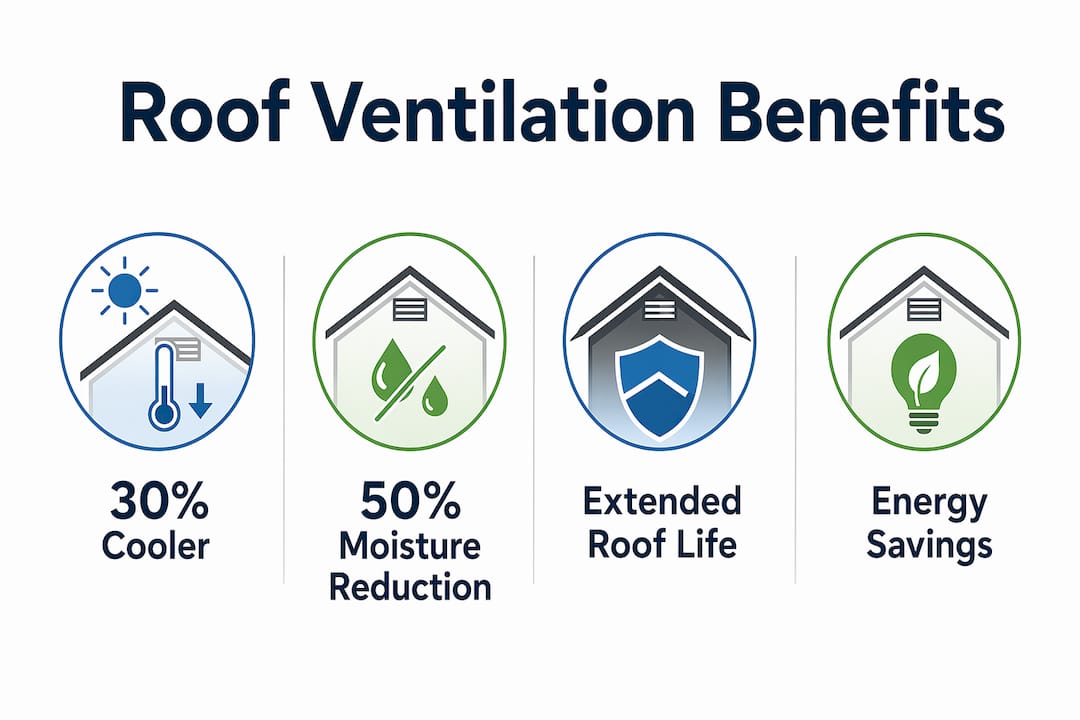
What are the signs you need a roof ventilation upgrade?
Recognizing the signs you need a roof ventilation upgrade early saves you from expensive repairs. Most homeowners miss the early warnings because they happen out of sight, inside the attic.
- Visible condensation or moisture stains in the attic. Water droplets on rafters or dark staining on sheathing confirm that humid air is trapped and condensing overnight.
- Attic feels like an oven in summer. If you open the attic hatch and feel a wall of heat, your exhaust capacity is insufficient for the attic’s square footage.
- Soffit vents clogged with insulation or debris. This is one of the most common causes of ventilation failure. Blocking soffit vents with insulation cuts off intake airflow entirely, regardless of how many ridge vents you have.
- Mold or rotting wood in attic framing. Active mold growth means moisture has been accumulating for weeks or months. This is a code and health concern, not just a roofing issue.
- Unexplained spikes in your energy bills. When attic heat radiates into conditioned living space, your air conditioner compensates. Higher cooling bills without a clear cause often trace back to attic heat gain.
- Inconsistent indoor temperatures between floors. Upper floors running significantly warmer than lower floors point to inadequate attic heat removal.
One frequently overlooked mistake is missing rafter baffles. Homeowners add blown-in insulation and unknowingly bury the soffit vent openings. The attic appears ventilated from the outside, but intake airflow is completely blocked at the eaves. The result is a system that looks correct on paper but fails in practice.
How to comply with building codes when upgrading roof ventilation
Building codes set the floor for ventilation performance, not the ceiling. IRC 2024 Section R806 requires a minimum of 1 square foot of net free ventilation area per 150 square feet of attic floor space. That ratio drops to 1:300 when at least 40% of the required ventilation is placed in the upper portion of the attic and a vapor retarder is installed on the warm-in-winter side of the ceiling. Meeting the 1:300 standard is more practical for most Florida homes and reflects how balanced systems actually perform.
One critical detail most homeowners miss: net free area accounts for the actual open space after screens and louvers are factored in. A vent labeled as 50 square inches may only deliver 30 square inches of net free area. Sizing based on nominal dimensions leads to chronic under-ventilation.
| Ventilation standard | Ratio required | Conditions |
|---|---|---|
| Basic IRC R806 | 1:150 | No vapor retarder, any vent placement |
| Reduced IRC R806 | 1:300 | Balanced intake/exhaust, vapor retarder installed |
| Unvented conditioned attic | N/A | Spray foam required, expert design needed |
Unvented conditioned attics are a code-approved alternative under IRC R806.5, particularly relevant in Florida’s hot-humid climate. Spray foam insulation applied directly to the roof deck eliminates the attic air space entirely, removing the ventilation equation. This approach works well but requires professional design and proper air sealing. It is not a DIY project.
Ridge vents without soffit intake create negative pressure that pulls conditioned air from the living space rather than drawing in outside air. This is one of the most expensive installation errors in residential roofing, and it is surprisingly common. A professional energy auditor using a blower door test can confirm whether this is happening in your home.
Pro Tip: When upgrading roof ventilation systems, always calculate net free area, not nominal vent size. Ask your contractor to show you the math before installation begins.
Comparing roof ventilation types for Central Florida homes
Not all vents perform equally in Florida’s climate, and choosing the wrong combination undermines the entire system. Here is how the main options compare:
| Vent type | Best use case | Central Florida consideration |
|---|---|---|
| Ridge vents | Primary exhaust along roof peak | Highly effective; must be paired with soffit intake |
| Soffit vents | Primary intake at eaves | Non-negotiable for balanced airflow |
| Box vents (static) | Supplemental exhaust on low-slope areas | Less effective than ridge vents for whole-attic coverage |
| Gable vents | Cross-ventilation in gable-end walls | Can short-circuit ridge-soffit airflow if combined incorrectly |
| Power attic ventilators | Active exhaust for large or complex attics | Risk of increased energy costs if improperly sized |
Power attic ventilators deserve special attention. They are often marketed as the premium solution, but studies show they can pull conditioned air from the living space when the attic is not properly sealed. Oversized or improperly installed ventilators create negative pressure that works against you, raising energy bills instead of lowering them. For most Central Florida homes, a well-balanced passive system with continuous ridge and soffit vents outperforms powered options.
GAF Master Flow vents are a reliable product line for both passive and bath or dryer exhaust applications. GAF Master Flow bath and dryer vents are designed to route exhaust directly outside rather than into the attic, which is a code requirement that many older homes violate. Dryer exhaust vented into an attic deposits lint and moisture directly onto insulation and framing, creating both a fire hazard and a mold risk.
The hot-humid climate in Brevard, Volusia, and Orange counties means moisture management takes priority over heat removal alone. Passive systems that maintain continuous airflow without mechanical components are lower maintenance and more reliable through hurricane season.
Practical steps to improve and maintain your attic ventilation
Improving roof ventilation does not always require a full system replacement. Many homes need targeted corrections rather than complete overhauls.
- Clear soffit vents twice a year. Debris, paint, and insulation are the three most common blockers. A flashlight inspection from inside the attic confirms whether light passes through each vent opening.
- Install rafter baffles at every rafter bay. Rafter baffles maintain a clear airflow channel from the soffit vent to the open attic space, preventing insulation from collapsing the intake path. This is a low-cost fix with a high impact.
- Route all appliance exhaust outside. Bath fans, dryers, and range hoods must terminate at an exterior vent cap, never into the attic. This single correction eliminates a major source of attic moisture in many Florida homes.
- Coordinate ventilation with insulation upgrades. Adding attic insulation without addressing ventilation traps heat and moisture more effectively. The two systems must be planned together. Pairing your insulation and ventilation improvements produces compounding energy savings.
- Schedule a professional inspection with thermal imaging. Infrared cameras reveal hot spots, moisture pockets, and airflow gaps that are invisible to the naked eye. A blower door test quantifies air leakage between the living space and attic.
- Avoid adding more vents without calculating balance. More ventilation without balanced intake and exhaust causes conditioned air loss and higher energy bills. Balance matters more than quantity.
Pro Tip: Before any ventilation upgrade, photograph your current soffit and ridge vent layout and measure your attic square footage. That data takes five minutes to gather and saves hours of back-and-forth with your contractor.
Coordinating a ventilation update with a roof maintenance inspection gives you a complete picture of your roof system’s health in one visit.
Key takeaways
Balanced attic ventilation is the single most cost-effective upgrade Central Florida homeowners can make to extend roof life, control energy costs, and protect their home’s structure from heat and moisture damage.
| Point | Details |
|---|---|
| Balance over quantity | Matched intake and exhaust vents outperform adding more vents without a plan. |
| Code compliance matters | IRC R806 requires 1:150 or 1:300 net free area ratios; net free area, not nominal size, determines compliance. |
| Early warning signs | Moisture stains, blocked soffits, and rising energy bills signal ventilation failure before visible roof damage appears. |
| Baffles are non-negotiable | Rafter baffles keep soffit intake paths clear and are the most overlooked fix in attic ventilation. |
| Warranty protection | Proper vent routing and balanced airflow protect roof warranty coverage by preventing the moisture damage that voids most claims. |
What I’ve learned from ventilation projects across Central Florida
The most common misunderstanding I encounter is the belief that more vents automatically mean better ventilation. Homeowners add ridge vents, then box vents, then a power ventilator, and end up with a system that actively pulls conditioned air out of their living room. Balanced intake and exhaust is the principle that governs everything, and it is the first thing to verify before adding any new components.
The connection between ventilation and roof warranty protection is genuinely underappreciated. Most shingle manufacturers, including GAF, require proper vent routing as a condition of warranty coverage. A ventilation deficiency discovered during a warranty claim inspection can void coverage entirely, even on a relatively new roof. That is a painful lesson to learn after a storm.
In Central Florida specifically, the combination of heat, humidity, and hurricane-season wind loads makes ventilation a structural issue, not just a comfort one. I have seen attic framing with active mold growth on roofs that were only seven years old, all because a dryer vent was routed into the attic during a renovation. The fix cost more than the original roof installation.
My honest advice: treat a ventilation assessment as part of any roofing project, not an optional add-on. The advantages of a properly ventilated roof compound over time in ways that show up on your energy bill, your roof’s lifespan, and your home’s resale value.
— Thomasroofingandrepair
Get your ventilation assessed by Central Florida’s roofing experts

Thomas Roofing and Repair serves homeowners and property managers across Brevard, Volusia, and Orange counties with roof installation, inspection, and ventilation system upgrades built to Florida’s code requirements and climate demands. The team brings hands-on knowledge of IRC R806 compliance, balanced vent system design, and the specific challenges that Central Florida’s heat and humidity create for residential roofs. Whether you need a full ventilation overhaul or a targeted correction to an existing system, a professional assessment is the fastest way to know exactly what your home needs. Request a free estimate and get a clear, honest evaluation from a contractor who knows Central Florida roofs. Explore roof installation services in your area and take the first step toward a cooler, longer-lasting roof.
FAQ
What does roof ventilation actually do for my home?
Roof ventilation removes heat and moisture from the attic by creating continuous airflow from soffit intake vents to ridge exhaust vents. This protects shingles, roof decking, and insulation from heat and moisture damage that shortens roof life.
How do I know if my attic ventilation is inadequate?
Visible moisture or mold in the attic, unusually high energy bills, and upper floors that are significantly hotter than lower floors are the clearest signs. Blocked soffit vents are the most common cause of ventilation failure in Florida homes.
Does adding more vents always improve ventilation?
No. Adding vents without balancing intake and exhaust can cause conditioned air loss and higher energy costs. The IRC standard requires matched intake and exhaust capacity, not simply more total vent area.
How often should roof ventilation be inspected?
A ventilation inspection should happen at least once a year, ideally before hurricane season. Any attic insulation project or roof repair is also a good trigger for a full ventilation review.
Can poor ventilation void my roof warranty?
Yes. Most shingle manufacturers require proper attic ventilation as a condition of warranty coverage. Moisture damage caused by inadequate or improperly routed vents is a documented reason for warranty claim denial in Central Florida.
Recommended
- Why Replace a Roof – Impact on Florida Homes
- 7 Essential Roof Replacement Tips for Florida Homeowners
- Clermont Roof Replacement Services | Thomas Roofing and Repair
- Wind Ratings Explained: Roofing Guide for Florida Homes
- Roofing Company Orlando, FL
- Roofing Company Titusville, FL
- Roofing Company DeLand, FL