 407-408-0577
TL;DR:
- Metal roofs have the lowest storm damage rate at 12 percent compared to asphalt shingles.
- Upgrading to impact-resistant roofing and FORTIFIED standards can significantly reduce insurance premiums.
- Material choice now depends on storm resistance, insurance qualification, and long-term cost, not just price.
Most Florida homeowners assume their asphalt shingle roof will hold up fine through hurricane season. The numbers tell a very different story. After Hurricane Ian, asphalt shingles saw roughly 50% damage compared to just 12% for metal roofs. That gap is reshaping what Central Florida homeowners and property managers are choosing in 2026, and it’s not just about storm performance. Insurance carriers are tightening renewal policies, material costs are shifting, and new standards are changing what qualifies for coverage. This article breaks down the dominant materials, their real-world performance, insurance implications, and how to make a smart choice for your property this year.
Table of Contents
- The central Florida roofing landscape in 2026
- Asphalt shingles, tile, and metal: Trends, pros, and storm performance
- Commercial roofing in 2026: TPO, insulation, and long-term value
- The growing impact of insurance and FORTIFIED roof standards
- What most Florida homeowners miss about 2026’s roofing trends
- Next steps: Expert help for your Central Florida roof
- Frequently asked questions
Key Takeaways
| Point | Details |
|---|---|
| Storm performance is key | Recent storm data shows that material choice directly impacts how your roof weathers Florida’s hurricanes. |
| Insurance is reshaping choices | Premiums and grant eligibility now strongly favor roofs with documented durability and FORTIFIED upgrades. |
| Tiles and metal outlast asphalt | While asphalt leads in market share, tile and metal offer much longer lifespans and less storm damage. |
| TPO dominates commercial roofing | Flat, commercial roofs increasingly use TPO for its energy efficiency and wind resistance. |
| Long-term value beats short-term savings | Choosing based on durability and insurance benefits leads to lower total cost in Central Florida. |
The central Florida roofing landscape in 2026
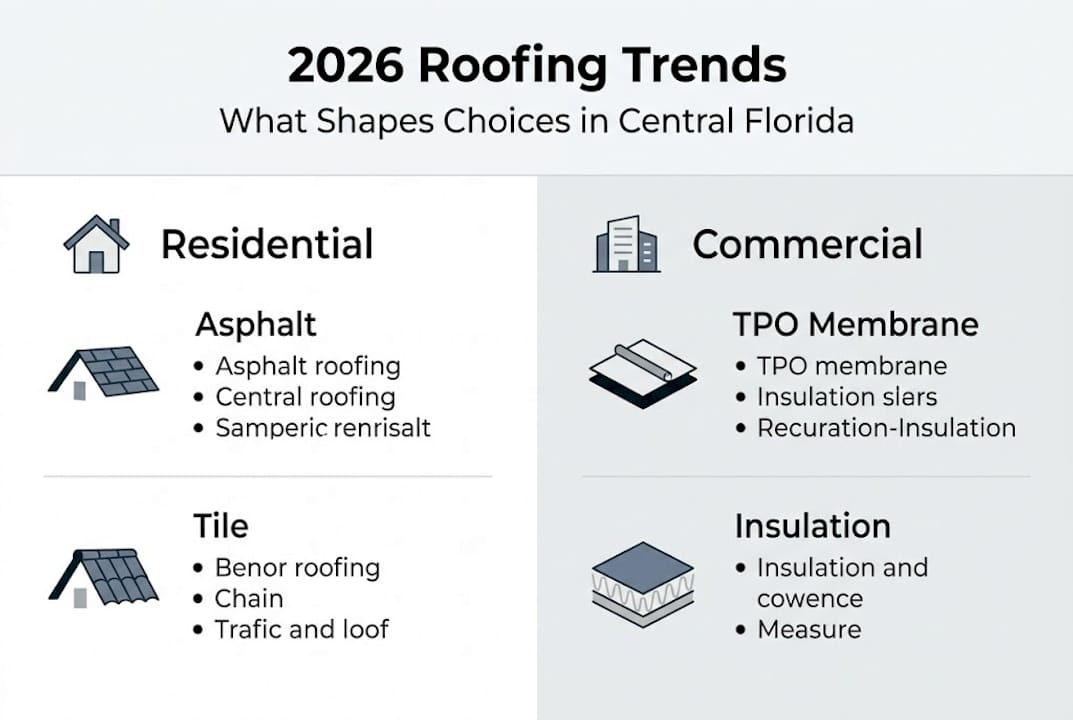
Central Florida’s roofing market is not a single story. It splits cleanly between residential pitched roofs and commercial flat roofs, and the dominant materials in each category are driven by very different pressures. On the residential side, impact-resistant asphalt shingles still hold roughly 60% market share, largely because of their lower upfront cost and wide availability. Concrete and clay tile roofing accounts for around 25% of residential roofs in the state, favored for longevity and aesthetic appeal in communities across Brevard, Volusia, and Orange counties.
For commercial and flat roofs, the picture shifts dramatically. TPO single-ply membranes now command 49 to 70% of the commercial market, driven by their heat-reflective properties and cost efficiency in Florida’s intense sun.
| Material | Segment | Market Share |
|---|---|---|
| Impact-resistant asphalt shingles | Residential | ~60% |
| Concrete/clay tile | Residential | ~25% |
| Metal roofing | Residential | ~10% |
| TPO single-ply membrane | Commercial | 49-70% |
What’s pushing these numbers in 2026 is a combination of hurricane performance data and insurance pressure. After several costly storm seasons, carriers across Florida are non-renewing policies on roofs older than 15 years and steering homeowners toward materials with documented wind resistance. That pressure is accelerating upgrades, especially in coastal and inland counties that saw direct hits from recent storms. The result is a market where material choice is no longer just a style or budget decision. It’s a practical calculation tied to insurability, storm risk, and long-term property value.
Asphalt shingles, tile, and metal: Trends, pros, and storm performance
With the market context in place, let’s look at how each major residential material is actually performing and what’s trending in 2026.
Asphalt shingles remain the most installed material in Central Florida, but the category has evolved. Standard 3-tab shingles are largely gone. What dominates now are Class 4 impact-resistant products like GAF Timberline HDZ, Owens Corning Duration FLEX, and CertainTeed Landmark IR. These carry higher wind ratings and qualify for insurance discounts in many cases. Still, even the best shingles showed a 50% damage rate during Hurricane Ian, which is a hard number to ignore.
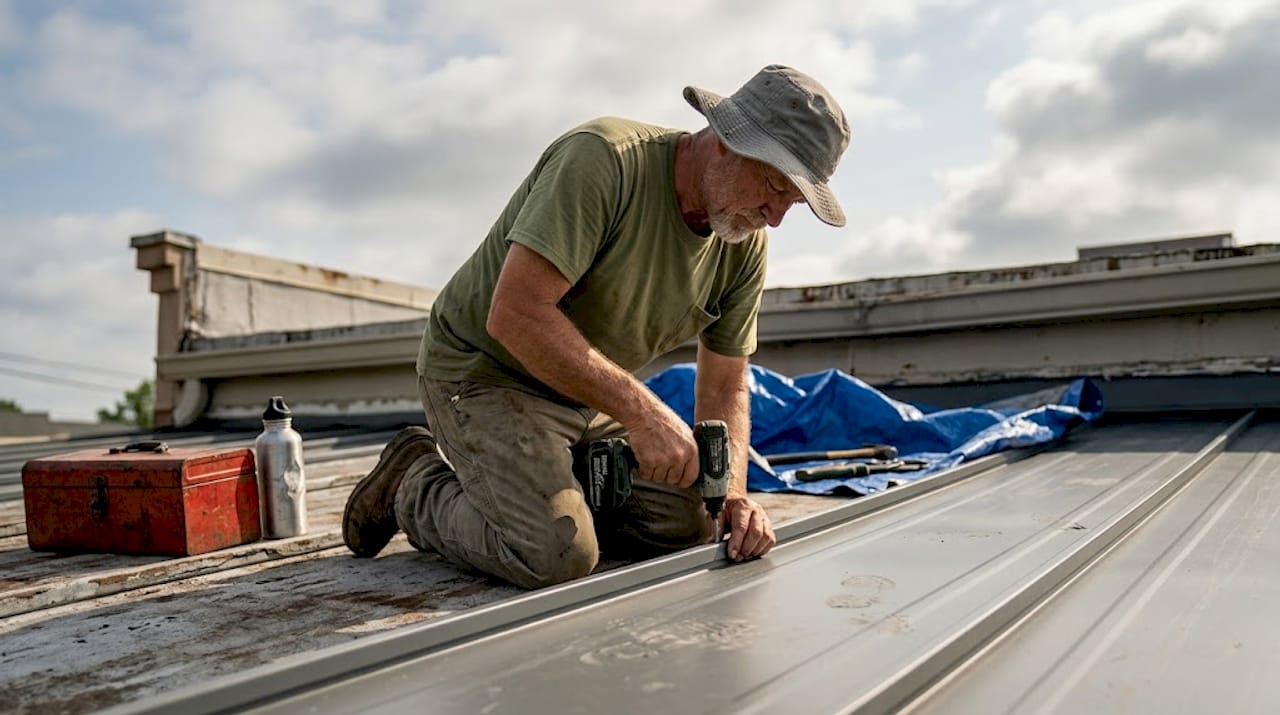
Metal roofing is the standout performer by storm data. That same post-Ian analysis recorded only a 12% damage rate for metal roofs. Standing seam metal in particular is gaining traction in 2026 for its wind uplift resistance and 40 to 70-year lifespan. The tradeoff is cost, typically 2 to 3 times more than asphalt upfront. But when you factor in fewer repairs, longer replacement cycles, and insurance savings, the math often works in metal’s favor over time.
Tile roofing sits in an interesting middle ground. Post-Ian data showed less than 40% minor damage for tile, a significant improvement over shingles. Concrete and clay tile can last 50 to 100 years or more in Florida conditions. The weight of tile requires proper structural support, and cracked individual tiles need prompt attention to prevent water intrusion.
| Material | Avg. lifespan | Storm damage rate (Ian) | Relative cost |
|---|---|---|---|
| Asphalt shingles | 20-30 years | ~50% | Low |
| Metal (standing seam) | 40-70 years | ~12% | High |
| Concrete/clay tile | 50-100+ years | <40% | Medium-High |
For 2026 style trends, cool-tone colors like slate gray and weathered wood are popular across all three categories. Lighter colors also help reflect heat, which matters in Central Florida summers.
Pro Tip: If you’re replacing an asphalt roof and budget is a concern, look at best roofing materials for Florida that qualify as Class 4 impact-resistant. The insurance discount alone can offset a portion of the upgrade cost within a few years.
Key factors to weigh when choosing a residential material:
- Storm rating: Look for products rated for 130+ mph winds
- Insurance eligibility: Confirm the material qualifies for discounts with your carrier
- Weight load: Tile requires structural assessment before installation
- Lifespan vs. cost: Calculate total cost over 30 years, not just today’s price
- Impact-resistant roofing certification: Class 4 ratings carry the most insurance weight
Commercial roofing in 2026: TPO, insulation, and long-term value
Residential isn’t the whole story. Commercial and flat roofs face unique pressures, and the trends in 2026 are being shaped by energy costs, storm exposure, and the need for longer-lasting solutions.
TPO (thermoplastic polyolefin) single-ply membranes lead the commercial market for good reason. They offer a 20 to 30+ year lifespan with wind ratings of 100 to 140+ mph. They’re lightweight, heat-reflective, and relatively straightforward to install and repair. For property managers in Central Florida managing strip malls, office buildings, or multi-unit residential properties, TPO delivers a strong balance of performance and cost efficiency.
“A well-installed TPO roof with proper insulation can reduce cooling costs by 15 to 25% in Florida’s climate, which adds up fast across a large commercial footprint.”
Beyond the membrane itself, 2026 is seeing a push toward better insulation systems beneath the membrane. Polyisocyanurate (polyiso) board insulation is the most common choice, offering high R-values per inch. When combined with a reflective TPO surface, the system significantly reduces heat transfer into the building. For property managers watching utility bills, this combination is one of the most practical upgrades available.
Understanding commercial roofing types helps you ask the right questions before signing a contract. Not every flat roof is a good candidate for TPO. EPDM and modified bitumen are still used in specific applications, and the right choice depends on the existing substrate, drainage design, and building use.
Here’s how to assess and plan a commercial roof upgrade in 2026:
- Schedule a professional inspection to document current membrane condition, seams, and drainage
- Evaluate insulation R-value against Florida Energy Code minimums for commercial buildings
- Compare TPO, EPDM, and modified bitumen based on your building’s specific slope and traffic needs
- Request wind uplift testing documentation from your contractor for the proposed system
- Factor in energy savings when calculating total cost of ownership over a 20-year horizon
| System | Lifespan | Wind rating | Energy efficiency |
|---|---|---|---|
| TPO single-ply | 20-30+ years | 100-140+ mph | High (reflective surface) |
| EPDM | 20-25 years | 90-110 mph | Moderate |
| Modified bitumen | 15-20 years | 80-100 mph | Low-Moderate |
The growing impact of insurance and FORTIFIED roof standards
Insurance and FORTIFIED programs are tipping the balance even further in 2026. This is where roofing decisions get genuinely urgent for Central Florida property owners.
Florida’s insurance market has been under severe stress. Carriers are non-renewing policies on older roofs, raising premiums on materials with poor storm performance, and in some cases requiring full replacement before issuing new coverage. The material on your roof now directly affects whether you can get insurance, what it costs, and what your home is worth to a buyer.
The FORTIFIED Roof program from the Insurance Institute for Business and Home Safety (IBHS) is the most significant certification trend in 2026. FORTIFIED-certified roofs follow a specific construction standard that includes sealed roof decks, enhanced fastening patterns, and impact-resistant coverings. The results are striking. FORTIFIED roofs reduce claim frequency by 73% and claim severity by 15%, and qualifying homeowners can receive 15 to 55% insurance premium discounts.
Florida also has grant programs through My Safe Florida Home that can help offset the cost of FORTIFIED upgrades. Funding availability changes annually, so checking current eligibility early in the year matters.
Pro Tip: Before starting any roof replacement vs repair decision, call your insurance carrier and ask specifically what materials and certifications qualify for discounts or are required for renewal. That conversation can change your entire material selection.
Key components of a FORTIFIED Roof upgrade:
- Sealed roof deck: Self-adhering underlayment applied to the full deck surface
- Enhanced fastening: Ring-shank nails at closer spacing than standard code
- Impact-resistant covering: Class 4 shingles, metal, or tile meeting FORTIFIED specs
- Proper flashing: All penetrations and edges sealed to FORTIFIED standards
- Third-party inspection: A FORTIFIED evaluator must verify and certify the work
Common pitfalls include starting the work before confirming evaluator availability, using materials that don’t meet the specific FORTIFIED product list, and failing to document every step of the installation for the certification file.
What most Florida homeowners miss about 2026’s roofing trends
Let’s be direct about something most surface-level roofing guides skip over. The biggest mistake we see Florida homeowners make is treating roofing as a pure cost comparison. They get three quotes, pick the lowest number, and install another 25-year asphalt roof. Then, two years later, they’re dealing with a non-renewal notice or a claim dispute.
The real calculation in 2026 is not what the roof costs today. It’s what the roof costs you over 20 years when you factor in insurance premiums, storm repair bills, and resale value. Tile and metal roofs cost 2 to 3 times more upfront, but the advantages of roof replacement with a premium material compound over time in a way that asphalt simply cannot match in this climate.
We’ve worked with homeowners in Brevard and Volusia who chose budget shingles in 2019 and are now facing replacement again, plus insurance premium increases that have made their monthly costs significantly higher than if they’d invested in metal or tile the first time. The upfront savings evaporated fast.
The smart approach is to treat your roof as infrastructure, not just a line item. Calculate the full picture before you decide.
Next steps: Expert help for your Central Florida roof
Choosing the right roofing material in 2026 is genuinely more complex than it was five years ago. Insurance requirements, storm performance data, and FORTIFIED standards all need to factor into your decision, and getting it wrong is expensive.

At Thomas Roofing and Repair, we work with homeowners and property managers across Brevard, Volusia, and Orange counties every day on exactly these decisions. Whether you’re navigating storm damage repair after a recent event, reviewing practical examples of roof repairs to understand your options, or planning a full roof installation with the right materials for long-term value, our team brings the local expertise and honest guidance you need. Contact us today for a free assessment and let’s build a solution that protects your property for decades.
Frequently asked questions
What roofing material has the lowest storm damage rate in Florida?
Empirical data after Hurricane Ian shows metal roofs had the lowest damage rate at 12% vs. 50% for asphalt shingles and less than 40% for tile, making metal the top performer in storm conditions.
How long do concrete or clay tile roofs last in Central Florida?
Tile roofs commonly last 50 to 100+ years under Florida conditions, far outlasting asphalt shingles and even most metal options when properly maintained.
Can upgrading to a FORTIFIED roof lower my insurance rates?
Yes, FORTIFIED Roof upgrades may qualify for 15 to 55% discounts on insurance premiums in Florida while also reducing your claim risk by more than 70%.
Why are insurance companies refusing to renew older Florida roofs?
Roofs over 15 years old carry higher storm damage and claim risk, so insurers are tightening renewal policies to favor newer materials with documented durability and wind resistance ratings.
What is the most popular commercial roofing material in Central Florida?
TPO single-ply membranes lead commercial roofing at 49 to 70% market share due to their combination of durability, heat reflectivity, and long-term cost efficiency.