
 407-408-0577
TL;DR:
- Energy-efficient roofing significantly reduces cooling costs in Central Florida’s hot climate.
- TPO, PVC, and reflective coatings provide the best ROI for commercial roofs.
- Complying with Florida regulations and conducting energy audits maximizes upgrade benefits and incentives.
HVAC systems eat up 40% of commercial energy bills, and if you’re managing a property in Central Florida, that number stings harder than most. The brutal heat from April through October puts your cooling system under constant pressure, and a roof that absorbs heat instead of reflecting it is silently driving up your monthly bills. Most property managers focus on HVAC upgrades when energy costs spike. But the roof above your head is often the faster, more cost-effective fix. This guide breaks down which energy-efficient roofing materials deliver the best ROI, how Florida regulations shape your choices, and what it actually takes to maintain these systems over the long term.
Table of Contents
- Why energy efficiency matters in commercial roofing
- Types of energy-efficient roofing solutions for Central Florida
- How Florida regulations shape energy-efficient roofing choices
- ROI and maintenance: Getting the most from energy-efficient roofing
- A smarter approach: What most people miss about energy-efficient commercial roofing
- Start your energy-efficient roofing upgrade today
- Frequently asked questions
Key Takeaways
| Point | Details |
|---|---|
| Big cooling cost savings | Energy-efficient commercial roofing can slash cooling bills by 10-30% in Central Florida. |
| Best materials for ROI | TPO, PVC, and reflective coatings offer rapid payback for energy upgrades. |
| Compliance is essential | Following Florida Building Code standards is key for maximizing energy efficiency and avoiding penalties. |
| Maintenance matters | Regular inspections and upkeep are critical to achieving long-term savings and durability. |
| Sustainability benefits | Upgrading commercial roofs supports environmental goals and may qualify for incentives. |
Why energy efficiency matters in commercial roofing
Energy-efficient roofing is not about installing the most expensive product on the market. It’s about reducing how much heat enters your building, which directly reduces how hard your HVAC system works. In a cooling-dominant climate like Central Florida’s, this is one of the most impactful investments you can make.
Think about it this way. Your roof is the largest sun-exposed surface on your commercial building. On a hot summer day in Orlando, a standard dark roof can reach surface temperatures above 150°F. That heat radiates downward into your building, forcing your air conditioning to work overtime. A reflective roof surface, by contrast, stays dramatically cooler.
When you’re investing in commercial roofing, the energy angle alone often justifies the cost. Here’s why it matters so much in this region:
- Florida’s climate is extreme. Central Florida averages over 230 sunny days per year. That’s sustained solar radiation beating down on your roof for most of the year.
- Cooling dominates energy use. Unlike northern states where buildings need significant winter heating, Florida properties spend the vast majority of their energy budget on cooling.
- HVAC strain accelerates wear. A roof that keeps interior temperatures lower doesn’t just lower your electric bill. It extends the life of your HVAC equipment.
- Utility costs are rising. Commercial electricity rates in Florida have trended upward, making every percentage point of cooling reduction more valuable.
- Carbon footprint matters. Many commercial tenants and stakeholders now expect visible sustainability efforts. An energy-efficient roof supports green building goals.
Cool roofs reduce cooling costs by 10 to 30% in hot climates like Florida. For a mid-size commercial property spending $8,000 a month on energy, that’s a potential savings of $800 to $2,400 per month. Over a year, that’s serious money back in your operating budget.
Key stat: Properties with cool roofs in hot climates can reduce cooling costs by up to 30%, according to EPA research on urban heat island mitigation.
Types of energy-efficient roofing solutions for Central Florida
Now that you understand the stakes, let’s talk about what actually works. Not every roofing product delivers the same level of energy performance. The key metrics to understand are Solar Reflectance Index (SRI) and thermal emittance. SRI measures how well a surface reflects solar heat and releases absorbed heat. The higher the SRI, the cooler the roof.
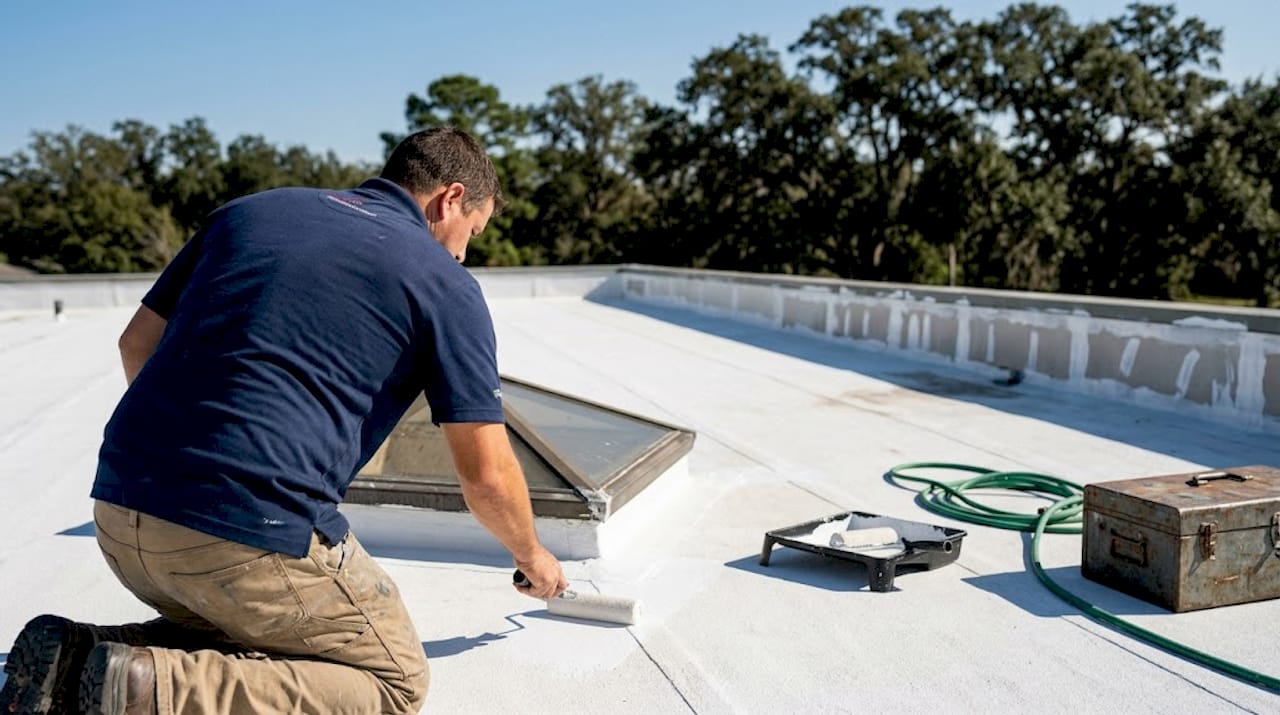
Cool roof materials like TPO, PVC, and reflective coatings rely on high reflectivity and emissivity to perform. Here’s how the main options compare for low-slope commercial roofs common in Central Florida:
| Roofing solution | SRI value (approx.) | Best use case | Durability |
|---|---|---|---|
| TPO membrane (white) | 104 | New installs, re-roofs | 15 to 25 years |
| PVC membrane (white) | 96 | Chemical exposure areas | 20 to 30 years |
| Conklin reflective coating | 85 to 107 | Retrofit over existing roof | 10 to 15 years per coat |
| Standard asphalt | 5 to 20 | No energy benefit | 10 to 20 years |
| Modified bitumen (white cap) | 26 to 40 | Moderate improvement | 15 to 20 years |
TPO and PVC membranes are the gold standard for new commercial installs. They offer excellent reflectivity right out of the box, strong resistance to UV degradation, and proven track records in Florida’s wet and hot conditions. When reviewing commercial roofing types, these two consistently lead for energy performance.
Reflective coatings deserve more attention than they often get. They can be applied directly over an existing roof, which means you avoid tear-off costs entirely. This makes them ideal for properties that have a structurally sound roof but want to boost energy performance without a full replacement. To understand how these fit into a broader commercial roof system guide, it helps to look at your current substrate and drainage before choosing a coating product.
- TPO: Best balance of cost and performance for most Central Florida commercial buildings
- PVC: Worth the premium if your roof is exposed to grease, chemicals, or restaurant exhaust
- Conklin and similar coatings: Best retrofit option for budget-conscious property managers
- Avoid dark asphalt options: Unless you’re layering a reflective coating on top, dark asphalt is simply not competitive for energy efficiency in this climate
Pro Tip: Low-slope roofs dominate the commercial building inventory in Central Florida. Prioritize solutions designed for flat or low-slope applications to get the full cooling benefit.
How Florida regulations shape energy-efficient roofing choices
Understanding your material options is only part of the story. Local regulations play a critical role in what you can install and what you’re required to meet for compliance.
The Florida Building Code Energy Conservation (FBC-EC), updated in 2023, sets specific requirements for commercial roofing including minimum solar reflectance and insulation values. These standards vary by climate zone. Central Florida falls primarily in Climate Zone 2, which mandates stricter cool roof requirements than northern parts of the state. The FBC-EC 2023 research from the Florida Solar Energy Center confirms that energy use intensity targets for commercial buildings reflect these climate-specific expectations.
For property managers planning an upgrade, here’s a practical compliance checklist:
- Confirm your climate zone. Brevard, Orange, and Volusia counties are all Zone 2. This determines your required minimum SRI and insulation R-value.
- Verify material certifications. Products must meet ENERGY STAR or Cool Roof Rating Council (CRRC) standards to qualify under the FBC-EC.
- Document insulation upgrades. If you’re adding continuous insulation during a re-roof, make sure it’s included in the permit application.
- Schedule a pre-upgrade inspection. This establishes your baseline condition and helps inspectors verify compliance after installation.
- Retain all product spec sheets. Inspectors will want documentation showing your selected materials meet reflectance and emittance thresholds.
Local enforcement can vary across counties. Orange County and Brevard County both have active commercial building inspection programs. Understanding the inspection process ahead of time can prevent costly delays. The roof inspection benefits for your Central Florida property are especially clear when you’re tying an inspection to a compliance-driven upgrade.
Pro Tip: Schedule both a pre-upgrade and a post-installation inspection. The pre-upgrade documents existing conditions, which protects you from liability claims, and the post-installation inspection creates a paper trail that supports any future energy incentive applications.
ROI and maintenance: Getting the most from energy-efficient roofing
Once you’ve selected a system and confirmed compliance, the real question is how fast you’ll see the return. The short answer is faster than you might expect.
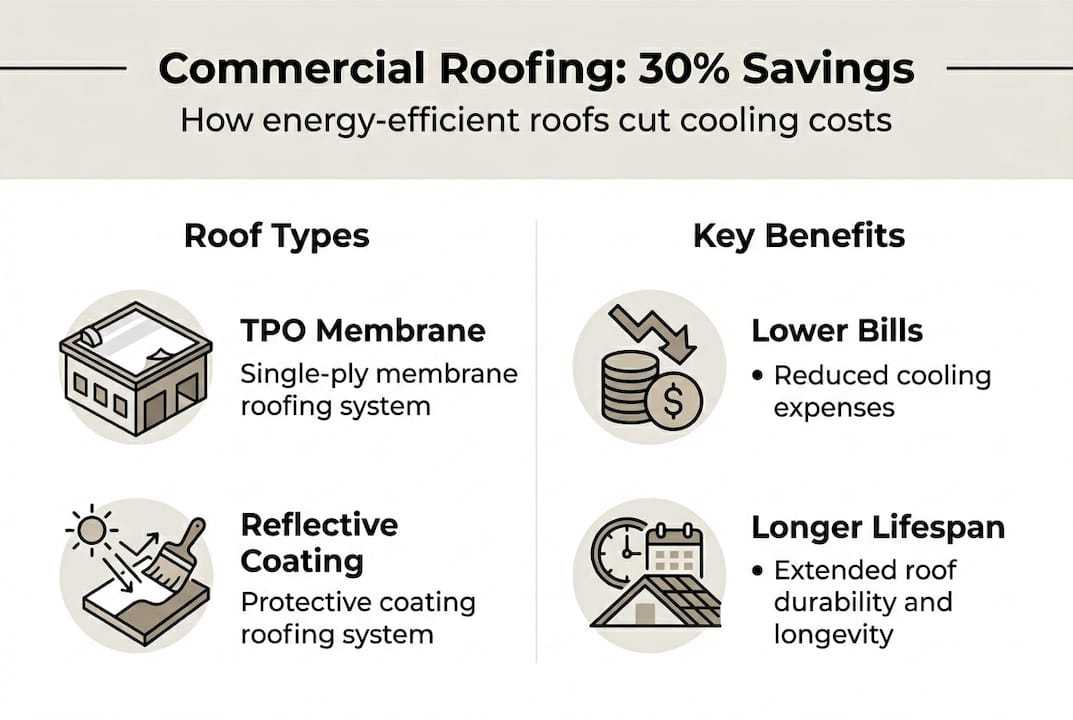
Cool roof retrofits delivering 20 to 30% cooling savings are realistic for Central Florida properties. The key performance metrics to track include SRI rating, thermal emittance, and kWh reduction per square foot per year. Your utility provider may offer benchmarking tools that help you measure actual savings after installation.
Here’s what a practical maintenance checklist looks like for energy-efficient roofing systems:
- Inspect coatings annually. Look for chalking, cracking, or dirt buildup that reduces reflectivity. A simple cleaning can restore much of the original performance.
- Check seams and penetrations twice a year. Membranes like TPO and PVC are extremely durable, but seams near vents, HVAC units, and drains are vulnerability points.
- Address ponding water immediately. Standing water accelerates coating degradation and can compromise the insulation layer beneath.
- Document energy bills quarterly. Track your kWh usage before and after installation to quantify savings for your records and any future incentive claims.
- Plan recoating schedules. Reflective coatings typically need a refresh coat every 10 to 15 years to maintain peak performance.
One thing that surprises many property managers is how little winter heating penalty comes with a cool roof in Florida. Unlike northern markets where a reflective roof might cause heating costs to rise in winter, Central Florida’s mild winters mean you barely feel it. The cooling season so thoroughly dominates your energy profile that the trade-off is almost nonexistent.
“In Florida, annual savings often outweigh modest maintenance costs, making energy-efficient upgrades a high-ROI move for commercial property owners who act early.”
For properties approaching the end of their current roofing system’s lifespan, exploring the commercial roof replacement process alongside an energy upgrade makes strategic sense. You’re already investing in the roof, so layering in energy performance pays dividends from day one.
A smarter approach: What most people miss about energy-efficient commercial roofing
Here’s the honest take after working with commercial properties across Central Florida. Most property managers we talk to underestimate two things: how quickly cool roof retrofits pay for themselves, and how little risk comes with the investment in this climate.
Conventional wisdom sometimes flags cool roofs as a trade-off, suggesting winter heating penalties or excessive maintenance. In Central Florida, that framing simply does not apply. The minimal winter heating penalty in cooling-dominant climates means the math almost always favors action. If your roof is structurally sound, a reflective coating retrofit can deliver measurable savings within the first summer.
The bigger missed opportunity is sustainability incentives. Urban heat island mitigation programs and energy efficiency incentives at both the state and federal level can offset upgrade costs significantly. But these programs require documentation, certified products, and often a pre-installation energy audit. Property managers who skip that step leave money on the table.
Our strong recommendation: start with a detailed energy audit before selecting any product. Quantify your current baseline energy use, identify your peak cooling demand months, and use that data to project ROI for each material option. This takes the guesswork out of the decision and gives you a clear business case to present to ownership or stakeholders. Pairing that audit with certified roofing expertise ensures the installation meets both performance and compliance standards.
Start your energy-efficient roofing upgrade today
If you’re ready to reduce your property’s cooling costs and meet Florida’s energy standards, the right roofing partner makes all the difference.

At Thomas Roofing and Repair, we work with commercial property managers and business owners across Brevard, Volusia, and Orange counties to find the right energy-efficient solution for every building type. Whether you’re exploring commercial metal roofing as a long-term investment or need commercial roof repair in Orlando before the next inspection, we bring certified expertise and honest recommendations to every project. Browse your commercial roofing options and reach out for a free estimate today.
Frequently asked questions
How much money can I save on cooling costs with an energy-efficient roof in Central Florida?
Cool roofs reduce cooling costs by 10 to 30% for commercial properties in hot Florida climates. Your actual savings depend on building size, existing insulation, and current HVAC efficiency.
Are cool roof coatings or TPO/PVC membranes better for commercial buildings in Florida?
Both reduce heat effectively, but membranes typically offer longer-term performance with less upkeep. Coatings are faster to install and more cost-effective for retrofitting a structurally sound existing cool roof materials.
Do energy-efficient roofs require extra maintenance compared to traditional roofs?
Coatings may degrade over time and need periodic cleaning or reapplication, but overall upkeep is manageable and is typically offset by the energy savings generated each year.
Does Florida’s climate mean energy-efficient roofing will increase winter heating bills?
No. Central Florida’s climate has a minimal winter heating penalty, so cool roofs deliver net savings year-round without meaningfully raising heating costs during the mild winter months.
Are there sustainability or incentive benefits for upgrading to energy-efficient commercial roofing?
Yes. Qualifying upgrades can support urban heat island reduction goals and may be eligible for local or federal energy incentives, particularly when installed with certified products and documented through a pre-installation energy audit.