
TL;DR:
- Most impact-rated roofing products in the U.S. are classified under UL 2218 Class 4, which tests durability against 2-inch steel balls impacting the surface. While these materials reduce the risk of leaks and functional failure, they do not prevent cosmetic damage such as dents or granule loss from hail. The effectiveness of hail-resistant roofing depends significantly on proper installation and the surrounding roof assembly components.
For most U.S. homeowners, the best hail resistant roofing types come down to three material families: Class 4 impact-rated asphalt shingles, impact-resistant metal roofing (standing-seam and stone-coated), and synthetic/polymer roofing. Concrete and clay tile also hold up well in specific assemblies, and gravel-surfaced built-up roofing is the top choice for flat commercial roofs. The standard that ties all of these together is UL 2218 Class 4, which requires a product to survive repeated steel-ball impacts simulating 2-inch hail without cracking or rupturing. FM 4473 and FM 4470 cover low-slope and assembly-level testing, with Severe Hail (SH) and Very Severe Hail (VSH) classifications for commercial systems.
One caveat worth stating upfront: Class 4 materials reduce the risk of leaks and functional failure, but they do not prevent cosmetic damage. Metal panels can dent. Shingles can lose granules. Manufacturer warranties commonly exclude cosmetic outcomes. Knowing that distinction before you buy saves a lot of frustration after a storm.
Top hail-resistant roofing types at a glance:
- Class 4 impact-rated asphalt shingles (SBS-modified): best balance of cost, availability, and insurance recognition
- Standing-seam metal roofing: strongest functional protection; cosmetic denting possible depending on gauge
- Stone-coated metal: granular finish reduces visible dents; strong Class 4 performance
- Synthetic/polymer shingles and tiles: lightweight, frequently Class 4 rated, and increasingly available
- Concrete tile: heavy but functionally resistant in most assemblies; requires structural verification
Thomasroofingandrepair installs and inspects all of these material types across Central Florida, including Brevard, Volusia, and Orange counties, and provides storm-damage documentation support for insurance claims.
Table of Contents
- What does “hail-resistant” actually mean, and how do impact ratings work?
- How do the top hail-resistant roofing materials compare?
- How do labs actually test impact resistance?
- What does a Class 4 roof cost, and how does insurance treat it?
- Which installation details actually affect hail performance?
- How do you choose the right hail-resistant roof for your home?
- Why “hail-resistant” is not the same as “hail-proof”
- After a hailstorm: how to assess damage and decide what comes next
- Key Takeaways
- A contractor’s perspective on what actually goes wrong
- Thomasroofingandrepair: inspections, Class 4 installations, and storm-claim support in Central Florida
- Further reading and sources
What does “hail-resistant” actually mean, and how do impact ratings work?
The phrase “hail-resistant” has no universal legal definition. What it actually refers to in the roofing industry is a product’s performance under a standardized lab test, most commonly UL 2218 for steep-slope materials or FM 4473/4470 for rigid and low-slope assemblies.
UL 2218 Class 1 through 4
UL 2218 rates products on a four-class scale. A steel ball is dropped from a set height onto the same spot twice, and the product is inspected for cracking or rupture. Class 4 is the highest rating and requires the product to survive impacts from a 2-inch steel ball with no functional failure. Class 1 uses a 1.25-inch ball; Class 3 uses a 1.75-inch ball. The jump from Class 3 to Class 4 is not cosmetic. A 2-inch hailstone carries significantly more kinetic energy than a 1-inch stone because energy scales with the cube of diameter, which is why Class 4 matters so much in high-risk regions.
What UL 2218 does not measure: surface denting on metal panels, granule adhesion on shingles, or any aesthetic outcome. It tests functional failure only. That distinction is what drives most post-storm warranty disputes.
FM 4473 and FM 4470
FM Approvals uses ice-ball testing rather than steel balls, which more closely simulates real hailstone behavior. FM 4473 applies to individual rigid cover materials; FM 4470 covers full roof assemblies. The FM system classifies performance as Moderate Hail (MH), Severe Hail (SH), and Very Severe Hail (VSH). For commercial and low-slope roofs in high-risk zones, an FM SH or VSH assembly rating is the equivalent of UL 2218 Class 4 on steep slopes.
What to look for on product labels and paperwork:
- UL 2218 Class 4 label (or Class 3 minimum for moderate-risk areas)
- FM 4473 or FM 4470 approval for commercial/low-slope systems
- Manufacturer installation instructions that reference the rated assembly
- Documentation your insurer specifically requires for premium discounts (this varies by carrier)
How do the top hail-resistant roofing materials compare?
No single material wins on every dimension. The right choice depends on your budget, your roof pitch, your local hail risk, and how long you plan to stay in the home. Here is how the main material families stack up across the dimensions that actually matter. For a broader look at material options, the roofing materials comparison guide from Thomasroofingandrepair covers additional performance factors specific to Florida climates.
| Material | Functional protection | Cosmetic damage risk | Installed cost (relative) | Lifespan | Weight | Insurance recognition | Curb appeal | Installer availability |
|---|---|---|---|---|---|---|---|---|
| Class 4 asphalt shingles | Excellent | Moderate (granule loss) | Low–moderate (10–25% over standard) | 25–30 years | Light | High | Traditional | Very high |
| Standing-seam metal | Excellent | Moderate–high (denting) | High | 40–50 years | Moderate | High | Modern/industrial | Moderate |
| Stone-coated metal | Excellent | Low–moderate (granules hide dents) | High | 40–50 years | Moderate | High | Varied | Moderate |
| Synthetic/polymer | Excellent | Low | Moderate–high | 30–50 years | Very light | Growing | Varied | Moderate |
| Concrete tile | Very good | Low–moderate (cracking possible) | High | 30–50 years | Very heavy | Moderate | Mediterranean | Moderate |
| Clay tile | Good–very good | Moderate (brittle profiles) | Very high | 50+ years | Very heavy | Moderate | Mediterranean | Low |
| Gravel-surfaced BUR (flat) | Excellent | Low | Moderate | 20–30 years | Heavy | High (FM-rated) | N/A | Moderate |
| Modified-bitumen (flat) | Excellent | Low | Moderate | 20–25 years | Moderate | High (FM-rated) | N/A | High |
Class 4 impact-resistant asphalt shingles
These are the most practical starting point for most homeowners. SBS-modified asphalt gives the shingle flexibility that standard asphalt lacks, reducing the cracking and puncture that leads to leaks. The cost premium over standard architectural shingles runs roughly 10–25%, which is modest compared to the insurance credits and reduced repair frequency many homeowners see over a 25–30 year lifespan. Installer availability is the highest of any material on this list, which matters when you need a post-storm repair quickly.
The tradeoff: granule loss from repeated hail events can shorten the roof’s life even without a visible leak. That is why post-storm inspections matter even when the ceiling is dry.
Standing-seam metal roofing
Standing-seam panels lock together at raised seams, eliminating exposed fasteners that can fail under impact. Most products achieve Class 4 ratings, and the concealed-fastener design means water intrusion from hail is rare. The functional protection is as strong as any material on this list.
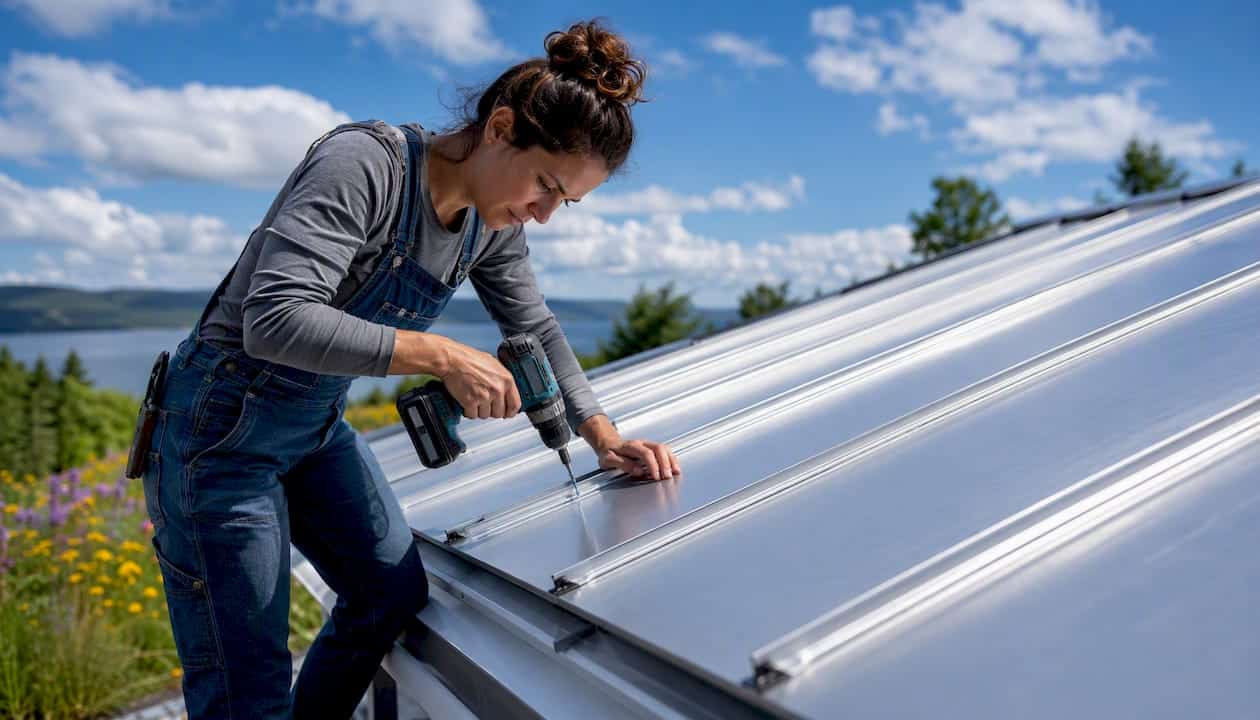
Where metal gets complicated is cosmetic damage. Gauge and coating choice directly affect dent visibility. Thicker gauge (lower number, such as 24-gauge versus 29-gauge) resists permanent indentation better. If you are in a neighborhood with strict HOA standards or plan to sell within a few years, visible denting after a storm can create friction even when the roof is functionally sound.
Stone-coated metal
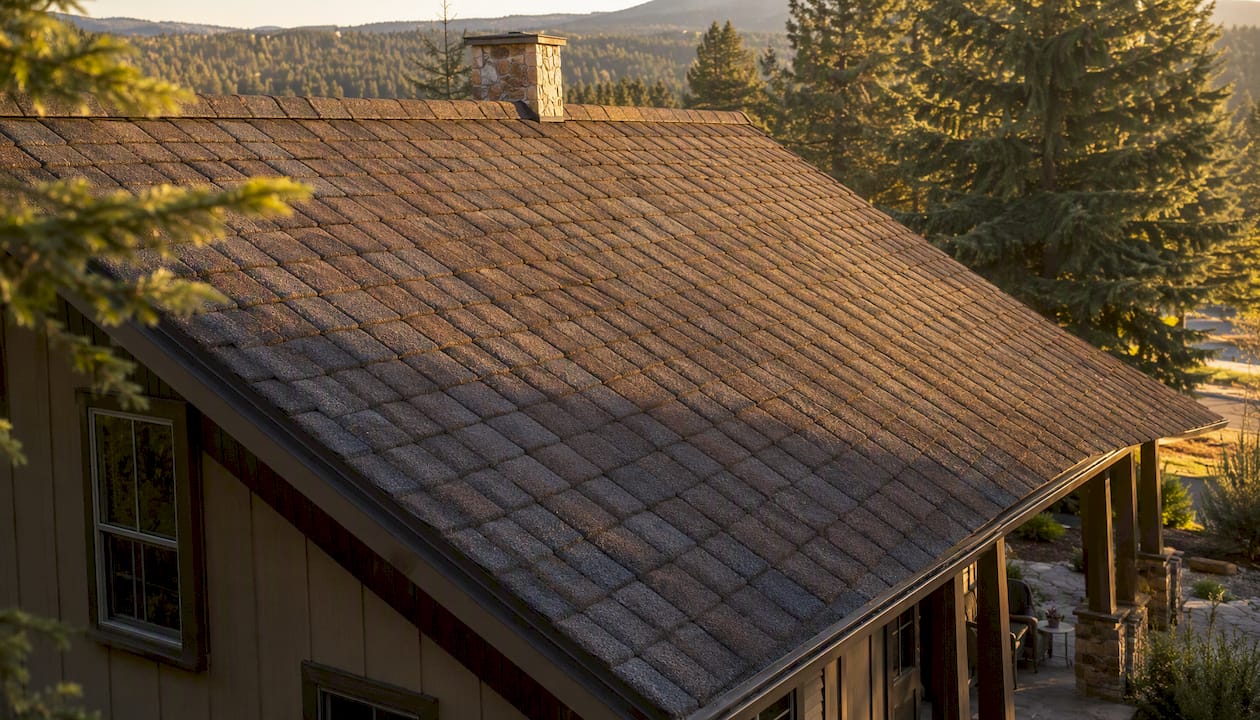
Stone-coated metal panels carry a granular finish bonded to the steel substrate. That finish does two things: it reduces the visual impact of minor dents, and it gives the roof a profile that resembles traditional tile or shingles. Class 4 performance is common across the product category, and the granular layer adds a layer of energy absorption that bare metal panels lack. Lifespan runs 40–50 years with minimal maintenance.
Synthetic and polymer roofing
Synthetic shingles and tiles are made from rubber, plastic composites, or engineered polymers, and many carry Class 4 ratings. Weight is a genuine advantage: they typically weigh a fraction of concrete or clay tile, which means most existing structures can accept them without structural reinforcement. The category has expanded significantly, and appearance options now include convincing slate and wood-shake profiles.
One thing to verify: not all synthetic products are Class 4. Ask for the specific test certificate before committing.
Concrete and clay tile
Both materials offer strong functional resistance in most assemblies, but they behave differently under impact. Concrete tile is dense and generally handles hail well, though large hailstones can crack thinner profiles. Clay tile is more brittle, and certain curved profiles are more vulnerable to direct strikes. The bigger constraint for both is weight: concrete tile typically runs 9–12 pounds per square foot, and clay can exceed that. Older homes may need structural assessment before installation.
For Central Florida homeowners considering concrete tile, Thomasroofingandrepair’s concrete tile repair guide covers inspection and repair specifics for the region.
Low-slope and commercial options
Aggregate-surfaced built-up roofing (BUR) and two-ply SBS modified-bitumen assemblies regularly achieve FM Severe Hail classifications when installed over appropriate coverboards. The gravel layer on BUR absorbs and disperses impact energy before it reaches the membrane. For flat commercial roofs in hail-prone areas, these are the most proven systems.
Pro Tip: When choosing between materials, prioritize functional rating over cosmetic appearance if you plan to stay in the home more than 10 years or if your area sees hail larger than 1.5 inches regularly. The insurance credits and reduced repair cycles on a Class 4 system typically outweigh the upfront premium over that timeframe.
How do labs actually test impact resistance?
Understanding the test helps you read product claims more critically. Two protocols dominate the U.S. market.
UL 2218 drops a steel ball from a fixed height onto a conditioned sample. The same spot is struck twice, and the sample is then inspected for cracking, splitting, or rupture. Steel balls are used because they are consistent and reproducible, not because they perfectly replicate hailstones. Real hailstones are irregular, often have jagged edges, and arrive at varying velocities depending on storm updraft strength.
FM 4473 fires ice balls at rigid cover materials at velocities calibrated to simulate real hail kinetic energy. Because ice balls fracture on impact the way real hailstones do, FM testing is generally considered a closer simulation of field conditions. The energy difference between hail sizes is substantial: a 2-inch hailstone carries many times the kinetic energy of a 1-inch stone, which is why passing at the Class 4 (2-inch) threshold is meaningfully different from passing at Class 1.
Both protocols focus on functional failure. Neither measures denting depth on metal, granule adhesion loss on shingles, or surface cracking that does not penetrate the material. That gap between lab performance and field appearance is where most homeowner frustration originates.
Homeowner verification steps:
- Request the product’s UL 2218 or FM 4473 test certificate by product name and model number, not just a verbal claim
- Check that the label on the physical product matches the certificate (some manufacturers produce both rated and non-rated versions of similar-looking products)
- Ask your contractor for the manufacturer’s installation instructions that reference the rated assembly, since installing a rated product incorrectly can void the rating
- Confirm with your insurer what specific documentation they need before you purchase materials
What does a Class 4 roof cost, and how does insurance treat it?
Cost is where homeowners often get surprised, in both directions.
Class 4 asphalt shingles typically cost more than standard architectural shingles on an installed basis. For a typical residential re-roof, that premium is real but not prohibitive. Metal roofing and synthetic options carry higher upfront costs but longer lifespans, which shifts the math for long-term owners. Concrete and clay tile sit at the high end of the cost range and add structural assessment costs for older homes.
Lifespan matters as much as purchase price. A Class 4 asphalt shingle roof rated for multiple decades versus a standard shingle roof that often needs earlier replacement after repeated storm damage changes the cost-per-year calculation significantly.
Warranties and what they actually cover
Manufacturer warranties on impact-resistant products almost universally exclude cosmetic damage. A dented metal panel or a shingle with granule loss from hail is typically not a warranty claim unless the product has cracked or failed functionally. Read the warranty language before purchase, and pay attention to installation requirements: most manufacturers require specific fastener counts, underlayment types, and documentation to keep the warranty valid.
Insurance premium credits
Insurance discounts for impact-resistant roofs are not automatic. Carriers typically require manufacturer labeling, product model numbers, and installation verification before granting any credit. The discount amount varies by carrier and by state. Some carriers in high-hail states offer meaningful premium reductions for Class 4 roofs; others offer little or nothing.
The practical step: call your insurer before you buy materials and ask specifically what documentation they need and what credit you can expect. Getting that answer in writing protects you if the agent changes or the policy renews under different terms.
Pro Tip: Save the manufacturer’s product label from the packaging, photograph it alongside the installed roof, and keep the contractor’s invoice with the specific product model number. That package is what most insurers need to process a discount, and it is much harder to reconstruct after the fact.
Which installation details actually affect hail performance?
The product rating matters. The installation matters just as much.
Substrate and deck condition
A solid, continuous deck is not optional for rated performance. Roofs installed over spaced boards, aged or soft sheathing, or deteriorated decking transfer impact energy differently than roofs over firm substrates. A Class 4 shingle over a compromised deck can fail under hail that the same shingle would survive over solid plywood or OSB. Before any re-roof, a contractor should inspect and document deck condition, and any soft spots or damaged sections should be replaced.
Metal-specific requirements
For standing-seam metal, 24-gauge steel is the standard recommendation for hail-prone areas; 29-gauge is thinner and more prone to permanent denting. Clip-based (concealed fastener) systems outperform exposed-fastener systems under impact because the fastener itself is not a point of vulnerability. Stone-coated metal benefits from the granular layer, but the substrate beneath the panel still needs to be solid.
Shingle and tile installation
Fastening patterns affect both wind and hail performance. Under-nailed shingles can lift at the edges, creating entry points for water after a hail event even if the shingle itself is not cracked. Manufacturer installation instructions specify nail counts and placement, and those specs are what keep both the warranty and any insurance credit valid. Underlayment choice also matters: a heavier synthetic underlayment provides a secondary moisture barrier if the primary cover is compromised.
Pre-installation and final inspection checklist:
- Confirm deck condition and replace damaged sheathing before installation begins
- Verify the product’s UL 2218 or FM certificate matches the materials being delivered
- Confirm fastener type, count, and placement per manufacturer specs
- Confirm underlayment type and weight per manufacturer requirements
- Request post-installation photos showing fastening pattern and underlayment coverage
- Get a written record of all product model numbers and lot numbers for insurance documentation
Pro Tip: Ask your contractor to photograph the deck condition before sheathing goes down, the underlayment before shingles go on, and the completed fastening pattern on a representative section. Those three photo sets are the documentation package that protects both your warranty and your insurance claim.
How do you choose the right hail-resistant roof for your home?
Decision-making gets easier when you work through it in steps rather than trying to compare everything at once.
- Assess your local hail risk. Central Florida sees hail less frequently than the Great Plains, but when it does occur, storms can produce large stones. Check your county’s historical hail frequency and typical stone size. The NOAA Storm Prediction Center publishes annual severe weather summaries that include hail event data by region.
- Set your budget and timeline. If you plan to stay in the home 10+ years, the lifecycle math favors Class 4 or metal. If you are preparing to sell within 3–5 years, Class 4 asphalt shingles offer the best combination of cost, insurance recognition, and buyer familiarity.
- Choose your material family. Use the comparison table above as a starting framework, then narrow based on your roof pitch (metal and tile have pitch minimums), your home’s structural capacity (tile requires verification), and your aesthetic preferences.
- Get 2–3 firm bids with test certificates. A bid that does not name the specific product and its UL 2218 or FM rating is not a complete bid. Require the certificate with every proposal.
- Confirm insurance credit eligibility before you sign. Contact your carrier with the product name and rating, and get the discount amount and documentation requirements in writing.
- Verify installation documentation requirements. Ask each contractor what they will provide at job completion: product labels, installation photos, fastener documentation, and warranty transfer paperwork.
Questions to ask every contractor:
- Can you provide the UL 2218 or FM 4473 certificate for the specific product you are proposing?
- What is the current condition of my deck, and will you replace any damaged sections?
- What fastener type, count, and placement pattern will you use, and does it match the manufacturer spec?
- What underlayment are you installing, and what is its weight and rating?
- Will you provide post-installation photos and a written product record for my insurer?
Red flags in bids:
- Vague product descriptions (“Class 4 shingles” with no brand or model number)
- No test certificate offered or available
- Labor hours that seem low for the scope (rushed installs skip fastening specs)
- No mention of deck inspection or underlayment specification
Why “hail-resistant” is not the same as “hail-proof”
This is the part most product marketing glosses over.
Class 4 materials reduce functional failure — cracking, rupture, and the leaks that follow — but they do not prevent all damage. A 3-inch hailstone in a severe storm can dent a 24-gauge metal panel, crack a concrete tile, and strip granules from a Class 4 shingle. The roof may remain watertight, but it will show damage. That distinction matters enormously for how you interpret your warranty and your insurance claim.
Manufacturer warranties almost universally exclude cosmetic damage. If your metal roof dents but does not leak, that is typically not a warranty claim. If your shingles lose granules but remain intact, the manufacturer is unlikely to cover replacement. What the Class 4 rating actually buys you is a higher threshold before functional failure occurs, not immunity from the storm.
The substrate plays a larger role than most homeowners realize. A Class 4 cover installed over a deteriorated deck can fail at hail sizes the same product would survive over solid sheathing. The assembly matters, not just the top layer.
Pro Tip: Take dated photos of your roof before storm season each year. If hail hits, those pre-storm photos establish baseline condition and protect you if an insurer tries to attribute pre-existing wear to the storm event.
After a hailstorm: how to assess damage and decide what comes next
Speed matters after a storm. Most insurance policies have claim filing windows, and delay can complicate coverage.
- Do a safe visual inspection from the ground. Look for obvious missing shingles, cracked tiles, or debris on the roof surface. Do not climb the roof immediately after a storm.
- Document everything with photos and video. Capture the date and time in your file names or use a phone that embeds metadata.
- Call your insurer to open a claim. Do this before scheduling a contractor, so the insurer’s adjuster can inspect alongside or before repairs begin.
- Apply emergency tarping if there is visible functional damage. A tarp prevents further water intrusion while you wait for the adjuster. Thomasroofingandrepair provides emergency storm repair services for Central Florida homeowners who need immediate protection.
- Schedule a professional inspection. A contractor inspection documents functional damage (cracked shingles, fractured tiles, compromised flashing) separately from cosmetic damage, which is the distinction your insurer will focus on.
Signs that suggest full replacement rather than repair:
- System-wide granule loss across multiple roof planes
- Multiple fractured or cracked shingles or tiles (not isolated to one area)
- Compromised flashing at valleys, ridges, or penetrations
- Deck damage visible through missing cover material
- Age of the existing roof (a 20-year-old shingle roof hit by significant hail is often better replaced than patched)
What to submit to your insurer:
- Pre-storm and post-storm photos with timestamps
- Contractor inspection report distinguishing functional from cosmetic damage
- Product test certificates for the existing roof (if available)
- Contractor repair or replacement estimate with specific product names and model numbers
- Manufacturer warranty documentation
For a detailed walkthrough of the storm damage assessment process specific to Central Florida homes, Thomasroofingandrepair’s storm damage guide covers documentation steps and common claim pitfalls.
Good post-storm maintenance also extends the life of whatever roof you have. Routine cleaning and inspection after major weather events, covered in detail at White Diamond Pressure Washing’s roof maintenance guide, can catch minor damage before it becomes a claim.
Key Takeaways
Class 4 impact-rated roofing reduces leak risk significantly, but functional protection depends on the full assembly, not just the cover material.
| Point | Details |
|---|---|
| Class 4 is the target standard | UL 2218 Class 4 requires surviving 2-inch steel-ball impacts with no cracking; it is the label insurers and IBHS recommend for hail-prone areas. |
| Assembly beats product alone | Substrate condition, underlayment, and fastening pattern all affect real-world performance; a Class 4 cover over a deteriorated deck can still fail. |
| Cost premium is 10–25% for asphalt | Class 4 SBS-modified shingles cost roughly 10–25% more than standard architectural shingles; metal and synthetic carry higher upfront costs but longer lifespans. |
| Insurance credits require documentation | Discounts are not automatic; carriers typically require manufacturer labels, model numbers, and installation verification before granting any premium reduction. |
| Thomasroofingandrepair covers Central Florida | Thomasroofingandrepair installs Class 4 asphalt, metal, and synthetic roofing across Brevard, Volusia, and Orange counties, and provides storm-claim documentation support. |
A contractor’s perspective on what actually goes wrong
Most hail-related roofing failures that come through Thomasroofingandrepair’s inspection queue are not material failures. They are installation failures on otherwise good products.
The pattern repeats: a homeowner paid for a Class 4 shingle, the contractor installed it over a deck with soft spots that were never replaced, and the first significant hail event produced functional damage that a properly installed system would have survived. The shingle performed as rated. The assembly did not.
The other common issue is documentation gaps. A homeowner upgrades to a Class 4 roof, never saves the product label or gets installation photos, and then cannot get the insurance discount they were expecting. The carrier asks for the UL 2218 label and the model number; the homeowner has neither. That is a fixable problem before installation and an unfixable one after.
For Central Florida homeowners specifically, the hail risk profile is different from Texas or Colorado. Storms here tend to produce smaller stones more frequently rather than the golf-ball-and-larger events common in the Great Plains. That means Class 4 asphalt shingles are often the right call for most residential applications, with metal roofing making more sense for homeowners who want the longest possible lifespan and the strongest functional protection regardless of storm size. For Florida-specific storm material guidance, the local context matters more than national averages.
The recommendation from Thomasroofingandrepair’s field experience: if you are replacing a roof in Central Florida and you are staying in the home for more than a decade, spend the extra 10–25% on Class 4 asphalt or step up to metal. The difference in repair frequency and insurance positioning over that period is real.
Thomasroofingandrepair: inspections, Class 4 installations, and storm-claim support in Central Florida
When you have done the research and you are ready to move from information to installation, the gap between a good material choice and a good outcome is almost always the contractor.
Thomas Roofing & Repair handles the full workflow for Central Florida homeowners: hail damage inspections with written functional-versus-cosmetic damage reports, Class 4 asphalt shingle installation, standing-seam and stone-coated metal roofing, emergency tarping and storm repair, and insurance-claim coordination that includes the documentation package your carrier will ask for.
Every inspection includes a written assessment of deck condition, existing cover material, flashing integrity, and any functional damage from recent storms. That report is what you bring to your insurer, and it is what protects you if a claim is disputed. Financing options are available for qualifying homeowners, and Thomasroofingandrepair backs its installations with manufacturer warranty support.
If you are in Brevard, Volusia, Orange, or surrounding counties and you want a straight answer about which material makes sense for your home and your insurer, schedule a local installation consultation or call for a free estimate. The inspection is the right first step whether you are planning ahead or responding to a recent storm.
Further reading and sources
The claims in this article draw from the following authoritative sources. Each is worth bookmarking if you are comparing products or preparing documentation for an insurer.
- UL Solutions: IBHS and residential roofing shingles impact testing — explains what UL 2218 Class 4 measures and what it does not; useful for reading product labels accurately.
- IIBEC: Impact Resistance of Roof Coverings — technical reference on substrate effects, hail energy scaling, and assembly-level performance; the most detailed publicly available treatment of why installation quality matters.
- EMC Insurance: FM/UL impact-resistance standards guidance — covers FM 4473, FM 4470, and the SH/VSH classification system; useful for commercial and low-slope roof decisions.
- IBHS: Relative Impact Resistance of Asphalt Shingles — IBHS research comparing shingle performance under standardized impact tests; useful for understanding relative product differences within the Class 4 category.
- Professional Roofing: Designing for hail resistance — practitioner-level guidance on specifying assemblies for hail-prone regions, including when VSH classifications apply.
- NOAA Storm Prediction Center: Annual severe weather summaries — historical hail event data by region; use this to assess your local risk before choosing a material.
When reviewing product pages and test certificates, look for the specific product name and model number on the certificate, not just a brand-level claim. A manufacturer may produce both rated and non-rated versions of similar-looking products, and the certificate should match exactly what is being installed on your roof.