
Hiring a local roofer gives you faster emergency response, materials matched to your actual climate, and a contractor who has real skin in the game when it comes to quality. The reasons to choose local roofers go well beyond convenience — they affect how quickly your roof gets fixed, whether your insurance claim succeeds, and whether the warranty holds up two years from now.
TL;DR:
- Local roofers respond faster to storm emergencies and can tarp a damaged roof the same day
- They know your county’s permit requirements and inspector expectations, which prevents costly rework
- Community reputation keeps them accountable in ways a national chain simply cannot replicate
- They match materials to your local weather, not a national spec sheet
- They can attend your adjuster visit and document hidden damage that insurers often miss
- Licensing, insurance, and manufacturer certifications are easier to verify locally
- Itemized quotes from local contractors tend to carry fewer hidden charges
- Supporting a local business keeps dollars in your community and gives you accessible references
Vet at least two or three local roofers using the checklist later in this article before you sign anything.
Key Takeaways
Hiring a local roofer gives homeowners faster emergency response, better code and climate knowledge, and stronger post-job accountability than out-of-area contractors can offer.
| Point | Details |
|---|---|
| Proximity speeds emergency response | Local crews can tarp and assess damage the same day, limiting secondary water damage. |
| Climate and code knowledge reduce rework | Local roofers match materials to regional weather and know county permit requirements, preventing failed inspections. |
| Community reputation drives accountability | A local contractor’s next job depends on your neighborhood’s word-of-mouth, which keeps workmanship standards high. |
| Verify credentials before signing | Confirm state license, general liability, workers’ comp, and manufacturer certification in writing before any contract. |
| Thomasroofingandrepair serves Central Florida | Covering Brevard, Volusia, and Orange counties with emergency repairs, inspections, replacements, and insurance claim support. |
Table of Contents
- Why the reasons to choose local roofers start with proximity
- Do local roofers actually know your climate better?
- How local roofers reduce permit risk and inspection failures
- Why community reputation makes local roofers more accountable
- What credentials should you confirm before hiring a local roofer?
- How local sourcing affects your price and project timeline
- How to handle insurance claims with a local roofer’s help
- What questions should you ask a local roofer before signing?
- What do roofing repairs and replacements actually cost?
- What a local roofer’s perspective actually looks like in practice
- Thomasroofingandrepair covers the full scope Central Florida homeowners need
- Sources
Why the reasons to choose local roofers start with proximity
When a storm tears through your neighborhood at 2 AM and water is dripping through your ceiling, the distance between you and your roofer matters more than any other factor. A local crew can be on-site within hours. An out-of-state storm crew might not arrive for days, and every hour of exposure adds secondary damage: soaked insulation, swelling decking, mold starting in the corners.
Here is what a realistic same-day emergency timeline looks like with a local roofer:
- You call and describe the damage (photos help immediately)
- The roofer arrives for a visual inspection, usually within 2–4 hours
- A temporary tarp or emergency cover goes on the same day to stop water intrusion
- A written damage assessment is prepared for your insurer
- Permanent repair or replacement is scheduled once materials are confirmed
That sequence collapses when the contractor is three states away. Local crews also know which suppliers are open on weekends and which material yards stock what — details that shave days off a project start.
Pro Tip: Before the roofer arrives, take time-stamped photos of every visible damage point from ground level and inside the attic if you can safely access it. Note the time the storm hit. That documentation becomes part of your insurance file.
Common storm scenarios where proximity changes the outcome:
- Missing or lifted shingles after high winds (exposure window before rain returns)
- Active leaks around skylights, chimneys, or pipe boots
- Gutters torn away and pulling fascia with them
- Hail impact on flat or low-slope sections where ponding accelerates damage
Do local roofers actually know your climate better?
Yes, and the difference shows up in material selection and installation details that a national spec sheet will never capture. A roofer based in Central Florida knows that the combination of intense UV exposure, high humidity, and hurricane-season wind loads rules out certain shingle weights and attachment patterns that work fine in the Midwest.
Local roofers match materials and installation methods to regional weather, which means fewer callbacks and longer roof life. Specific examples:
- High-wind zones: Hip roof details and six-nail fastening patterns instead of four-nail, plus sealed starter strips along every eave
- Hail-prone areas: Class 3 or Class 4 impact-resistant shingles, which can also qualify you for an insurance discount
- Salt-air coastal zones: Stainless steel or hot-dipped galvanized fasteners instead of electro-galvanized, which corrode within a few years
- High-UV climates: Heavier-weight shingles with algae-resistant granules and reflective coatings to slow thermal degradation
Weather-related roof failures account for a significant share of homeowner insurance claims every year. A roofer who has replaced dozens of roofs in your specific zip code has seen what fails first and why.
Ask any estimator a direct question: “How does your recommended shingle handle the most common storm type in this area?” If they give you a vague answer, that tells you something.
How local roofers reduce permit risk and inspection failures
Local roofers speed permitting and get installations to pass inspection the first time. That sentence sounds simple, but the mechanics behind it save homeowners real money.
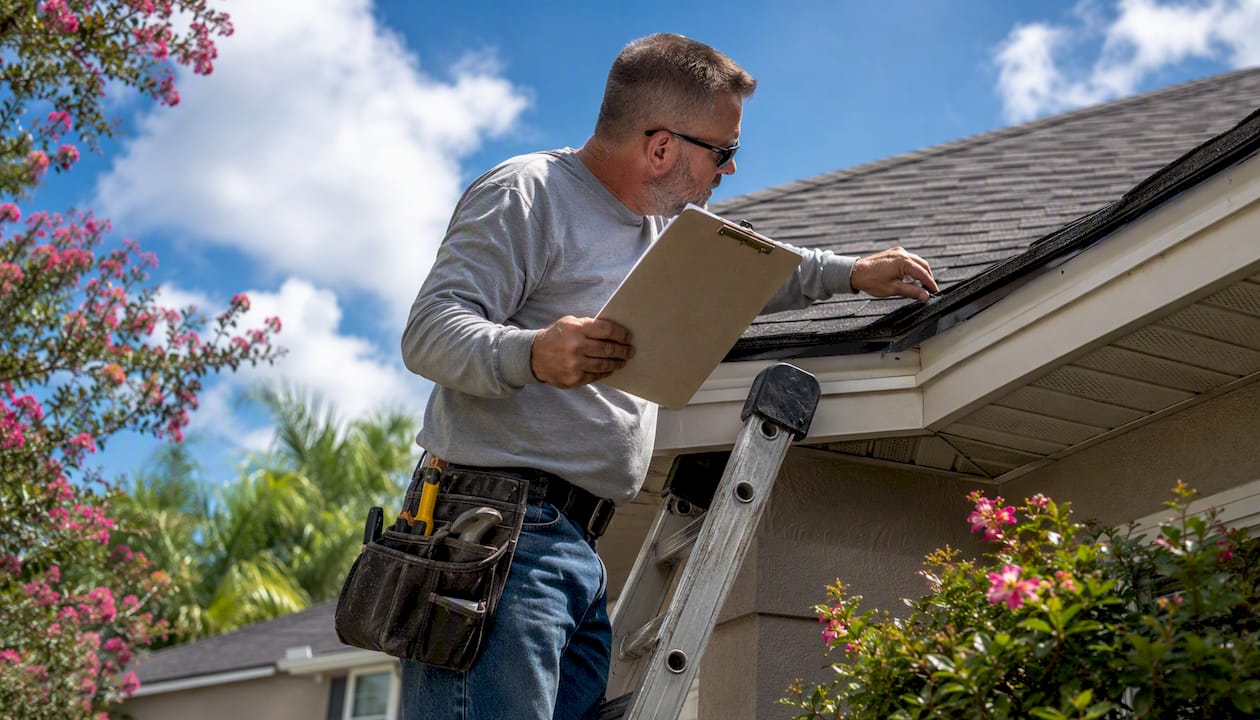
Every county and municipality has its own interpretation of the Florida Building Code (or your state’s equivalent), its own inspector preferences, and its own documentation requirements. A roofer who has pulled permits in Brevard County dozens of times knows exactly what the inspector wants to see on the permit application, what flashing details get flagged, and which ventilation calculations need to be spelled out. An out-of-area crew guesses.
Common permit-related pitfalls that local familiarity prevents:
- Under-specified drip edge or step flashing details on the permit drawings
- Improper attic ventilation ratios that fail the energy code review
- Mismatched fastener patterns between the permit application and the installed work
- Missing ice-and-water shield callouts in freeze-thaw zones
- Failure to list decking replacement scope, which triggers a separate inspection in some jurisdictions
A failed inspection means re-inspection fees, project delays, and sometimes tear-out and redo. Local roofers avoid that cycle because they have built relationships with local inspectors and know the paperwork cold.
Pro Tip: Ask your contractor for the permit number before work begins. You can verify the permit was actually pulled by searching your county’s online building department portal. Never let a roofer start work without a pulled permit — it exposes you to liability and can void your homeowner’s insurance coverage for that work.
For code-aware installation practices, confirm your contractor follows your jurisdiction’s specific requirements, not just a generic national standard.
Why community reputation makes local roofers more accountable
A local roofer depends on your neighborhood for the next job. That dependency creates an incentive structure that national chains, by design, cannot replicate. When a contractor’s next five customers live within ten miles of your house and talk to each other at church or the school pickup line, cutting corners carries a direct financial cost.
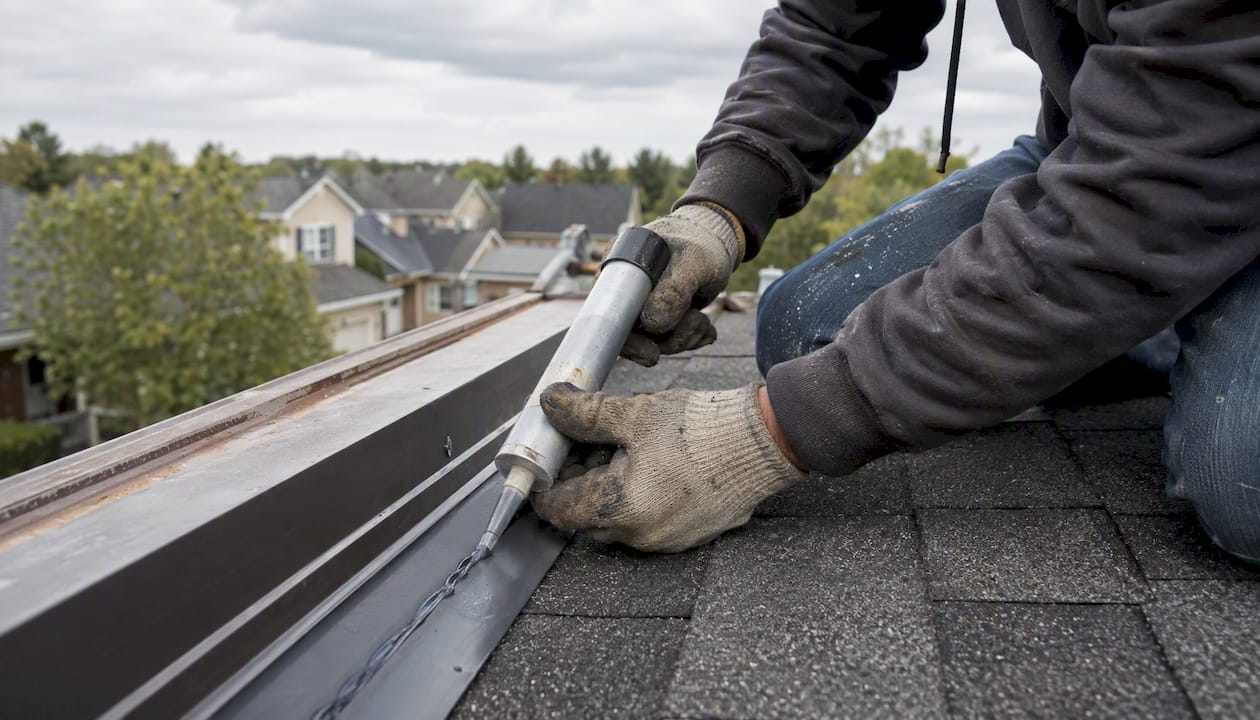
Local roofing companies have more accountability and community reputation at stake, which often leads to higher attention to workmanship and customer communication than national chains. That accountability also makes warranty follow-up far more likely: a local roofer who ignores a warranty call risks losing an entire neighborhood’s worth of future business.
How to verify a local roofer’s reputation quickly:
- Search the company name on Google Maps and read the one-star and two-star reviews specifically — patterns in negative reviews reveal more than the average rating
- Check the Better Business Bureau profile for complaint history and how complaints were resolved
- Ask the contractor for two or three references from jobs completed in the last 12 months in your specific area
- Search the company name plus your city on Facebook — local community groups surface complaints that never make it to formal review sites
- Ask references directly: “Did the crew show up on the scheduled day?” and “Did the final invoice match the written estimate?”
Red flags in reviews to watch for:
- Multiple complaints about crews disappearing mid-project
- Repeated mentions of the company not returning calls after payment
- Reviews that mention a different company name (sign of a rebrand after complaints)
- Testimonials with no specifics about the job type or location
Hiring local roofers also supports the local economy and gives you access to personal referrals from neighbors who have seen the actual finished work.
What credentials should you confirm before hiring a local roofer?
Confirm license, insurance, and manufacturer certification before you sign anything. Those three items protect you from liability, preserve your material warranty, and give you legal recourse if the work fails.
Here is what to ask for in writing:
- State contractor license number: Verify it on your state licensing board’s website (in Florida, that is the Department of Business and Professional Regulation)
- General liability insurance: Minimum $1 million per occurrence; ask for a certificate of insurance naming you as the certificate holder
- Workers’ compensation insurance: Covers crew injuries on your property — without it, you may be liable
- Manufacturer preferred-contractor status: Owens Corning Platinum or Gold Preferred Contractor, CertainTeed SELECT ShingleMaster, or equivalent
- Written workmanship warranty: Separate from the material warranty; covers installation defects for a defined period
Manufacturer certifications from Owens Corning and CertainTeed are key trust signals that protect your material warranty. Most manufacturers require installation by a certified contractor to honor the full warranty term. A non-certified installer can void a 50-year shingle warranty down to 10 years or less.
Manufacturer warranties from Owens Corning and CertainTeed are only fully honored when the installation is performed by a contractor holding current preferred-contractor status with that manufacturer. Always ask for the certification number and verify it on the manufacturer’s website before signing a contract.
Pro Tip: Ask whether the workmanship warranty is transferable to a future buyer. A transferable warranty adds measurable value to your home at resale and signals that the contractor stands behind the work long-term.
How local sourcing affects your price and project timeline
Local supply and staging usually cut hidden costs and shorten lead times. A contractor who orders materials from a regional distributor they use every week gets faster delivery, better pricing, and priority during material shortages — all of which flow through to your project.
Local market knowledge leads to more transparent pricing and fewer surprise charges than out-of-area storm crews who mark up materials to cover their travel and staging overhead.
Use this checklist when comparing itemized quotes:
- Material allowance: is the shingle type, weight, and color specified by name and SKU?
- Labor hours: broken out by phase (tear-off, decking inspection, install, cleanup)?
- Haul-off and disposal: listed as a line item, not buried in a general overhead charge?
- Permit fees: listed at actual cost, not inflated as a profit center?
- Decking replacement: priced per sheet with a clear trigger condition (e.g., soft spots found during tear-off)?
- Drip edge, ice-and-water shield, and underlayment: each listed separately?
| Logistics factor | Local roofer | Non-local / out-of-area crew |
|---|---|---|
| Material sourcing | Regional distributor, familiar pricing | Spot purchases, variable markup |
| Crew staging | Based nearby, lower mobilization cost | Hotel, per diem, travel time baked in |
| Lead time | Days to a week in most cases | Often 1–3 weeks for scheduling |
| Permit familiarity | Knows local requirements | May need to research jurisdiction |
| Post-job warranty access | Easy follow-up call | Difficult; crew may be out of state |
Local roofers often source materials from nearby suppliers, which shortens lead times and can prevent project delays during busy post-storm seasons when national supply chains get stretched.
How to handle insurance claims with a local roofer’s help
Call your insurer first if your policy requires it, but engage a reputable local roofer early for documentation and emergency protection. The sequence matters, and getting it right can be the difference between a fully covered claim and a partial payout.
A professional roofer can document damage and provide a detailed report that strengthens an insurance claim; in some situations, involving a roofer early for emergency covers and documentation is the right call before the adjuster even schedules a visit.
Step-by-step workflow:
- Immediately after the storm: Photograph all visible damage from ground level and inside the attic; note the date and time
- Within 24 hours: Call your insurer to open a claim and ask about their preferred sequence for contractor involvement
- Same window: Contact a local roofer for emergency tarping or temporary mitigation to stop further water intrusion
- Before the adjuster visit: Ask your roofer to be present during the inspection; local contractors identify hidden damage adjusters may miss and provide documentation and advocacy that improves claim outcomes
- After the adjuster visit: Submit the contractor’s written damage report, material receipts for emergency work, and photos of any hidden structural damage alongside the adjuster’s report
- Before signing anything: Review the adjuster’s scope against your contractor’s scope line by line; gaps are negotiable
Documents a local roofer can provide that insurers accept:
- Itemized damage report with photo references
- Material receipts for emergency tarping or temporary repairs
- Photos of hidden damage: compromised decking, failed underlayment, damaged sheathing
- Written estimate with line-item scope matching the adjuster’s damage categories
Storm-chaser warning signs:
- Arrives unsolicited immediately after a storm and pressures you to sign on the spot
- Offers to “handle your deductible” or waive it entirely (this is insurance fraud in most states)
- Asks you to sign an Assignment of Benefits before the claim is even opened
- Has no local address, no verifiable license, and no reviews older than six months
Pro Tip: Never sign an Assignment of Benefits (AOB) document without consulting your insurer or an attorney first. AOB transfers your claim rights to the contractor, which can complicate disputes and limit your ability to negotiate directly with your insurer.
For a detailed walkthrough of the full claims process, the roofing insurance essentials guide covers documentation steps specific to Central Florida homeowners.
What questions should you ask a local roofer before signing?
Use these precise questions and contract checks to separate reputable local roofers from risky providers. The goal is to get specific answers, not polished sales responses.
Questions to ask on the first call:
- What is your state contractor license number, and can I verify it online?
- Do you carry general liability and workers’ comp? Can you send a certificate of insurance today?
- How many roofs have you replaced in this county in the last 12 months?
- Are you a manufacturer-certified installer for the shingles you’re recommending?
- Who pulls the permit, and will you give me the permit number before work starts?
- What does your workmanship warranty cover, and is it transferable?
Questions to ask during the on-site estimate:
- How do you handle decking damage discovered during tear-off? (Look for a per-sheet price, not a vague “we’ll figure it out”)
- What is your payment schedule? (Red flag: any contractor demanding more than 30–40% upfront)
- Who is the crew foreman, and will the same crew be on-site every day?
Red flags that should stop the conversation:
- Pressure to sign the same day with a “today only” discount
- Cash-only payment requirement with no written receipt
- No physical local address (a P.O. box is not a business location)
- Warranty language that says “manufacturer warranty only” with no workmanship coverage
- Vague scope of work: “replace roof” with no material specifications
Contract clauses to review before signing:
- Scope of work: every material by name, weight, and color
- Payment schedule tied to project milestones, not calendar dates
- Change-order process: written approval required before any additional work begins
- Warranty language: duration, what is covered, transferability, and exclusions
- Lien waiver: confirm the contractor will provide one upon final payment
For a full contractor vetting checklist tailored to Florida homeowners, review the questions guide before your first call.
What do roofing repairs and replacements actually cost?
Repair costs and full replacement costs occupy very different ranges, and knowing the spread helps you evaluate quotes without getting anchored to a number that does not apply to your situation.
For most residential repairs — a few missing shingles, a flashing failure, a pipe boot replacement — costs typically run in the hundreds to low thousands of dollars depending on scope and access. A full roof replacement on a standard single-story home lands in a much wider range based on square footage, pitch, material choice, and whether the decking needs replacement.
High-end roof replacements using premium materials or covering large, complex roofs can be quite costly. That figure is a useful ceiling benchmark, not a typical outcome for a straightforward replacement.
| Project type | Typical timeline | Key cost drivers |
|---|---|---|
| Minor repair (1–5 shingles, flashing) | 1–2 days | Access difficulty, material match |
| Moderate repair (section replacement, leak source) | 2–5 days | Decking condition, underlayment scope |
| Full replacement, standard home | 1–3 weeks (permit to final inspection) | Pitch, material grade, decking replacement |
| Storm damage replacement with insurance | 3–6 weeks | Adjuster timeline, supplement negotiations |
Factors that push cost toward the higher end:
- Steep pitch or multiple roof planes (increases labor time and safety equipment)
- Premium material choice (metal, tile, or high-grade architectural shingles)
- Decking replacement beyond the standard allowance
- Permit fees in high-cost jurisdictions
- Second-story or difficult-access structures
For a deeper look at what drives replacement costs and how to protect your investment, the roof replacement guide for Central Florida breaks down the full scope.
What a local roofer’s perspective actually looks like in practice
The difference between a local roofing company and a traveling crew shows up most clearly in the 48 hours after a major storm. A local team already knows which neighborhoods took the worst hits, which suppliers have tarp stock, and which county inspectors are scheduling re-inspections that week. That knowledge is not something you can replicate by dispatching a crew from out of state.
Thomasroofingandrepair operates across Brevard, Volusia, and Orange counties in Central Florida, which means the team has direct experience with the specific combination of hurricane-season wind loads, intense UV exposure, and the permitting requirements of multiple county building departments. When a homeowner in that region calls after a storm, the response is not a scheduling queue managed from a call center. It is a local crew that can be on-site the same day.
That local presence also changes how warranty service works. A contractor who lives and works in the same community as their customers does not disappear after the final invoice. They are reachable, they have a reputation to protect, and they have every incentive to make a warranty call right the first time. For local roofing expertise in Central Florida, that accountability is built into every job.
Thomasroofingandrepair covers the full scope Central Florida homeowners need
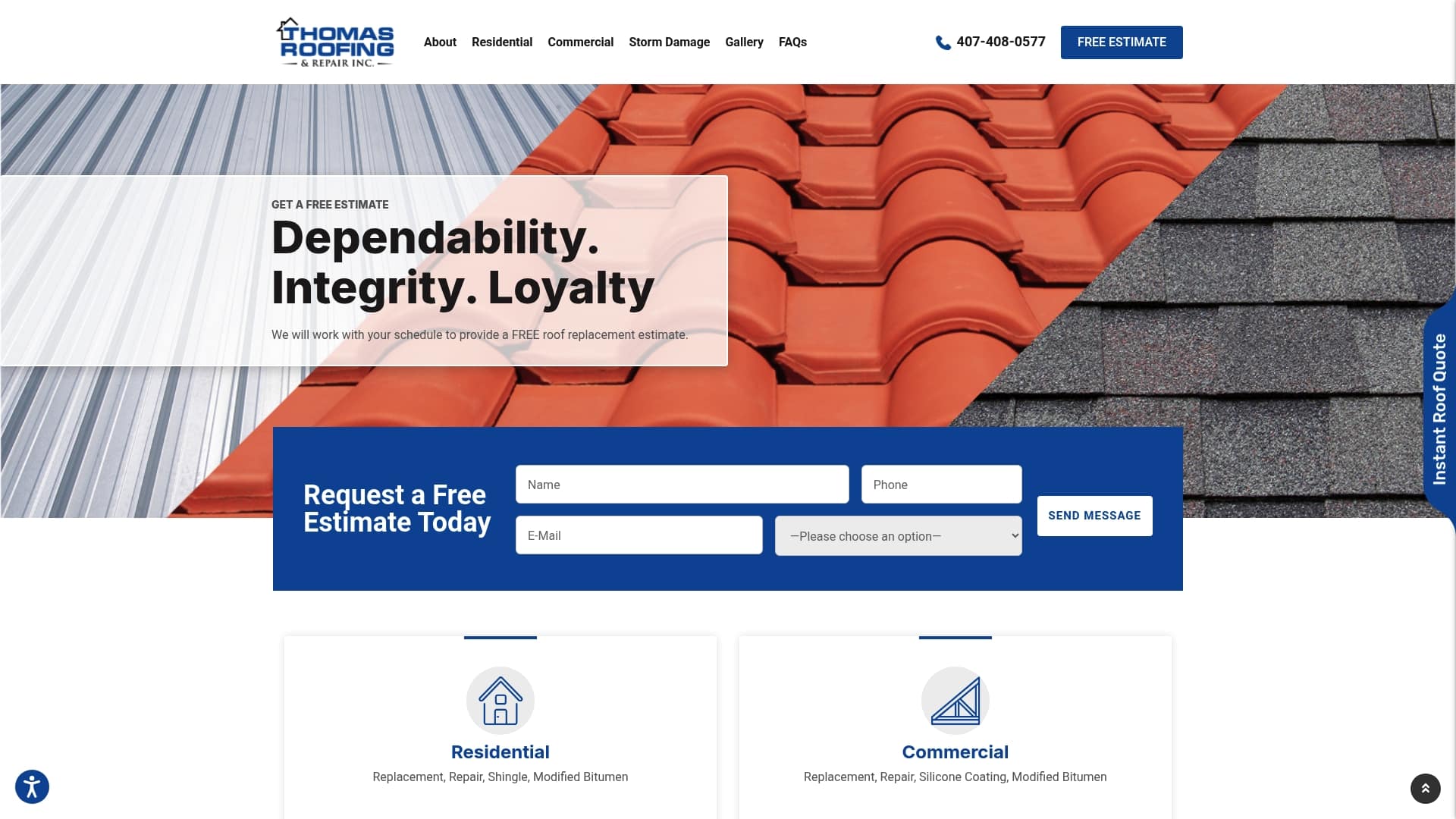
Thomas Roofing & Repair delivers the local services this article describes: same-day emergency tarping, storm damage documentation for insurance claims, full roof inspections, and complete replacement across Brevard, Volusia, and Orange counties. The team holds manufacturer certifications, carries full general liability and workers’ compensation insurance, and provides written workmanship warranties on every job.
For homeowners dealing with active storm damage, the emergency roof repair workflow walks through the exact steps from first call to permanent repair. For those planning a replacement or evaluating their roof’s condition before hurricane season, a free inspection and itemized estimate is the right starting point.
Schedule your inspection with Thomasroofingandrepair and get a written, line-item estimate with no pressure and no vague scope. Call or request an estimate directly through the insurance claims assistance page if storm damage is already in progress.
Sources
The sources below are worth bookmarking if you want to dig deeper into any of the topics covered here. Check the publication date on any third-party page and confirm that code references match your specific county, since building requirements vary by jurisdiction.
- Roof Damage: Should You Call a Roofer or Insurance First? – Colorado Roofing Association
- Local Roofing Company vs National Roofing Chain: Pros and Cons | Homestretch
- National Roofing Chain vs. Local Roofer: Pros & Cons – Shieldline Roofing
- Local vs. National Roofing Companies: Pros & Cons – KFX Roofing
- Local roofers vs. national roofing companies: Exploring the pros and cons
- What Is the Cost of a New Roof? – MKS Construction LLC
When reading any third-party roofing guide, confirm that the code references cite your state’s building code edition and that the cost figures reference your region, not a national average. Local building departments publish their current permit fee schedules online, which is the fastest way to verify what a contractor should be charging for permit pulls.