
 407-408-0577
TL;DR:
- Water can travel horizontally along rafters, making stains inside misleading about leak location.
- Florida’s weather factors like wind, heat, and humidity worsen roof leaks and damage.
- Professional leak detection and forensic inspection are essential for accurate repairs and long-term durability.
That dark water stain on your ceiling probably isn’t sitting directly below your actual roof leak. Water travels laterally along rafters before it drips, which means the stain you see inside your home can be feet away from where water is actually entering. For Central Florida homeowners, this fact matters enormously. Our intense storms, punishing heat, and year-round humidity create conditions that accelerate roof damage and make leak tracing far more complex than in drier climates. In this guide, you’ll learn how leaks actually start, why stains mislead, how Florida’s weather makes things worse, and what you can do to stop repeat problems for good.
Table of Contents
- How roof leaks really start: Mechanics and common entry points
- Why interior stains rarely reveal the true leak source
- Florida climate factors: Wind, rain, heat, and how they impact roof leaks
- Diagnosing, repairing, and preventing roof leaks: Actionable strategies
- Expert verdict: Why quick patches rarely work and forensic inspections matter
- Get professional help for Central Florida roof leaks
- Frequently asked questions
Key Takeaways
| Point | Details |
|---|---|
| Stains mislead | Interior stains often appear far from the roof leak’s actual entry point, requiring expert tracing to find the cause. |
| Florida climate risk | Wind-driven rain, heat, and humidity in Central Florida greatly increase the likelihood and complexity of roof leaks. |
| Penetration-zone leaks | Nearly 90% of leaks begin at roof penetrations or perimeter details, highlighting the need for focused inspection and repairs. |
| Expert diagnosis matters | Forensic roof inspections are critical for identifying the true leak source and preventing repeat damage. |
| Prevention is practical | Regular inspections and proactive maintenance help stop leaks before they start and save homeowners money. |
How roof leaks really start: Mechanics and common entry points
With the surprising truth about hidden leak locations revealed, let’s break down how leaks actually begin and which roof zones are most at risk.
Most homeowners picture a roof leak as a single hole where rain falls straight through. In reality, core leak mechanics include hydrostatic pressure from ponding water, capillary action in tiny gaps, wind-driven infiltration, and condensation buildup in poorly ventilated attics. Each of these forces water into your roof in different ways, and Central Florida’s climate feeds all of them.
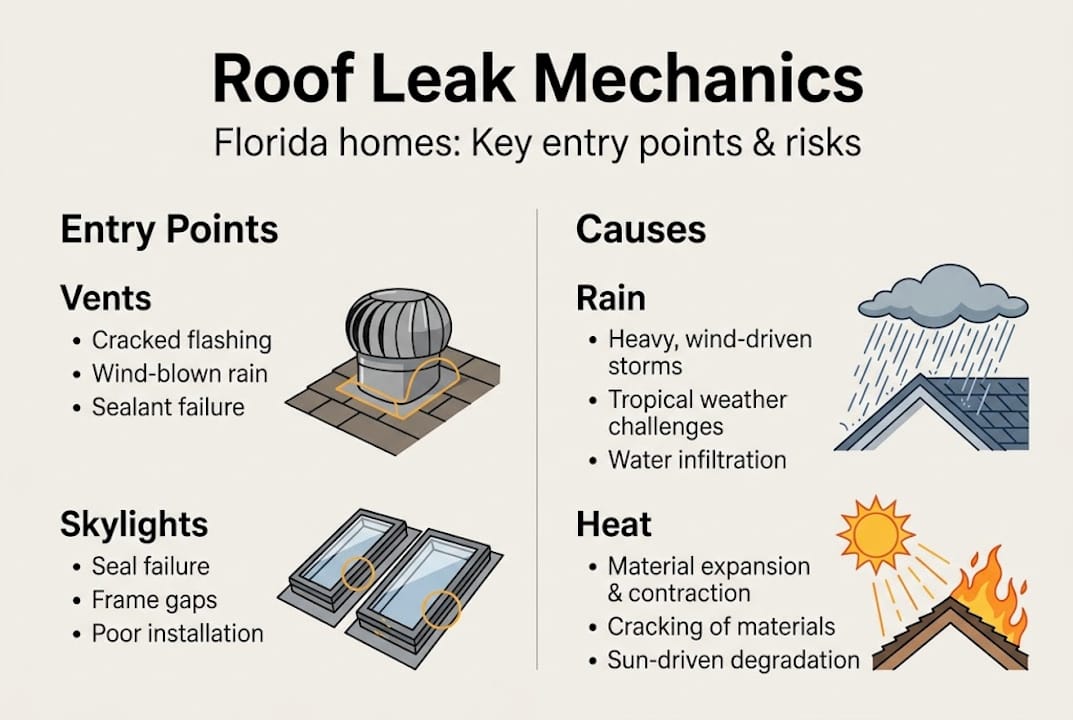
Hydrostatic pressure occurs when water ponds on a flat or low-slope roof. The weight and pressure of standing water forces moisture through even small cracks or imperfect seams. Capillary action is trickier. Water is drawn into microscopic gaps between shingles, flashing, or sealant through surface tension, no downward gravity needed.
Here’s a quick breakdown of the most common leak entry zones:
| Entry zone | Why it’s vulnerable | Florida risk level |
|---|---|---|
| Penetrations (vents, pipes, skylights) | Flashing gaps and sealant failures | Very high |
| Roof perimeter and edges | Wind lifts shingles and flashing | Very high |
| Field shingles (open field) | Cracking or missing shingles | Moderate |
| Valley intersections | Water channels at slope junctions | High |
| Flat roof seams | Ponding and membrane separation | High |
Notably, penetration and perimeter leaks account for roughly 90% of all diagnosed roof leaks. That’s not a minor detail. It tells you exactly where to look first.
Common entry points to watch:
- Around pipe boots and vent collars
- Along roof-to-wall transitions
- At chimney flashing and step flashing joints
- Near gutters and drip edges
- At any skylight frame
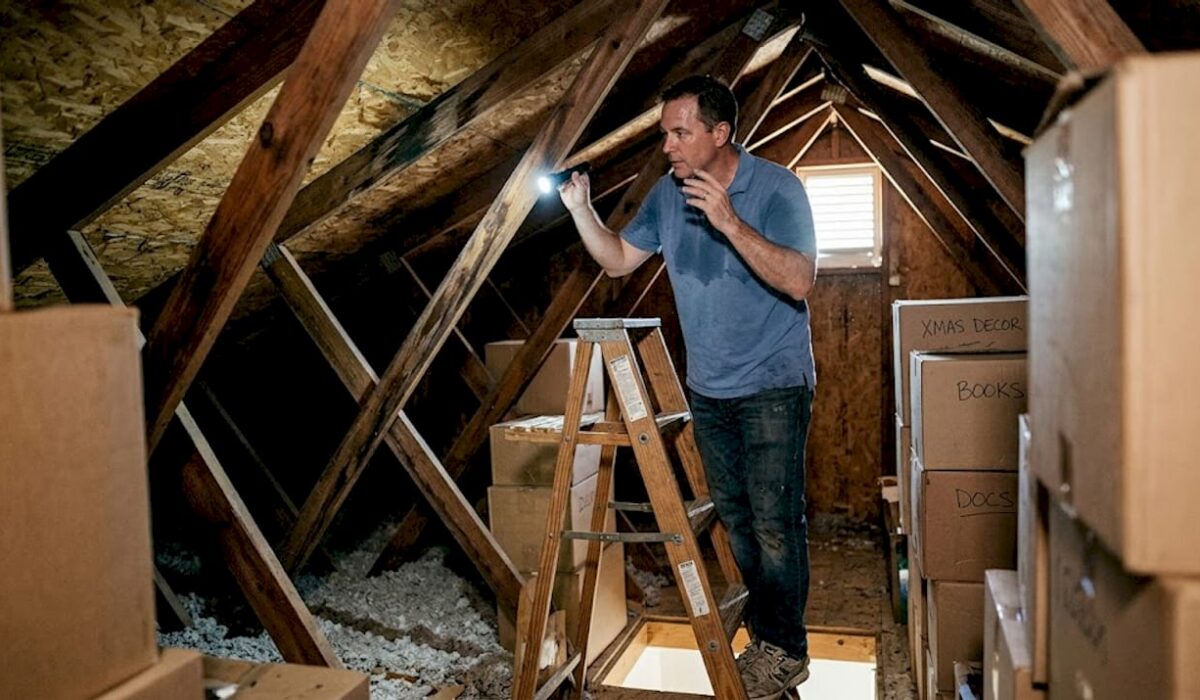
Pro Tip: After a heavy rainstorm, check your attic with a flashlight before the ceiling stain appears. Early moisture on rafters or insulation tells you water has entered before you ever see it downstairs. Understanding the full range of roofing damage types helps you know which zones to prioritize during any inspection. For homes where you already suspect an active leak, roof leak detection by a professional is the fastest way to pinpoint the entry point accurately.
Why interior stains rarely reveal the true leak source
Understanding where leaks enter is only half the battle. Let’s tackle why the stains you see inside your home rarely match the real trouble spot.
When a homeowner calls us after spotting a water stain, the first instinct is to look directly above it on the roof. That’s understandable. But it’s almost always wrong. Water travels along rafters laterally before it drips, so a stain centered over your bedroom may trace back to a failed flashing joint several feet away near a dormer or vent.
This lateral travel happens because water follows the path of least resistance. It runs along the slope of a rafter, pools at a low point, then drips. On steep-pitched roofs, water can travel 6 to 10 feet or more before it ever lands on your ceiling drywall.
“Repairing the stain but not the source leads to repeated failures. Forensic inspection is the only reliable method for accurate leak diagnosis.” — National Roof Authority
Here’s a comparison that shows why this matters so much in practice:
| Approach | What it fixes | Long-term outcome |
|---|---|---|
| Patch ceiling stain only | Interior cosmetics | Leak returns, damage worsens |
| Repair obvious roof spot above stain | Assumed source | Frequently misses actual entry point |
| Forensic roof inspection | True leak origin | Durable repair, no repeat failure |
A forensic inspection traces moisture using tools like infrared cameras, moisture meters, and controlled water testing. Visual-only checks simply can’t replicate this level of accuracy.
How to approach leak tracing correctly:
- Start in the attic during or after rain, not on the roof surface.
- Look for moisture trails or staining on rafters, not just the deck.
- Follow the trail uphill, since water enters above where it drips.
- Note the location of any penetrations, flashings, or valleys near the trail.
- Have a professional confirm findings before any repair begins.
Skipping this process explains why so many roof repairs fail. Homeowners patch what they see, not what’s actually failing. Knowing the roof replacement signs can also help you decide whether a repair makes sense or whether the roof has simply aged past the point of reliable patching. For a clear walkthrough of what comes next, the roof leak repair steps guide covers each phase in plain language. And if you want to understand what a full roof inspection process looks like from a professional’s perspective, it’s worth reviewing before you call anyone out.
Florida climate factors: Wind, rain, heat, and how they impact roof leaks
Now that we know stains can mislead, it’s vital to understand how Central Florida’s notorious weather plays an outsized role in roof leak frequency and severity.
Central Florida doesn’t just get rain. It gets fast, intense storm cells with wind gusts that can exceed 60 mph in a typical afternoon thunderstorm, and far worse during hurricane season. Wind-driven infiltration is a leading mechanism in Florida roof leaks because rain doesn’t just fall down. It hits your roof sideways, forcing water under shingles, through flashing gaps, and around sealants that were never designed for horizontal water pressure.
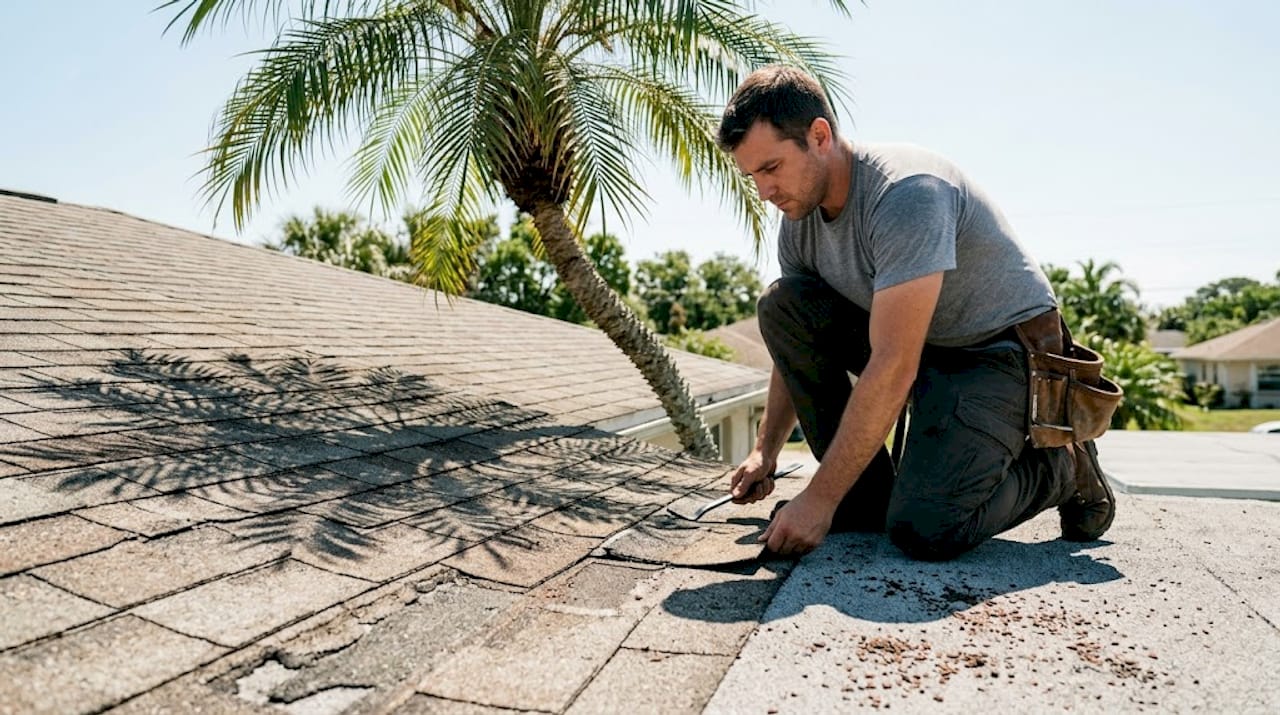
Beyond storms, heat is a constant factor. Asphalt shingles expand in our 90-degree summers and contract overnight. Over years, this thermal cycling cracks and curls shingles, breaks down sealant strips, and loosens fasteners. Then humidity adds another layer of risk. Poor attic ventilation traps moist air, which condenses on the underside of the roof deck and creates moisture damage even when no rain has fallen.
| Florida weather factor | Roof impact | Most vulnerable area |
|---|---|---|
| Wind-driven rain | Forces water under shingles and flashing | Perimeter, rakes, eaves |
| Intense heat | Shingle cracking, sealant failure | Field shingles, ridges |
| High humidity | Attic condensation, wood rot | Decking, rafters |
| Hurricane-force wind | Shingle blow-off, flashing displacement | Entire roof system |
Steps to protect your roof before storm season:
- Schedule a professional inspection each spring before peak storm months.
- Replace any cracked or lifted shingles immediately.
- Reseal all exposed flashing around penetrations.
- Clean gutters and downspouts to prevent perimeter water backup.
- Confirm attic ventilation is working properly to reduce condensation buildup.
Pro Tip: After any storm with winds over 45 mph, do a simple walk-around of your home’s exterior and look for displaced granules in your gutters or shingles sitting on the ground. These are early signs that your roof took a hit even if no stain appears inside yet. Reliable roof leak prevention starts with consistent habits, not just emergency repairs. A structured roof maintenance process can keep your roof resilient through Florida’s harshest months. Homeowners can also benefit from practical roof repair tips Florida that address local conditions specifically.
Diagnosing, repairing, and preventing roof leaks: Actionable strategies
With the environmental impact clear, let’s wrap up with precise strategies you can use today for diagnosing, repairing, and preventing roof leaks, and when expert help is critical.
Diagnosis comes first, always. The biggest mistake homeowners make is skipping straight to repairs without confirming the actual source. Repairing the stain but not the source guarantees the leak returns, often worse than before, because water continues entering and rotting the structure behind the scenes.
Diagnosing a roof leak step by step:
- Enter the attic during or after rain and look for active drips or wet insulation.
- Use a flashlight to trace any moisture trail along rafters back toward its highest point.
- Mark the location from inside, then access the roof and check all penetrations and flashing within a 10-foot radius of your mark.
- If no obvious entry point is found, have a professional use moisture meters or an infrared scan.
- Never assume the stain is directly below the source.
Common repair approaches that actually work:
- Re-bedding and re-pointing deteriorated chimney flashing with appropriate sealant.
- Replacing failed pipe boot collars, which crack and shrink in Florida heat.
- Applying compatible flashing tape over roof-to-wall transitions before any cosmetic repair.
- Patching or replacing individual shingles only after confirming the source underneath.
Pro Tip: Temporary sealants like roofing caulk are fine as an emergency patch during storm season, but they are never a substitute for a proper repair. Budget to have a professional assess any caulked area within 60 days.
Ongoing prevention checklist:
- Inspect twice yearly, in spring and after hurricane season.
- Keep trees trimmed so branches don’t scrape or puncture shingles.
- Address any lifted shingles within days, not months.
- Document roof condition with photos after every major storm.
For a full walkthrough, the roof leak repair guide covers these steps in more detail. Seeing roof repair examples from actual Central Florida homes can also help you understand what proper repairs look like versus quick patches.
Expert verdict: Why quick patches rarely work and forensic inspections matter
After understanding both causes and remedies, here’s the hard truth that most homeowners don’t want to hear: patching what you can see is rarely enough.
We’ve worked on roofs across Brevard, Volusia, and Orange counties where the homeowner had already paid for two or three separate repairs before calling us. In every case, the previous contractors repaired the obvious spot above the stain. But repairing only the stain leads to repeated failures because the actual entry point never got fixed.
Forensic inspection changes that equation. By tracing water’s actual path rather than guessing from a ceiling mark, we find the true entry point almost every time. This isn’t just about saving money on repeat repairs. In Central Florida’s climate, an unresolved leak feeds mold, destroys decking, and weakens structural framing faster than in cooler, drier regions. Investing in accurate professional leak detection upfront costs far less than tearing out rotted wood six months later.
Get professional help for Central Florida roof leaks
Taking practical steps can mean the difference between quick fixes and lasting repairs. Here’s where to turn for expert help in Central Florida.
At Thomas Roofing and Repair, we serve homeowners across Brevard, Volusia, and Orange counties with the kind of thorough, honest assessments that prevent repeat failures. Whether you’re dealing with post-storm damage or a slow, persistent drip that’s stumped you for months, we’re equipped to trace it accurately and fix it right.

Our storm damage repair guide walks you through what to do immediately after a major storm. If you’re in the Titusville area and need repairs fast, our reliable roof repair Titusville team is ready to respond. And if you’d like to start with a thorough evaluation, schedule a professional roof inspection service and get a clear picture of your roof’s actual condition today.
Frequently asked questions
How do I know if my roof leak is caused by Florida storms?
Look for new leaks appearing near the roof’s perimeter or around penetrations after heavy wind-driven rain. Wind-driven infiltration is a key mechanism in Florida storm damage, so timing and location together are strong indicators.
Is it safe to repair a roof leak myself?
Minor surface repairs are possible, but tracing the actual entry point requires expertise and tools most homeowners don’t have. Professional tracing is recommended because repairing only what’s visible often leads to repeated failures.
How often should I inspect my roof for leaks?
Twice a year is ideal, once in spring before storm season and once after hurricane season ends. Regular inspection helps you catch developing problems before they become expensive structural issues.
Can condensation in my attic cause roof leaks?
Yes. When attic ventilation is poor, warm humid air condenses on the underside of the roof deck, creating water stains and wood rot even without any exterior breach. Condensation is a recognized leak mechanism that many homeowners overlook entirely.