
 407-408-0577
TL;DR:
- Roof overlays involve installing new shingles directly over existing ones, saving costs and time.
- Eligibility requires a single, undamaged, flat shingle layer and a sound roof structure.
- Full tear-offs are recommended for longevity, better storm performance, and to uncover hidden damage.
If your Central Florida roof is showing its age, you might assume a full replacement is your only option. That assumption costs homeowners thousands of dollars every year. A roof overlay, which means installing new shingles directly over your existing layer, can extend your roof’s life at a fraction of the cost of a tear-off. But it is not right for every home, and making the wrong call can create bigger problems down the road. This guide covers what overlays are, how to know if your roof qualifies, how they compare to full replacements, and what the installation process actually looks like.
Table of Contents
- What is a roof overlay?
- When is a roof overlay possible?
- Overlay vs tear-off: Which is better for Central Florida?
- How roof overlay works: Step-by-step process
- The real impact of roof overlays: What homeowners miss
- Get expert roof overlay or replacement help in Central Florida
- Frequently asked questions
Key Takeaways
| Point | Details |
|---|---|
| Overlay is not always suitable | A roof overlay works only when the existing roof is flat, undamaged, has one layer, and meets material and slope standards. |
| Tear-off lasts longer | Full roof tear-off replacements provide greater longevity, full warranty access, and higher property value in Central Florida. |
| Overlay saves money short-term | Installing an overlay is faster and less expensive upfront compared to a tear-off, making it attractive for qualified roofs. |
| Inspection is essential | Professional roof inspection is critical to determine overlay eligibility and avoid hidden structural issues. |
| Local climate matters | Florida’s heat, storms, and hurricanes impact performance—choosing the right method protects your home best. |
What is a roof overlay?
A roof overlay is exactly what it sounds like. Instead of tearing off your old shingles before installing new ones, a contractor lays the new shingles directly on top of the existing layer. The result is a refreshed roof surface without the labor and disposal costs of a full tear-off. For homeowners watching their budgets, that difference can be significant.
The basic process follows a clear sequence. A roofing professional first walks the roof to check for soft spots, uneven surfaces, and visible damage. If the existing layer passes inspection, new shingles go on top using nails driven all the way through to the roof deck below. That nailing pattern is critical. According to proper overlay methodology, new shingles must be nailed through to the deck, and the process is only suitable for roofs with a single existing layer.
Here is what makes a roof eligible for an overlay:
- Only one existing layer of shingles is present
- The surface is flat and even, with no buckling or warping
- No soft spots or signs of deck rot underneath
- Shingles are not curling or lifting at the edges
- The roof structure is sound and can handle the added weight
Material choice matters too. Most overlays use asphalt shingles, which are the most common roofing materials in Central Florida. Metal overlays are possible in some situations, but they require material compatibility checks.
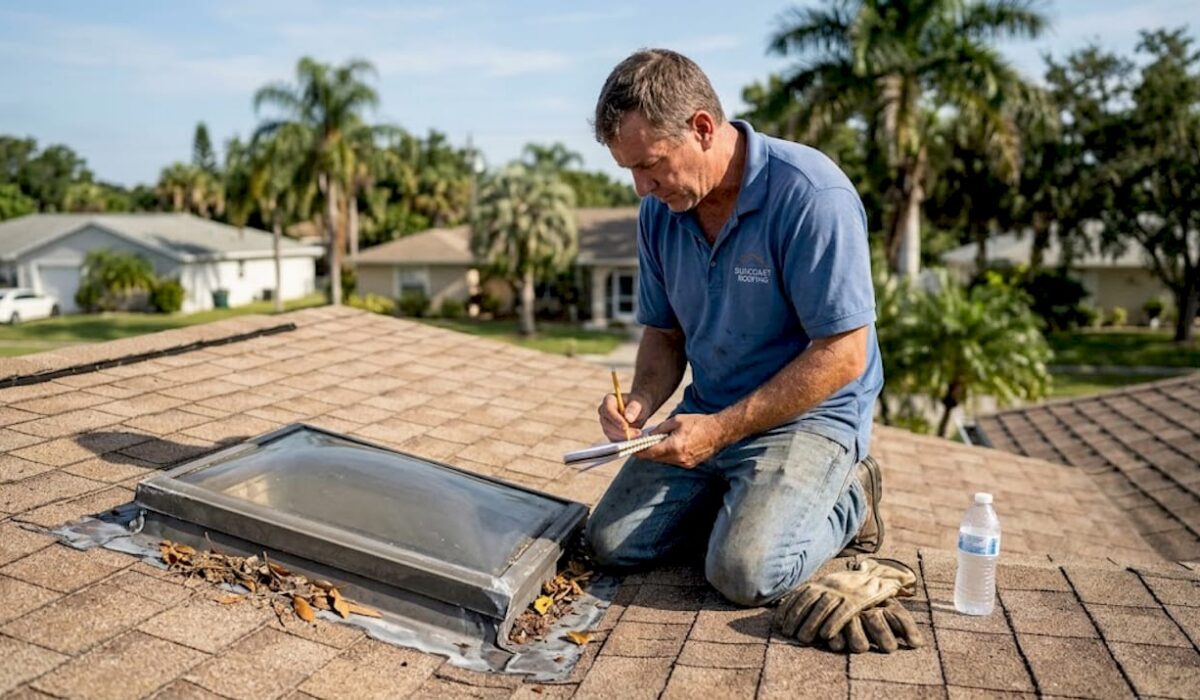
A common pitfall: Homeowners sometimes assume that because their roof looks fine from the ground, it qualifies for an overlay. Surface appearance alone is not enough. A professional inspection is the only reliable way to confirm eligibility.
One thing worth understanding is the weight factor. Adding a second layer of shingles increases the load on your roof structure. Older homes in Central Florida, especially those built before modern building codes, may not have the structural capacity to support two full layers. Your roofer should assess this before any work begins.
With the basics established, let’s now look at the specific criteria that determine if an overlay is possible for your roof.
When is a roof overlay possible?
Not every aging roof qualifies for an overlay. There are specific conditions your roof must meet, and understanding them upfront saves you time and money.
Here are the key qualifying criteria in order of importance:
- Single layer only. Your roof can only have one existing layer of shingles. Most building codes, including those in Florida, prohibit more than two layers total. If your roof already has two layers, a full tear-off is required.
- No curling or warping. Shingles that are curled, cupped, or warped create an uneven surface. Laying new shingles over them traps air pockets and leads to premature failure.
- No soft spots. Any soft areas indicate moisture damage or deck rot beneath the surface. Covering these up without fixing them is a recipe for structural problems.
- Adequate slope. Roofs with a pitch below 2/12 may require an ice and water shield before an overlay can be applied. Low-slope roofs in Central Florida are more vulnerable to standing water after heavy rain.
- Material compatibility. If you want to switch from asphalt to a different material, an overlay is not an option. The new material must match or be compatible with what is already there.
So what disqualifies a roof? Multiple existing layers, widespread shingle damage, evidence of leaks, structural weakness, and low slopes without proper shielding all rule out an overlay. If you are unsure whether your roof is showing replacement warning signs, a professional inspection will give you a clear answer.
Pro Tip: If your roof is 15 years or older and you have never had it professionally inspected, schedule one before assuming an overlay is viable. Hidden damage is common in Central Florida homes due to UV exposure and storm activity.
For homeowners in Brevard County, roof replacement in Melbourne, FL is a common outcome when inspections reveal damage that rules out overlays. And if you are weighing your options more broadly, understanding roof replacement vs repair in Florida can help you make a more informed decision.
If your roof qualifies, it is crucial to weigh overlays against full tear-offs before making a decision.
Overlay vs tear-off: Which is better for Central Florida?
This is the question most homeowners really want answered. The honest answer is: it depends on your roof’s condition, your budget, and how long you plan to stay in your home.
| Factor | Roof overlay | Full tear-off |
|---|---|---|
| Upfront cost | Lower (saves on labor and disposal) | Higher |
| Installation time | Faster (1 to 2 days typical) | Longer |
| Lifespan | Shorter than full replacement | Full manufacturer lifespan |
| Warranty coverage | Limited or none | Full manufacturer warranty |
| Hidden damage detection | Not possible | Full deck inspection |
| Performance in storms | Lower (two layers can trap heat and moisture) | Higher |
| Property value impact | Modest | Stronger |
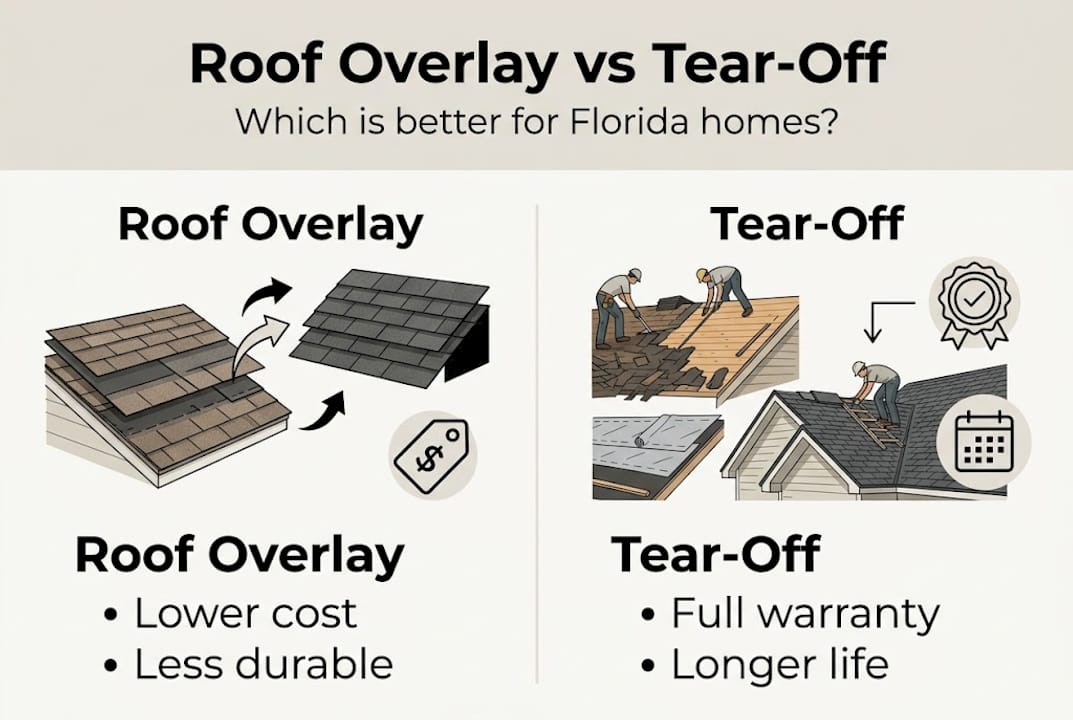
Expert consensus among roofers and manufacturers strongly favors tear-offs for longevity, full warranty access, and better performance in Florida’s heat and hurricane conditions. An overlay can hide underlying issues and may reduce your home’s value if buyers or inspectors discover two shingle layers during a sale.
That said, overlays are not without merit. If your roof is structurally sound, has only one layer, and you need a cost-effective short-term solution, an overlay can buy you several more years. For homeowners who plan to sell within a few years and want to improve curb appeal without a major investment, it can make financial sense.
Florida’s climate adds a specific layer of risk to overlays. The intense UV exposure degrades shingles faster here than in northern states. Double layers trap more heat, which accelerates wear. And during hurricane season, a roof with two shingle layers may not perform as well as one installed over a clean, inspected deck. If you want impact-resistant roofing that holds up in severe weather, a tear-off is almost always the better foundation.
For homeowners focused on maximizing property value in Florida, a full replacement typically delivers a stronger return. If you are still deciding between options, comparing roof replacement vs repair can clarify the financial picture.
Now that you understand the pros and cons, let’s walk through what the overlay process looks like for a Central Florida homeowner.
How roof overlay works: Step-by-step process
Knowing what to expect during an overlay installation helps you ask the right questions and hold your contractor accountable. Here is how a professional overlay job should go from start to finish.
- Initial inspection. The roofer walks the entire roof, checking for soft spots, uneven areas, shingle condition, and existing layer count. This step determines whether an overlay is even possible.
- Deck and structure assessment. The contractor checks that the roof deck and framing can support the added weight of a second shingle layer.
- Edge and flashing preparation. Old flashing around chimneys, vents, and edges is inspected. Damaged flashing is replaced before new shingles go on.
- Starter strip installation. A starter strip is applied along the eaves to create a sealed edge and prevent wind uplift.
- New shingle installation. New roofing materials are laid in overlapping rows, nailed through the existing layer and into the roof deck below. Per overlay installation standards, nailing through to the deck is non-negotiable for structural integrity.
- Ridge cap installation. The ridge line is capped with matching shingles to seal the peak of the roof.
- Cleanup and inspection. Debris is cleared, and the finished roof is inspected for proper alignment, nail placement, and sealed edges.
| Overlay stage | Typical timeframe |
|---|---|
| Inspection and assessment | Half a day |
| Preparation and flashing | 2 to 4 hours |
| Shingle installation | 4 to 8 hours |
| Cleanup and final check | 1 to 2 hours |
Pro Tip: Before work begins, ask your contractor for a written checklist of what was inspected and the results. This protects you if issues arise later and gives you documentation for your homeowner’s insurance.
Having covered the practical side, let’s wrap up with professional advice and unique insight.
The real impact of roof overlays: What homeowners miss
Here is something most roofing articles will not tell you directly: an overlay is a tool, not a solution. We have seen Central Florida homeowners choose overlays to save money, only to spend far more two years later when hidden moisture damage finally broke through. The overlay did not create the problem. It just delayed the discovery.
The real risk is not the overlay itself. It is the false confidence it creates. When new shingles go on top of old ones, everything looks fine. But the deck underneath, the underlayment, and the flashing are all still aging. Florida’s UV intensity and storm season do not pause because your roof looks new from the street.
Our honest take: overlays make sense for a narrow set of situations. Sound structure, single layer, no hidden damage, and a clear short-term plan. Outside of that window, you are likely postponing a larger expense. Understanding how roofing decisions affect your property value is part of making a choice you will not regret.
Get expert roof overlay or replacement help in Central Florida
If you are weighing an overlay against a full replacement, the best first step is a professional inspection from someone who knows Central Florida roofs.

At Thomas Roofing and Repair, we serve homeowners across Brevard, Volusia, and Orange counties with honest assessments and quality workmanship. Whether you need a storm damage repair guide after a rough season, a new roof installation in Horizon West, or a thorough roof inspection in Central Florida, our team is ready to help. Contact us today for a free estimate and find out which option is right for your home.
Frequently asked questions
Is roof overlay allowed on homes in Central Florida?
Roof overlay is allowed if your roof has only one existing layer, is structurally sound, and does not have curled or warped shingles. Always verify with a licensed local roofer, as county codes may vary.
What are the risks of a roof overlay compared to tear-off?
Overlays can hide roof damage, reduce property value, and may perform worse in Central Florida’s heat and storm conditions. A tear-off allows full deck inspection and typically delivers better long-term results.
How long does a roof overlay typically last?
A roof overlay lasts less than a full replacement and often does not qualify for a full manufacturer warranty. Lifespan varies based on shingle quality and local climate conditions.
Can metal roofs be overlaid?
Metal overlays are possible if your existing roof material is compatible, but most residential overlays in Central Florida use asphalt shingles over asphalt shingles.
How do I know if my roof qualifies for an overlay?
Have a licensed roofer inspect for flatness, confirm a single existing layer, check structural soundness, and look for no curled or damaged shingles before committing to an overlay.