
A roof survives a hurricane or tornado when it has a continuous load path, a sealed deck, and a covering rated for local wind and impact conditions. Everything else is secondary. If you’re weighing where to spend time and money before storm season, start here.
Do this now:
- Walk the roofline and check for lifted, cracked, or missing shingles.
- Confirm attic access and look for daylight or water stains at the deck.
- Have loose or damaged shingles re-secured before the next windstorm.
- Ask a contractor about taping deck seams with self-adhering membrane.
- Check that rafter-to-wall connections have hurricane straps or clips.
- Reseal roof penetrations (vents, pipes, chimney flashing).
- Clear gutters and downspouts of debris.
- Trim overhanging branches a safe distance from the roofline.
The standards worth knowing: FORTIFIED from the Insurance Institute for Business & Home Safety (IBHS), FEMA’s wind-resistance guidance, and ASTM D1970 for self-adhering underlayment tape.
Key Takeaways
A storm-resistant roof depends on a continuous load path, a sealed deck rated to ASTM D1970, and a covering matched to documented wind and impact standards.
| Point | Details |
|---|---|
| Structure before cosmetics | Fix roof-to-wall connections and deck attachment before upgrading shingles or tile. |
| Seal the deck properly | Use self-adhering tape rated to ASTM D1970 on all sheathing seams as a second water barrier. |
| Match materials to ratings | Choose shingles, metal, or tile with documented wind and impact test ratings for your zone. |
| Inspect twice a year | Check the roof each spring and fall, plus a fast pass 48 to 72 hours before any forecast storm. |
| Work with a documented contractor | Thomas Roofing and Repair provides inspections, sealed-deck installs, and photo documentation for insurance and FORTIFIED needs. |
Table of Contents
- What Roof Storm-Proofing Strategies Actually Protect Against
- Which Structural Upgrades Matter Most for Storm Resistance
- How Do You Seal a Roof Deck Against Storm Damage?
- What Roof Materials Hold Up Best in Severe Weather?
- Which Roof Components Fail First When the Covering Gives Out?
- How Often Should You Inspect Your Roof for Storm Readiness?
- Is FORTIFIED Certification Worth It for Your Roof?
- How to Vet a Contractor for Storm-Proofing Work
- What a Local Roofer Sees That Homeowners Miss
- Get a Storm-Ready Roof Assessment From Thomas Roofing and Repair
- Sources
What Roof Storm-Proofing Strategies Actually Protect Against
High winds don’t just push on a roof. They create uplift, especially at corners and eave edges, while internal pressure from a broken window or garage door pushes outward on the structure from inside. Wind-driven rain finds any gap in flashing or fastening and gets under the covering long before the covering itself blows off.
The damage pattern usually follows a sequence:
- Uplift starts at roof corners and perimeter edges, where suction pressures run highest.
- Flashing around chimneys, skylights, and walls separates first, opening a path for water.
- Once the deck is exposed, water intrusion spreads fast, even without total roof loss.
- Wind-borne debris, from tree limbs to a neighbor’s patio furniture, punches through weak spots.
Roof failure isn’t a minor line item after a major storm. A majority of post-catastrophe insurance claims involve roof damage(https://basc.pnnl.gov/information/hurricanes-and-high-winds-overview), which tells you where your storm budget should go first.
Which Structural Upgrades Matter Most for Storm Resistance
Strengthen the connections before you touch anything cosmetic. A roof that looks great but lifts off in 90 mph wind gusts was never storm-ready to begin with.
Priority order for structural work:
- Continuous load path. Roof, walls, and foundation need to act as one connected system, not three separate parts held together by nails alone.
- Deck attachment. Re-nailing sheathing with ring-shank nails on the correct schedule dramatically improves resistance to uplift.
- Hurricane straps and clips. These metal connectors tie rafters or trusses to the top plate and are often missing or undersized in homes built before modern wind codes.
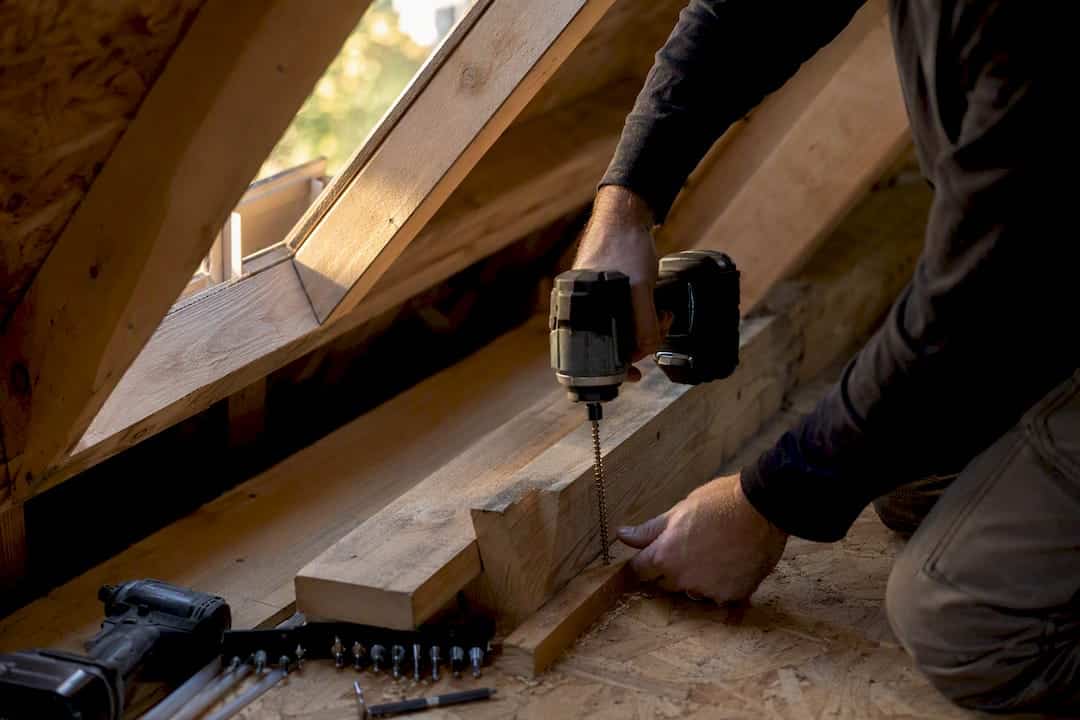
- Engineered structural screws. A retrofit option for homes where full drywall removal isn’t practical.
If your budget is tight, focus on corners and gable ends first. These areas take the highest uplift loads and fail before the rest of the roof does.
Pro Tip: Contractors can often drive engineered structural screws from inside the attic, through the top plate into the rafters, without removing any drywall. It’s a fraction of the disruption of a full retrofit, and it pairs well with a scheduled re-roofing job.
How Do You Seal a Roof Deck Against Storm Damage?
Once the shingles or metal panels fail, the sealed deck is what keeps water out of your attic and walls. That’s why it’s called the second line of defense, and why it needs to be installed correctly, not just present.
FEMA lays out a clear sequence contractors should follow:
- Inspect existing sheathing attachment and replace weak or missing fasteners.
- Clean the deck surface before applying any tape or membrane.
- Apply self-adhering polymer-modified bitumen tape, minimum 4 inches wide, across horizontal and vertical seams.
- Layer underlayment over the taped deck per the manufacturer’s specified method.
- Seal every penetration, then set starter strips and drip edge before the final covering goes down.
The tape itself matters. Insist on a product rated to ASTM D1970, the standard specification for self-adhering modified bitumen sheet membrane. In coastal zones within roughly 3,000 feet of saltwater, fasteners should be stainless steel or hot-dip galvanized. Ordinary electro-galvanized nails corrode fast in salt air and lose their grip long before the roof’s expected lifespan is up.
What Roof Materials Hold Up Best in Severe Weather?
Match the covering to your local design wind pressure, not just to the look you want. A shingle that performs fine in a low-wind inland market can fail in a coastal wind zone rated for stronger gusts.
Ratings worth asking your contractor about:
- ASTM D3161 Class F and ASTM D7158 Class H, the wind-resistance classifications for asphalt shingles.
- UL 2218 Class 4, the toughest impact-resistance rating, relevant if you’re in a hail corridor.
- IBHS impact and hail ratings, which go beyond the UL minimum and test entire product lines.
Metal and tile roofs need site-specific design pressure calculations and attachment schedules; a metal panel that’s bulletproof in one wind zone can still lift in another if it’s under-fastened.
Materials with documented wind and impact resistance aren’t a luxury add-on. IBHS ties FORTIFIED Roof acceptance criteria directly to test-based standards like D3161 and D7158, and insurers increasingly look for that documentation before extending storm-related coverage incentives.
For a closer look at how asphalt, metal, and tile compare on cost and longevity in Florida’s climate, our guide to top roofing materials for storm resistance breaks down the tradeoffs.
Which Roof Components Fail First When the Covering Gives Out?
Vents, soffits, and penetrations are where a structurally sound roof still loses the fight. Wind gets under a loose soffit panel, pressurizes the attic from below, and starts working the roof deck apart from the inside.
Fixes that close these gaps:
- Secure or brace roof and gable vents so they can’t be pried open by wind.
- Install impact-rated skylights, or add temporary shutters ahead of a storm.
- Reinforce soffits and overhangs, especially on gable ends.
- Anchor gutters and downspouts so they don’t tear loose and take fascia with them.
- Trim trees and remove any loose equipment, satellite dishes, or antennas from the roof surface.
Pro Tip: Before a storm makes landfall, cover exposed vent openings, check that fascia boards are fully secured, and pre-cut window boarding if you’re in a coastal evacuation zone. These take an afternoon and can prevent thousands in interior water damage.
How Often Should You Inspect Your Roof for Storm Readiness?
Inspect twice a year, spring and fall, and again after any major wind event. In the 48 to 72 hours before a storm is forecast to arrive, do a fast walk-through rather than starting new repairs.
- Check for nail pops and lifted shingle tabs.
- Look for loose or missing flashing around chimneys and vents.
- Clear debris from valleys, gutters, and downspouts.
- Inspect the attic for daylight, staining, or damp insulation.
- Photograph existing conditions, roof, gutters, and any prior damage, for your insurance file.
- Confirm loose items (grills, patio furniture, trash cans) are stored or tied down.
Sealing a deck or adding straps typically runs a few hundred to a couple thousand dollars depending on roof size and access, far less than a full replacement after storm loss. If wind or debris does get through before a contractor arrives, a properly weighted tarp secured under the shingle line (never nailed through exposed decking) buys time without creating new leak paths. Reactive repairs alone don’t build long-term resilience; scheduled inspection is what actually keeps a roof storm-ready year over year.
Is FORTIFIED Certification Worth It for Your Roof?
FORTIFIED is a systems standard, not a single product upgrade, and it’s built around exactly the priorities in this article: sealed decks, secure connections, and documented materials. For homeowners weighing insurance incentives against project cost, that documentation is often the deciding factor.
What FORTIFIED Roof requires:
- A sealed roof deck using approved tape or underlayment methods.
- Installation by a certified FORTIFIED Roofing contractor.
- Photo documentation and compliance paperwork submitted for third-party review.
- A designation level (Bronze, Silver, or Gold) based on how much of the system meets the standard.
Designation certificates are valid for five years and require independent verification at each stage, not just a contractor’s word. That third-party check is what insurers actually trust when they’re deciding whether to extend a premium discount.
How to Vet a Contractor for Storm-Proofing Work
Hire someone who documents the work, not someone who just shows up and nails shingles. If a contractor can’t explain fastener schedules or underlayment methods, they’re guessing at the parts of the job that matter most in a storm.
Questions worth asking directly:
- Are you a certified FORTIFIED Roofing contractor?
- Will you photograph deck sealing and connection work before the covering goes on?
- What fastener schedule and corrosion protection do you use near the coast?
- Which underlayment method and tape do you install, and is it ASTM D1970 rated?
Demand nail schedules, dated photos, product test data, and itemized invoices at completion. A missing written fastening plan or vague material specs on the estimate are red flags worth walking away from.
What a Local Roofer Sees That Homeowners Miss
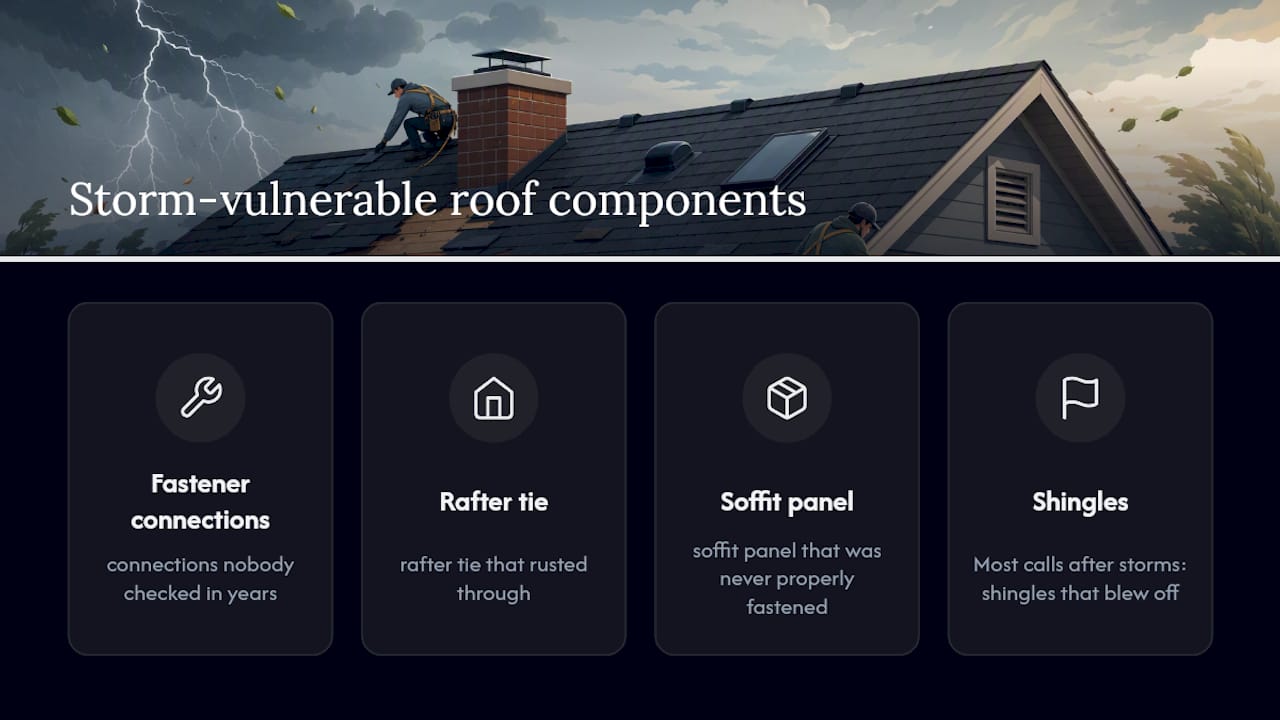
Most calls I get after a storm are about the shingles that blew off, but the real damage usually traces back to connections nobody checked in years, a rafter tie that rusted through, a soffit panel that was never properly fastened. Fix those before you spend money on curb appeal. Working with a contractor who documents fastener schedules and photos also gets insurance claims processed faster, because the adjuster isn’t guessing what was actually installed.
Get a Storm-Ready Roof Assessment From Thomas Roofing and Repair
Homeowners can hire a certified contractor to put every strategy in this article into practice and document each step for insurance and FORTIFIED purposes. That documentation piece is where most local roofing companies fall short, and it’s the difference between a fast claim payout and a drawn-out dispute after the next storm.
Thomas Roofing and Repair serves Central Florida homeowners across Brevard, Volusia, and Orange counties with services built around this exact system-first approach:
- Full roof inspections that check load path connections, not just shingle condition.
- Sealed-deck installations using ASTM D1970 rated tape and underlayment.
- Hurricane strap and clip retrofits for older homes.
- Emergency tarping and rapid post-storm response.
- Insurance claims documentation and support.
Ask for photo documentation and a written installation checklist on any job, storm-proofing work only holds up under insurance review if it’s on paper. If you want a professional look at where your roof stands before the next system rolls through, our roof installation best practices guide walks through what a code-aware job should include, or you can request an inspection directly through Thomas Roofing and Repair.