
The main flat roofing systems are TPO, EPDM, PVC, modified bitumen, built-up roofing (BUR), spray polyurethane foam (SPF), liquid-applied membranes, metal low-slope panels, concrete, and green roofs. Pick by climate and use first: cold climates favor EPDM, hot and sun-heavy roofs do best with reflective TPO or PVC, kitchens and rooftop chemical exposure call for PVC, heavy foot traffic or equipment access points toward BUR or modified bitumen, and buildings needing maximum insulation lean on SPF.
- Cold or shaded climate, tight budget: EPDM
- Hot climate, want lower cooling costs: TPO or PVC
- Grease vents, chemical exhaust, restaurant roofs: PVC
- Rooftop equipment, mechanical traffic: BUR or modified bitumen
- Odd-shaped roof, insulation and waterproofing in one step: SPF
According to the NRCA, single-ply membranes now dominate new low-slope construction, and SPRI sets the seam and wind-uplift standards most of these systems are tested against. Thomas Roofing and Repair installs and services all ten systems across Central Florida, so the rest of this guide breaks down what each one actually costs you in dollars, lifespan, and maintenance headaches.
Key Takeaways
The right flat roofing system depends on matching membrane strengths, climate exposure, and rooftop use to your budget and expected service life.
| Point | Details |
|---|---|
| TPO leads new construction | It combines heat-welded seams with reflective cool-roof performance at a moderate cost. |
| EPDM suits cooler climates | Its 25 to 30 year lifespan and lower cost make it a budget-friendly pick where UV load is lower. |
| PVC wins chemical exposure | Superior chemical resistance makes it the standard for restaurants and grease-exhaust roofs. |
| Maintenance protects lifespan | Recoating SPF, checking seams, and clearing ponding water preserve warranty coverage. |
| Thomas Roofing and Repair matches systems to roofs | Free evaluations help Central Florida property owners pick the right membrane before signing a contract. |
Where Can You Learn More About Flat Roofing Standards?
For technical depth beyond this guide, SPRI publishes single-ply installation and wind-uplift standards, while the NRCA offers broader roofing technical guidance and lifecycle data. The Asphalt Roofing Manufacturers Association covers BUR and modified bitumen specifications, and Coolroofs provides reflectivity and emissivity data behind cool-roof performance claims. The Polyiso Insulation Association details insulation board specs that affect overall roof assembly performance, and the Metal Construction Association documents standing-seam options for low-slope applications.
- Standards and wind-uplift testing: SPRI
- General roofing technical guidance: NRCA
- BUR and modified bitumen specs: Asphalt Roofing Manufacturers Association
- Reflectivity data: CoolRoofs.org
- Insulation specifications: Polyiso Insulation Association
Table of Contents
- Types of Flat Roofing Systems Explained
- How Do Flat Roofing Systems Compare Side by Side?
- How Should You Choose a Flat Roof System?
- What Installation and Maintenance Steps Protect Your Roof?
- Frequently Asked Questions
- Sources
Types of Flat Roofing Systems Explained
Every flat roof system trades off cost, lifespan, and tolerance for water sitting where it shouldn’t. Here’s what separates them.
TPO (thermoplastic polyolefin) ships in wide rolls that installers heat-weld at the seams, creating a fused, monolithic surface rather than a glued one. It leads new commercial installs because it pairs reliable heat-welded seams with reflective cool-roof performance at a lower installed cost than PVC. Expect 15 to 20 years of service life on a properly detailed roof, with manufacturer warranties commonly running 15 to 30 years depending on membrane thickness. It handles heat and UV well but punctures more easily than PVC under heavy foot traffic.
EPDM (rubber membrane) is synthetic rubber that’s been on roofs since the 1960s, typically installed in large sheets bonded with adhesive or seamed with tape. It’s a cost-leading option with a lifespan around 25 to 30 years when detailed correctly, and its long field history makes it a dependable pick for shaded or cooler climates. The tradeoff: its black surface absorbs heat (white EPDM exists but costs more), and taped seams need careful quality control during installation.
PVC also heat-welds at the seams, but its chemistry gives it a real edge in chemical resistance. It’s the preferred single-ply for restaurants and rooftop exhaust areas where grease and solvents would degrade TPO or EPDM over time. Lifespan runs 20 to 25-plus years, though it’s typically the priciest single-ply option per square foot.
Modified bitumen is factory-manufactured asphalt sheet, installed as a base ply plus a cap sheet using torch-applied, cold adhesive, or self-adhered methods. It improves on old-style BUR’s flexibility while keeping a typical lifespan around 15 to 25 years. It’s a solid middle-cost choice for roofs that need some flexibility in temperature swings.
Built-up roofing (BUR), the tar-and-gravel system your grandfather’s building probably had, layers alternating plies of asphalt and felt into a redundant membrane. It’s the oldest low-slope system with a proven track record, delivering 15 to 30 years of service and unmatched tolerance for standing water. It’s heavy, labor-intensive to install, and generally the least reflective option, which hurts cooling bills.
SPF (spray polyurethane foam) sprays on as a liquid, expands into a seamless foam, then gets a protective coating. It combines insulation and waterproofing in one application, giving it a theoretical service life of 30 to 50 years, but it needs recoating roughly every 10 to 15 years to protect the foam from UV degradation. Installation quality matters enormously here; skilled applicators are non-negotiable.
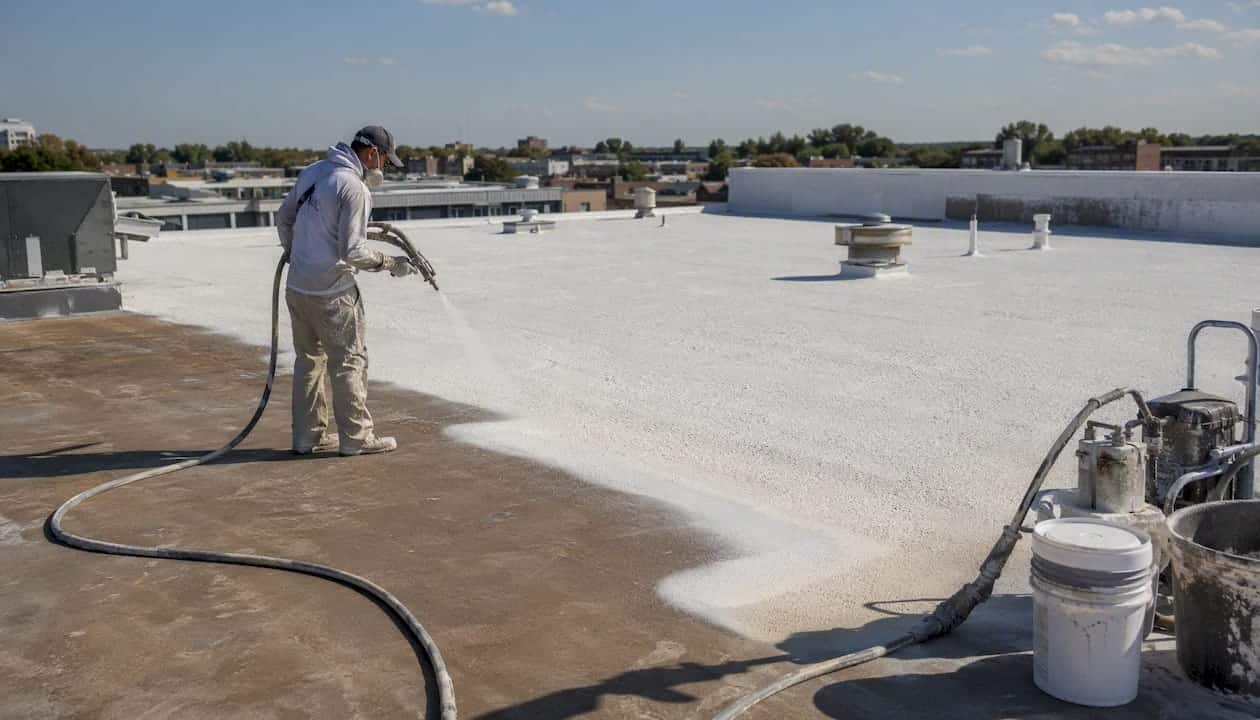
Liquid-applied roofing cures into a fleece-reinforced, seamless membrane that conforms to odd shapes and penetrations better than sheet goods. It works well over many substrates and can be a lower-impact choice with low-VOC formulations, but cure time is sensitive to humidity and temperature, which narrows the installation window.
Metal low-slope systems use standing-seam panels engineered for shallow pitches. They deliver 30 to 50-plus years of service with minimal maintenance, but they need some slope to shed water and carry a higher upfront cost.
Concrete roof decks, more common on commercial and institutional buildings, provide a durable structural base that’s often topped with one of the membranes above. On their own they’re not waterproof, and they’re rarely a residential option.
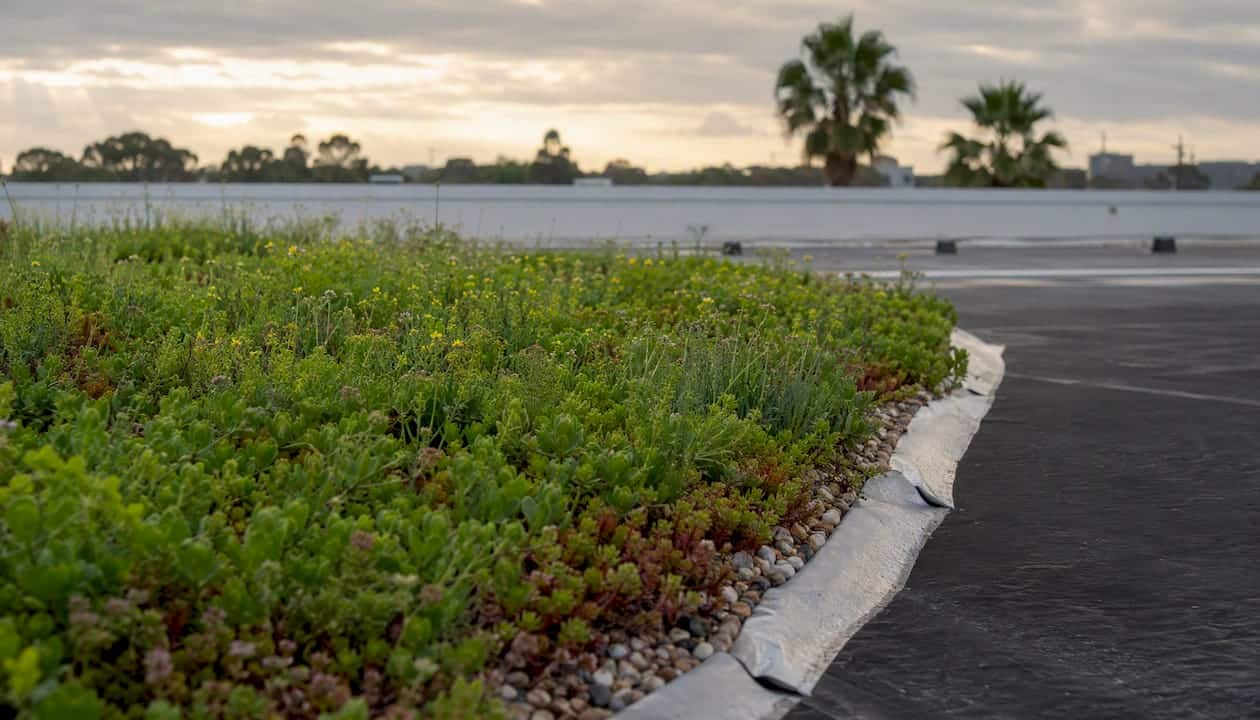
Green roofs layer a waterproof membrane, drainage mat, growing medium, and vegetation. They cut stormwater runoff and add insulation value, but they add significant structural load and require a robust waterproofing layer underneath, since a leak under 6 inches of soil is a nightmare to trace.
Pro Tip: Don’t choose a membrane color before checking your climate. A white reflective TPO roof in a shaded, cool-climate building can actually work against you in winter heating costs, while dark EPDM in Central Florida heat is fighting your air conditioner every afternoon.
How Do Flat Roofing Systems Compare Side by Side?
| System | Lifespan (years) | Relative cost | Seam type | UV/heat performance | Maintenance | Best for |
|---|---|---|---|---|---|---|
| TPO | 15–20 | $$ | Heat-welded | High reflectivity | Low | Commercial, general use |
| EPDM | 25–30 | $ | Adhesive/tape | Low (unless white) | Moderate | Cold/shaded climates |
| PVC | 20–25+ | $$$ | Heat-welded | High reflectivity | Low | Chemical exposure, restaurants |
| Modified bitumen | 15–25 | $$ | Torched/adhered | Moderate | Moderate | Mixed-use, moderate traffic |
| BUR | 15–30 | $$ | Layered/mopped | Low | High | Rooftop equipment, ponding |
| SPF | 30–50 | $$$ | Seamless | Needs recoat | High (recoat cycle) | Irregular roofs, insulation-critical |
| Liquid-applied | 10–20 | $$ | Seamless | Moderate | Moderate | Complex penetrations |
| Metal low-slope | 30–50+ | $$$$ | Standing seam | High | Very low | Long-term, low-maintenance |
| Green roof | 30–50 (membrane-dependent) | $$$$ | Membrane below layers | Excellent (insulating) | High | Amenity space, stormwater goals |
Quick picks: For fastest value, TPO balances cost and performance for most commercial jobs. For sheer longevity with minimal upkeep, metal low-slope wins. For chemical or grease exposure, PVC is the clear answer.
How Should You Choose a Flat Roof System?
Weigh these factors before you call a contractor: your climate and sun exposure, how the rooftop gets used (foot traffic, mechanical units, amenity space), your budget for installed cost versus lifecycle cost, what’s already on the roof deck, drainage and ponding risk, warranty expectations, and how many years you need the roof to last.
Bring these questions to every contractor bid:
- What’s the exact scope, including tear-off versus overlay?
- Which seam method will you use, and is it appropriate for this membrane?
- How will you detail flashing at parapets, drains, and penetrations?
- What warranty coverage comes from the manufacturer versus from you?
- How much experience does your crew have with this specific membrane?
- Can you provide references from similar projects?
- What maintenance will this system require after installation?
Watch for these red flags:
- No documented slope or drainage plan
- Seams that should be heat-welded but are only glued
- Vague or verbal warranty promises
- A bid dramatically lower than others with no lifecycle cost explanation
Pro Tip: A low first-cost bid that skips slope correction or proper flashing details almost always costs more in year three, when the leaks start.
What Installation and Maintenance Steps Protect Your Roof?
Good installation starts below the membrane: proper deck preparation, slope to drains that meets IBC/IRC minimum requirements, correctly detailed flashing, verified seam method, and the right insulation board (often polyiso for its strong R-value per inch under the membrane).
Maintenance needs vary by system, but a general checklist applies:
- Inspect twice yearly and after major storms
- Check seams and flashing terminations for separation
- Address standing water that lasts more than 48 hours
- Recoat SPF and liquid-applied systems on schedule, not when they start failing
Early failures almost always trace back to inadequate slope, poor flashing termination, or mismatched insulation and membrane. Thomas Roofing and Repair’s roof maintenance process walks through the inspection cadence that catches these issues before they become leaks.
Why Contractor Experience Matters More Than the Membrane You Pick
Demand a written scope, manufacturer product data sheets, shop drawings for drains and penetrations, proof of installer certification for your chosen membrane, and a clear warranty package before signing anything.
Two warranties matter here, not one. The manufacturer’s membrane warranty covers material defects. The installer’s workmanship warranty covers whether they put it on correctly. A roof with only one of the two leaves you exposed if something fails.
Before final payment, confirm manufacturer sign-off, photographed flashing and penetration details, and a completed punch list.
What Actually Matters on a Flat Roof Job
Water intrusion prevention and lifecycle cost matter more than sticker price. A properly matched, professionally installed system beats a cheap membrane every time. Prioritize a qualified installer over the lowest bid.
Get a Free Flat Roof Evaluation From Thomas Roofing and Repair
Choosing between ten membrane options is a lot easier with someone who’s installed all of them looking at your actual roof. Thomas Roofing and Repair evaluates your climate exposure, rooftop use, and existing deck condition, then matches you to the system that fits your budget and how long you plan to own the building, not just the cheapest quote on paper.
Beyond new installation, the team handles coatings, emergency storm repairs, and full commercial roof replacement as well as soffit, fascia & gutter repair in Dodge County, WI for buildings across Brevard, Volusia, and Orange counties. Financing options and manufacturer warranty support are available so a system upgrade doesn’t have to strain cash flow in one lump sum. If you’re weighing roofing decisions against long-term property value, the roofing investment strategies page breaks down how material choice affects resale and asset value. Request a free estimate and inspection to get a straight answer on which system fits your roof.
Frequently Asked Questions
What is the most common type of flat roofing system?
TPO is the most widely installed system on new commercial buildings because it balances installed cost, reflectivity, and seam reliability.
Which flat roof system lasts the longest?
Metal low-slope systems and SPF both offer 30 to 50-plus years of service life, though SPF depends on staying current with recoating.
Is EPDM or TPO better for a flat roof?
EPDM tends to cost less and holds up well in cooler, shaded climates, while TPO offers better reflectivity and heat performance for sunnier locations.
How much does a flat roofing system typically cost?
Cost varies significantly by system, roof size, and existing deck condition, but relative cost generally runs from EPDM and modified bitumen on the lower end to metal and green roofs on the higher end. Get a free estimate for pricing specific to your building.
Can you walk on a flat roof after installation?
Some systems, like BUR and certain TPO membranes, tolerate foot traffic better than others. Discuss expected rooftop use with your contractor before installation so they can add walkway pads where needed.