
 407-408-0577
TL;DR:
- In Central Florida, roof lifespans are typically 15 to 20 years due to harsh climate conditions, not 25 to 30 years on ratings. Regular maintenance and prompt repairs are essential, as delayed action increases costs and accelerates damage. Homeowners should schedule inspections, address minor issues immediately, and plan for realistic replacement timelines based on local environmental factors.
Every year, homeowners across Central Florida make expensive mistakes based on outdated assumptions about their roofs. They hold off on repairs, skip annual inspections, or invest in upgraded materials and assume their job is done. The truth is that Florida roofs rarely last as long as their rated lifespans suggest, and the myths surrounding roof care are often the reason why. This article breaks down the most common misconceptions so you can make smarter, more informed decisions about protecting your home.
Table of Contents
- Myth 1: Roofs last their full rated lifespan
- Myth 2: Newer materials guarantee longer life
- Myth 3: Roof maintenance is optional
- Myth 4: Repairs can always wait
- Summary: Myth comparison and recommended actions
- Why ignoring myths could cost you more in Florida
- Solutions for Central Florida homeowners
- Frequently asked questions
Key Takeaways
| Point | Details |
|---|---|
| Florida roofs have shorter lifespans | Local roofs typically last 15-20 years, not their rated maximum, due to harsh climate. |
| Maintenance matters more than materials | Regular upkeep is critical for all roof types in Central Florida, regardless of material. |
| Delaying repairs raises costs | Postponing roof repairs leads to fast-escalating damage and higher expenses. |
| Annual inspections are essential | Inspections each year help spot issues early and keep your roof lasting longer. |
| Myths lead to expensive mistakes | Relying on myths instead of facts often results in preventable spending and roof failure. |
Myth 1: Roofs last their full rated lifespan
This is one of the most persistent beliefs in home ownership, and it causes real financial harm. A 30-year architectural shingle sounds reassuring. But that rating is based on laboratory conditions, not on year-round Florida heat, humidity, and UV exposure.
Here is what actually happens to roofs in Central Florida:
- UV radiation breaks down asphalt binders faster in Florida than in northern climates, reducing flexibility and leading to cracking
- Constant humidity promotes algae and moss growth, which trap moisture against shingles and weaken the mat underneath
- Summer heat cycles cause repeated expansion and contraction, loosening fasteners and creating small gaps over time
- Wind resistance declines significantly as shingles age, making your roof vulnerable long before the rated lifespan ends
- Hurricane season puts stress on roofs every year, compounding damage that accumulates even if no single storm is catastrophic
The realistic lifespan for asphalt shingles in Central Florida is 15 to 20 years, not 25 to 30. Research confirms that shingles lose durability far sooner than manufacturers’ ratings imply in high-heat, high-UV environments. Checking your Florida roof maintenance guide can help you understand what specific warning signs to watch for based on your roof’s age.
The practical impact is significant. If you are planning to stay in your home for another 15 years and your roof is already 12 years old, you need to start budgeting now, not later. Waiting until visible failure appears almost always costs more. Strategies for extending roof lifespan in Florida’s climate exist, but they only work if you start applying them before the decline is too far along.
Myth 2: Newer materials guarantee longer life
Walk into any roofing showroom and you will hear a lot of impressive claims about the latest shingle technology. Impact-resistant ratings, enhanced sealant formulas, polymer-modified asphalt. These innovations are real and they do offer benefits. But they do not eliminate the need for regular maintenance, and they do not reset Florida’s climate challenges.
Here is a comparison that puts material claims in perspective:
| Feature | Older shingles | Newer shingles |
|---|---|---|
| Wind resistance at installation | Moderate | High |
| Wind resistance after 10 years | Low | Moderate to low |
| UV degradation rate | Faster | Slightly slower |
| Maintenance requirement | Annual | Annual |
| Realistic Florida lifespan | 12 to 18 years | 15 to 20 years |
Notice that even with improved materials, overall durability declines after 10 years, which makes regular maintenance non-negotiable regardless of what you paid for the shingles. The gain from newer materials is real but measured in a few years, not decades.
Understanding the importance of roof maintenance alongside material selection is the approach that actually pays off. You would not buy a new car and then never change the oil because the engine is newer. Roofing works the same way. The material is a starting point, not a solution on its own.
When you are weighing roof replacement tips and considering which materials to use, factor in long-term maintenance costs, not just installation price. A slightly more expensive shingle that comes with better warranty support and a maintenance program may save you money over the full ownership period.
Pro Tip: Schedule an annual inspection regardless of how new or premium your roofing material is. Florida’s climate does not care what you paid per square foot.
Myth 3: Roof maintenance is optional
Some homeowners treat roof maintenance the way they treat annual physicals. They know they should do it, but they keep putting it off until something goes wrong. With your health, that can be dangerous. With your roof in Florida, it is almost guaranteed to become expensive.
Neglecting maintenance does not just shorten your roof’s lifespan. It accelerates wear at a rate that catches most homeowners off guard. A small crack in flashing around a chimney or vent might seem minor. Left alone through a rainy season, that crack allows water into the decking below, rotting the wood and eventually reaching the ceiling of your home. What started as a $150 repair becomes a $4,000 structural fix.
“Florida’s combination of UV radiation, extreme heat, and high humidity creates one of the most demanding environments for roofing materials in the country. Proactive care is not optional for homeowners who want their roofs to perform as expected.”
Here is a practical maintenance routine that applies to almost every Central Florida home:
- Inspect visually after every major storm, looking for lifted shingles, missing granules, or debris buildup in valleys
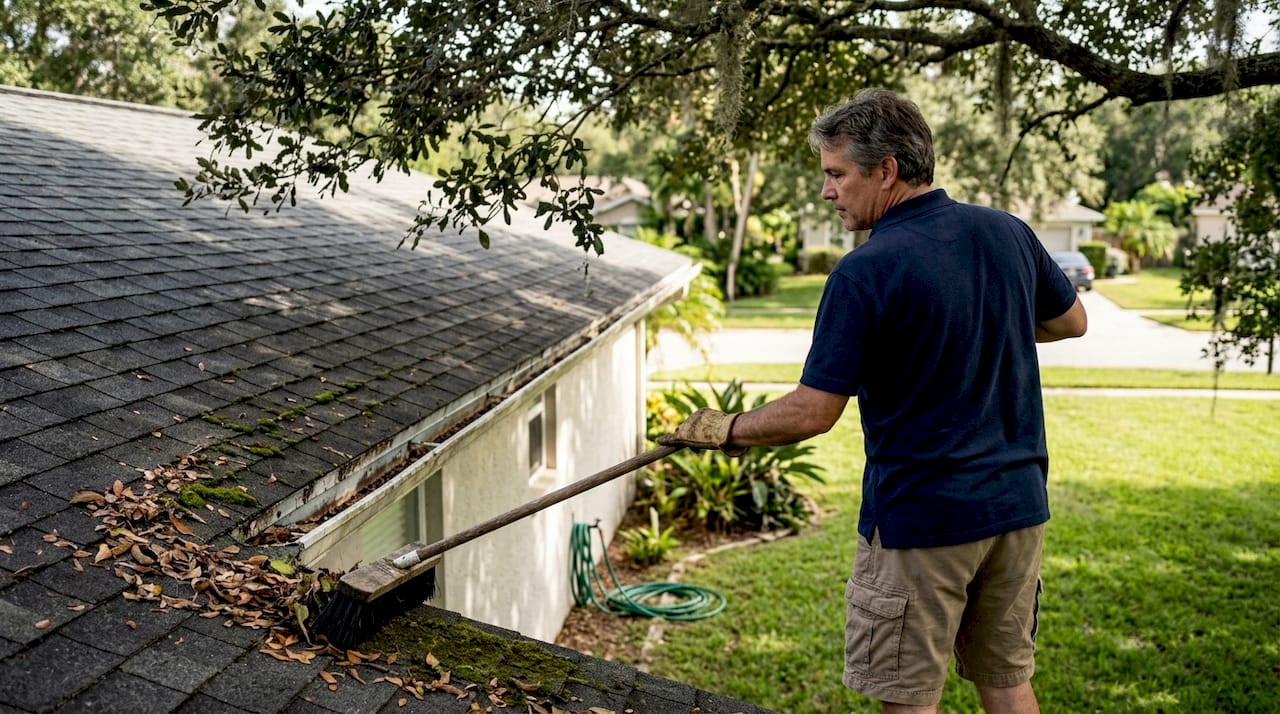
- Clean gutters at least twice a year, in spring and fall, to prevent water from backing up under eaves
- Check for algae or moss growth on shingles and treat early with appropriate zinc or copper applications before the growth spreads
- Examine flashing around chimneys, skylights, and vents for cracks, separation, or rust stains, which often indicate hidden water entry
- Schedule a professional inspection annually, ideally before hurricane season begins, so any vulnerabilities can be addressed before storms arrive
Reliable roof maintenance tips adapted for Florida weather conditions make this process much more manageable. The goal is not just to fix problems after they appear but to catch the early signs of wear that only a trained eye can spot.
Research reinforces this approach. Routine maintenance in Florida’s climate is essential, not just a best practice. When you protect your roof investment with consistent care, you are also protecting the structural integrity and resale value of your entire home.
Myth 4: Repairs can always wait
This myth is understandable. Roof repairs cost money. Life is busy. If the ceiling is not leaking into a bucket yet, the problem does not feel urgent. But in Central Florida, where storm season runs from June through November and afternoon thunderstorms are practically daily events in summer, small damage has almost no chance to stay small.
Here is what delayed repairs actually look like in terms of real costs:
| Damage type | Cost if repaired promptly | Cost if delayed one season |
|---|---|---|
| Minor shingle lifting | $150 to $300 | $800 to $2,000 (decking damage) |
| Small flashing crack | $200 to $400 | $1,500 to $4,000 (structural rot) |
| Granule loss on 10 sq ft | $300 to $500 | $2,500+ (full section replacement) |
| Clogged valley drainage | $100 to $200 | $3,000+ (mold and structural repair) |
The numbers make the case clearly. Delaying repairs exponentially increases costs, especially after storms. Florida homeowners who wait out one rainy season with a known issue almost always face a much larger bill on the other side.
Real-world roof repair examples show the same pattern repeatedly. The original damage was manageable. The delay made it structural. Good roof repair tips always emphasize speed for exactly this reason.
Here is what tends to happen after a major storm in Brevard, Volusia, or Orange County:
- Thousands of homeowners call for repairs at the same time, creating long contractor backlogs
- Uncovered damage is exposed to additional rain while waiting for a repair appointment
- Insurance claims become harder to document as original damage merges with subsequent weather exposure
- Recovery costs rise significantly because what was one contractor’s job now requires multiple trades
A solid storm damage repair guide helps you understand exactly what to document and how to move fast when storms strike your neighborhood.
Summary: Myth comparison and recommended actions
Let’s pull everything together so you can see the full picture clearly.
| Myth | What many homeowners believe | What evidence shows |
|---|---|---|
| Roofs last their rated lifespan | A 30-year shingle will last 30 years | Florida roofs typically last 15 to 20 years |
| Newer materials solve everything | Premium shingles eliminate maintenance needs | Durability still drops after 10 years regardless of material |
| Maintenance is optional | Roofs require little upkeep between replacements | Annual care is essential to fight UV, heat, and humidity |
| Repairs can always wait | Small issues stay small until you are ready | Delays during rainy season multiply costs dramatically |
Fact-based maintenance practices consistently outperform assumptions in extending roof life across Florida’s climate zones. Use this roof maintenance checklist to build a consistent schedule that reflects what the evidence actually shows.
Here are the recommended actions every Central Florida homeowner should take right now:
- Find out the exact age of your current roof and compare it to realistic Florida lifespan expectations, not the rated lifespan on the package
- Schedule a professional inspection before this year’s hurricane season begins, even if your roof looks fine from the ground
- Address any known issues immediately, regardless of how minor they appear, to avoid compounding damage during rainy season
- Build annual maintenance into your home care budget as a non-negotiable line item
- Evaluate roofing materials based on total long-term cost including maintenance, not just upfront installation price
Why ignoring myths could cost you more in Florida
Here is something most roofing conversations miss. The real damage from these myths is not just financial. It is the false sense of security that keeps homeowners from acting until a crisis forces their hand.
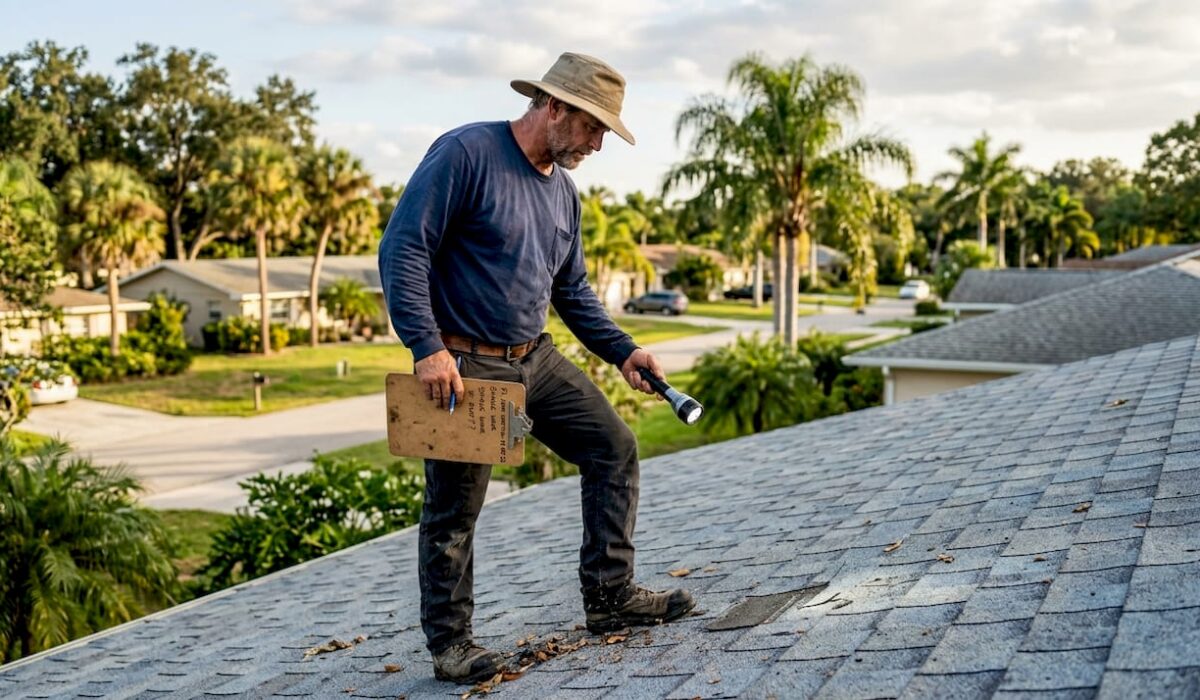
We work with homeowners across Brevard, Volusia, and Orange County who are often surprised to learn that their 12-year-old roof is already past the halfway point of its realistic life in this climate. They assumed it was fine because there were no obvious leaks. But when we get on the roof, we can see granule loss in the valleys, softening of the mat beneath, and flashing that has started to separate in multiple spots. None of those signs were visible from the ground. All of them were quietly accelerating the roof’s decline.
The uncomfortable truth is that Florida’s climate is genuinely unforgiving in a way that national data and manufacturer ratings do not fully capture. When you combine daily UV intensity, temperatures that routinely exceed 90 degrees for months at a time, tropical humidity, and an active storm season, you get an environment that simply wears roofing materials down faster than almost anywhere else in the country.
Responding to that reality is not pessimistic. It is practical. The homeowners who maintain their roofs consistently, address repairs quickly, and plan ahead for replacement at realistic timelines are the ones who avoid the $15,000 emergency replacements that come after years of delayed decisions. Our roofing advice articles go deeper on many of these topics if you want to keep building your knowledge.
The biggest mistake is not the one you make in a storm. It is the months and years of avoidable delay that make every problem worse.
Solutions for Central Florida homeowners
Understanding the myths is one thing. Doing something about them is another.

At Thomas Roofing and Repair, we work with homeowners throughout Brevard, Volusia, and Orange County who want straightforward, honest assessments of their roof’s condition and a clear plan for protecting their investment. Whether you need a professional inspection before hurricane season, help with storm damage documentation, or guidance on whether repair or replacement makes more sense for your situation, we are here with the local expertise that Florida homes actually need. Our maintenance process for Florida homes is designed specifically around the climate conditions you live with every day. Contact us to schedule your free estimate and take the first practical step toward real roof protection.
Frequently asked questions
How long do asphalt shingle roofs really last in Central Florida?
Most asphalt shingle roofs last 15 to 20 years in Central Florida because UV and humidity break down materials much faster than in cooler, drier climates, regardless of the rated lifespan printed on the package.
Can newer roof materials withstand Florida’s climate much better?
Newer materials offer genuine improvements in wind resistance, but overall durability declines after 10 years even with advanced shingles, making consistent maintenance just as important as the material you choose.
Does regular roof maintenance really extend the lifespan?
Yes, proactive maintenance consistently extends roof life by catching early deterioration before it becomes structural damage, and routine care in Florida directly combats the accelerated wear caused by UV exposure and humidity.
How quickly should roof repairs be completed after damage?
Repairs should be handled as soon as possible, ideally within days of discovery, because delaying repairs after storms allows subsequent rain events to dramatically multiply both the damage and the eventual repair cost.
Is annual roof inspection necessary for Florida homes?
Annual inspection is strongly recommended in Florida because visible signs of serious damage often appear only after significant underlying deterioration, and catching issues early through professional assessment keeps small problems from becoming major structural failures.