 407-408-0577
TL;DR:
- Storm-resistant roofing features include impact-rated shingles, secure fastening patterns, and self-adhering underlayment designed to withstand severe weather. Proper installation and certification, such as IBHS FORTIFIED, significantly reduce storm damage risk and insurance claims. Regular pre-storm inspections and documentation are essential for maintaining a storm-ready roof system.
Storm-ready roofing features are specialized components and materials designed to withstand hail, high winds, and heavy rain to keep your home structurally secure during severe weather. The roofing industry refers to this as storm-resistant roofing, a system built around three measurable pillars: impact resistance, wind uplift resistance, and water shedding. For homeowners in Central Florida and other storm-prone regions, understanding these features is not optional. A roof that fails in a hurricane does not just leak. It exposes your entire home to catastrophic loss.
1. Impact-resistant shingles rated to UL 2218 Class 4
Impact resistance is the first line of defense against hail and wind-driven debris. The UL 2218 standard uses a four-class system to rate roofing materials, and Class 4 is the highest level of impact resistance available. A Class 4 product must survive a 2-inch steel ball dropped from 20 feet without cracking. That is the equivalent of large hail striking your roof at terminal velocity.
Products like GAF Timberline AS II and Grand Sequoia AS use SBS polymer-modified asphalt to achieve this rating. These shingles also meet ASTM D3161 Class F wind and ASTM D7158 Class H uplift standards, making them a complete storm-resistant package. Beyond protection, Class 4 ratings often qualify homeowners for insurance premium discounts. That financial benefit alone can offset a significant portion of the upgrade cost over time.
Pro Tip: Ask your insurance provider specifically whether a UL 2218 Class 4 rating qualifies for a discount in your county before you purchase materials. In Florida, the savings can be substantial.
Metal roofing is another strong option for wind resistant roofing materials. Standing seam metal panels interlock at the seams, eliminating exposed fasteners and dramatically reducing the chance of wind-driven water infiltration.
2. Wind-resistant fastening patterns and corrosion-proof nails
Wind uplift is not a downward force. It is a negative pressure event where wind pulls the roof surface upward from the outside. Wind-driven uplift pressure is the primary failure mode in hurricanes, which means the way your shingles are nailed down matters more than most homeowners realize.
In Florida’s High Velocity Hurricane Zone (HVHZ), the Florida Building Code mandates a 6-nail-per-shingle pattern using hot-dipped galvanized or stainless steel nails. Standard residential installation outside HVHZ typically uses four nails per shingle. That difference in fastener count translates directly to how much uplift force your roof can resist before a shingle tears free.
Three fastening details separate a code-minimum roof from a genuinely storm-proof roof:
- Nail count: Six nails per shingle in hurricane zones, four in standard zones.
- Nail material: Hot-dipped galvanized or stainless steel only. Electro-galvanized nails corrode faster in coastal humidity and lose holding power.
- Nail placement: Nails must hit the nailing strip precisely. Off-target nailing reduces pull-through resistance by a measurable margin.
Pro Tip: Request a wind mitigation inspection report after your roof is installed. This document verifies nail patterns and fastener types, and it is required by most Florida insurers to qualify for wind mitigation discounts.
3. Self-adhering peel-and-stick underlayment
Traditional felt underlayment tears in high winds and absorbs water when exposed. Self-adhering peel-and-stick membrane underlayment bonds directly to the roof deck, creating a watertight secondary barrier that protects your home even if shingles are lost in a storm.
Florida’s HVHZ code goes further. Self-adhering underlayment is required across the entire roof deck, and only polymer-modified membranes with Miami-Dade Notice of Acceptance (NOA) approval are permitted. Mechanically fastened felt is not allowed as a primary water barrier in these zones. This requirement exists because water infiltration through a compromised deck causes the majority of interior storm damage, not the missing shingles themselves.
| Underlayment Type | Storm Performance | Code Status in HVHZ |
|---|---|---|
| Traditional felt (15 lb or 30 lb) | Tears in high wind; absorbs water | Not permitted as primary barrier |
| Self-adhering peel-and-stick membrane | Bonds to deck; resists wind-driven water | Required across full deck |
| Synthetic non-adhered underlayment | Better than felt; not self-sealing | Permitted in non-HVHZ zones |
The water infiltration resistance standard used to evaluate these products is TAS-100, which simulates wind-driven rain conditions specific to Florida storm events. A product that passes TAS-100 testing has been proven to resist the kind of lateral water intrusion that standard rain tests do not capture.
4. Proper edge flashing and drip edge installation
Roof edges are where water shedding either works or fails. Flashing and drip edges direct water away from the fascia and into gutters, preventing it from wicking back under shingles or soaking into the roof deck at the perimeter. This detail is one of the most commonly skipped in budget installations, and it is one of the first places storm damage appears after a major weather event.
Drip edge must be installed under the underlayment at the eaves and over the underlayment at the rakes. Reversing this order traps water against the deck. Flashing at chimneys, skylights, and roof-to-wall transitions must be sealed with compatible sealant and mechanically fastened. These penetrations and transitions are the most vulnerable points on any roof system, and wind-driven water infiltrates through them first.
5. Sealed roof deck with closed-cell spray foam or adhesive
The roof deck is the structural foundation of the entire system. If it delaminates or shifts during a storm, every layer above it fails with it. One of the most effective storm readiness roofing upgrades available is sealing the underside of the roof deck with closed-cell spray polyurethane foam or a construction adhesive applied to the rafter-to-deck connection.
This technique, used in IBHS FORTIFIED construction, converts the roof deck from a mechanically fastened assembly into a structurally bonded one. The result is a deck that resists racking forces from wind and maintains its integrity even when shingles are partially displaced. It is not standard practice in most residential builds, but it is a meaningful upgrade for homeowners in Brevard, Volusia, and Orange counties where hurricane exposure is a real annual risk.
6. IBHS FORTIFIED certification as a system standard
The IBHS FORTIFIED program is the most credible third-party certification for storm-resistant roofing in the United States. It goes beyond individual product ratings and evaluates the entire roofing system, including materials, installation methods, and edge details. After Hurricane Sally in 2020, FORTIFIED-certified homes had 73% fewer insurance claims and 20% less loss severity compared to non-certified homes. That is not a marginal improvement. It is a structural difference in how well a home survives a major storm.
FORTIFIED offers three tiers:
FORTIFIED Roof™ addresses the roof system alone, covering materials, fastening, and water barriers. FORTIFIED Silver™ adds wall and opening protection. FORTIFIED Gold™ covers the entire building envelope. For most homeowners, the Roof tier delivers the highest return on investment relative to cost.
Insurance carriers in Alabama, Louisiana, and increasingly Florida offer meaningful premium reductions for FORTIFIED-certified homes. Some states have legislated minimum discounts. The certification also requires a FORTIFIED evaluator to verify the installation, which adds an accountability layer that standard contractor work does not include.
7. Pre-storm inspections and documentation
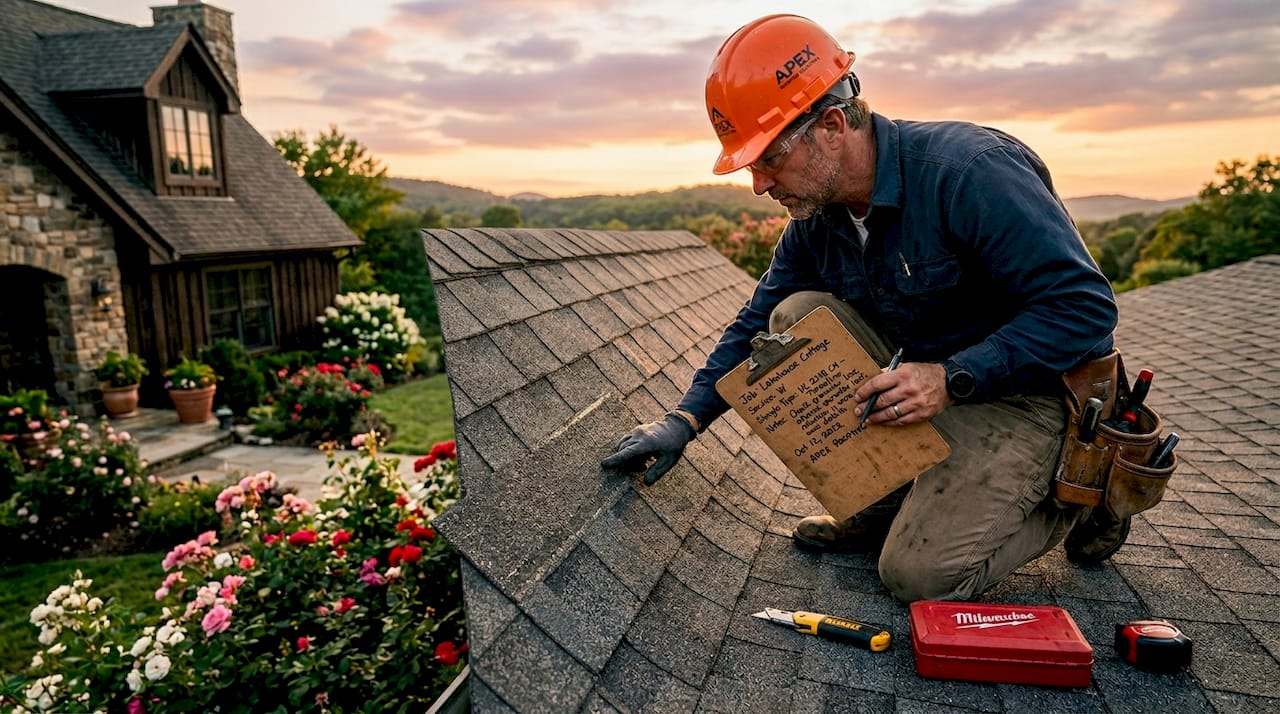
A storm-ready roof that has not been inspected in two years is not actually storm-ready. Shingles crack, flashing lifts, and sealant dries out between storm seasons. Pre-storm inspections and documentation are key steps recommended by roofing professionals along with maintaining temporary protection supplies like waterproof tarps and securing materials.
Focus your inspection on these areas:
- Penetrations: Pipe boots, vents, and skylights are the most common entry points for wind-driven water.
- Flashing: Check for lifted edges, rust, or separation at chimneys and walls.
- Shingle condition: Look for cracked, curling, or missing tabs, especially at ridges and edges.
- Gutters: Clogged gutters cause water to back up under drip edges during heavy rain.
Date-stamped photo documentation of your roof’s pre-storm condition is critical for insurance claims. Without it, adjusters have no baseline to compare against post-storm damage. Schedule a professional inspection before hurricane season opens each June, and keep a digital record of every repair and inspection report.
Pro Tip: A wind mitigation report from a licensed inspector costs roughly $75 to $150 and can reduce your Florida homeowner’s insurance premium by hundreds of dollars annually. It pays for itself in the first year.
Professional roof cleaning also removes algae and debris that trap moisture against shingles, accelerating deterioration before a storm even arrives. Add it to your annual roof maintenance schedule alongside gutter clearing and flashing checks.
Key takeaways
Storm-resistant roofing requires UL 2218 Class 4 materials, six-nail fastening patterns, self-adhering underlayment, and verified edge details working together as a single system.
| Point | Details |
|---|---|
| Impact resistance rating | UL 2218 Class 4 is the highest standard; products like GAF Timberline AS II meet it. |
| Wind fastening compliance | Six nails per shingle with hot-dipped galvanized nails is required in Florida’s HVHZ. |
| Underlayment type | Self-adhering peel-and-stick membranes are mandatory in HVHZ and superior everywhere. |
| FORTIFIED certification | IBHS FORTIFIED homes had 73% fewer claims after Hurricane Sally compared to standard homes. |
| Pre-storm documentation | Date-stamped photos and professional inspections protect your insurance claim baseline. |
What I’ve learned after years of watching roofs fail in Florida storms
Most homeowners think a new roof means a storm-proof roof. It does not. A new roof installed with the wrong nail pattern, standard felt underlayment, and no drip edge at the rakes is not storm-ready. It is just new. The material grade matters, but installation quality determines whether those materials actually perform when a Category 3 makes landfall.
The other misconception I see constantly is that storm-resistant roofing is only worth the investment if you live directly on the coast. That is wrong. Inland counties like Orange and Volusia take direct hits from hurricanes and tropical storms that produce sustained winds well above 100 mph. The distance from the water does not protect you from wind uplift.
The homeowners who come out of storm season with minimal damage are almost always the ones who invested in impact-resistant roofing before the storm, not after. They also tend to have documentation, a relationship with a licensed contractor, and a roof that was inspected within the last 12 months. That combination is not luck. It is preparation that pays off in the most literal financial sense possible.
If you are weighing whether to upgrade your roof now or wait until after the next storm, consider this: repair costs after a storm are always higher than proactive replacement costs, and your insurance deductible does not care when you decided to act.
— Thomasroofingandrepair
How Thomasroofingandrepair installs storm-ready roofs across Central Florida

Thomasroofingandrepair installs storm-resistant roofing systems across Brevard, Volusia, and Orange counties, with full compliance to Florida Building Code HVHZ requirements where applicable. Every installation includes verified nail patterns, approved underlayment systems, and proper edge detailing. The team handles both new roof installation in storm-prone areas and rapid post-storm repairs through a structured emergency repair workflow designed to minimize interior damage after a weather event. If your roof has not been inspected before this hurricane season, contact Thomasroofingandrepair for a free estimate and professional assessment.
FAQ
What is storm-resistant roofing?
Storm-resistant roofing is a system combining impact-rated materials, wind-compliant fastening, and water-shedding underlayment to protect a home during hail, high winds, and heavy rain. It is defined by standards like UL 2218, ASTM D3161, and IBHS FORTIFIED certification.
What is the best roofing material for hurricanes?
UL 2218 Class 4 impact-resistant shingles and standing seam metal roofing are the top choices for hurricane-prone areas. Both resist hail impact and wind uplift better than standard asphalt shingles.
How many nails per shingle are required in Florida’s HVHZ?
Florida’s HVHZ requires six nails per shingle using hot-dipped galvanized or stainless steel fasteners. Standard residential installation outside HVHZ typically uses four nails per shingle.
Does FORTIFIED certification lower homeowner’s insurance?
Yes. IBHS FORTIFIED-certified homes qualify for insurance premium discounts in multiple states, and data from Hurricane Sally shows these homes had 73% fewer claims than non-certified homes.
How often should I inspect my roof before storm season?
A professional inspection once per year before hurricane season opens in June is the standard recommendation. Pre-storm documentation with date-stamped photos is also required to support any post-storm insurance claim.