
TL;DR:
- Proper hurricane roof preparation involves inspecting and reinforcing key components before the season to prevent damage. Upgrading roof-to-wall connections, sealing penetrations, and documenting conditions enhance resilience and insurance claims. Early planning, code-compliant materials, and final pre-storm measures significantly improve a home’s storm readiness.
Hurricane roof preparation is the process of inspecting, reinforcing, and sealing your roof before storm season to prevent structural failure, water intrusion, and costly damage. For homeowners in Central Florida’s Brevard, Volusia, and Orange counties, this is not optional maintenance. It is the difference between a roof that survives a Category 3 and one that ends up in your neighbor’s yard. This guide walks you through every critical step, from pre-season inspection to last-minute securing, with 2026 Florida Building Code references and insurance insights built in.
What are the essential roof elements to inspect before hurricane season?
A licensed contractor inspection is the non-negotiable starting point for any serious hurricane roof preparation. The inspection must cover shingles, flashing, soffits, gutters, ridge vents, and attic conditions, because each of these components can become a failure point under sustained winds. A 2026 Florida guide specifies starting inspections no later than May 1, with March or April being the target window to avoid contractor backlog and allow time for repairs before the season begins.
During the inspection, look for these specific warning signs:
- Loose, curling, or missing shingles that can peel away under wind pressure
- Cracked or displaced flashing around chimneys, vents, and skylights
- Degraded pipe boot sealants showing cracking or separation from the pipe collar
- Sagging gutters or blocked downspouts that redirect water under the roof edge
- Soft spots in the attic decking indicating moisture damage or rot
- Gaps in ridge vent seals that allow wind-driven rain to enter the attic
Use the inspection findings to rank repairs by urgency. Structural issues like damaged decking or failed flashing take priority over cosmetic concerns. Take date-stamped photos of every area the inspector flags, because this documentation becomes your evidence if you file an insurance claim after the storm.
Pro Tip: Book your inspection in March, not May. By April, licensed contractors in Central Florida are booked weeks out. Early scheduling also gives you time to source materials, which can be in short supply as hurricane season approaches.
How to strengthen roof-to-wall connections and roof decking
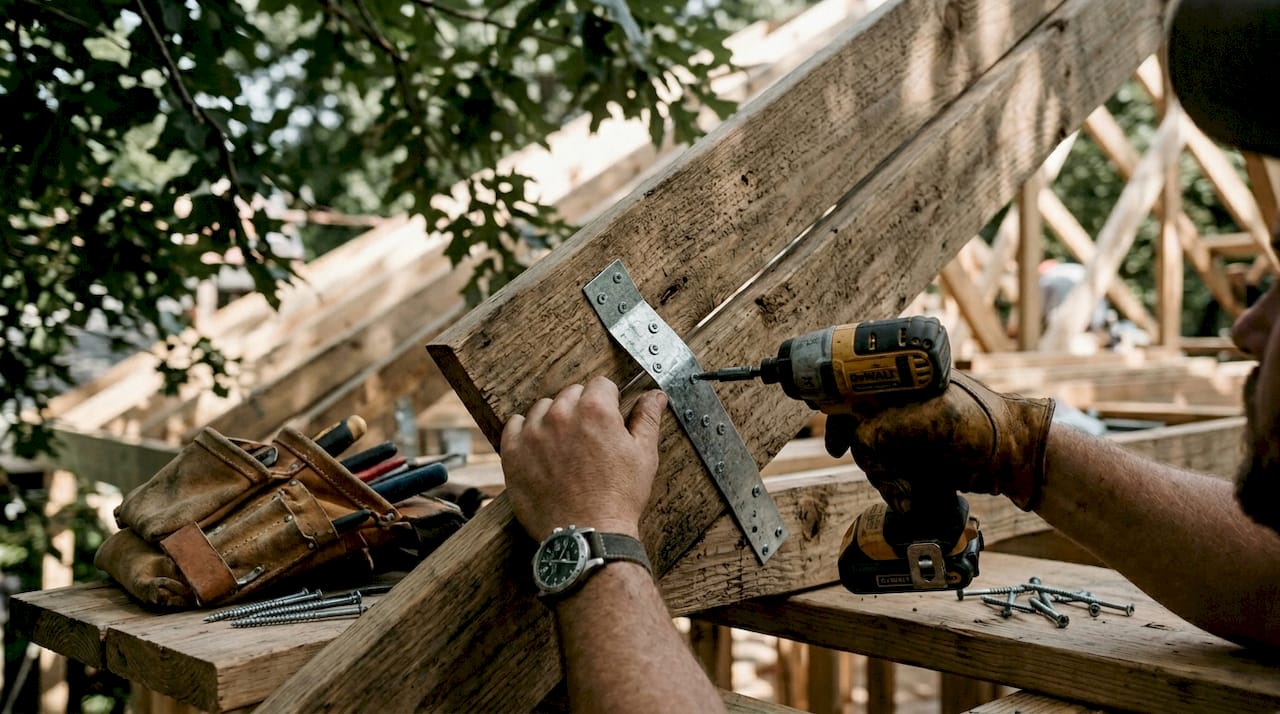
The structural chain connecting your roof deck to your walls is the most critical defense against hurricane uplift. Most older Florida homes were built with toe-nailed connections, where nails are driven at an angle through the rafter into the top plate. This method provides roughly 170 lbs of uplift resistance per connection. That is not enough for a major hurricane.
The upgrade path follows three steps:
- Access the attic. Inspect each rafter-to-wall connection. Look for metal connectors already installed. If you see only toe-nails, the connection needs reinforcement.
- Install hurricane straps or clips. Simpson Strong-Tie H2.5 connectors boost uplift resistance from 170 lbs to over 500 lbs per connection when installed with the correct nails and full hole fastening. A licensed contractor can retrofit these without removing the roof surface.
- Upgrade the roof deck fastening. Replace smooth shank nails with 8d ring-shank nails at 6-inch centers. Both IBHS FORTIFIED Home standards and the Florida Building Code mandate this spacing to secure roof sheathing against hurricane-force shear forces.
| Connection type | Uplift resistance | Code compliance |
|---|---|---|
| Toe-nail only | ~170 lbs per connection | Pre-2002 standard |
| Simpson H2.5 hurricane strap | 500+ lbs per connection | FBC and FORTIFIED compliant |
| Ring-shank nails at 6" centers | Significantly higher shear resistance | FBC and IBHS mandated |
The roof’s chain of bonding, meaning fasteners, sealants, and underlayment working together, is what resists uplift. Surface aesthetics matter far less than bond integrity. A roof can look perfect from the street and still fail catastrophically if the fastening pattern is wrong.
Pro Tip: IBHS FORTIFIED programs allow some retrofits using spray foam sealed roof decks without a full tear-off. This creates a secondary water barrier under your existing roofing and qualifies for insurance incentives. Ask your contractor whether your home qualifies before committing to a full replacement.
How to seal and protect roof penetrations, flashings, and edges
Water intrusion during a hurricane rarely comes from a roof that blows off entirely. It comes from small gaps around penetrations, failed flashings, and lifted shingle edges that allow wind-driven rain to force its way under the surface. Sealing these points is the second layer of your storm defense.
Focus on these specific areas:
- Pipe boots: These rubber or metal collars around plumbing vents typically last 10 to 15 years in Florida’s UV-intense climate. A cracked or separated boot creates a direct water entry point. Replace any boot showing visible cracking before the season starts.
- Chimney and skylight flashing: Step flashing and counter-flashing must be fully adhered with roofing cement or compatible sealant. Any gap wider than a credit card edge is enough for wind-driven rain to penetrate.
- Ridge vents: Standard ridge vents can allow rain entry during extreme wind events. Hurricane-rated ridge vents with baffled designs are available and should be installed in homes in HVHZ (High-Velocity Hurricane Zones) or coastal areas.
- Shingle tab edges: Apply roofing adhesive under the tabs along the roof’s perimeter and rake edges. This prevents the peel-up effect where wind gets under the leading edge and progressively lifts shingles from the outside in.
- Synthetic underlayment: If your roof is due for replacement, specify a self-adhering synthetic underlayment rather than traditional felt. Six-nail patterns and synthetic underlayments markedly improve uplift resistance and provide a secondary water barrier if the outer surface is compromised.
For homes with older roofing materials, review the top roofing materials for Florida storms to understand which products carry current FBC Product Approval ratings.
What practical measures can homeowners take in the final 72 hours?
The final 48 to 72 hours before a hurricane makes landfall is not the time for major repairs. Trying to make significant fixes last-minute is dangerous and often counterproductive. Focus instead on securing what you can and documenting everything.
- Clear the roof and gutters. Remove leaves, branches, and debris that can become projectiles or block drainage during heavy rain. Clogged gutters force water under the drip edge.
- Trim overhanging limbs. Any dead or weak branch within striking distance of the roof should be cut back. A falling limb during a storm can punch through shingles and decking.
- Remove or secure rooftop objects. Antennas, satellite dishes, and decorative weather vanes must come down. These become high-speed projectiles in Category 2 or higher winds.
- Apply roofing cement to loose shingles. If you have a shingle that is lifting but a full repair is not possible before the storm, press it flat and apply a bead of roofing cement under the tab. This is a temporary measure, not a permanent fix.
- Photograph every roof surface. Walk the perimeter of your home and photograph all roof faces, gutters, and visible flashing. A 2026 report advises taking date-stamped photos and video before cleanup and keeping all receipts for mitigation expenses, as insurers may reimburse these costs.
Stay off the roof entirely once winds exceed 20 mph. No last-minute repair is worth a fall.
How do building codes and insurance inspections affect your preparation?
Florida’s building code framework directly shapes which roofing materials and methods qualify for insurance discounts and legal compliance. In High-Velocity Hurricane Zones, only products with FBC Product Approval or Miami-Dade Notice of Acceptance may be installed. The Florida DBPR maintains a searchable database where you can verify any product before purchase.
Wind mitigation inspections are the financial lever most homeowners overlook. A licensed inspector assesses seven key roof features including roof covering, deck attachment, roof-to-wall connections, roof shape, secondary water resistance, opening protection, and construction code year. Florida law requires insurers to provide premium discounts based on documented hurricane-resistant features verified by these inspections.
Pro Tip: Upgrading to Class 4 impact-rated shingles can yield insurance premium discounts of 5 to 30%. In a state where homeowners insurance premiums have risen sharply, that discount often pays back the cost of the upgrade within a few years.
The IBHS FORTIFIED certification program takes compliance a step further. FORTIFIED-certified roofs must meet specific standards for deck attachment, sealed roof decks, and opening protection. Homes with FORTIFIED designation consistently show lower damage rates in post-storm assessments and qualify for additional insurer discounts. If you are weighing roof replacement versus repair, a FORTIFIED-level replacement may be the smarter long-term investment.
Wind mitigation inspections also improve claims outcomes. When your insurer has a pre-storm inspection report on file, disputes about pre-existing damage versus storm damage are far easier to resolve in your favor.
Key takeaways
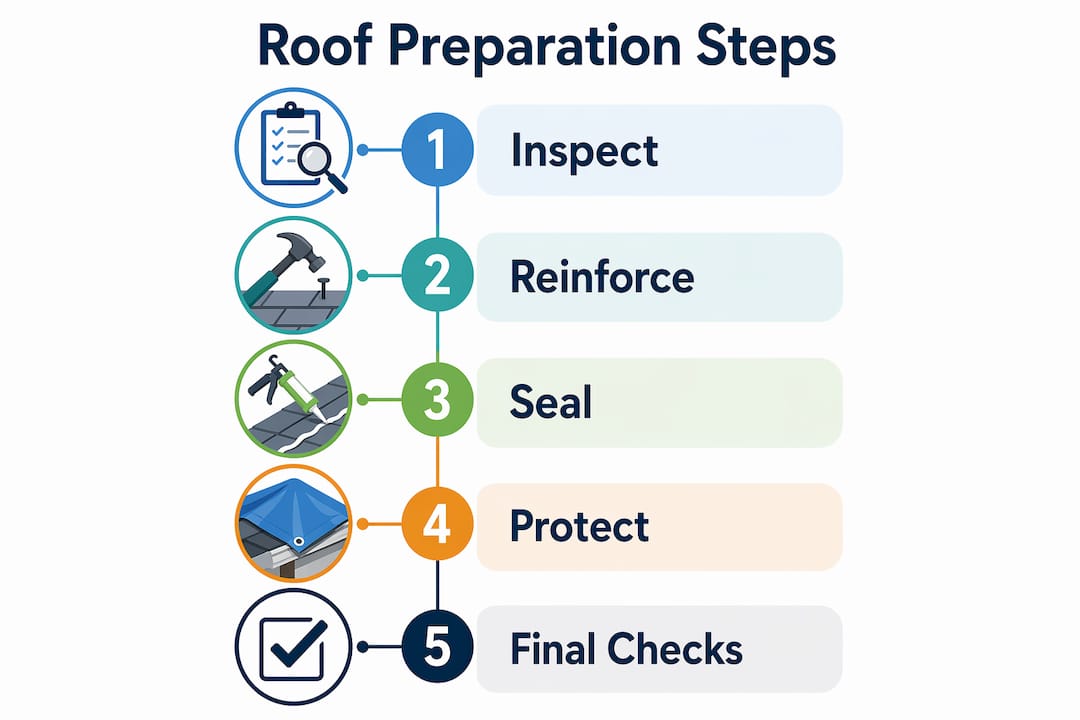
Effective hurricane roof preparation requires structural reinforcement first, waterproofing second, and surface repairs last, executed well before June 1.
| Point | Details |
|---|---|
| Inspect by April | Schedule a licensed contractor inspection by March or April to avoid backlog and allow repair time. |
| Upgrade connections | Install Simpson H2.5 hurricane straps and 8d ring-shank nails to raise uplift resistance above 500 lbs per connection. |
| Seal all penetrations | Replace pipe boots, reseal flashing, and apply roofing adhesive to shingle tab edges before storm season. |
| Document everything | Take date-stamped photos before and after storms to support insurance claims and track roof condition. |
| Use code-compliant materials | Only install products with FBC Product Approval or Miami-Dade NOA in Florida’s hurricane zones. |
What I’ve learned after years of Florida roofing work
Most homeowners I talk to think hurricane roof preparation means buying a tarp and hoping for the best. That mindset costs them tens of thousands of dollars. The homeowners who come through storms with minimal damage are the ones who treated their roof like a system, not a surface.
The single biggest mistake I see is delaying fastening upgrades. Homeowners spend money on new shingles but leave the original toe-nail connections in place. A beautiful new roof with inadequate wall connections will still fail in a Category 3. Start with the structure, then work outward to waterproofing, then address surface materials.
I also push every client to get a wind mitigation inspection before and after any upgrade work. The insurance premium reductions are real, and the inspection report gives you proof of what was done. That documentation is worth more than any warranty when you are standing in front of an insurance adjuster after a storm.
If your roof is over 15 years old and has never had its fastening pattern upgraded, do not wait for the next storm to find out what happens. The cost of a professional assessment and targeted reinforcement is a fraction of what a full post-storm replacement will run you.
— Thomasroofingandrepair
Get your roof storm-ready with Thomasroofingandrepair
Thomasroofingandrepair serves homeowners across Brevard, Volusia, and Orange counties with professional roof inspections, wind mitigation documentation, and storm-resistant upgrades built to 2026 Florida Building Code standards. Whether you need a pre-season inspection, a fastening retrofit, or a full storm-ready roof replacement, the team brings the experience and materials to do it right the first time.

After a storm, Thomasroofingandrepair offers fast-response emergency repair services to stop water intrusion and document damage for your insurer. Financing options are available for homeowners who need to move quickly on repairs or upgrades. Contact Thomasroofingandrepair today for a free estimate and get your roof ready before the 2026 hurricane season peaks.
FAQ
What is the best time to prepare your roof for hurricane season?
Schedule a licensed contractor inspection by March or April. This timing avoids the contractor backlog that builds through May and gives you enough time to complete repairs before June 1, when the Atlantic hurricane season officially begins.
How do hurricane straps improve roof safety?
Hurricane straps, such as Simpson Strong-Tie H2.5 connectors, increase roof-to-wall uplift resistance from roughly 170 lbs to over 500 lbs per connection. They are retrofittable from inside the attic without removing the roof surface.
Do roofing upgrades actually lower my insurance premiums?
Yes. A wind mitigation inspection documents hurricane-resistant features, and Florida law requires insurers to apply discounts based on those findings. Class 4 impact-rated shingles alone can reduce premiums by 5 to 30%.
What should I do to my roof in the 48 hours before a hurricane?
Clear gutters and roof debris, trim overhanging limbs, remove rooftop antennas or decorations, apply roofing cement to any lifting shingle tabs, and photograph all roof surfaces with date-stamped images for insurance documentation.
Which roofing materials are required in Florida’s hurricane zones?
Only products with Florida Building Code Product Approval or a Miami-Dade Notice of Acceptance may be legally installed in High-Velocity Hurricane Zones. Your contractor should verify product approval status through the Florida DBPR database before any installation begins.